RAR #280: Books Take Us Places
One of the very best ways to travel with your children is through books.
Physically traveling as a family isn’t always possible for a variety of reasons, but by reading with our kids, we give them the gift of windows into unfamiliar worlds. Stories develop empathy and invite us to engage with another’s experiences in ways that can even go deeper than visiting a place in real life.
Today, RAR’s Creative Director (and my eldest daughter) Audrey is with me to talk about the power of books to take us places, even when we’re not able to go far from home ourselves.
In this episode, you’ll hear:
- How stories help us engage with creativity, community, and our Creator
- How books can give us deeper connections to the places we do travel
- How reading–and especially reading aloud!–cultivates curiosity and wonder
Watch the episode on YouTube here.
Some links are affiliate links
Books and Resources Mentioned in This Episode:
- “There is no Frigate like a Book,” Emily Dickinson
- On Fairy Stories, J.R.R. Tolkien
- “The Landlord’s Tale. Paul Revere’s Ride,” Henry Wadsworth Longfellow
- RAR #43: Raising Kids Who Read, Daniel Willingham
- The Read-Aloud Revival Booklists




Audrey Menck (00:00):
There's something about a book that helps us to enter into someone else's experience. It might be a different life in our current day and age, but it also could be a different point in history, places that we really can't go necessarily in a physical way, but we can still enter into through stories.
Sarah Mackenzie (00:14):
They don't just take us places, these books. They build our imagination and our identity as part of this community of people, all the people in the world that God made. They make us a part of that larger community.
(00:39):
Welcome to the Read Aloud Revival Podcast. This is the show that helps you make meaningful and lasting connections with your kids through books. I'm your host, Sarah Mackenzie. I'm the author of Teaching From Rest and the Read-Aloud Family and a growing collection of picture books. And today, I want to talk all about how books take us places and take our kids places, even when we're not able to go super far from home ourselves.
(01:06):
I have got our creative director, who's also my oldest daughter, Audrey, back on the show. Audrey, you're usually working your magic behind the scenes of the show. I love it when you're on-screen with me. So thanks for coming back on.
Audrey Menck (01:18):
Thanks for having me back. I love this topic because I love books, but I also, as some of our listeners know, love travel. And I was actually just having a conversation with a friend the other day. We were talking about traveling and I was trying to think about why is it that I love travel so much because there's a lot of things about it that are really hard and uncomfortable.
(01:38):
Usually there's many factors outside of your control and you might be in a place where the culture is unfamiliar, the language is so unfamiliar and it can be just so disorienting. So I was thinking about like, what is it? Why do I love it so much? And as we were chatting, I was realizing that a lot of my heart for seeing the world for encountering different places and different people really comes back to one of my very first experiences abroad, which was my study abroad semester with Franciscan University in Austria at their remote campus.
(02:07):
And the directors there just really encouraged us at the beginning of the semester to really take this semester and travel as pilgrims rather than tourists. And the distinction that they made was really interesting because we have all these travel experiences baked into the study abroad with the program. And they really wanted us to encounter things as they came rather than going in with a real expectation of something going in a certain way.
(02:33):
So to let go of our own ideas of what something might look like and just try to receive what God had for us, receive the people that came across our path. And I think that when you miss a train and you're traveling as a tourist, it feels like, oh, something's being taken from you. But when you're going as a pilgrim, you're going with this posture of Franciscan poverty and humility, it's really an invitation to just see, okay, well, make the best of the situation and then notice how many things that might not have happened before had you not missed that train.
(03:09):
You might talk to the man on the street corner or play with a baby in the train station. And I think that it just really shifts the disposition in us from wanting to maximize the pleasure that we get out of a trip or a journey and really help us to answer the call that's right in front of us, see the invitations that are right there before us.
Sarah Mackenzie (03:29):
I love that. I'm just thinking of all the ways that that idea of approaching something, whether it's a trip or a day or a season of our life as a pilgrim instead of as a tourist, it flips that entitlement right on its head. Not that this trip or this time or this week is mine.
Audrey Menck (03:48):
And here's the thing, I don't think that many of us are super naturally open and easygoing and willing to just roll with all the punches that life throws us. I think some of us come by a little bit more naturally than others of us, but it really can be a skill that we learn over time. And I know that we've talked about this on the podcast before, but we didn't really travel much when I was young, but I think these same virtues, the same openness, this disposition can still be cultivated in those little years, even while you're just at home. So that's why I want to talk about books today, because I think that can be a really great vessel to growing in that compassion and in knowledge of other cultures and all those good things.
Sarah Mackenzie (04:29):
Yeah. I mean, I think we didn't do hardly any travel at all when you were growing up, but the way we traveled was through books. And I think one of the best ways that we can travel with our children is through books. We talk a lot about how stories can develop empathy in our kids. They basically, every time we read a story, we're giving our kids the chance to walk a mile in the shoes of somebody else and experience things they wouldn't have otherwise been able to experience.
(04:57):
And that is the magic of stories. That's the power of stories is that they give us this companionship, there's window into what it's like to be somebody else that pull us into this world that's different than our own. I think one of the things that's especially wonderful about books is that because it's not always possible for us to travel as families, I mean, there's so many moving pieces. There's schedules and finances and just the absolute stress of traveling with small people. But what a gift really that we can offer our children these windows to the world through stories, through books.
(05:34):
There's the Emily Dickinson poem that is so relevant here. There is no frigate like a book. It says, "There is no frigate," and we should know a frigate is a ship, right? "So there is no frigate like a book to take us lands away, nor any coursers like a page of prancing poetry. This traverse may the poorest take without a press of toll, how frugal is the chariot that bears the human soul." I love this.
(06:02):
There is no frigate like a book. So what she's saying here is that there's nothing quite like a book to take us far away. And those of us who have experienced the power of words to bring us to far away lands, it's just incredible. It stays with us. Sometimes when you read a book, you feel like you've actually been to the place you just read about.
Audrey Menck (06:24):
Absolutely. Well, I also think too that we can travel and we can experience different cultures, but we also, there's that timeless quote. We don't always see things as they are. We see them as we are, right? There's something about our own perspective that really informs the way that we engage with the world around us. And so there's something about a book that helps us to enter into someone else's experience. It might be a different life in our current day and age, but it also could be a different point in history, places that we really can't go necessarily in a physical way, but we can still enter into through stories.
Sarah Mackenzie (06:58):
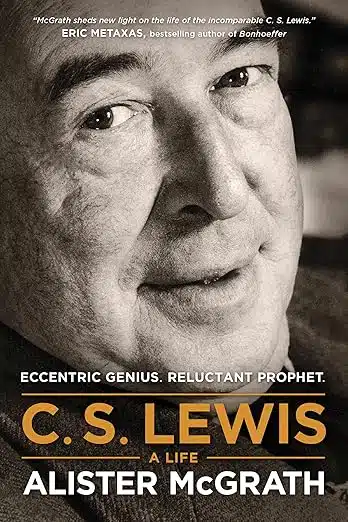
Yeah, that's right. They don't just take us places, these books. They build our imagination and our identity as part of this community of people, all of the people in the world that God made, right? They make us a part of that larger community. In his biography of C.S. Lewis, Alister McGrath writes, "The imaginative is produced by the human mind as it tries to respond to something greater than itself, struggling to find images adequate to the reality," which I think is such a great reminder that what a book actually does is it pulls us out of ourselves.
(07:34):
So we are living, we can only live our life from our own point of view, right, from our own perspective. And then when we read these stories, we are actually walking a mile in the shoes of somebody else. It actually pulls us out of this sort of self-centered way of living that we all just default to because of our nature, this self-centered kind of thinking and way of being. And it sort of propels us into the depth of what it means to be a human, what it means to be in relationship with one another, what it means to belong in this community. And so there's so much happening even with a story that feels like it's just a fun read.
Audrey Menck (08:07):
I always come back to Tolkien when I think about this topic.
Sarah Mackenzie (08:10):
I think you always come back to Tolkien actually, not just when you're thinking about this topic. I feel like ...
Audrey Menck (08:16):
[inaudible 00:08:16] to Tolkien.
Sarah Mackenzie (08:17):
Yeah. Just kidding.
Audrey Menck (08:20):
No, but I love, like he talks a lot about creativity in his essay on Fairy Stories about creativity and how it's our right as creations to engage with the creative world as we are made in the image and likeness of a maker. And I just love this idea of creativity. Of course, it's in the writing of stories. It's in the imagining of worlds that didn't exist before, right? But it's also in the engagement.
(08:44):
We're using that imagination. We're engaging with our own creativity as we envision the stories that we're reading and we enter into these characters' lives. And so by showing children what is possible, be it a golden apple or a house made of gingerbread or simply what an ordinary warning means to some child all the way across the world in a really different culture, it really instills in us a sense of our part in the greater world.
(09:10):
And it is that response that Alison McGrath is talking about here, that as we're engaging with story, with other people's stories, with other creative beings, that is in its own way, engaging with the creator and participating in this larger imaginative body of Christ.
Sarah Mackenzie (09:28):
Yeah. Oh, I love that so much. I wonder if there are books that come to mind for you that are books that have really carried you to other places or times. I have this thing for picture books about Maine. I think we all do because there's just so many ... I don't know. I think being in Maine must make the picture book writer and illustrator come alive. Anyone who's living in Maine right now is probably laughing.
(09:56):
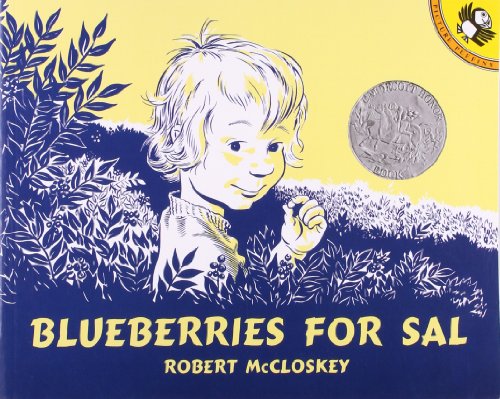
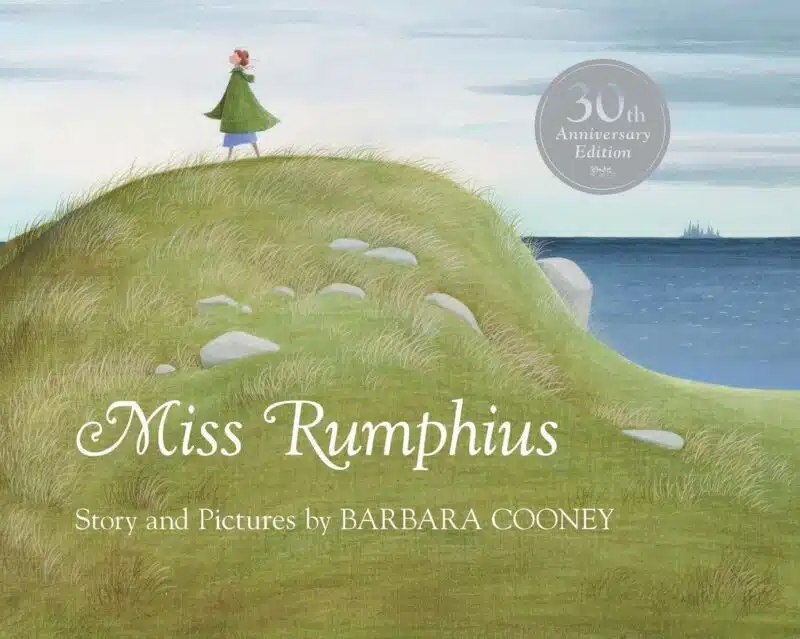
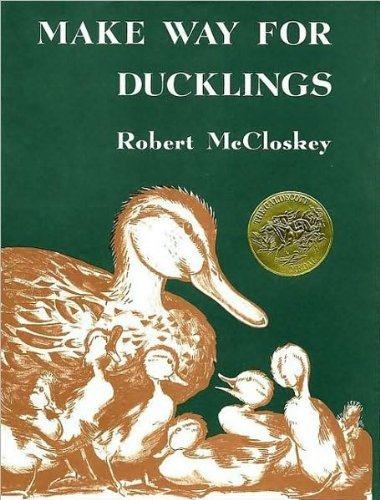
But so many of my favorite picture books happen and we're made in Maine. Everything by Robert McCloskey, Make Way for ... Well, Make Bay for Ducklings is in Boston. That's a close second in my head for like somewhere the best picture books came from. But like One Morning in Maine, Blueberries for Sal, Barbara Cooney's books, Miss Rumphius, so many books. I just think to me, I've never spent any amount of time in Maine. I would like to. I will remedy that at some point, but I feel like I've been there. I bet when I go, I'm going to feel like I'm visiting a place I've already been.
Audrey Menck (10:30):
Well, weren't you in line at an amusement park or a grocery store somewhere and you heard some people talking about Maine?
Sarah Mackenzie (10:37):
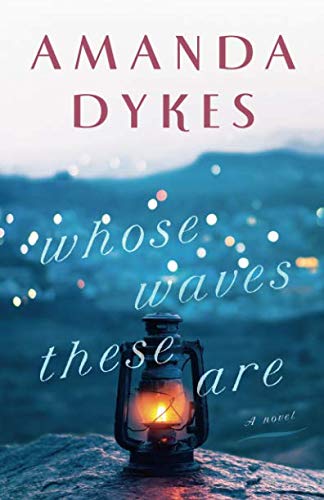
Well, okay, yes. I was in line at an amusement park for a ride and it wasn't just that I overheard them, it's that I was chatting with them. I can tell you all about their family now. I'm sure you're shocked by this, but we were making lots and lots of chit-chat as we were waiting and they said they were from Maine and my first response was like, "Oh, I just came from there." It was not because I had just come from, I did not come. I immediately stopped myself and went like, "Oh my goodness, I just read a novel." It was one of Amanda Dykes novels, I think Whose Waves These Are, which is an adult historical fiction novel that our listeners and readers would love. So we'll put it in the show notes for you. And it had such a strong sense of place that I felt like I had been to Maine. I was like, "Oh, I just was visiting there." So I wasn't.
Audrey Menck (11:29):
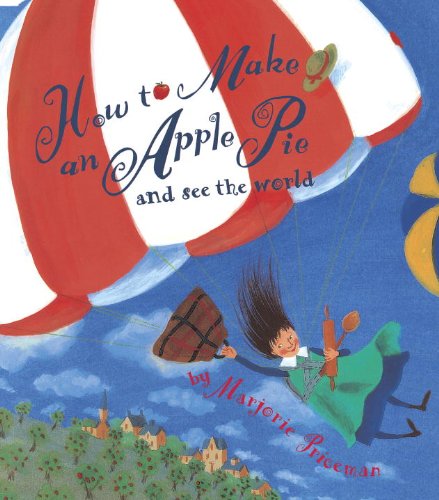
But that's how powerful they are, right? That's amazing. I think the first one, the first book that comes to mind is, I feel like it feels like a classic of perhaps my own childhood, maybe other people's childhoods as well, but How to Make an Apple Pie and See the World. I just love this book. It follows this ... I believe she's unnamed girl throughout her adventure. She decides she's going to make an apple pie and she's going to go throughout the world and find the finest ingredients.
(11:53):
So she goes all over the world to all these different places to get the finest wheat to make the crust with and the best apples and cinnamon. And it's very fun and she has lots of adventures and the illustrations are just great. But I think that's a great example of what we're talking about because you really go all over the world with this character and experience the world and-
Sarah Mackenzie (12:14):
Actually my favorite part about that picture book is that it opens with her trying to go to the market to get ingredients and the market's closed. So she's like, "Well, I guess I'll just go get the ingredients myself." And then she travels around the world and then at the end of the picture book, she makes the pie with all the ingredients she collected from all around the world and then she needs something at the very end. It might be ice cream or whipped cream or something to put on top and she goes back to the market and it's closed. It's this great circular ... I just love a good picture book. You know me. We'll put that in the show notes as well.
Audrey Menck (12:47):
Absolutely. Okay. Do you have another one that comes to mind, another book?
Sarah Mackenzie (12:50):
Yeah, let me think. Novels, I mentioned Whose Ways These Are. That one's like an adult novel. A middle grade novel though that is one that sticks out to me is Laura Martin's book, Glitch, which-
Audrey Menck (13:04):
I love that one.
Sarah Mackenzie (13:05):
We'll also put in the show notes. Yes, this one's a time travel book. And essentially the main characters have to time travel to keep these other time travelers from going back and changing history because the other time travelers are going back and messing with history, which puts the world in peril. The book opens up at Ford Theater on the day that Lincoln was assassinated. I think there were so many different places in that book because the time travelers go so many different places, so many different periods of time that there's just a lot of opportunity to feel like you're traveling all over and not just places, but also in time.
Audrey Menck (13:41):
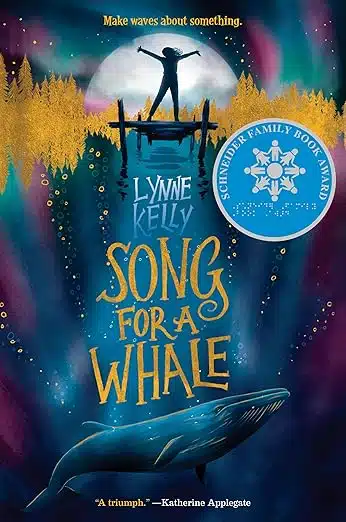
Yeah. Well, speaking of middle grade, I just finished, I was listening to it on audiobook, but Song for a Whale by Lynne Kelly, and it's just absolutely beautiful, brilliant story of this young girl who is deaf and she is just really into the science of sound and sound waves. And so she fixes up radios in her house and she can feel the different audio waves through the vibrations of the machine. It's so interesting. I feel like I learned so much by reading this book.
(14:13):
They didn't know about sound and the science behind it, but she basically hears about this whale who is singing a song that nobody has ever heard before. The scientists can't figure out why it's singing at the level of hurts that it's singing at and it swims away from its pod and it's sort of a loner and they can't really pick up on the pathway that it's traveling.
(14:36):
And so she decides to take it upon herself to write a song for this whale so that this whale will know it's not alone and so they can hear something in its own language. And so she's like measuring the hurts from what the scientists have discovered and creating this song. And it was just really beautiful the way that her just adventurous and tenacious spirit carries you. But I think there was a really wonderful example of a contemporary story that I feel like just took me into a whole different place, a whole different experience of the world that's not something that I've experienced.
(15:07):
And you just get to step in, I believe it's Iris' shoes. I think her name is Iris, but yeah, you just step in her shoes and you get to just experience what the world is like for someone who is deaf and also like her adventures along the way.
Sarah Mackenzie (15:26):
No. You've mentioned that book enough times to me that it's on my TBR. I will be reading it very soon.
(15:37):
So I think there's a good question of like, okay, we're going to travel. Maybe you're going to travel somewhere in real life and it's like an idea of I want to read some books that are take place there so that it looks familiar when we get there. And the question can be, should I read the book first or travel to the place first and read after? And I think it can go either way. There's benefits to either way. There's that recognition of familiarity is going to come either when you're reading the book or when you're there in person.
(16:01):
But I have a few special and particular memories of going somewhere in real life and being like, "We have been here before." And it just made the whole thing come so alive. So one of those experiences was when we went to Boston as a family several years ago and seeing Trinity Church and I had brought ... No, I didn't bring it. I was thinking I had brought a picture book of Paul Revere's Ride, but I didn't have it. I pulled up the words to Paul Revere's Ride on my phone and we sat out in front of Trinity Church and I read Paul Revere's Ride and one if by land and two if by sea.
(16:40):
I don't know if it was as powerful for the kids as it was for me, but I just loved it so much. It felt like, "Oh my gosh, this is a place that we've read about so many times and we're standing here where this happened. That was amazing." And then another one that comes to mind for me is we went to London last year and there was so many things there. We were only in London for a few days. There were so many things that we wanted to see and I had to narrow it down, but one of the things we really made time for was to search out to find this landmark called The Matchstick.
(17:16):
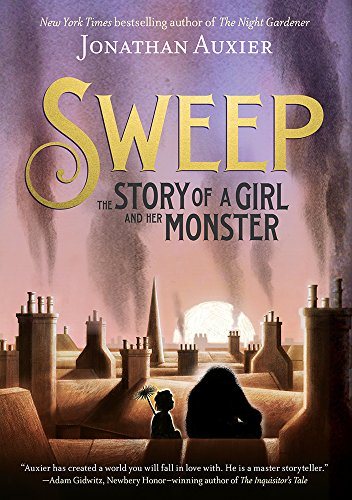
So the matchstick is this landmark in London that commemorates the Great Fire of London. And it figures very prominently in Jonathan Auxier's book, Sweep, which longtime listeners and viewers will know is one of my very favorite books of all time. I think it's an absolute masterpiece. It's such a great read aloud. I've read it so many times aloud to myself. I just love it in every way. And the Matchstick is a landmark that's of supreme importance in that book.
(17:48):
And so going there, I will say the kids and I, we went, right? And the kids and I were all so excited because we were like, we just finished reading this book and I texted a picture of us in front of the Matchstick to Jonathan be like, "Just so you know, we're looking for Nan."
Audrey Menck (18:03):
There's just so many different avenues. Books can take us places, like that means so many different things, right? We're talking about, it can take us to physical places, it can take us to emotional places, it can take us into people's experiences that we don't have. And it also can be this pathway to our own life, right? To experiencing our own life more deeply through, because we've encountered it in story first, those stories really bring worlds to life to us that we might never experience, but then they also bring afresh the world that we live in alive to us.
(18:33):
And I just think that that is so beautiful, how they can do so many different things and function in so many different ways. And probably no one book is going to do all those things at the same time, although some of them will have multiple elements of those. How do you think we can kind of cultivate that spirit of hunger, of wanting to know about the world? How do we spark that wonder and curiosity?
Sarah Mackenzie (18:57):
That's such a good question. I mean, I think it's less about creating that in our kids and more about just offering the Tinder for that to come alive, that desire to be a part of a community and then to learn about this, like the people that God put in the world with us, I think is like innate and in all of us, but we might need to zig it out a little bit.
(19:24):
And so I think by reading aloud specifically, because it takes away the pressure of them having to read on their own or like all the other baggage that our kids oftentimes have when it comes to their own struggles with reading or the fact that they might not enjoy reading as much or the fact that today's kids have to contend with all of the siren song of screens that is very, very loud and very, very noisy and constantly clamoring for attention.
(19:48):
And so reading aloud actually supersedes all of that because your kids don't have to choose to read, you're reading to them. They don't have to overcome their struggles in reading because you are reading to them. And so they just get to get swept off into the story. And then that's like they get a taste of it and then they might want more for themselves. I think you've mentioned before to me one particular summer where you read about a lot of different places. Do you want to tell everybody about that?
Audrey Menck (20:15):
Yeah. It was, I think in my early teen years, but we would have in the summer during the hottest afternoon hours when like going outside just wasn't an option, we would have our quiet reading hour and we kind of were all sectioned off into different parts of the house so we could have our peace and quiet and not be poking each other.
Sarah Mackenzie (20:39):
For 30 blessed minutes, really.
Audrey Menck (20:42):
Yeah. So that meant that, I think I shared a room with my sister or maybe both of my sisters at the time. So I went down to the basement and we had this, really, I just thought it was the best couch ever. It was so comfortable to me. But anyway, I think it was like left there from the previous owners. It was not like some ... Anyway, it was just whatever was in our basement, but I would go-
Sarah Mackenzie (21:04):
It's not a great item. It's not a fancy couch. I'm only laughing because I'm like, "Yeah, that old thing.
Audrey Menck (21:08):
Okay." It was mine, so I loved it.
Sarah Mackenzie (21:12):
Okay. Okay.
Audrey Menck (21:12):
But I would go down into the cool basement and I just remember I went through all of our bookshelves and we had all these books that we would pick up at the library sale or secondhand bookstores. Oftentimes, yeah, churches will do book sales for really ... you can get really cheap books, but we had kind of gathered a collection of children's books that I hadn't really read.
(21:33):
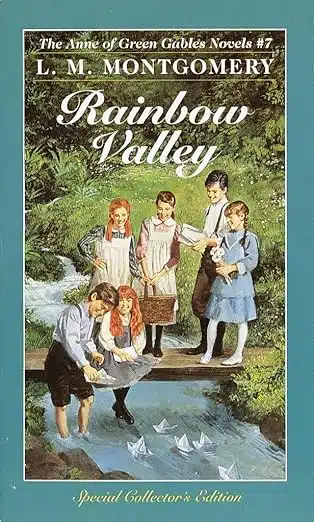
And so I just kind of went through our shelves and was pulling them all off and created before myself this really large, bold, audacious stack of books. And I read everything from Treasure Island to Encyclopedia Brown. The range was really quite vast, but I felt like I just went so many places that summer, getting to solve mysteries and play with the Blythe children in Rainbow Valley and go all over the island with Jim Hawkins.
(22:08):
And it was just really a beautiful ... I just remember every day kind of going down there and feeling like I was entering into something different. A lot of them were actually quite short little books that I would kind of burn through pretty quick. But I think because I had this time set aside and this space to read, I really just felt the freedom to jump right in. And I think that somewhere we probably, maybe we went and visited grandparents or something, but we didn't go many places, but I did feel like that was a summer I deeply traveled.
Sarah Mackenzie (22:38):
Traveled, Traveled widely. I love that so much. And I'm going to just expound on what you're talking about just because I haven't talked about it recently on the podcast, which is what we called quiet reading time. And it was just a time in the middle of the day and it kind of varied on how long it was depending on how old you guys all were and how practiced you were at this time and ... I don't know, as being able to go out to your room or to somewhere separate like that couch quietly.
(23:09):
But so for example, let's say it's like 30 minutes in the middle of the day and the idea, it's like a drop everything and read if any of our viewers or listeners have heard of that very Ramona Quimby way of thinking about quiet reading time. And basically you were not allowed to do anything else, but you could lay on your bed if you wanted. You could take a nap if you wanted, or you could read. You could read anything you wanted that you could get your hands on. So it wasn't like quiet reading time and then you were being assigned reading or doing school reading.
(23:41):
It was time set aside for your own pleasure reading. And a couple of things I think came out of that. One is that Dr. Daniel Willingham came on the podcast years and years ago to talk about how hard it is for our kids to choose to read in their free time. And I think, I mean, he was probably here ... I don't know, seven or eight years ago, and it's only harder now for our kids to choose reading. He gave the metaphor that I feel like I bring up a lot because it's so relevant, which is that if you were to give your kids ... He was talking about how if he was to put a big bowl of watermelon out on the table as dessert after dinner, everybody would love it.
(24:19):
Everybody would eat it. People would come over and eat it and enjoy it. If he put that watermelon and ice cream, everyone would choose the ice cream. I would definitely choose the ice cream. Listen.
Audrey Menck (24:31):
Especially with chocolate.
Sarah Mackenzie (24:33):
Yes, exactly. There's no question. What he was basically saying is like, the watermelon is sweet and enjoyable, but we need to give our kids, like take away the pressure of them having to choose. It just takes some of the weight off of them having to make the choice to like, "Do I play that video game or read?" There's no question in a way that technology is constructed too is made to make us want more of it.
(24:56):
And so I think what quiet reading time did is it took away the pressure of having to choose to read and it was like, "This is when I read." And then the choice then is what do you want to read? Like you said, it could be Treasure Island or it could be Encyclopedia of Brown or a Garfield comic. It could be any of those things, but you got to choose what it was to read and it was just time set aside.
(25:18):
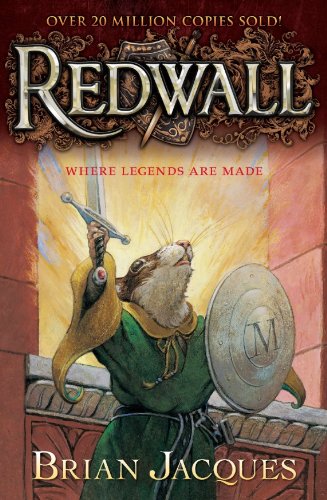
And so for those of you who are watching and listening and have kids who aren't independent readers, all of my kids were later readers than not. And they, for quiet reading time, would listen to audio books. In fact, Drew, my now 20-year-old, listened to all of the Red Wall collection, which is like 28 books or some crazy amount like that. He listened to those while he played Legos. That was his quiet reading time. It's basically like, "You have to go to your room, you are not allowed to speak to me. I'm not allowed to see your adorable little face and please do not come interrupt me."
(25:52):
And the best quiet reading times were when I also would sit and read for a little bit. I wasn't always as good about that as I wish I had been, but sometimes it's really hard to just realize that everybody has 10 minutes. I could read for 10 minutes before I do the laundry, before I put dinner in the crack pot, before I like clean up the morning school stuff to get out the afternoon school stuff, whatever it is that we've got going on. But it's fun for me to hear now that you traveled all over the world during that time when I just really wanted a break.
Audrey Menck (26:23):
Oh yeah. And I think too, I mean, people write in often and will ask, "How do I build my home library? How do we build up a collection of books so that my kids sort of have the ability to kind of wander and grab things off the shelf of books that I've curated and that we as a family really have decided that we'd like to enjoy either together or separately." And perhaps we'll do an episode in the future about how building your own home library. But I think that there's a lot of ways to do it. I think keeping your eye out for those church sales, secondhand stores, garage sales, things like that can be a good way to get your hands. Because I know when you have a voracious reader, it's hard to keep up when they have a really tall stack.
Sarah Mackenzie (27:05):
And those really long series come in handy a lot. Yeah.
Audrey Menck (27:08):
Totally. And yeah, kind of building in a rhythm of going to the library or just kind of surrounding your kids with books in the ways that you can, borrowing books from friends. You could do book swaps with friends. I know people talk about doing that too. So I think there can be lots of different ways to build that like love for reading and curiosity in practically as well.
Sarah Mackenzie (27:31):
Yeah. The other thing that you said that I just want to make sure that we didn't pass over too quickly is like, at the same time, in the same summer, you were reading easier book, you were reading something like Treasure Island and you read, I think you said Encyclopedia Brown was one of the other ones that you mentioned.
(27:47):
And then The Rainbow Valley by Lucy Maud Montgomery and Rainbow Valley, Treasure Island and Encyclopedia Brown are not even remotely close to the same level, right? And yet there was no, this is another piece I think about that quiet reading time that's so important is not that like, you're not saying like you need to read something at your level, they just get to read. Because what happened is that you even said like a lot of them were really short books that I just cooked through. And I bet that probably built up your identity as a reader. Like you were somebody who read and finished books and read lots of books because you were reading so many of little ones. Well, then it also doesn't deter you from wanting to read a longer book like Treasure Island because you are a reader. This is something you do.
(28:30):
So I just wanted to kind of like make sure that we didn't pass over that either because the books take you places whether they're at your reading level or not. And as adults, we don't read at our reading level. We never read at our reading level for the most part. So
Audrey Menck (28:42):
It's a really I think in grad school, it's very exhausting.
Sarah Mackenzie (28:46):
I bet. We'd all be very tired all the time if we read at our reading level. Well, this is really what we do at RER Premium as well. In our program, we have a monthly family book club. And one of the things that we are always looking for, and Audrey, you're a part of that process and our premium coordinator is a part of this process where we are really looking for books that are that transformative experience, of course, books that make us to want stories, stories that invite us to walk a mile in the shoes of someone else, but that also take us places, take us places that are different from the lives that we live every day in and out, that like help us step out of ourselves and see the world through fresh eyes.
(29:33):
That's what we do every single month in our family book club. So I think alongside Read A Lot of Revivals booklists, which you can access for free online at readaloudrevival.com, you look for those booklists, if you really want an invitation to go places, then check out and see what we're doing in premium because we are very likely going places very exciting with our current sections.
Audrey Menck (29:54):
Well, and something I just really have enjoyed about being part of the process is reading these stories and thinking about The connections and helping families make those connections. So oftentimes we provide activities and recipes and resources that really make the book come alive. And they're all things that are super simple to do in your own home with the supplies you likely already have around your kitchen. So I think that it can just be a really wonderful way to make stories come alive for your whole family.
Sarah Mackenzie (30:22):
Yeah. Especially if you're in a season where going places besides ... I mean, there was a long season for me where going to Target was about more travel than I wanted to do.
Audrey Menck (30:34):
You're going places.
Sarah Mackenzie (30:37):
Yes. And it was exhausting. Okay. Well, let's go here from Read Aloud Revival Kids about the books they're loving lately.
Alistair (30:51):
My name is Alistair Potts. I'm from California. My favorite book is Patrick Wigglesworth's Bizarre Bible. And why I like it is because it's so funny.
Sarah Mackenzie (31:04):
How old are you?
Alistair (31:05):
Seven years old.
Ni (31:10):
Hi, my name is Ni. I live in Illinois and I'm five years old. And I recommend My Mom Has No Fun by Becca Haney because her son's always by his side.
Kenna (31:23):
Hi, my name is Kenna. I'm 11 years old. I live in Illinois and the book I would like to recommend is Rescue by Jennifer Nielsen. And why I like it is because it's about a girl in World War II named Meg, who helped a family get to safety.
Ella (31:44):
I'm Ella. I'm five years old. I live in Pennsylvania. My book I recommend is Trumpet of the Swan because this one has a trumpet.
Sarah Mackenzie (32:04):
What is your name?
Jenny (32:04):
Jenny.
Sarah Mackenzie (32:04):
How old are you, Jenny?
Jenny (32:04):
Two.
Sarah Mackenzie (32:04):
What is your favorite book?
Ni (32:10):
[inaudible 00:32:09]. Apples.
Sarah Mackenzie (32:11):
Apples. How Apples grow? Why do you like it?
Ni (32:14):
Learn about apples.
Sarah Mackenzie (32:18):
Learn about apples. Good job.
Rosalie (32:21):
Hello. My name is Rosalie. I am from Chico, California and I am seven years old. The book that I recommend is the Lion, the Witch and the Wardrobe. I like it so much because it's so magical and it has lots of Bible connections. Goodbye.
Sarah Mackenzie (32:38):
The show notes for this episode are at readalouderrevival.com/280. And we mentioned a whole bunch of books in this episode, so if you're like, "What was that one?" It's in the show notes. Go check it out. And don't forget to look at our book lists and join us in RAR Premium if you'd like books to take you places we'd love to go with you because it's what we do around here. Audrey, thanks so much for coming back on this side of the show.
Audrey Menck (32:59):
Thanks for having me.
Sarah Mackenzie (33:00):
Well, we will be back in two weeks with another episode, but in the meantime, you all know exactly what to do. Go make meaningful and lasting connections with your kids through books.