RAR #283: Our Favorite Reads for Forming Virtue in Our Kids
Here at the Read-Aloud Revival, we’ve been asked more times than I can count to create virtue-based book lists. And I always say no.
Today, our Creative Director (and my eldest daughter) Audrey is back with me to talk about why we don’t make lists of books that specifically set out to teach kids about kindness, honesty, or other virtues.
The reality is, all good books have a powerful capacity to inspire us towards virtue, and the ones that are the most effective are the ones that don’t set out to teach. They just set out to tell a good story. Good stories, by their nature, form us in virtue.
We’re going to talk about what makes a story formational, and of course, share some of our favorite books that have been formative in our family.
In this episode, you’ll hear:
- Why learning virtue doesn’t need a lesson plan or bullet points, and can even be delightful
- How stories invite us into the experiences of others, with all their human strengths and weaknesses
- The guiding question behind every book recommendation we make at RAR
Some links are affiliate links
Books and Resources Mentioned in This Episode:
- Fantasy, Science Fiction, and the Teaching of Values, James Prothero
- Mirrors, Windows, and Sliding Glass Doors, Rudine Sims Bishop
- RAR #280: Books Take Us Places
- On Fairy Stories, J.R.R. Tolkien

Sarah Mackenzie (00:00:00):
We don't want to reduce a story into less than what it is. So, what is a story for and what is this particular kind of story for, is an interesting question to play with. What I think we want to be careful not to do, is to think a story's purpose is reduced to teaching a lesson, because a story can do more than that.
(00:00:34):
Hello, hello. Welcome to the Read-Aloud Revival podcast. I'm your host, Sarah McKenzie. I'm the author of Teaching From Rest and the Read-Aloud Family and several award-winning picture books. And today we're going to dive into a topic that comes up when we're talking about how books can form virtue in our kids. Now, my creative director and oldest daughter is here. We're going to discuss this together and we're going to share a little bit about why books are a great place to begin your child's formation in virtue.
(00:01:05):
And it's not necessarily the way that you think, because we're not talking about books that set out to teach a specific virtue. In fact, we have been asked, more times than I can count, to create virtue-based book-lists here at Read-Aloud Revival. I always say no. I always say I don't want to create a book list of books that will teach your child to be kind or books to teach your child to be honest or any other specific virtue. And the reason is because all books, all good books, I should say, have this powerful capacity to inspire us toward virtue. But oftentimes the most effective ones don't set out to teach that virtue and they don't do it in an obvious way. They set out to tell a good story and good stories by their nature form us in virtue. We're going to talk all about that.
(00:01:59):
Audrey, welcome back to this side of the Read-Aloud Revival Podcast. I always love it when you join me on the show.
Audrey Menck (00:02:05):
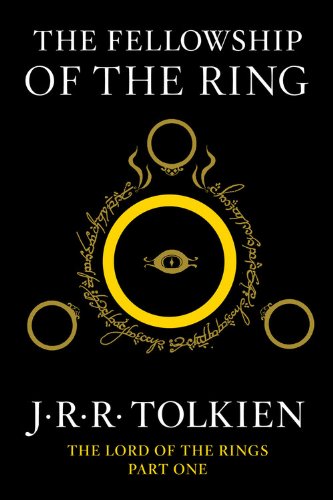
I'm so glad to be here. And I'm really excited about this topic, because it's something I spent a lot of time in grad school thinking about, how does art, story, beauty communicate, what is true, good, and beautiful, in a way that doesn't feel didactic, that isn't overbearing, doesn't stifle out the very enjoyment of the thing by drilling in a lesson into your mind. And so, I came across one of, an article in some of my research on this called Fantasy, Science Fiction, and the Teaching of Values. And in it, James Prothero said something that I think really encapsulates what we want to talk about here. He said, "We may learn of courage and perseverance from Tolkien's Frodo or Ursula Le Guin's Ged, but not in a lecture followed by a quiz." And I really love this because he's getting at something that's really easy to lose sight of, right?
(00:02:57):
Not all learning is quantifiable. Not all good education can be measured by a series of marks and bullet points and values. And so, it's not to say that those things don't matter or they don't have their place, because they certainly do. But rather that a holistic understanding of education really encompasses the whole of the human person as a relational and storied individual. And so, because of that, I really came to believe through my studies, that virtue and morality and character, it's not something that we have to figure out how to teach in just a way that's palatable but can really be delightful, enjoyable. And in that, the story doesn't have to include a lesson at the end, right? Where it outlines what has been explicitly and implicitly woven throughout the story in bullet point fashion, in order to have communicated those true, good and beautiful things still.
Sarah Mackenzie (00:03:51):
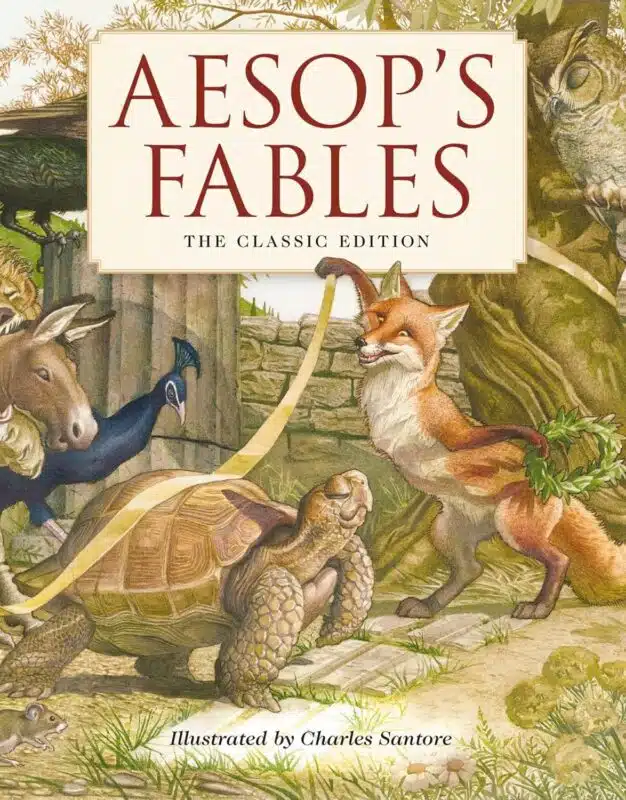
Yeah. And Aesop Fable does that, right? But we would be really turned off, I think, in our own reading lives, if we finished a really great novel and at the end it was like, "Nonetheless, the moral of the story is..." And also, a lot of times I think, the person who would be trying to say what this is what that story means, it's one option. It's one part of what it means, but there's a lot of different things that we encounter and take and expand on. And there's a lot of different ways that stories enrich our lives, and that can't be, like you said, quantified or measured in a specific way.
Audrey Menck (00:04:26):
Well, and I think something I, it's going off on a little bit of a tangent, but something that I thought a lot about and did some reading on too is parables in the gospel. Jesus is using story to teach the disciples. And what's so interesting is that, there is, there's very clearly a lesson, right? A parable is doing something different than your historical fiction novel or a picture book, right? So, it is doing something different. But in it, I love that in order to... I think he's using this format of story to teach and to share the beauty of it.
(00:04:59):
And he doesn't end it by being like, and so this is why you should treat other people with kindness. He doesn't end the story of the good Samaritan by saying, so, be kind to your neighbor, but it's very clear that that's what we're being called to do, and that's a different genre of writing. But I think that they're getting to see those different threads of like, we can use story in a lot of different ways, story can form and shape us in a lot of ways. And today we're going to talk a lot about fiction and about how those stories can communicate truth, but that's a side nod to the gospels.
Sarah Mackenzie (00:05:29):
Yeah, and actually just riffing on that idea of the Good Samaritan, because Jesus doesn't say, and the moral of the story or the lesson here is to be kind to your neighbor, we are actually invited to listen to that story and consider that we could be the person who was hurt. We could be any of the people that are passing by. We could be the good Samaritan. So, it invites us into a larger story because it's not reduced to a single lesson. I think it kind of drives back to something that I have a feeling is going to keep coming up today, which is like, we don't want to reduce a story into less than what it is. So, like what is a story for and what is this particular kind of story for, is an interesting question to play with. But I do think, the question of like, how can we use books to aid in our kids' formation, specifically their virtue formation, it's a good question because, when we ask that question, we're really recognizing the power that words and stories carry, right?
(00:06:30):
What I think we want to be careful not to do, is to think a story's purpose is reduced to teaching a lesson, because a story can do more than that. Related, is that a character's role, a character's purpose is not actually to serve as a role model for the reader. So, an author who's writing a story, is not thinking of their character like a role model for the reader and we would not have very good stories if they were written that way. We get into trouble, I think, when we look at books like the characters are supposed to be good role models for our kids, for our children who are reading them. We are supposed to be good role models for our children surely, and there is a place, of course, for an overt lesson. But a story is for something else. One of a story's jobs is to portray the experience of being human, with all of its strengths and weaknesses, right?
(00:07:20):
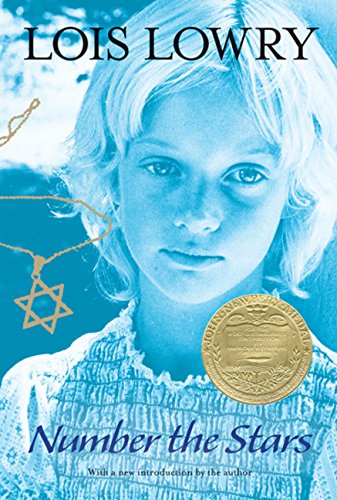
I would also argue that the purpose of a story is to help us love better, to love God better, even if God's never mentioned in the story, to love people better, regardless of whether or not it's a story that has a clear moral, right? Because we're inspired to do that not by reading stories of good role models who do the right thing or who do bad things and then have a negative consequence, but just by being invited to walk in the shoes of another person, of seeing the experience of being alive from the vantage point that we didn't have before, right? I don't know what it was like to be a Jewish child in Denmark in 1943, but when I'm reading a story, I'm invited to that experience. I don't know what it was like to live in the Great Depression and lose my father and my home and have to move out into the woods in a rundown shack, but a very particular story might invite me to do that, right?
(00:08:20):
I don't know what it's like to stand in this cold wintery mysterious world and stand next to this shining queen-like woman who's offering me a delectable dessert and comfort and warmth, when I'm feeling cold and alone and not appreciated, and to know what I would encounter in that moment. But a very particular story, you might know, might give me an idea of that, right? In that same article that you referenced, later in it, James Prothero says, he says, "We tend to teach just the facts, not the meaningful context, the web of truth in which they hang." And I love this idea that stories offer that web of truth, that meaningful context, which is why we don't need to worry about characters in the books. We're reading, always making virtuous choices, because again, a character's job is not to be the role model for the reader. The character's job is actually to serve the story, and the story's job is an invitation to view the world with fresh eyes.
Audrey Menck (00:09:25):
Well, and if I can interject quickly, Emily Stimpson Chapman just wrote a children's Bible called The Story of All Stories, with our friends over at Word On Fire and their children's publishing imprint. And I just love that because I think we're coming back to this storyteller God, right? Even in these stories where God isn't mentioned, that is getting back to the truth that we're deeply relational, that these stories have been written in our hearts from the very beginning and that I love that God loves words so much, that he gave us his Word, right? Capital W. And so, I think that, that phrase though, the story of all stories, just kept coming up for me as you were talking, because even when the stories necessarily aren't pointing back in a really clear way, they're still encompassed in that.
Sarah Mackenzie (00:10:13):
Yeah. I know we've talked on the podcast before about how stories offer us companionship. I think a lot of us have a memory as kids of reading a book and feeling like we were less alone because we were reading under the covers of the flashlight, right? Like, The Baby-Sitters Club are objectively not good books, guys, they're not. But I loved them and they served a very specific important role in my growing up reading life, right? So, books can offer us companionship. And we talked about it on a whole show, we'll put a link to that in the show notes. But they also offer us a perspective shift, like an invitation to understand the world differently, a different world than our own or from a different vantage point than our own.
(00:10:57):
Rudine Sims Bishop calls it, books being mirrors, that's when we see ourselves in a book, right? Windows, where we see someone else's life, and sliding glass doors, where we walk a mile in the shoes of someone else. So, the books then are mirrors and windows and sliding glass doors, whether the world that we're reading about is fictional or real, it's easier to see that the world is not as it should be, which I think we all know, but we can see it more clearly in a story than we can in real life. Also, I think just the mysterious quality of stories, they defy this desire we have to make everything objective or clear cut, which is slippery.
(00:11:38):
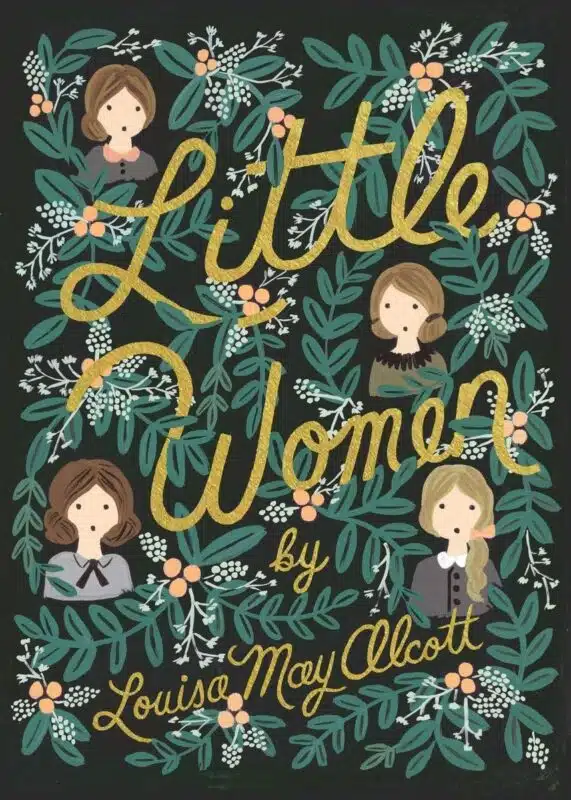
And I think it's why we get these questions, "Hey, Sarah, my kid is lying and I... Can you please make a book list and tell me the books that will help him understand he needs to stop lying? He needs to tell the truth." That objectively feels like a thing a mother wants for her child. And I would argue that yes, having a very clear objective conversation, didactic conversation about the importance of honesty is good. That's it. It's a both-and kind of a thing. You do need to do that. But good stories don't work on an objective level. They are by their nature, a subjective experience. Every author has their own lived experience that they're bringing and then every reader. So, you and I both can read Little Women and hear and see and experience it differently, because we are bringing all of our own experiences and perspectives to that reading experience. And that's what a story can do, it can meet you where you're at. Not tell you exactly what to think, but just invite you to look at something a little bit differently.
Audrey Menck (00:12:36):
In my time in grad school, academia, academics is very famous for their being open to many possibilities and liking to widen the conversation and make connections that you might have not otherwise made. And I was often bringing my grad class back to like, "Okay, but what is the facts? Can we talk about the true things?" Much to some professor's chagrin, but really who's to say. But I think there's totally space for that. I think what we're saying isn't really to the exclusion of the other, right? I mean, I remember being a little girl and lying to you about having doodled on your dresser and-
Sarah Mackenzie (00:13:16):
With a Sharpie, if I remember correctly.
Audrey Menck (00:13:18):
With a sharpie. I was quite [inaudible 00:13:20]. And so, I remember telling you I hadn't done it and we had a conversation about like, "Okay, well you have," because it was quite clear that I had. And this is why we should tell the truth and even when it's difficult. And so I think, of course, like you're saying, there's room for those conversations and this isn't to the peril or destruction of more formative moral formation. I think, it's sort of, I like to think of it as like, the pianist to the vocalist, right? It's like this accompaniment that enriches and inspires and encourages the ability to sing the notes, the ability to live a virtuous life, to have the accompaniment of the piano singing alongside you, like that's really what I think the characters can do, what stories can do for us.
Sarah Mackenzie (00:14:06):
I love that. I'm definitely not saying like, don't teach your child that they need to be honest. Audrey definitely was not telling me the truth when she said she didn't draw on my dresser, and so I needed to tackle that head on. Of course we want to teach that, 100%. It's just not how stories work. So, I think it's when we ask a story, we look to a story to do that objective didactic teaching that we get ourselves into a little bit of a... Well, a couple of things. We reduce stories to less than they are and we take some of the mystery out of them. I heard Andrew Peterson say this once. He actually heard someone else say it and neither of us have any idea where it originated, but it is this and I love it so much. "If you want a child to know the truth, tell him the truth. If you want a child to love the truth, tell him a story."
(00:14:57):
And I think what we're getting at here is that, a child whose mind is filled with stories, a variety of stories, is actually getting a lot of training and virtue by the nature of what a story is, even if that virtue is not called out or the book was not written for it, which is why I'm so opposed to making book-lists for specific virtues, because we want to teach our kids about that virtue and then we want to fill their mind with stories and good stories will teach, like invite readers into that. Going back to the James Prothero article, that web of truth, that meaningful context, it gives us, so it really widens the web and enriches the context. Which brings us to this moment that we know you're waiting for, which is specific books, because we [inaudible 00:15:48] talk about specific books.
Audrey Menck (00:15:49):
The very best part.
Sarah Mackenzie (00:15:50):
Always. I think it's really helpful to probably discuss what makes a story formative when it's not... I'm saying here that, we don't want to go out looking for a book to teach your child honesty. Teach your child about honesty and fill your children's lives with books and that's going to reinforce everything in a much deeper way. But if we're not looking for books to set out to teach a virtue overtly or directly, what are we looking for? How then like, how does a book form our kids in virtue, I should say. It brings up this thing, is that, one of the guiding questions, it's a guiding principle we use at Read-Aloud Revival when we select books around here, whether it's for a book list, whether it's for a family book club in premium. We are always asking this question, before we recommend a book at Read-Aloud Revival, we are asking, does this book leave the reader with a sense of hope?
(00:16:44):
There's a lot of other questions we think about when we're recommending books, but that's the biggie. That's the one that's like, we're non-negotiable on this. We are duty bound to tell children the truth and the truth is that we are a people of hope and every story should point toward hope. Now, let's get back to why this makes sense. So, if we're going to think about story structure, more or less in most every story, there's a main character who we think of as the hero or the heroine, right? And at the very beginning of the story, they need something and they want something and it's usually not the same thing. They often know what they want, but they don't always know what they need, and then something stands in the way of them getting what they want. So, they try a whole bunch of things and they fail a whole bunch of times again and again, that's the whole middle of the book.
(00:17:30):
And then around the three-quarter mark, about three quarters of the way in the book, we get to a point that we oftentimes in storytelling called the all is lost moment. And this is the moment that feels like there is no hope. It's that three-quarter mark is pivotal for the structure of a story. I never let my kids finish a book, like quit reading a book at the three-quarter, I never let them stop watching a movie at the three-quarter mark. Because, one of my kids, one of my younger kids will leave the movie almost every single time, at about the three-quarter mark, she'll like wander off and I'm like, "Oh no, you come back here." Because, you don't want to stop watching at that point, that's the hopeless moment in the story. For the story to work, it has to feel like all is lost.
(00:18:13):
Then the hero or heroine has to become who they need to be, that whole need thing that we've learned at the beginning, what do they need? They become who they need to be, in order to be the person that can get what they need and make the world a better place, not just for themselves, but also for everyone else. Now, I mean, I could sit here and talk about this all day. I can geek out on story structure, Audrey, the way that you can geek out on systematic theology or systematic pedagogy, but I'm going to try not to rabbit hole here. What I just described though, that's like the structure or the basis of most good stories. And for a story to tell us the truth, it has to leave us with hope, because the truth is that we are a people of hope.
(00:18:59):
So, when we read a story and it leaves us with hope, that is a story that is telling us the truth and that is a story that's inviting us to be formed by it. So, at Read-Aloud Revival, when we are choosing a book, it can be sad, lots of bad things can happen, characters can make poor choices and sometimes they even go unpunished for those poor choices, just like in life, right? All of that is part of good storytelling, all of that is true to our human experience, so it makes us feel seen, like those mirrors, windows and sliding glass doors. But the book has to end with a sense of hope, because we also believe in telling children the truth.
(00:19:38):
So, that idea of does this book, regardless of how far down it took you into sadness or grief or fear or whatever the hard emotions are in the book, does this book leave you as a reader with hope? And that one is non-negotiable, because like I said, we're duty bound to tell children the truth and the truth is that we're people of great hope.
Audrey Menck (00:20:01):
Yeah. And there's no resurrection without crucifixion, right? If it just ended at the crucifixion, what's the point of that? What is [inaudible 00:20:09]? It's suffering that's been redeemed for greater glory. And so, we see that. We want that theme to be pervasive. Yeah, I love that phrase, people of hope. And I also really like this because it's not a denial of suffering, right? There are very sweet and saccharin stories that are quite pleasant to read. And I think of course there's a certain level of like, of course that's so lovely, but if you know a book of impact, of meaning, when there's been some wrestling to overcome difficulties, overcome struggle, as hard as it is to watch characters that you love and care about suffer, but it's much like life, as hard as it is to watch your family and friends and people you love suffer. And I think that, it's the journey that really stirs something in us to take a reader through this story, that's really powerful.
Sarah Mackenzie (00:21:00):
Yeah. As you're talking, I'm thinking about how it goes back to that question of, what are stories for and then what is this particular story for? So, if stories in general are, and this is not a complete definition, but I'm just going to present a possibility here. If stories are an invitation into a more full human experience, so that we can love better... I might really like that. I'm going to have to sit with it and think about if I think that's exactly right, but then what are stories for? What is this particular story for? That's going to change and like you're saying, sometimes sweet saccharin stories, or like if you think about just something like light and beachy that you might want to read while you're sitting in the sand on the side of the lake, is different than if you're going to read like a classic, is different than if you're reading a poem, is different than if you're reading Lord of the Rings, and is different than if you're reading a comic.
(00:21:52):
All of them are inviting us into that human experience and can leave us a little bit differently than we were at the beginning of the book, but they do it differently because each book is for something different. And I really like this emphasis of like, there is no resurrection without crucifixion. There's also not a real experience in the book itself that we're reading, in the story that we're being invited into, if it's not a little jagged around the edges. And so, this is why we don't want the characters in the books to strictly be role models, like where things always go, like somebody makes a good choice and good things happen to them, somebody makes a bad choice, bad things happen to them. That's not true. That's actually just not true. That's not how it works. And also, that's not inspiring us to love God and love others better. It's got to be like, we're more multifaceted than that.
Audrey Menck (00:22:43):
Well, and this is reminding me of, a number of years ago, I was serving at a preschool in Jinja, Uganda on mission for a summer. And that summer, I was just devouring World War II novels. I mean, All The Light You Cannot See and all of these books that were really, really heavy. I remember we were calling one day and you were like, "Wow, that feels like a really heavy thing to read, as you're really experiencing a lot of suffering of the families that I was working with and the students that I was teaching." And I remember thinking, but it's different, right? It's a different kind of hard and suffering that I'm seeing. But I think, now that I'm reflecting on it, that same universal suffering and struggling, I think if I had just been reading stories that were just like an escape, it would have felt very disintegrated or like very foreign to my actual experience of like real life and I don't think I would have enjoyed them because I think it would have been like, but this isn't real life and this is... I think it might have been frustrating.
(00:23:40):
And so, I think even though it was a different kind of suffering, that stories can often bring us into suffering that we may never experience. Like you said earlier, we don't know what it's like to live in these different time periods and in different people groups and things like that. And so, I think that core of resilience and faith and even that title, All The Light We Cannot See, right? The light that is hidden in the darkness, that we're searching for. I felt that, even though I wasn't in World War II, in the midst of that, I was in my own form of seeing the suffering and the brokenness of the world.
Sarah Mackenzie (00:24:21):
There have been times where I've had the same experience, where something hard is happening in my life and I can read something hard that's very different. I've also had experiences where like I want to read nonfiction or memoirs about something that I'm going through, that's similar to what I'm going through. And I think that all goes back to that whole idea of Rudine Sims Bishop saying, Books are mirrors and windows and sliding glass doors and you don't always need all three. Sometimes you need one or the other. And our kids do too. And this is one of the beauties of reading aloud, is that you're reading aloud a book with let's say three different kids. Well, I'll give you an example. So, a good example of this recently is that, I read Number The Stars by Lois Lowry with your younger siblings, who are not super young anymore, they're 12, 12, and 14.
(00:25:02):
I've read this book multiple times. I read it aloud to you and the older siblings when you were younger and now I've read it to these younger ones. Now, I know that every time I read it, I'm a little bit different and I have a different experience of it. And I know that, when I read it to you and Alison and Drew, your experience was slightly different from each other's, because like I said before, every reader's coming to a story with their own experience, their own hardships, their own weaknesses, their own fears, their own hopes, their own dreams, their own experience, right? So, let's talk about this one. So, Number The Stars tells the story of a girl named Annemarie who lives in Denmark with her family during World War II. And her family becomes very involved with hiding Jewish families from the Nazis and Annemarie is actually called herself to exhibit just a tremendous amount of courage from very real danger.
(00:25:52):
Interestingly, the story never suggests that courage means being unafraid or that terrible things don't happen. It never sounds like it's preaching at you that you need to be courageous. It definitely doesn't preach at us that justice always prevails or that danger is not real or any of those things, right? Here's the deal though, cruelty doesn't have the last word. We watch some characters be more courageous than others and the story itself ends with hope. Does not end with a tidy bow and it definitely the whole way through, it didn't have characters who were placed, like who behaved flawlessly, but they were placed in like this meaningful context and then the story itself ends by leaving the reader with hope. And that kind of like, it's like an alchemy, it feels to me.
(00:26:42):
Which is why I think I resist so much, like a character in a book is supposed to be a role model or this book is going to teach your child to be more courageous. Yes, it will, but it's not just that. It's because it's like this... I love that like web of... What did James Prothero say?
Audrey Menck (00:27:00):
The web of truth.
Sarah Mackenzie (00:27:01):
The web of truth. Yeah. Meaningful context. It's like an alchemy because it feels like the sum is greater than its parts.
Audrey Menck (00:27:07):
Yeah. I think another thing that's interesting about books that are filled with hope, and you've touched on this already, is that the characters are imperfect and it is easy to think like, wait, but they're supposed to be good role models. And I think there's something about revealing the humanity of a character, that makes them more real to us, right? We know they aren't perfect, we know nobody in our lives is perfect. We know we're not perfect. And so, I think it can help us relate to and engage with characters when you can see like, oh look, like they are failing, they are making mistakes and a number of things can happen, right? You can see that and you can learn through their mistakes. You could see how they continue to get up and continue on, that they don't fall into despair, that they have failed or gone past the point of no return. There's a certain pervasive hope that persists in something like that.
(00:28:02):
And it just reminds me, Pope Francis has this quote, where he says that, "God never tires of forgiving us. We are the ones who tire of seeking his mercy." And so, I think we want characters who don't allow themselves to be defeated in the face of difficulty, even if that difficulty is within themselves, is in their own internal turmoil.
Sarah Mackenzie (00:28:25):
Yeah. And part of what you're describing, I think, because most stories are about a hero who's trying to overcome something to become who they need to be, you're bearing witness to fortitude again and again and again. Because the characters are going to try and fail, try and fail, try and fail, try and all is lost, now we really don't think it's, and then try and realize who they need to become, in order for this story to end.
Audrey Menck (00:28:50):
I'm going to put you on the spot. Can you give us an example of an all is lost moment and a story that maybe a lot of our listeners are familiar with?
Sarah Mackenzie (00:28:58):
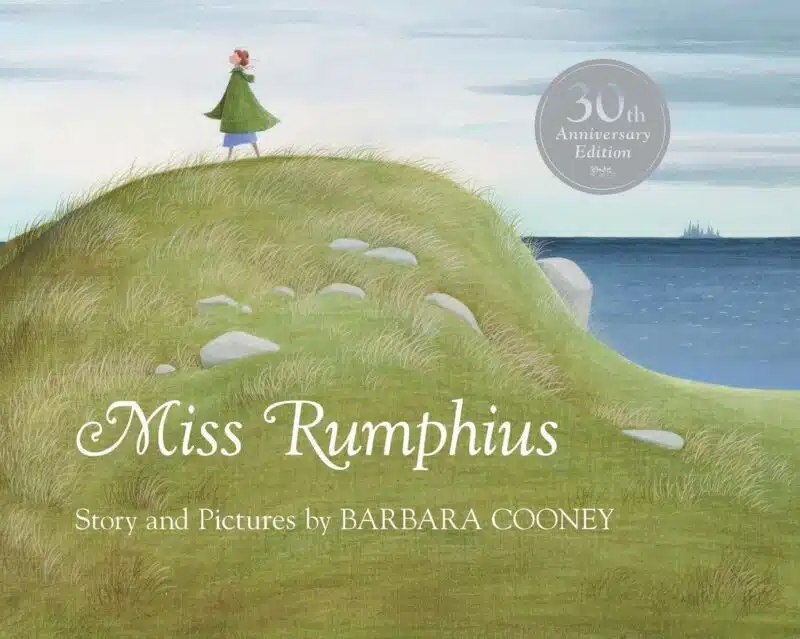
Okay. So yeah, let me think about this through the lens of one of my very all time favorite picture books. Okay. Miss Rumphius, I know, longtime listeners are like, Sarah. I love Miss Rumphius by Barbara Cooney. Miss Rumphius is basically this picture book about a girl who sits on her grandfather's knee at the beginning of the story and she says she wants to be just like him when she gets older. She wants to live by the sea and she wants to paint beautiful landscapes. And he tells her that she can do that, but there is something else she must do, something that only she can do to make the world a little more beautiful. And so, Ms. Rumphius grows up and she becomes a librarian and she travels all over the world. I think that's one of the things she said to her grandfather at the beginning, is she wanted to travel the world, paint and come home to live by the Salty Sea, I think, if I'm remembering correctly.
(00:29:54):
So then, she basically, she does all of these things, but you get to a point about three quarters of the way through the picture book, where she has fallen ill, she's gotten really sick. There's this picture of her laying in bed and she's looking out the window. And at this, moment you're like, I don't know, she's kind of old here. She still hasn't done that one thing. She's traveled the world and I don't think she's painted at this point, I can't remember. But she lives by the salty sea, but she's not done that thing to make the world a little more beautiful. And then she does, because she ends up being able to make the world more beautiful right where she's at by planting lupines all over. They just, lupine flowers blooming everywhere.
(00:30:35):
Now, that's kind of a really simple example. Ms. Rumphius never gets to an all is lost, where you think like we're not going to get out of this alive. A lot of novels are going to, your all is lost moment is going to be a life or death situation. You're talking about Lion, the Witch and the Wardrobe, and Aslan is... Well, actually, the all is lost moment is not Aslan dead on the stone table, it's later. I don't want to get off on too long. We could just talk about that. Again, I can geek out about story structure all day long, but let me just stick with the Miss Rumphius example, even though it's not like life or death. The character wants something, she needs something and she is trying things to get it. She has to be transformed in order to do this thing that she sets out to do. If we were looking for Ms. Rumphius to be a good role model, we might get a little uncomfortable if she was to fail.
(00:31:28):
Think about the stories that your kids are reading. If the kids were always behaving well in the stories that your kids are reading, then they don't seem very realistic, first of all, because your kids don't always behave well, I bet. Mine don't anyway. I'll just talk about mine.
Audrey Menck (00:31:41):
I do, but the other ones.
Sarah Mackenzie (00:31:45):
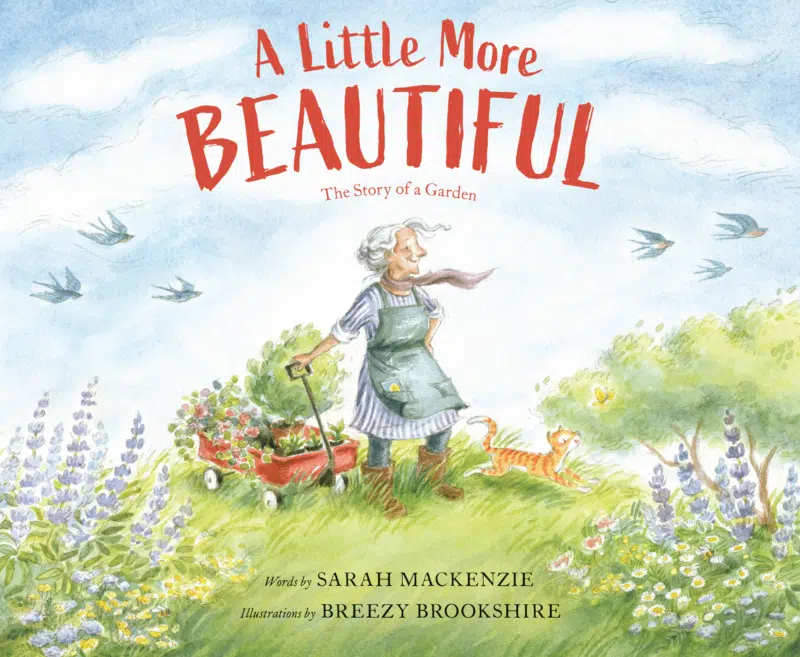
Spoken like a firstborn, let me tell you. But also because we have to watch them fail. If we don't watch them fail, then we're not rooting them on. There's nothing to cheer on and it's not a story about the human experience. Right? And so, that is the really important piece I think here is that, there is failure and grittiness in... Not in every single book. Miss Rumphius might not be the best example of this, because Ms. Rumphius, it's not like she does anything and fails. She got sick. Similarly, I wrote my very first picture book, is called A Little More Beautiful: The Story of a Garden, and it is just an homage to Miss Rumphius. I mean, we didn't hide it, we put that on display. So, let me tell you about it. So, we set Lou Alice, a little old woman, in a town, where she is making that town more beautiful day by day, but nobody really notices her.
(00:32:39):
She's tending to plants, she's feeding a cat. She's actually treated by the townspeople like more of a problem, like a burden maybe, than somebody who's contributing to the town. She asks at the town hall if she can plant a garden and the leader basically says like, "No, go home, Lou Alice." Basically, "Get out of the way, you're in the way. Let us handle it." And then one day, she is taken to a nursing home because she can no longer care for herself and only one little girl notices. And she not only takes on the work that Lou Alice was doing by planting and taking care of the gardens and the cat, which is sort of an idiom, I guess, for putting on the mantle, taking up the work of those who've gone before, carrying on their work. But also she knows that there's something else she has to do.
(00:33:33):
There's a spread in that book where she's standing on the hillside. This spread is the Miss Rumphius spread. So, if you have the book at home and you have Ms. Rumphius, compare them, because it'll be like, ooh, magic, it's so fun. It's what I call Miss Rumphius spread, and it's the little girl standing on top of the hill and the wind is blowing her hair back and basically she just knows there's something else that she can do, but she doesn't know what it could possibly be.
(00:33:57):
There's not like a sentence in the book that says like, This is why you should notice the contributions of old people who've gone before you, or you have a unique purpose... the moral of this story is that you have a unique purpose in the world and you need to figure out what it is, how can you make the world more beautiful. Right? Instead, the story just invites you into the experience of watching somebody else, watching a human struggle through those things herself. And just like in Ms. Rumphius, we're watching a human wrestle with the same things herself.
(00:34:28):
And then you might be invited to notice the trash collectors who are picking up your curbside garbage or the older woman at your church who changes out the flowers in the sanctuary or at the altar, right? Because something inside of you might have been sparked by that spread when the girl's standing on that hill, when she's trying to figure out what she can do to make the world a little more beautiful, it's an invitation, it's not a sermon. I think that's what the all is lost moment and then leaving the reader with hope, that's what a story does. It's about an invitation into something bigger, than a didactic lesson.
Audrey Menck (00:35:03):
Yeah. And good stories make what is good and true, something that is desirable, something that we want. They depict goodness as beautiful, right?
Sarah Mackenzie (00:35:14):
Even if you were to read a dystopian classic, these are not my favorite and they're not on our Read-Aloud Revival list, for a reason. They don't really leave the reader with hope. But actually the lack of goodness in these worlds that you're reading, they actually call out in you, like you're able to see goodness for what it is and that desire. Like you said, like ordering our affections to want to do right, to want what's beautiful, to love what is lovely, is made clear to us when we see this objectively awful, ugly world depicted in this story.
Audrey Menck (00:35:50):
Yeah. It's via negativa, right? It's the way of negation. It's sort of teaching the truth, teaching things by showing what the lack of it looks like. Right?
Sarah Mackenzie (00:36:01):
Yeah, yeah, yeah.
Audrey Menck (00:36:02):
You see the goodness and the beauty of life, because we experienced death. I mean, C.S. Lewis has that fantastic quote where he says, I'm going to paraphrase, but sort of that idea of like, "If you can't taste sorrow, you can't taste joy," right? That's the fullness of the human experience.
Sarah Mackenzie (00:36:21):
I think it's really easy for us, as a mom, I know this is true for me. It's really easy to get caught up in the results of how we want our kids to turn out. We want our kids to love God, we want them to love others, we want them to live full, meaningful lives and we want them to leave this world more beautiful than they found it, right? But it's also really important for us to remember that people aren't equations. It's not like we can put in lessons of morality and virtue and know that the answer's always going to add up to the same thing, like two plus two is four, right? Our kids are not a pie. It's not like if you follow the recipe, you're going to get that same specific results.
(00:37:03):
And it's kind of what we've been saying about stories, is they're bigger than that. They can't be contained by something quantifiable. They're doing some work on you as the reader and your children as readers, that is impossible to measure and it's impossible to predict. And that's really beautiful. That's part of why they're so powerful. And then in the same way our kids, it's humanity, it's loving people, it's a relationship. We want things to be simpler than they are, but people are very rarely all bad or all good, right? We're like whole comprehensive beings who, like we touched on a moment ago, make mistakes, are in need of God's mercy. And so, then a story's job is not to teach a virtue like a math lesson. Thank goodness. A good story is an invitation into a meaningful experience, in a world where we are beloved, where every human is clothed in dignity, and where things are not as they ought to be, but hope wins. That's what stories are.
Audrey Menck (00:38:07):
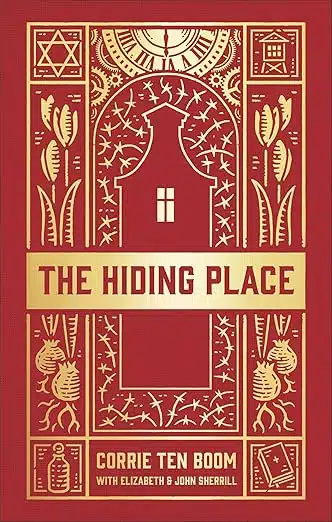
Yeah. Makes me think of Corrie Ten Boom's The Hiding Place, which is of course based on her life, right? And how many moments the Ten Booms were in absolute disbelief, that things could just ever change for them. They had no control over the outcomes of their own lives, right? They had no idea they were going to walk out of the occupation, the Nazi occupation, with the lives of not only the people that they love, but their very own. And so, it's interesting because as you read that book, that feels like a story that's infused with hope to me, despite all that they walk through, despite the deep suffering and darkness and yeah, just the depths to which they have to traverse through, right? God is always with them and he's faithful, even in the heartbreak and the loss and the suffering, he's with them, just like he promised. And it was just one step in front of another at a time, one at a time.
Sarah Mackenzie (00:39:07):
It's a good example of like a book that broadens your horizons, because we will never have, thank God we will never have the experience that Corrie Ten Boom have. We will never have to live that. Reading her book then broadens our horizons, so that we can see the world with fresh eyes. I was going to mention, we just recently did a podcast, you and I, on how books have the capacity to take us places. They also have the capacity to broaden our world, right?
Audrey Menck (00:39:33):
Yeah.
Sarah Mackenzie (00:39:33):
Because every time we're reading a story, we're reading about people who live different lives than we do. So, it's broadening our world, we're walking a mile in the shoes of another, over and over and over again. And how does it work then if you are constantly, your horizons are being broadened again and again and again, that you wouldn't see the world around you and see the people around you differently than you did before you were reading, right?
(00:39:56):
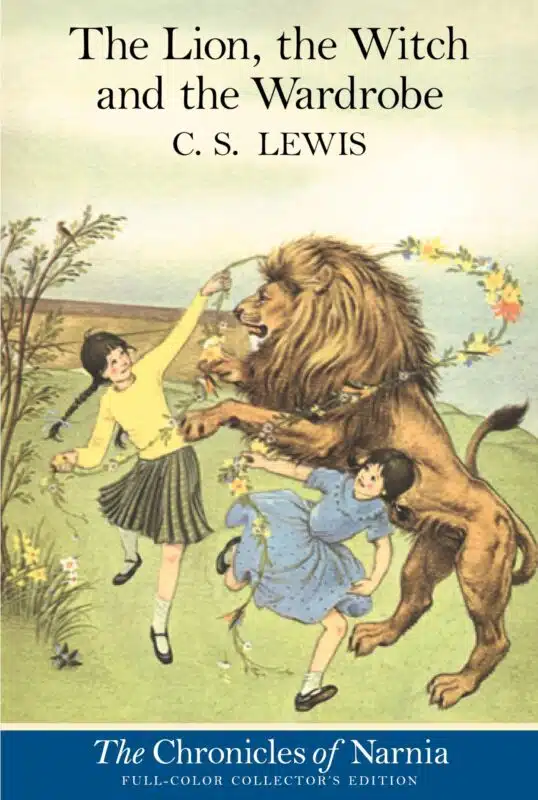
So again, it's not about like, we put in this book and out comes this virtue. It's not like you're going to sit down and read The Lion, The witch and the Wardrobe, and your children are going to hop up and be more virtuous. That's not how it works. It's like nourishing the soil that your plant is growing in and you can't necessarily know which books are going to have more profound effect, but making sure that our kids' childhoods are richly storied, is a really good way to help them grow and be formed.
Audrey Menck (00:40:35):
Okay. Let's give a few more recommendations of books that have really formed and shaped us throughout the years.
Sarah Mackenzie (00:40:41):
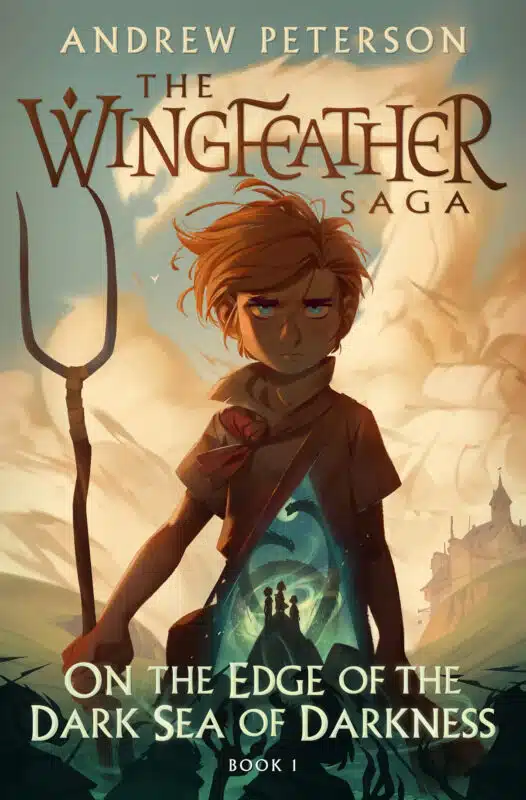
Okay. So, I told this story in the Read-Aloud family, I'll just mention it briefly here, but we loved The Wingfeather Saga by Andrew Peterson. He's the one I mentioned before with the great quote that he heard somewhere else. But he is a musician and an author, and in the Wingfeather saga, this story I just think is funny because it also reminds me of how much stories can help us with a little levity, because parenting is really exhausting and it's like the most important thing to us as parents. We want to do this well and so it feels very heavy. And so, this was like a good moment where the book offered some levity in an otherwise very exhausting moment. But basically in the Wingfeather Saga, there are these critters called thwaps that basically steal from the garden, like ruin a garden and steal from the garden. And that's all you really need to know for this particular story.
(00:41:31):
Drew, at the time, he must have been something like six or something, had run into, or he had been sneaking into your room, the room you shared with your sister. And you both came down, both of you girls came down and were like, "Mom, Drew's been sneaking in our room again." And I just happened to see a copy of, On The Edge of the Dark Sea of Darkness, the first Wingfeather book on the counter. And I looked at Drew, because we're halfway through reading this book aloud and I said, "Drew, don't be a thwap."
(00:42:00):
That's all I had to say. Everyone burst out laughing, me, you, your sister, Drew, because a thwap, we all knew, was like somebody who went where they didn't belong and were a pest and they were obnoxious. And so, instead of getting into like a whole lecture, where I was telling him, You can't sneak into your sister's room and you shouldn't go in places where you don't belong and blah, blah, blah. I just said, "Don't be a thwap." And it's not that he never did it again, but I'm saying like, that was kind of a book that had a lot of funny things that we could contextualize into our lives and make part of how we talked about making better decisions or-
Audrey Menck (00:42:38):
Totally.
Sarah Mackenzie (00:42:39):
Yeah.
Audrey Menck (00:42:40):
That's so great.
Sarah Mackenzie (00:42:41):
What about you? What comes up for you?
Audrey Menck (00:42:43):
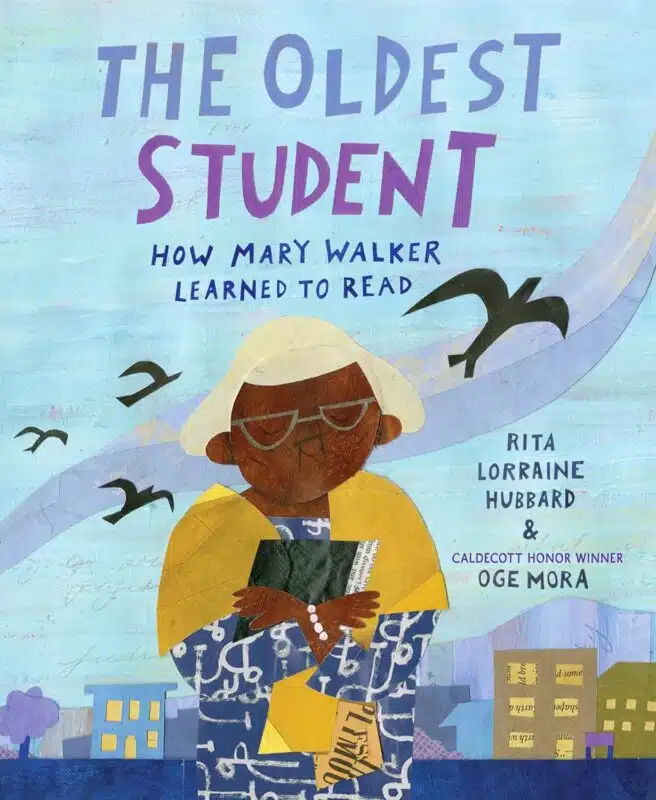
Yeah. Well, I kind of was thinking about this even in a picture book direction. One of the books we've selected for a previous family book club and RAR Premium is The Oldest Student by Rita Lorraine Hubbard. And it tells a story of Mary Walker, who is this woman who's born into slavery in the American South. And when she was a teenager, she was freed and she lived her life, she was married, she had children, she worked a lot of different jobs and she never learned to read. Because she was never offered education, she didn't have the opportunity to be educated. And so, it tells a story of how she came to learn to read at the age of 116, which is amazing to me.
Sarah Mackenzie (00:43:22):
It's amazing.
Audrey Menck (00:43:24):
Yeah. I just think, even stories... I love this. I mean, it's based on a true story that's already so inspiring, but again, it's a perspective that none of us are going to have. That story isn't going to reflect-
Sarah Mackenzie (00:43:35):
Our own experience.
Audrey Menck (00:43:36):
Yeah, our own experience. But what a great lesson in perseverance and persistence, that it's never too late and you're never too old and to try new things even, like to put yourself out there. I think that's something a lot of us struggle with. We want to do things we're good at. And I would imagine, after living a very long and fruitful life, that you certainly wouldn't want to do something so brand new and [inaudible 00:44:01]
Sarah Mackenzie (00:44:02):
How many of us, even like in our 40s, just saying, will think to ourselves like, I'm too old to start doing that, I've never done that before, am I too old to... Or like at any point and then you read a story like about Grandma Moses or Mary Walker and you're like, You know what? You're not too old to start, actually. That is definitely, you're not too old. And that's really inspiring. So, that's the kind of stuff that I think makes you go, it broadens your horizons, because you're seeing like, wait a second, it's really easy for us to get kind of myopic and just think our own experience is the only... Like, this is where, I don't know, it needs to be broadened, it has to be broadened. Stories do that. I love that. I love that particular picture book so much.
(00:44:40):
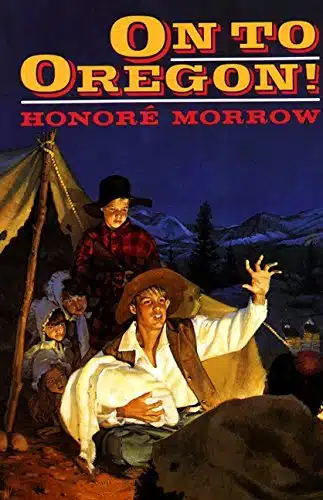
One of them that comes to mind for me, as far as like inspiring... And I won't pretend like I didn't read this book hoping that it would rub off on a particular child of mine, not you. You know it. Because it's called... I hesitate to recommend it, only because it's out of print. And so, we try not to do that around here, because so many of you listening are going to go try and get it. It's a great book though, if you ever find it on the shelves. It is called On to Oregon! By Honore Morrow, and it tells this story, it's a fictionalized version. I think it's a fictionalized story of like the Stout-Hearted Seven. Some of you listening may be familiar with that one. Basically, of this family of, I think it was seven kids, I'm pretty sure it was seven kids, who were orphaned on the Oregon Trail very early on.
(00:45:21):
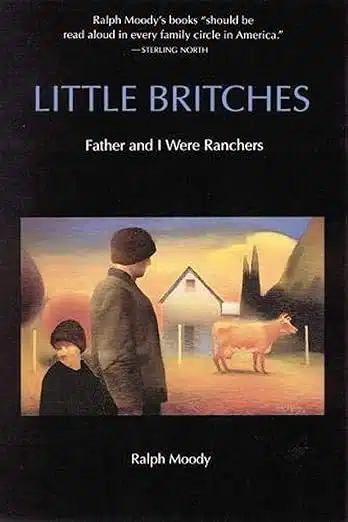
Anyway, in On to Oregon!, the very beginning of this fictionalized version of a true story, the oldest boy is... Drew's going right under the bus today. Is just selfish and obnoxious, he's not helpful to his family. He's rude to his mother. I mean, you just don't like him at all at the beginning of the story. Then, this is not a spoiler, it's the whole premise of the book, but they're orphaned and he really has to step up and become the man of the family, to get his family safely on their journey. And watching him become a man in that book, I think is... It's an experience that I think a lot of people have when they read Little Britches. That's not my favorite series, I found it a little boring, but I know we have a lot of listeners who just love that book series, for the same reason.
(00:46:08):
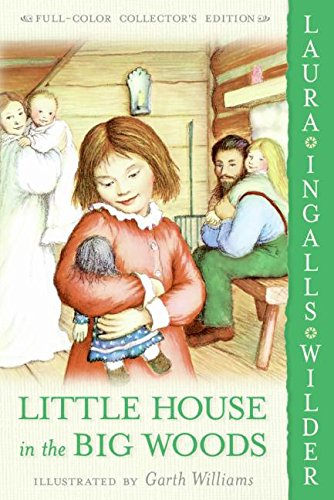
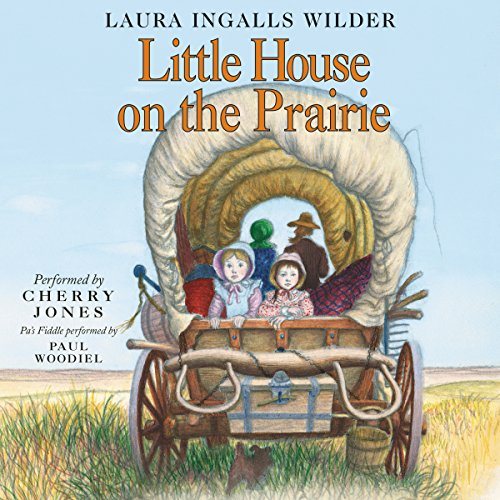
You're watching a young man come into manhood and it's really inspiring. And I will admit, when I read it, I was hoping it would rub off on your father. And it did, he's become a nice young gentleman and I'm quite sure it's because we read On to Oregon!, when he was nine. Anyway, another one that does the same kind of idea, has the same kind of like, it just brings up the same thing in me, is just the entire Little House on the Prairie, book series. And I know we've told this story on the podcast before, but I'm going to say it again. There is that part and I think it's in Little House in the Big Woods, although it might be in Little House on the Prairie, where Laura, does she smack a bear? I'm getting this story mixed up in my head. She's like outside.
(00:46:53):
I think she smacks a bear on the face. I can't remember exactly what happens and our listeners are like shouting out at me right now what happens in this story, and I love you all for it so much. Anyway, Laura's mom says to her like, "Laura, get inside." And she does. She instantly runs inside. I've listened to this audiobook a million times and every time I've thought not one of my six children would listen to me that quickly. I wish I could be more like Ma, that I had taught that, so that when my kids heard me say, Laura, get inside, they would just go.
Audrey Menck (00:47:24):
Wouldn't get eaten by a bear.
Sarah Mackenzie (00:47:25):
Exactly. Well, fast-forward to a couple of years ago when we were at Glacier National Park and we had our own little bear encounter. Not we.
Audrey Menck (00:47:35):
We did.
Sarah Mackenzie (00:47:35):
Not you and me. You and your younger sister. You should probably tell the story.
Audrey Menck (00:47:41):
Yeah. We were hiking along, some of the kids were running ahead and so I think you told me to run up and catch up with them in the case that there was a bear or something, which I probably just laughed at you for and then continued on. And then we turned the corner and sure enough there was a mama bear, but we didn't know she was mama bear yet. She was sitting there, she's eating some beers. And Clara thankfully had turned around just in time to tell me something. So, she actually didn't see the bear, which I think was good, for screaming purposes. And in my head I'm thinking, like going into full big sister mode like, Okay, I got to get myself in between this little girl and this bear, somehow this has to happen. And so, I just looked at her and I was like, it must have been the way my eyes just got really big, but I was like, "You're going to need to come to me really slowly right now." She was like, "Oh." And then she just slowly walked towards me and I like stuck her behind me.
Sarah Mackenzie (00:48:40):
She did. She did exactly what Laura did.
Audrey Menck (00:48:41):
And we like scooched around the corner. She did. She truly did. We scooched around the corner and then we just in time to see the mama bear hop up off the path with her two baby cubs and go on their merry way and we got to point them out to all the other hikers, who thought this was very exciting. And my heart is like beating really fast and I have the bear spray out just in case.
Sarah Mackenzie (00:49:04):
But, I'm telling you, I was like, after I calmed down when you told me this story, because I'm not the most calm person in an emergency, just being real here. It was probably good that it wasn't me, it was you. But I will say, I was like, Oh my gosh, I thought all this time, my children would never. And they did. So, we had our own Laura moment and I felt like Ma was patting me on the head like, "Good job. You did it. You did read the kid who listened, right? When you said, Laura, get in the house."
(00:49:33):
Anyway, the Little House series is just full of like there's so many moments in that story that are inspiring or stick with you or that you can refer back to in your family life when something hard is happening. So, I would say, if you are listening to this podcast and you have not listened to the audiobooks, the Little House audiobooks, they're narrated by Cherry Jones, who's a famous actress. I don't like reading them aloud, which I don't know if I'm allowed to say on this podcast, but it's mine, so I'm going to... I'm not a fan of reading the Little House books aloud, because I feel like some of those paragraphs feel like reading about Noah's Arc's dimensions, like, and then he brought a piece of wood that was this long and this wide, and I'm like.
Audrey Menck (00:50:15):
All the [inaudible 00:50:15].
Sarah Mackenzie (00:50:16):
Well, yeah. But do you know what Cherry Jones does it amazingly on the audiobooks and it's quite riveting. So, highly recommend as a great, especially like if you're on a road trip or if you need kids quiet in the car, just flip on the next one and they're so great.
Audrey Menck (00:50:32):
So good. Yeah.
Sarah Mackenzie (00:50:36):
Any other picture books you can think of that...
Audrey Menck (00:50:37):
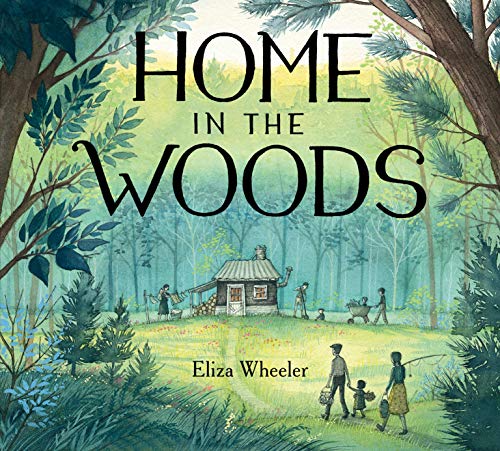
Oh, yeah. I think Eliza Wheeler's Home in the Woods is a great example of this. It's a story of a family who, in the Great Depression, they lose their home and they have to go sort of camp in the woods, make a home in the middle of the woods and they've lost their father. And so, this family's clearly known a lot of suffering, a lot of loss. And yet it still feels like a very joyful story to me, it still feels very like filled with like the childlike imagination that like maybe only you could see living in the woods with your family, through like, the lens through which it's told is really lovely, even though it's certainly not diminishing the sadness of the tale and the gravity of what this family's lost and it acknowledges that.
(00:51:27):
I think that story really illustrates maybe what change and loss does in childhood, and how their mother just really persevered and carried the family through this difficult time, is really powerful too. And so, especially really I think good for building family connections and relationships and it feels very clear that that family is a little team, you know?
Sarah Mackenzie (00:51:52):
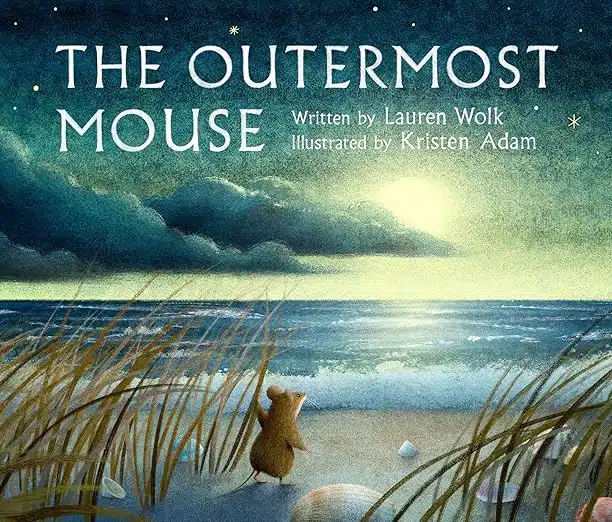
Yeah. And so resilient, makes you like want to be that kind of resilient. It's very inspiring as a mother. I think reading that picture book is one of my all time favorites. I have a print of it in my bedroom, I love it so much. Another picture book, which I actually happen to have right here, it's brand new, it just came out, it's called The Outermost Mouse. We'll put this in the show notes. It's written by Lauren Wolk, illustrated by Kristen Adam and it's like one of my new very favorite picture books. I cannot stop talking about it. Basically, we start the book and there's this mouse who lives by the sea in this house that she loves, where the wind is her pantry, so adorable, right?
(00:52:33):
She loves where she lives, she loves everything about it, except that the tide's coming in, basically a storm is coming and it's getting closer and closer and it's making her very nervous. So, this is where she's like, what does she want? She wants to protect her home, right? What does she need? I'm going to say like, you wouldn't know this until after you'd read it, but I would say like, what you're going to find out in this story is that, what she wants is her home. What she needs, is to know that her home is wherever she is. Okay, let's just go with that. Okay. So, here comes the storm and she is going to try to stop the storm by piling up sand. I can't, she's the fuzziest little mouse.
Audrey Menck (00:53:08):
So sweet.
Sarah Mackenzie (00:53:08):
Yeah. She's working really hard to stop the storm from like overcoming, because she knows that she wants this home, right? But then what happens in the all is lost moment, I'm going to spoil it for you, because you're going to go get this book anyway because it's so good, you guys. It is so good. Okay. So, what happens is, the storm comes anyway and it carries away the home, right? It carries away her home and she's just devastated and you're like, this poor mouse, all she wanted was her home and she just lost it. Now you might think that a mouse tiny enough to fit into a teacup, would quake and wail in the white wildness of the waves. You might think that her tears would blind her, her fears engulf her, that she would be too small to survive what had come. But you know our mouse better than that. You know she was smart and strong, brave enough to lash her tail to a spindle and ride that house like a sailing ship.
(00:54:06):
I can't, you guys, I'm kind of obsessed with this book. And she becomes exactly who she needs to be, a mouse that can ride the waves and make her home wherever she finds herself. I love it so much on so many different levels, but this is like what we're talking about with a story, like the alchemy of what it does and the inspirational, the way it's forming virtue in us, without us knowing it. And it's doing it like through the alchemy of story instead of through a lesson. And so, yes, it's good to teach our kids lessons and when we fill our kids' minds and childhoods with stories, we're giving them like this rich tapestry of formation to carry them. Okay. We can stop talking about The Outermost Mouse for now. I'll put it in the show notes. You're welcome.
Audrey Menck (00:54:55):
Well, friends, I don't think it would quite be a true Audrey and Sarah episode if I didn't quote Tolkien's On Fairy-Stories at least once. I've been resisting the urge. Quite valiantly, I might not. So, in keeping with my streak, I think I'm going to close this with this quote, which I think just sums up what we've been talking about so beautifully. So, this is from J. R. R Tolkien's On Fairy-Stories. "Children are meant to grow up, not to lose innocence and wonder, but to proceed on the appointed journey. That journey upon which it is certainly not better to travel hopefully than to arrive, though we must travel hopefully if we are to arrive. But it is one of the lessons of fairy-stories. If we can speak on the lessons of things that do not lecture, that on callow, lumpish and selfish youth, peril, sorrow, and even the shadow of death can bestow dignity and even sometimes wisdom."
Sarah Mackenzie (00:55:53):
That we must travel hopefully, if we are to arrive. Yes. I hope this episode has been an invitation to read stories with our kids and fill the bookshelves, fill our homes with books, because they do inspire virtue. They do form, us and our kids to love what is lovely and good and right, to see the good and the beautiful, right? We don't need a list of books that teach honesty or courage or fortitude. We need to have those conversations with our kids and then fill their childhood with the richness of stories and that will invite them to be formed by those very virtues, in this really delightful, meaningful way. Love it so much.
(00:56:38):
Listen, we're going to wrap up for today, but if there are more topics that you would like Audrey and I to discuss on the show, we would love to hear them. We'd love to hear what you want to hear about. Tell us what you'd like us to record episodes on. Just feel free to drop them in comments or you can send them to us at support@readaloudrevival.com and we'll get them that way and we will plan our podcasts based on what you most want to hear. For now, I think we should go hear from the kids about the books they're loving lately.
Speaker 3 (00:57:07):
All right. What's your name?
Juniper (00:57:08):
Juniper.
Speaker 3 (00:57:11):
Juniper. And how old are you?
Juniper (00:57:14):
Five.
Speaker 3 (00:57:15):
Where do you live?
Juniper (00:57:16):
Mississippi.
Speaker 3 (00:57:19):
In Mississippi. And what is your favorite book?
Juniper (00:57:25):
The Lion, The Witch and the Wardrobe.
Speaker 3 (00:57:28):
The Lion, The Witch and the Wardrobe. And what do you love in this book?
Juniper (00:57:30):
Because they had the wolf chasing the children.
Speaker 3 (00:57:34):
You like the part where the wolf is chasing the children? And why should other people read this book?
Juniper (00:57:40):
Because it's good.
Speaker 3 (00:57:42):
It's really good. Good job.
Speaker 5 (00:57:46):
What's your name?
Gemma (00:57:46):
[inaudible 00:57:47].
Speaker 5 (00:57:48):
Say it loud, Gemma.
Gemma (00:57:49):
[inaudible 00:57:50]
Speaker 5 (00:57:51):
And how old are you? How old are you? Two. Say two. Just say it loud.
Gemma (00:57:58):
Two.
Speaker 5 (00:58:02):
Okay. What's your favorite book?
Gemma (00:58:03):
Ballerina.
Speaker 5 (00:58:07):
Ballerina Swan Lake?
Gemma (00:58:08):
Ballerina Swan Lake.
Speaker 5 (00:58:14):
And do you like it because of all the pretty dresses and the owl man?
Gemma (00:58:20):
Yeah.
Speaker 5 (00:58:20):
Okay. Say bye.
Gemma (00:58:20):
Bye.
Speaker 5 (00:58:21):
Oh, we forgot to say. Where are you from? Indiana.
Speaker 3 (00:58:30):
All right. What's your name?
Henry (00:58:30):
Henry.
Speaker 3 (00:58:32):
Henry. How old are you?
Henry (00:58:33):
Three.
Speaker 3 (00:58:35):
Three. And where do you live?
Henry (00:58:37):
In Mississippi.
Speaker 3 (00:58:39):
In Mississippi. What is your favorite book?
Henry (00:58:41):
[inaudible 00:58:41] I am.
Speaker 3 (00:58:41):
Green Eggs and Ham, with Sam-I-Am. Why is that your favorite book?
Henry (00:58:47):
[inaudible 00:58:47] eat ham and an egg.
Speaker 3 (00:58:48):
You like the part at the end where he eats the ham and the eggs. Good.
Bonnie (00:59:03):
Hi, my name is Bonnie. I live in Virginia. I'm 14 years old. And one of my favorite books is the Boxcar Children by Gertrude Chandler Warner, and I like it because it's a fun [inaudible 00:59:12].
Harold (00:59:13):
Hi, I'm Harold and I live in Virginia and I'm nine and I like Dog Man: Mothering Heights, because it's so fun.
Sarah Mackenzie (00:59:27):
Thank you so very much, kids. Goodness, I hope you love this episode as much as Audrey and I enjoyed recording it. The show notes for this episode are at readaloudrevival.com/283. We'll put all the books that we talked about and all the things we referenced, so many things today. We'll put them all in the show notes. So, readaloudrevival.com/283 and I'll be back in two weeks with another episode, but in the meantime, you know what to do. Go make meaningful and lasting connections with your kids through books.
Audrey Menck (00:59:57):
Via negativa, as they say, the way of negation, right?
Sarah Mackenzie (01:00:29):
Okay.
Audrey Menck (01:00:29):
It's like seeing things...
Sarah Mackenzie (01:00:32):
I thought you were using... I thought it was like a salsa dance. Okay, sorry we have to go back. Via negativa, it sounds like. Okay. Cut that, Tara.
Speaker 10 (01:00:43):
I think you should keep it.