Sarah Mackenzie (00:00):
If I asked you, “How tranquil is your life?” You would probably either bust out laughing or you would look at me like I was from another planet. Listen, I get it. Today, I’ve got a guest here at the Read Aloud Revival who is a mother of five. She’s a beloved author and she’s going to help us consider how we can have tranquility by Tuesday.
(00:38):
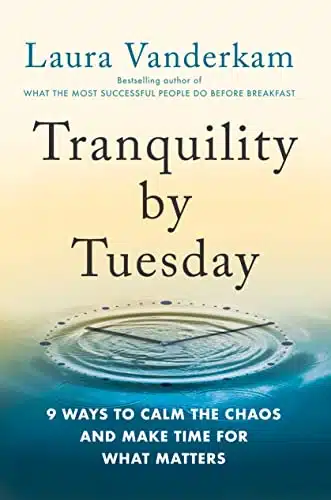
Welcome to the Read Aloud Revival Podcast. I’m your host, Sarah McKenzie and today I am just absolutely thrilled to share one of my favorite nonfiction authors with you. Her name is Laura Vanderkam. Laura is the author of several time management and productivity books. Her book, Tranquility by Tuesday: 9 Ways to Calm the Chaos and Make Time for What Matters is one of my all time favorites. It’s one of my tippy top recommendations. So in this book, Laura suggests that to have real tranquility, real peace in our very unpredictable, very abundant lives, we need a schedule that’s resilient, not a perfect schedule, a resilient schedule. And then she helps us create that by equipping us with nine rules for calming the chaos, enjoying our lives more, and wasting less time. And this helps us live more free, sustainable, and joyful lives.
(01:39):
Now, Laura’s appeared on numerous television programs like the Today Show, CBS This Morning, hundreds of radio segments, and she’s spoken about time and productivity to audiences of all sizes all over. She lives outside Philadelphia with her husband and her five children, and I’m so excited to share this conversation with you today about how we can have tranquility by Tuesday.
(02:02):
Well, Laura, welcome to the Read Aloud Revival. I’m just delighted that you’re here.
Laura Vanderkam (02:12):
Thank you so much for having me. I’m excited to be here.
Sarah Mackenzie (02:14):
Yeah. Okay. So I am a fan of so many of your books. My favorite so far is Tranquility By Tuesday. I also love 168 Hours: You Have More Time Than You Think. And that’s going to be something I want to chat with you about because I think so often in our lives, especially for the listeners to this podcast, we actually feel like we don’t have as much time as we need just to do the things that we need to do. And the idea of peace or tranquility can feel really elusive, if not impossible. And I know that so many of us feel like, “Oh, that’s what I want.” I mean, that title alone, Tranquility by Tuesday. Yes, please. I need the tranquility. And if you get it to me at any point, let alone Tuesday, that’d be amazing. And so I just wonder where this came from. Where did your desire to write about this come from?
Laura Vanderkam (03:02):
Well, I’ve been writing about time management for a great many years. It’s really my favorite topic. I love the idea of people taking this resource that we all have when we all have 24 hours in a day and 168 hours in a week and building the lives we want in the hours that we have. And so I’m so excited about talking with people who are doing a lot of amazing things at their lives, figuring out exactly how their schedules work. But I’ve been doing this for a great many years and giving people advice about their schedules. And I realized I was saying the same things over and over again, that people’s lives are very different, but I was often giving versions of the same advice.
(03:44):
And so for Tranquility by Tuesday, I decided to hone my time management advice down to my nine favorite rules. My nine favorite rules that I think can help just about anyone feel better about their time. Sure, I’m a fan of people being productive, getting stuff done, but I also want people to enjoy their time. And that’s what those nine rules and Tranquility by Tuesday are aimed at doing.
Sarah Mackenzie (04:08):
Yeah. Yeah. I love it. It’s not just about how to get more done. I love your focus in Tranquility by Tuesday on more about having a resilient schedule than a perfect schedule. A lot of our listeners have a lot of children. I have six, you have five, so we know what this is like juggling, whether we’re homeschooling or we’re juggling school schedules and then all the activities and meals and laundry and work schedules and all of the things that we do. There’s so many different elements that we’re… Juggling isn’t even the word I really want to use because in this context of this conversation, because I think you give us a different picture in Tranquility by Tuesday where we’re not actually… It’s not so much about juggling. It’s about designing a way of living based around these nine rules that you talk about that help us feel like our time is more abundant, that we actually have time and space, even in the places and spaces that we don’t think we do.
(05:01):
One of the things we talk about, I feel like all the time I’m constantly quoting you on your three times a week is a habit. So talk to me about that. That’s one of the rules in your book. Talk to me about that.
Laura Vanderkam (05:12):
That. Yeah, this is one of the Tranquility by Tuesday rules and I have to say it’s one of my favorite as well. Because people always say to me like, “Laura, there are not enough hours in the day to get to everything I want to get to.” And it’s absolutely true. I agree. There are not enough hours in the day, but the truth is that we don’t live our lives in days. We actually live our lives in weeks, right? A week is the more complete picture of what your life looks like. If you picture yourself on a Tuesday or a Saturday, for many people, those days look different, but they both occur just as often. So one is not more typical than the other. So we want a unit of time that encompasses both. A week is kind of the unit of repeat as a mathematician would say in the pattern of our lives. So I’m always encouraging people to think about a week, think about 168 hours rather than 24. And when you look at the whole of 168 hours, it often feels more expansive than just 24 hours.
(06:11):
It turns out that many things that are important to us do not have to happen daily, nor do they have to happen at the same time every day in order to count in our lives. I believe that things that we do three times a week are a habit. Three times is frequent, it is a regular occurrence in our life, but it is often much easier to get to three times a week than trying to do something every single day.
Sarah Mackenzie (06:40):
Yeah. Yeah. I mean, anytime someone says that something needs to be added daily, it feels instantly impossible to me. The math that I love to do at the Read Aloud Revival, because we are always talking about how reading aloud is such a great connector between us as parents with our children, is that if you were to read aloud every other day for about 10 minutes, we’re talking about 30, 35 minutes in a week, that adds up to 30 hours in a year and that’s a tremendous amount of reading aloud. You could read the entire Chronicles of Narnia in that amount of time, 200 picture books or something like that, just a tremendous amount. But it’s funny how I think we do get kind of hung up on like… We want to be a family that has dinner together, for example. Most of us don’t think that that counts unless we’re doing it every day, but we also can just go… I just love this because you’re right. Three times a week, your kids are going to remember you as having family dinner if you are-
Laura Vanderkam (07:39):
Absolutely. And I would honestly say that a lot of the things that people claim to do daily, they do not do daily. When people talk about a daily habit, I mean, this is an occupational hazard of writing about time management is people often want to tell me about their great daily habits. They’re like, “Oh yeah, I’m at the gym every day.” And I’m like, “Okay, really? You were there on Christmas? You were there when you were sick with the flu? You were there when you were traveling to London for work and you were on the plane all day?” It’s like, okay, no, they were not. They were not. What they mean when people say they do something daily is that they do it frequently. It is a frequent part of their life, but generally that tends to mean that somebody’s doing it a number of times a week that is not seven, but what is it? It may be five, but it may be three. So again, getting to three means that something is a frequent occurrence in our lives.
(08:30):
So something like having family dinner, the number of people who say, “We have daily family dinner.” Okay, really, really? You have given up every single obligation you might have from 5:00 to 10:00 PM? You would never do anything from 5:00 to 10:00 PM because it means one person in your family might not be there for dinner? I don’t think they’re saying that. So what we mean is we want to do it frequently. We want to have it be a regular occurrence. So somebody’s got a busy schedule, maybe like parent work schedules, school activities or different community activities people are in. Nobody is unveiling a pot roast Norman Rockwell style at 6:00 PM every night, right? It’s not happening.
Sarah Mackenzie (09:08):
Yes.
Laura Vanderkam (09:09):
But you look at your schedule and you say, “Okay, Friday night we’re often doing pizza together.” Maybe Sunday morning tends to be pancake morning at our house. Everyone’s having pancakes together on Sunday morning. So that’s twice a week. All we need to do is add one more time and we have gotten to three, right? Three times a week as a habit. So you look at your schedule and see, “Well, actually, everyone’s around by later in the evening on Tuesday. So we could decide to all have pasta together on Tuesday night and we’d all be here for it.” There you go. That’s a third family meal. We are a family that regularly has meals together.
Sarah Mackenzie (09:44):
Yeah. And your kids will remember. I love this. Dr. Meg Meeker will talk about this sometimes when she says, “For your kids to remember you as a fun mom, you just need to have fun with them about 10 to 15 minutes a week.” And then they will remember you because those moments will stick in their mind and they’ll remember you that way. I mean, I think about this with like going to church, for example. We go to church once a week, that’s not even three times a week. And still, your kids are going to remember that… They’re going to say they grew up going to church. It’s just a thing that we kind of in our heads I think do.
(10:15):
And there’s so many things in our personal lives in addition to like with our kids, just thinking about like, I mean, I want to read my Bible every day. I want to make sure I’m praying every day. I want to exercise. I can’t do all these things every single day. So I love this. This freedom of three times a week is a habit I think lets things take like a more rightly ordered amount of space in our time and calendar. And I love how you’re encouraging us not to zoom in on a day because you’re like saying exactly that a day is not the right form of measurement, but we need to zoom out to a week. And even over… You do this in other places in the book too. I’m thinking of the one little adventure, one big adventure chapter where your idea is basically like zoom out. We don’t have to do… If you do a big adventure once in a while, it’s just a different form of measurement when we zoom out. And it’s actually how we remember our lives.
Laura Vanderkam (11:09):
Yeah. Or even just the idea that things don’t have to happen at the same time every day. I mean, a lot of people say they want to exercise and then they talk themselves out of it because there is not a perfect time every single day because your schedule is shifting. You have different responsibilities on different days. And it’s like, “Well, I can’t get up early every single morning to do this,” or, “I can’t go to the gym for an hour every night with my family and all the things that are going on.” And that’s fine. It doesn’t have to happen at the same time every day. I mean, somebody looking at this could just look at the whole of the week and see where it fits in. And maybe it’s one morning you get up early and do something and one evening it works for you to go do a workout somewhere and you do something on the weekend. And again, we’re at three times a week. It didn’t happen at the same time every day, but it didn’t have to.
Sarah Mackenzie (11:53):
Yeah. Yeah. That’s so great. We make up these false rules and then make our lives be successful or not successful based on them. It’s so interesting. Out of the nine rules, I’m curious if there’s one that you feel like has a disproportionate impact on your life, like it makes a bigger difference than the others.
Laura Vanderkam (12:12):
So I mean, it’s hard to say what’s my favorite rule because it’s like saying my favorite child. I like all of them. But I think the one that has kind of the biggest impact for a lot of people is rule number one, which is to give yourself a bedtime.
Sarah Mackenzie (12:28):
Yes. I had a quote from your book written down on a post-it forever that said, “Going to bed early is how grownups sleep in,” or something like that.
Laura Vanderkam (12:37):
Yes, that’s true.
Sarah Mackenzie (12:39):
That was mind blown. I’m like, “Wait, yes.” This makes it feel luxurious and decadent instead of like, “I have to go to bed early.”
Laura Vanderkam (12:48):
Like lame. No, no, no. It’s like I’m sleeping in. It just happens to be on the other side of the night. It’s the exact same thing.
Sarah Mackenzie (12:54):
Yes, I love it.
Laura Vanderkam (12:54):
Exact same thing. But a lot of adults wake up at set times every morning for work and family responsibilities, right? These are the things you’ve been setting an alarm since you were 12 years old probably, but we’re a little bit… We see that the day has a beginning. We are a little bit less set on the notion that each day has an end, but it does, right? And when we know when that end is, wonderful things happen because first we are more likely to get in bed at a time that means we will get enough sleep to function well, right? It’s just math. If you need seven and a half hours of sleep and you need to set your alarm at 6:00 AM, then you need to be asleep at 10:30 at night for this to work, right? You can tell yourself a different story, but that is how the math works.
(13:41):
And I’ve also found that people tend to get the amount of sleep that they need over longer stretches of time, but they do it in disorderly ways. Like you crash on the couch some nights or sleep through your alarm on another day or sleep in on weekends or have to take naps during the day. And that’s fine if you’ve got infants and your sleep is like that, or if you do shift work and that’s what you have to do. But if that’s not the situation, it would be better to get the amount of sleep you need every single night versus skimping on some nights and crashing on others. So set a bedtime.
(14:13):
So that’s good we’re getting enough sleep, but then we also make more rational choices about how we spend our time as a whole. When you know the day has a beginning and you know the day has an end, then it is a question of how you allocate the hours in between those two points, right? If you are sleeping seven and a half hours a night, then your day has 16.5 hours and you can decide how you spend those 16.5 hours, but we are using building blocks within a certain space. We are not thinking there is time there that doesn’t exist, so we’re able to make better choices with the time that we can see we have.
Sarah Mackenzie (14:51):
Do you find, just as a time and productivity expert, do you find… Because I know one of the things you have your readers and your audience do a lot is tracking time, to track it to see actually where it’s going. What do you think is the misconception most of us have about how much time we actually have, the 168 hours a week that you talk about?
Laura Vanderkam (15:08):
Yeah. Well, the first problem is most people don’t know there are 168 hours in a week. So right there we’ve got some problems. I mean, trying to figure out what proportion of time we devote to different things. If you don’t know the denominator on a fraction, it’s pretty hard to figure out what the rest of it looks like. But beyond that, there’s a pretty fundamental aspect of human nature that we overestimate the things we don’t want to do and we underestimate the things we do want to do. So people tend to overestimate housework sometimes by about order of magnitude versus like you ask people-
Sarah Mackenzie (15:44):
How the time I think in my mind, I think the dishwasher takes so long. And when I look at the time and time it and I realize it takes me approximately four minutes, it blows my mind every time.
Laura Vanderkam (15:53):
Blows my mind. I mean, that doesn’t mean you want to empty the dishwasher, nor does it mean that the other seven people in your household shouldn’t be doing it every seven days so you don’t have to do it. I’m not saying that those facts aren’t there, but it doesn’t… You cannot with a straight face claim that emptying the dishwasher is keeping you from living the life you want when it takes four minutes a day.
(16:16):
So we overestimate housework. We tend to underestimate things we do want to do. So people massively underestimate how much free time they have. I’ve had people say things to me like, “Oh, I have no free time whatsoever,” and you’re having this conversation at a party. Okay. Well, maybe just a tiny bit, but what people mean when they say, “I have no free time whatsoever,” is that they don’t have as much free time as they want, which of course is 100% true. I mean, for almost anyone in the busy phase of life when you are raising a family and have your various responsibilities with that, but not as much as I want is not the same thing as none, right? Not as much as I want suggests good choices, like good questions right there. How can I scale this up over time? How can I make good choices within the limited leisure time I do have so I feel rejuvenated whereas none is just defeatist.
(17:05):
So I want people to know what their time truly looks like so they can make good choices. I mean, it’s the same of any financial decision you’re making, a business decision you’re making. You want to make sure you have good data so that you can figure out how to allocate your time. And since time keeps passing no matter what you do, it is very hard to get a grip on how much time you devote to things without actively keeping track of it. But it’s not that hard to do. Just write down what you’re doing every couple of hours since the last time you checked in, try to keep going for a week since the week is the unit of repeat in our time. And then look at it, see what you like, see what you don’t like, see how much time you’re devoting to different things and ask yourself how you feel about that.
Sarah Mackenzie (17:52):
Yeah, because I think I can tell in my own life, things like emptying the dishwasher, housework, exactly like you said, I think I spend way more time on it than I actually do. But then there are other things that I know I underestimate how long this particular project is going to take, especially in my work life, that’s definitely the problem. I think, “I can get that done in 30 minutes,” and then four hours later I’m like, “Wow, 30 minutes was quite the underestimate for that.” So it kind of depends on what area of life, but you’re right, without actual data, without just knowing what you’re dealing with, it’s really easy to live in our head and make up a story that is different than our reality. And if what we’re trying to do is create more tranquility and abundance… Not just abundance, our lives are abundant for the most part. I think tranquility and the ability to enjoy that abundance instead of being drowned by it because I feel like there’s two sides of the same coin there.
Laura Vanderkam (18:41):
Yeah. Life is all about expectations. And I mean, one of the things I see when people track their time, they sort of underestimate how much of life is just devoted to routine tasks and regular life maintenance or at work. It might be things like email or the things we do day after day. And so when you are debating taking on a new project, I mean, I’ll see somebody with a workday where basically five and a half, six hours of the eight are devoted to regular recurring things. They’re like, “Oh yeah, I can take on this eight hour project. It’ll take me one day.” It’s like, well, no, you only have two hours of discretionary time. So really that’s four days. You’ve just given away all the discretionary time of four days, not one day.
(19:25):
And when people realize that and how we may not have as much time available in certain chunks of life as we think, and so we need to be careful about what we take on. But when we are and we match our expectations to the time available, we actually can get through a lot of things. And many things that are important to us don’t need to take that much time. If you talk about reading aloud, you read aloud for 10 minutes, you’ve created a reading allowed habit. You exercise for 20 minutes, you’ve created an exercise habit. In 168 hours, can we find 40 minutes each week to read aloud and 80 minutes to exercise? Well, probably we can and we’ve still got 166 hours for other things, more or less.
Sarah Mackenzie (20:05):
Yeah. Yeah. Putting in those numbers is so helpful to me, especially with something like exercise that I usually don’t want to do, but then I think, “Wow, so if I’m exercising even two hours out of 168, it’s such a small…” I think I spend more than that amount of time complaining about it than I do actually doing the thing. It just feels like it rightly orders things in my mind. It keeps them in perspective.
(20:37):
I love how, so your nine rules are grouped into three sections about calming chaos, which I think is … I love that you start the book here because that is what I think most of us need to do even to be able to move on to the next part of the book where the next three habits or four habits, I guess, you’re focusing on how to make good things happen. So first you need to calm the chaos in your life and then you can make some good things happen.
(20:59):
And then it’s part three is like, “This is how you can waste less time and all of these nine habits fit into this framework.” And it feels… I’ve read this book a couple of times now. I’ve marked my copy all up. I actually meant to bring it to show it to you today, but I forgot it. So I don’t have it with me, but it is all marked up because every time I read it, there’s something new for me because my life has changed since the last time I read this book. And so now a different rule speaks to me differently. So where three times a week as a habit might have been exactly what I needed, now batching the little things might be something that’s really like, “Oh, that’s a key.”
(21:35):
So I’d love to know too, is there a particular rule that pops up more than others that people have resistance to that you’ve noticed? Because this book has been out for a while. So I feel like you probably have gotten some good feedback from people who are like, “I can’t make this one work.”
Laura Vanderkam (21:48):
Yeah. Well, I would say one that I get a lot of resistance to, particularly with busy people, is the idea of taking one night for you.
Sarah Mackenzie (21:55):
Oh, yeah.
Laura Vanderkam (21:57):
So this rule is that every person needs something that they do regularly in their life that is not work and is not caring for family members, right? It is something that is fun, uniquely for you. And ideally, I want people to make a commitment to it that involves possibly even getting out of the house and seeing other people. Because when you do something at a particular time, and ideally every week, it becomes part of your life and part of your schedule and you make it happen.
(22:30):
So for example, I sing in a choir. And the one I was writing about in the book, it has Thursday night rehearsals. It’s 7:00 to 9:00 every Thursday. Obviously I have to go to a certain place for rehearsal. There’s nothing flexible about a rehearsal from 7:00 to 9:00 on Thursday night. That is when it is, no moving it around, but I generally make it because people know that Thursday is choir night and that’s what I’m going to be doing that night. And the problem is, a lot of people are like, “Oh yeah, I need more like self-care and me time in my life.” But then they choose things that are very flexible, like, “I need more bubble baths.” It’s like, okay, that sounds awesome, but what happens when life gets busy? Well, your bathtub isn’t going anywhere, so it is the first thing to go. Whereas when you make a commitment to something, it does happen.
(23:23):
And there are very few people who I think could not do this. I mean, there are some circumstances maybe, but any of the run-of-the-mill stuff like, “Okay, I have kids.” Yeah, great. So the rest of us. “I work.” All right, so do many people. Or like, “I’m caring for an elderly family member.” Okay, what happens if something happens to you? Who is caring for that elderly family? You have to have a backup plan for you for safety. So clearly maybe you could make a backup plan for like two hours on a Tuesday night, if that would be helpful to have you have something that is fun for you because I believe everyone deserves to be interested in their own lives.
Sarah Mackenzie (24:02):
Oh, two things come to mind for me as you’re talking about that. One is that the thing that has always gotten in the way of me being a good mom is resentfulness. That’s the feeling that bubbles up when I’m constantly doing and doing and doing for all the responsibilities. And if this idea of like, I can’t even… If I have in my head like I can’t even go to a choir practice on Thursday night if I want to, that is going to breed resentfulness because that’s just what happens. And then that trickles down to all of our relationships and impacts all of those relationships that we think we’re pouring out for, but we kind of need to be filled up in order to pour out well and connect.
(24:40):
So there’s that piece of like… I always think of it in the homeschooling context, I think of it as like taking care of the teacher, like you’re in your homeschool longer than anyone else. You’re in your home longer than any of your children are. And so like taking the time to make sure you can come to your home with like joy and like filled up is a worthy thing to do.
Laura Vanderkam (25:00):
I think the other thing to keep in mind is it’s just not that much time in the grand scheme of things. I mean, a two-hour practice on a Thursday night, or if you go play tennis with a friend on Tuesdays or go to a regular evening get together with friends on a Monday or you volunteer at the same place every Wednesday or whatever it is, these things are not huge in the grand scheme of things.
(25:22):
And one of the things that made me realize I could go to a Thursday night choir practice is I track my time. And I’ve tracked my time for over 10 years and I could see that so many evenings in my house were just nothing. I mean, I wasn’t doing anything with my kids. We were there. I’m vaguely supervising them, but it’s not like we were having any particularly great interaction. Or if I was, it was only like one or two nights a week. It certainly was not all seven. So if I could take one night to go do something else, I’m still there the others, but I have this time where I feel like I’m doing something that I really enjoy. And it’s just helpful to have an identity for yourself apart from family or apart from any work you do, this makes you feel like more of a whole person.
Sarah Mackenzie (26:10):
Yeah. And again, two, three hours, let’s say with your commute to and from choir practice, three hours in the context of 168 is not that much. And then it also, again, right? Where is it?
(26:20):
The other thing I think really is popping up for me, it feels really important is that at some point when my older kids, I have six kids, the oldest is currently 24 and then the youngest are 12. When my oldest kids were younger, I remember at one point realizing that I wasn’t exactly living in a way that would make my kids be like, “I can’t wait to be a grownup because it looks really fun. That’s going to be super great.” I was sort of living in a way that was like this constant martyrdom, that’s what I was basically doing.
(26:53):
And I’m thinking about you going to choir and also that the model that that sets for your kids that like being an adult is fun, it’s like life giving and you can pursue and do things that interest you. And that’s part of being like a healthy whole adult and it gives our kids this picture of something they want to aspire to because if I want my kids to live abundant lives when they’re adults and I do, then I should be living one as well, which requires maybe taking a night for me. And depending on the season of life you’re in, whether it can be every single week or maybe you have an infant, you have nursing babies, maybe your husband travels a lot for work or you travel a lot for… I mean, there’s a lot of different variables. But again, I think zooming out to a week or a month and feeling like, how can I make this… There’s a ways. We can get creative if we want to.
Laura Vanderkam (27:39):
We can. Although I would tell you, I’ve had five nursing babies and a husband who travels and I still go.
Sarah Mackenzie (27:45):
Yes. Yes, you still go. I love it. Yes. I love it.
Laura Vanderkam (27:48):
You make it happen and you call in other things. I mean, many kinds in our lives when I have a choir rehearsal, we will have a regular babysitter come for that night of the choir rehearsal. So if my husband isn’t back, it doesn’t matter because I’m still going. And I generally think that people should be trading off. If you have a co-parent, it is great if you could trade off and each of you gives each other time to go do the things that you want to do. And if for whatever reason somebody is not equally available to do that, then it would be fine to use some of the family’s resources to replace that for the other person. So there you go.
Sarah Mackenzie (28:24):
That’s great. I love that.
(28:26):
Well, I love this book so much. We are reading it for our Read Aloud Revival Premium Mama Book Club this winter. And so if as you’re listening or watching this podcast, as you’re thinking these things through, if you’re like, “Okay, what are the other habits I now need to know?” You do, you want to know the other nine rules, all nine rules, and we’re going to explore those together specifically as they relate to our lives and be talking about them in the forum. So join us at RARPremium.com and you can join us for that Mama Book Club. Laura’s coming to Premium. We’re going to be on Zoom. We’re going to be answering questions and chatting through what’s coming up for everybody with each of the different rules. What’s standing in your way? What are the things that are keeping you from thinking that one works or can we troubleshoot and brainstorm how this might look in these particular different circumstances?
(29:11):
Laura, also a little bird told me you have a new book coming out in 2026 that I’m quite excited about. So tell me more about that.
Laura Vanderkam (29:17):
Yeah, it’s called Big Time and we’ve been talking about a sense of abundance here. So Big Time, the subtitle is A Simple Path to Time Abundance. And this book is about how to fall in love with your schedule. It’s about several different angles of looking at time that can help us treat time as more abundant and what happens when we truly adopt that mindset. So I’m really excited to see this out in the world. It’s a little bits of things I’ve written about before, but all new in some ways too and kind of a little quirky. There will be all sorts of ways of looking at time in this book.
Sarah Mackenzie (29:57):
I love it. I love how you always make me rethink or reframe the way I’m looking at time through that natural lens that I think so many of us have of scarcity and moving into abundance. And then it just opens up so many more possibilities with how we want to use it and how we want to experience the time we have and how we want to… Yeah. Thank you so much. I’m so excited for it. So thanks so much for coming on the show. I can’t wait to chat with you again inside Premium.
Laura Vanderkam (30:19):
Thank you so much for having me. I really appreciate it.
Sarah Mackenzie (30:25):
Pretty fabulous, right? I really recommend Tranquility by Tuesday, and I would also recommend that you join us to read it with us in RAR Premium. We’re going to be talking specifically about what that looks like in our particular lives, what each of these rules looks like with what we have as Read Aloud Revival mamas on our plates. So to join us for that mama book club, you want to go to RARPremium.com and you’ll also get to ask questions and meet Laura yourself in our Zoom. It’s going to be super great. We cannot wait. It’ll be fabulous.
(30:56):
Now, let’s go hear from the kids about the books that they’re loving lately.
Clark (31:02):
Hi, my name’s Clark. I’m five years old and I’m from Michigan. And my favorite book is Charlie in the Chocolate Factory because Charlie finds the golden ticket. It’s really fun.
Caitlin (31:17):
I’m Caitlin, age 12, and I’m from Southern Oregon. I recommend the Keeper of the Lost Cities series by Shannon Messenger, because they’re hilarious books full of mystery and adventure and they make you want to keep reading.
Emma Jean (31:30):
My name is Emma Jean and I’m age 10 and I recommend Impossible Creatures by Katherine Rundell. And I recommend it because not only does it have a guide of magical creatures at the back, but it’s also full of mystery, adventure, and magic. And I personally think the way it starts the book, its first sentence is really cool. It says, “It was a very fine day until something tried to eat him,” and I think that’s a very intriguing way to start a book.
Casey (32:06):
My name is Casey. I live in Southern Oregon and I am eight years old. The book I recommend is Wolf Wilder by Katherine Rundell because it is suspenseful, it makes you want to read more. Here is a trailer on it, “Theo’s life is extraordinary. She and her mother trained domesticated wolves to fend for themselves in the snowy wilderness of Russia. She loves working with the wolves, especially the three that have been wild but refused to leave her. They’re half wild, not pets, but not everyone is enamored with the wolves, especially General Raykoff, who intends to take everything Theo loves and soon, in order to save her mother, Theo must travel through the Icy Woods to St. Petersburg and learn to trust strangers whose lives have been similarly tainted by the general’s cruel deeds.”
June (33:13):
Hello, my name is June. I’m seven years old. I’m from Michigan and my favorite book is Sign of the Beaver and how the Native Americans help Matt.
Des (33:25):
Hi, my name is Des and I am from Tiree, Texas.
Speaker 9 (33:33):
How old are you?
Des (33:33):
Three.
Speaker 9 (33:33):
What’s your favorite book?
Des (33:34):
My favorite book is construction ones.
Speaker 9 (33:42):
What was it?
Des (33:45):
Construction ones.
Speaker 9 (33:46):
Construction ones?
Des (33:47):
And I like the T-Rex’s because I like really sharp teeth.
Speaker 9 (33:54):
You like T. Rex’s and sharp teeth? You like dinosaur books. You like dinosaur dancing?
Des (33:58):
Yeah.
Sarah Mackenzie (34:01):
Thank you so very much, kids. Okay, that’s it for today. Show notes for this episode are at readaloudrevival.com/275. That’s where you’ll find Laura’s books and anything else we mentioned on today’s show. And I will be back in two weeks with another episode. In the meantime, you know just what to do. Go make meaningful and lasting connections with your kids through books.