Jonathan Auxier (00:00:00):
When you’re a little bit younger, you have the time and the space, the sky really is the limit. You really can ask any question. And questions aren’t threatening to your sense of identity the way I think they become later. The older you get, the more dangerous questions should be. And really no question should be dangerous. Every question should be a doorway.
Sarah Mackenzie (00:00:26):
Hey, hey, Sarah Mackenzie here. You’ve got a new episode of the Read-Aloud Revival Podcast. This episode is a video as well as audio. So if you’re listening to this in your podcast app, but you’d rather watch the video, go to readaloudrevival.com/video.
(00:00:42):
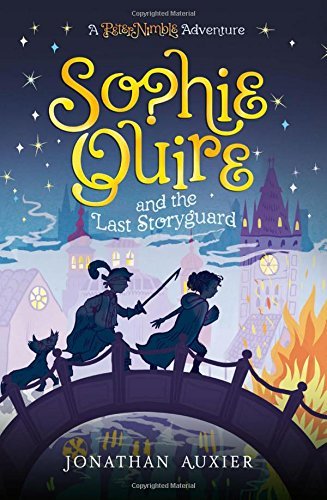
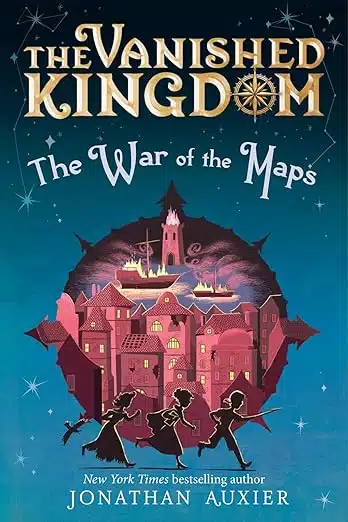
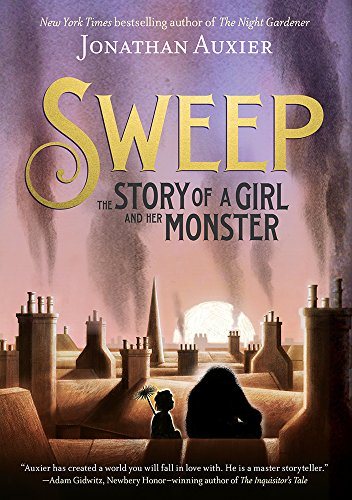
Now today, Jonathan Auxier is back. He is one of our favorite guests at Read-Aloud Revival. You might know him as the author of Sweep, that’s my own favorite, The Night Gardener, Peter Nimble and His Fantastic Eyes, Sophie Quire and the Last Storyguard, any of this ringing a bell, The Fabled Stables series. Today, I invited him on the show to talk about his brand new book, The War of the Maps, which is the final book in the Peter Nimble trilogy. And I’m pretty sure I heard some shrieks out there in the world as soon as some of you heard there’s a new Peter Nimble book because you’ve been waiting quite a while and Jonathan really delivers.
(00:01:23):
One of the things that Jonathan and I dig into is this idea of what happens inside the writer when they’re writing a story and how the questions that arise, this guiding question that he doesn’t know the answer to, but that he’s exploring with each one of his books. Every book has a different guiding question. Each of those questions is a kind of doorway for finding out who we are and whose we are and what our work is here in the world. I cannot wait to share this conversation with you. I feel like the top of my head comes off often when I talk with Jonathan, and this was no exception. So I hope you enjoy this conversation with me and Jonathan Auxier.
(00:02:06):
Well, Jonathan, it is always a complete delight to have you here at Read-Aloud Revival. Thanks for coming back.
Jonathan Auxier (00:02:13):
Of course, absolutely. I love Read-Aloud Revival. I love talking to you. So I’m very excited to be here.
Sarah Mackenzie (00:02:18):
Well, let’s answer the burning question from all the listeners right now, right at the top, which is, is there a new Peter Nimble book?
Jonathan Auxier (00:02:28):
Oh my goodness, I am so happy to be able to answer yes to this question because for so long I couldn’t answer that. And so I am so excited to say that yes, in fact there is a brand new Peter Nimble adventure. So a little context for those of you who aren’t as familiar with me, I write strange stories for strange kids. And seemingly, I write books specifically for Read-Aloud Revival listeners because over the years, you all have been just one of my most supportive and enthusiastic and kind of nerdy and hardcore audiences that come to me with questions. You show up at events.
(00:03:04):
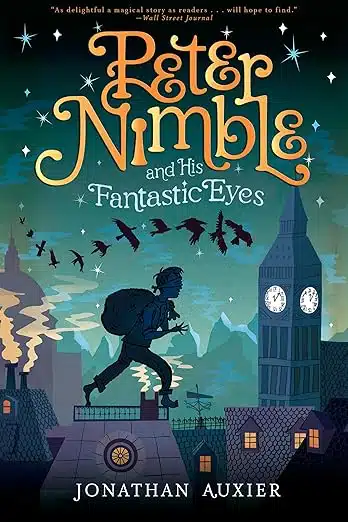
A lot of readers on the Read-Aloud Revival Podcast found me through a series I’d written about a character named Peter Nimble. The first book is Peter Nimble and His Fantastic Eyes. The companion book to that is called Sophie Quire and the Last Storyguard. And I thought I was done with these stories and this world, but it was actually all of you who kept harassing me and wanting to know more about this world. And so slowly the gears started turning, and I do mean slowly because I am a very, very slow processor. It took years and years until I finally at long last have the third and final book in the series about Peter Nimble.
(00:03:39):
The series has been repackaged. You might notice this whenever we’re talking about it. If you see a link, it says The Vanished Kingdom at the top. That’s what the series is being called, which when you read the whole series in totality, I think is a really fitting title. I really wish I had used it from the beginning. But this third book is called The War of the Maps, and this is the third and final book in the Peter Nimble series.
Sarah Mackenzie (00:04:01):
I cannot tell you how many times I’ve heard kids say they adore these books. You know my kids are huge fans of this whole series. Actually, we’re huge fans of all of your books. I was just mentioning to you before we hit record that I was reading Sweep to my younger set of kids, my 11 and 13-year-old, and it’s probably my fifth or sixth read myself. My oldest daughter was like, “Are you reading Sweep again?” I was like, “Listen, that’s what you do when you love a really good book and this is one of those.”
(00:04:31):
So we’re huge fans and I know there’s going to be, I feel like I probably heard like an echo of squeals of delight as you were talking from all of these Peter Nimble and Sophie Quire fans that there’s a new book. There’s a new book coming April 29th, so right around the corner.
Jonathan Auxier (00:04:46):
It’s coming very, very soon. It’s available for pre-order now. And I will make a pitch. I usually don’t do this often, but since we have time
Sarah Mackenzie (00:04:53):
Do it, yes.
Jonathan Auxier (00:04:53):
In this new publishing ecosystem, which is constantly shifting, sometimes pre-orders are not really a big deal. They’re a huge deal right now, specifically pre-ordering from independent brick and mortar bookstores. That is one of the most powerful ways to move the needle for a publisher and let a publisher know that there are readers excited about a book. And when they see the pre-order numbers go up, they suddenly put a lot more energy into getting the word out into supporting that book in terms of publicity and things. And also, by default, making them much more interested in hearing more stories in the same world. So if you do want more stories in the world of The Vanished Kingdom and things like that, those pre-orders are kind of a crucial step. So no pressure, but if you are someone who wants to get the book, get it right away.
Sarah Mackenzie (00:05:40):
Speaking as a publisher now of Waxwing books, I’m over here cheering, yes. So you mentioned that you revisited it because so many children lovingly harassed you about when you were going to write again. But I know you at least well enough to know there has to be more impetus for revisiting the world of Peter and Sophie.
Jonathan Auxier (00:06:02):
Absolutely. Just for those who are unfamiliar with the book, let me give a quick rundown of the essence of the book and then I can talk about where it came from. So The War of the Maps is this epic adventure about an apprentice witch, a talking tigress, a cursed knight, and the greatest thief who ever lived. And for years, they have been sailing across to the very edges of the map, looking for wrongs to right, villains to fight, protecting magic wherever they find it. But now suddenly something is wrong. The map seems to be changing. Every new land they visit has fewer and fewer wonders. Magic is disappearing and they are helpless to stop it.
(00:06:42):
And so The War of the Maps, the backdrop of it, the essence of it is it’s set amidst this epic battle that has been raging for centuries between reason and magic, between facts and fantasy, between what is and what if. And when our crew of heroes find themselves on different sides of the battle line, they’re thrown into this fight that’s going to determine the very nature of reality. So this is very much, again, part of the world of Peter Nimble. Peter Nimble and Sophie Quire, the characters from the other books are central characters in this story.
(00:07:20):
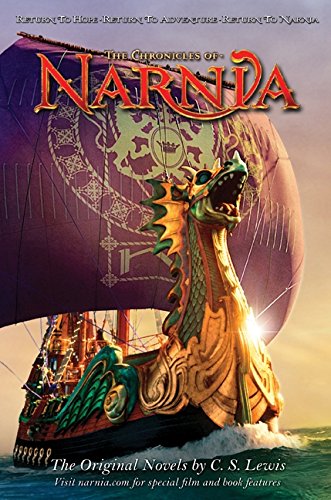
My hope is, I really tried to write it in such a way that if you haven’t read those other books, you can just jump in and read this. The template I used for Peter and Sophie and now this book was always the Narnia books where there’s a lot of debate about what order they should be read in. There is a correct answer, but people at least have different opinions-
Sarah Mackenzie (00:07:38):
Hold on, hold on, hold on because we are talking about Narnia this year a lot. So what order should they be read in, Jonathan?
Jonathan Auxier (00:07:43):
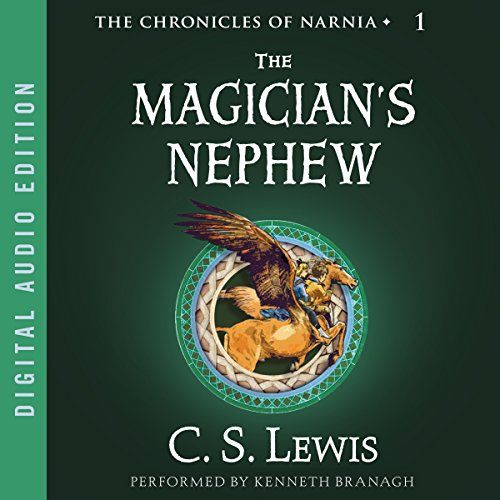
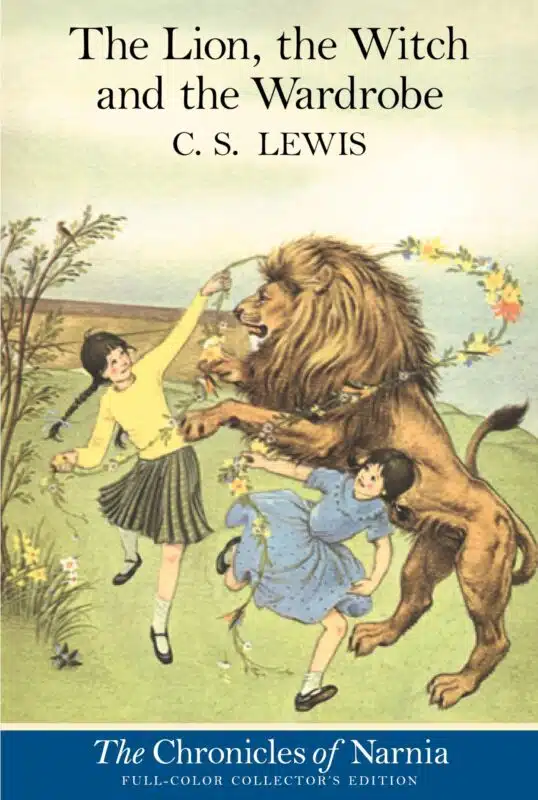
Well, actually, I’m not the biggest Narnia geek with a small caveat, which may be one of my top five favorite books of all time is The Magician’s Nephew. I’m not a huge Lion, Witch and the Wardrobe fan. I had it read to me, I read it, I saw too many versions as a kid, I just got a little tired of it. And I see a lot of the strengths of the book, but it doesn’t do it for me. But Magician’s Nephew is a prequel to that story. If you just start with Magician’s Nephew, it’s not actually a good book.
(00:08:10):
What I discovered is Magician’s Nephew only works because, and this is probably the power of almost all prequels, they only work because they’re answering questions that were presented in the later work. And so in the same way that it’s not really a great experience to show people Star Wars by starting with Episode I, we only care about this whiny little Anakin kid if we are holding him against what we know about the terrifying Darth Vader figure.
(00:08:37):
And so this is, I think, true of all prequels. I’m the only person in the world who actually kind of enjoys Indiana Jones and the Temple of Doom, which most people hate. But similarly, that’s a prequel to Raiders of the Lost Ark. And it’s fun because it answers questions that I asked because of Raiders of the Lost Ark. Anyway, I could talk about prequels for a long time.
(00:08:58):
All this to say I love Magician’s Nephew, but generally speaking, I love how that series, you can read it in any order because each story is a full standalone. And yes, you get the Pevensie kids and things like that where there’s some continuity, but he never makes the reader dependent on that information. So that’s the case in this new book, War of the Maps. In fact, while I was writing this book, I had a rule for myself, which is that I wasn’t allowed to reread Peter Nimble and Sophie Quire.
Sarah Mackenzie (00:09:24):
That’s amazing.
Jonathan Auxier (00:09:26):
Yeah, I’m really glad I did it. I wondered if it was the right choice or not, but because these characters age up a little bit older in each book. So in Peter Nimble, he’s 10 years old, Sophie Quire in her book is 12, in this book, they’re 14. And I wanted the adventures from the previous books to basically have that kind of hazy sense of memory that I myself as the author of them had where I mostly remember the facts. But really beyond that, I remember the story I told myself about what happened, which is I think what we all do in our own lives.
(00:09:57):
I actually can’t give you the facts of what my life was like when I was a college student. I just remember the short little story I told about the kind of person I was and the experiences I had. But sometimes I’ll look at old photos of me in college and I’m surrounded by all these people that I’m hugging, and clearly they’re like besties. And I’m like, “I don’t know these people because they didn’t feature in the story.” And I’m that character in their memories as well, which is to say not present at all.
(00:10:23):
So this is a book you could dive into. And as I said, kind of setting up the context, this is a book that really gets to the heart of what I had been trying to talk about in Peter Nimble and to a larger degree, Sophie Quire, which was this tension we have that to me feels like a really profound metaphor for our arc in history, where we move from an age of wonder and mysticism and a different way of knowing and describing and explaining the world to the age of modernity and materialism where we have rational empirical evidence and explanations for the mysteries around us.
(00:11:02):
And I also feel like that’s part and parcel with most of my books. I don’t really write about childhood. I write a lot of books about the end of childhood, which is a thing I’m constantly processing. So Night Gardener is about that, Sweep is about that, and The Vanished Kingdom books are really about that.
(00:11:20):
I felt the end of my childhood really acutely. I was a late bloomer. I didn’t want to grow up. I was kind of dragged into adolescence kicking and screaming. And I felt like I was surrounded by a culture and a world that was like, “Kid stuff is dumb. Wait till you become an adult, real life begins.” And I felt like I was leaving behind something really treasured almost against my will, not just by society, but by literally the biological imperative, by nature itself. This is clearly part of the mechanism.
(00:11:53):
And so many fantasy books I love up to including something like the world of Middle Earth in Lord of the Rings, fantasy often has sort of an elegiac quality. It’s about the end of things. It’s about lost things. Even when Lucy first steps through the wardrobe, she’s stepping into a Narnia that has fallen. It was beautiful, it was verdant, the animals were free, Aslan was present, and then Aslan is gone, and it’s winter without Christmas.
(00:12:25):
And I think a lot of fantasy, regardless of how you would … This isn’t speaking to a current political moment, it transcends that to just a larger aching for something in the past that we feel like is gone and is inaccessible to us, a longing for that. And I love that. I feel that very strongly and I feel like that’s the heartbeat of most of the most powerful fantasy I’ve encountered.
(00:12:49):
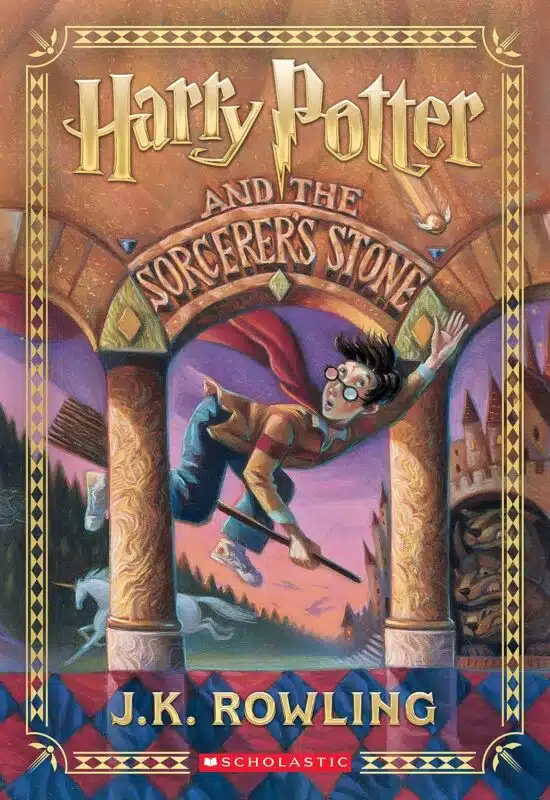
But I also have this problem where these fantasy stories put this ache, this yearning inside for a world, here there be dragons, all of these wonders, all of these magical things. And there’s a beauty to that yearning, but there’s also a tragedy because every time you finish one of those books, you close it and you’re not in a world with dragons, you’re here. And it puts a longing inside me that ends up not being something I can have. At the end of the day, when we read about Hogwarts for the very first time, we all are going, “Yes, I’m a magic kid in the world of Muggles.” But then you close that book and you are a Muggle. You are closer to the Dursleys than you are to Harry, and you never got your letter.
Sarah Mackenzie (00:13:39):
That’s right.
Jonathan Auxier (00:13:40):
To go back to Lewis, and it’s a controversial moment, but I understand some of the depth of it. We are all kind of Susan Pevensie locked out of Narnia because we grew up, it became inaccessible to us. And I felt like, I’m not saying no one has ever written about this, but I had not really found a lot of fantasy books that spoke to that tension and specifically spoke to it in a way that allowed me to love where I am, because this is where we are, allowed me to not just imagine my way out of a humdrum reality, but see the reality, the materialist reality, the current moment we’re in just as if not more wonderful, wonder-full and wonder-filled as any world full of dragons.
(00:14:40):
This book took me a very long time to write because this is something I’ve been wrestling with since I started reading. And I’ve been an author for all these years and still, I didn’t have an answer to this tension. And the book was my chance to carry my characters through that grieving and that complexity and take them to a new hopeful place that they didn’t see originally when they’re handed a series of absolutes, is the world this or is it that? Is it reason or is it science? And also as therapy for myself to walk through that same process.
(00:15:15):
And hopefully the readers get to experience some of that journey as well, and maybe it provides some insights, ideas, comfort as well. But fundamentally, the book was therapy for me to work through my own, very complicated, as you can tell, and muddy feelings about fantasy, about story, about imagination, why are we doing this? Fiction doesn’t feed an empty belly, it doesn’t suture a wound. It has no tangible impact in our world, but there’s something that it gives us that we need that prepares us for the world beyond.
(00:15:50):
And so this book was really my really sincere and really kind of slow and intentional and deliberate interrogation into my own experience and sense of the world. Like all my books, I always start with a question that I don’t know the answer to, which is great if you find an answer. Sometimes it means I write for years and years with nothing. Sweep took me 15 years on and off to find an answer to-
Sarah Mackenzie (00:16:18):
What was the guiding question? Do you remember what your guiding question was as you wrote Sweep?
Jonathan Auxier (00:16:23):
Yes. So the question, sometimes it takes me often years to put words to the question, but I have three young kids. And so the question became more clear once I actually had kids rather than just wondering because the story started in my head long before I was a father. But the question at the heartbeat of Sweep was given how much I love my children when they were little babies and they are not aware cognitively at least of me, and if I were to disappear from the face of the earth when they were one or two years old, they would lose all memories of me. And if that were the case, how could I convey to them the depth of my love for them?
(00:17:09):
And the answer in Sweep, because it’s about a girl who was loved dearly and then abandoned when she was young. And she has some memories, but she mostly has the trauma of losing someone who cared for and loved her. I realized the only way she could possibly actually understand how much she was loved is if she basically herself had to raise her own child.
(00:17:34):
And so the story of Sweep for years, I thought it was about a monster that’s a protector for this little girl. But I realized the thing that unlocked the book is when I realized that when she first finds this monster who does become her protector, it’s basically like a newborn baby. And she who has guarded her heart and walled herself off, understandably because she’s been so hurt and beaten up by the world, she has to go through the process of opening her heart and becoming vulnerable. And it’s only in doing that, that she can truly fathom and understand what it means to be loved is by loving someone to that point. And at one point a character says, closely related this idea, “We save ourselves by saving other people.” And so that was the Sweep one.
Sarah Mackenzie (00:18:24):
Yeah, because what I hear, what I feel like I hear you saying, the pattern that I’m noticing is that your books are almost a way to resolve cognitive dissonance between these two things, the tension. It’s like exploring it until there’s a both and. And I don’t really know. I don’t feel like I’m putting it into words well. But now I’m curious about your new book and the guiding question for that one, if you’re willing to share. Or if you feel like it’s not something you should share, don’t.
Jonathan Auxier (00:18:50):
Well, no, and actually when you talk about the both and, that’s a big, big piece of it is I think so much in our cultural moment, but also historically, The War of the Maps is this pitched battle between a world of ration, reason, and a world of magic. It’s a zero-sum game and it’s life or death. And I think where I ultimately come to is that the great damage and lie is the idea that it is a war. We are told that we have to choose sides. We are told that it is us versus them when really they are two different ways of being and they’re not mutually exclusive.
(00:19:29):
And so I like your language of both and, because they both are obviously real because they’re both obviously inside you and they both obviously have truth and resonance and they both obviously have limits to how much they can explain. And this is a big, big book. It is by far the most ambitious thing I’ve ever written emotionally, certainly plot wise, thematically.
(00:19:51):
When my agent finished reading the first draft, and I’m the only children’s author he represents. So I think he thinks he was giving me a compliment, I got my dander up. But he was like, “I think you’re trying to write a book for grownups.” And I was like, “Well, I don’t know about that. I hear the insult you’re saying, like you’re insinuating that children can’t handle this and I think we underestimate children at our peril.” I think children, I know at that age, I was plagued by all of these questions.
(00:20:18):
So the question is how do you reconcile the fact that we don’t live in a world with magic? And how do you reconcile what is clearly the beautiful yearning that stories of fantasy and stories of magic place inside us? Because one way that a lot of people respond to fixating on things that are not tangible is they have a contempt for the world around them, the material world and their present world. They are so fixated on preserving a hypothetical or an imaginary thing that they disregard suffering that is in front of them, duties and roles that are in front of them. They have scorn for the world that we actually all inhabit with actual real live human beings who have actual lives and needs. They turn everything physical around them into the other as separate from themselves and not part of themselves.
(00:21:16):
And that is not the whole story, but that is one of the very compelling and heavy threads. And so I was writing this book to explore that instinct in myself and to interrogate it because I think it yields really bad fruit. And so if fantasy, imagination, magic, all of this leads a person to that place, why does it do that and what does it mean? So even in The War of the Maps, there’s two factions, very flawed and also very beautiful in each their own way. And our main characters are basically thrown into those two different communities and each engage with them. And they see the allure of each of those communities and ultimately the frailty and the dysfunction of them as well. Again, I think my goal is to find a more capacious third way that lets two things be true.
(00:22:10):
I can’t have that scorn for the world that’s my children’s world. I can’t not feel hopeful. I can’t not see the beauty. There was a point in our life where the quotidian, the ordinary, the humdrum was magical. And I think we lose that at our peril. I think children are in some ways more philosophically and theologically oriented than adults allow themselves to be, because adults have to pay taxes and just keep a roof over their head and change diapers. And adults are actually thrown into the trenches of this very quotidian, horrible grind.
(00:22:46):
But when you’re a little bit younger, you have the time and the space, the sky really is the limit. You really can ask any question. And questions aren’t threatening to your sense of identity the way I think they become later. The older you get, the more dangerous questions should be. And really no question should be dangerous. Every question should be a doorway if it’s come to in good faith, I think.
Sarah Mackenzie (00:23:09):
Well, I know kids who are listening right now are asking, they heard you say that it takes a long time to write a book, that it took you a long time to write this particular book, The War of the Maps. How long are we talking?
Jonathan Auxier (00:23:23):
So in some ways, this is the book I’ve been trying to write my whole life. I took some questions and themes in Peter Nimble that had to do with the way maps and magic and realism and the rational modern world. Those got supercharged in Sophie. In all of those times, I couldn’t quite get to the thing. So in some ways I’ve been kind of edging up to this book step by step, getting closer and closer until I finally had to jump off the cliff and just write it. The actual serious writing, probably about four years of really in deep. After Sweep, I decided to give myself a break and I wrote a series of books for younger readers called The Fabled Stables.
Sarah Mackenzie (00:24:09):
I love those. Huge fans of those around here, yes.
Jonathan Auxier (00:24:12):
Those are fun books and they were fun to write. The artist, a woman named Olga Demidova, she had the hard job because it’s very easy for me to say on this page there’s 10,000 things and then she has to draw them.
Sarah Mackenzie (00:24:24):
Exactly.
Jonathan Auxier (00:24:25):
Those books, really delightfully, not only were they a bit of a break for me from the heavy work. Sweep especially, it was a very heavy book emotionally and just logistically to write-
Sarah Mackenzie (00:24:37):
Because it’s a work of brilliance. I’m just saying. I’ve read it six times. I know.
Jonathan Auxier (00:24:41):
I really appreciate that. If you could tell that to my children who continue to be unimpressed with me. No matter how many books I dedicate to them, they’re like, “Okay.” But also kind of shockingly, we mentioned prequels before, so The Fabled Stables are very much prequels to The War of the Maps. So if you’re familiar with the character, Auggie, who’s the main character of The Fabled Stables, this boy who cares for these stables full of one-of-a-kind creatures, Auggie is in War of the Maps in sort of a surprising way. The stables make an appearance in this book. The Rooks who are the villains of The Fabled Stables are a part of this book too.
Sarah Mackenzie (00:25:21):
Oh my gosh.
Jonathan Auxier (00:25:22):
I could not have written this book without The Fabled Stables in a way that just, you couldn’t have planned it. And I’m so happy. So many times as a writer, you get a master plan in your head about like, this is going to work and it never pans out for me. No matter how good it looks on paper, it’s just a little too rigid and there’s not enough discovery.
(00:25:42):
But it was a long process of hibernation following that. I knew I wanted to write a final third Peter Nimble book. I knew at first, I was really almost trying to avoid these heavy themes that I still didn’t think I could handle. I wrote over 100 pages. I spent over a year writing a version of this book about a completely different main character. It was a completely different plot in a different setting, different themes.
(00:26:10):
And ultimately I realized that if I had written that book, because it was a pretty good hundred pages. People who read it were really excited by it, but it wasn’t actually going to get me closer to that big scary question that I had been struggling to answer and also a little afraid to try to really interrogate. So it would have been like another book in the series, but it wouldn’t have really taken me as a writer, as a thinker, as a human being to a new place. It would have just been kind of a fun new story. And there’s nothing wrong with that per se, but if I’m going to spend this long writing something, I want to make sure it changes me.
(00:26:46):
This is why I’m so slow. I don’t really start writing a big book unless I have that question I can’t answer, unless I have something that I know the book can give me through the process of writing it that I need as a person. Have you seen any of the amusing YouTube clips about the peanut butter sandwich assignment?
Sarah Mackenzie (00:27:04):
Is this the one where you give directions on how to make a peanut butter sandwich and someone follows them literally? I haven’t seen any YouTube clips, but I did have a teacher who did that assignment with us in class one time.
Jonathan Auxier (00:27:16):
Oh, so you had it happen?
Sarah Mackenzie (00:27:16):
Yeah.
Jonathan Auxier (00:27:18):
I assume if you’re the right age and the teacher did it right, it’s transformative. The idea is kids are assigned like write down the instructions for making a peanut butter and jelly sandwich. And the kids all do because it’s so easy. That’s the easiest sandwich. And then the teacher takes them and reads them out and applies them Amelia Bedelia style, hyper literally. So it will be, place the peanut butter on the bread. And so they take the jar of peanut butter and smash it onto the bread. Use the knife and spread it on the peanut butter. And so you don’t open the jar yet. You just wipe a knife against the outside of the jar. So you can see kids are just losing their minds as the teachers are effectively trolling them.
(00:27:54):
But what a great and visceral way to make the point, which is there are so many steps that you are actually just taking for granted and assuming. But if you had to teach someone who didn’t know what a peanut butter sandwich was, who had never done it before, what are the actual steps? And there’s so many tiny invisible steps and things that you’re skipping over because you have all this knowledge and background.
(00:28:18):
And I find when writers, even professional writers who do it a lot, they tell someone how to do it, they’re often like those kids writing the four sentence instructions for making a peanut butter and jelly sandwich. Really to actually end up with a peanut butter and jelly sandwich, it’s like 40 instructions. So there are so many steps even in that simple task. I, a little bit, find that with stories where I can tell the students how a story happens, but what I’m discovering for myself is unfortunately the answer isn’t always more steps when it comes to writing.
(00:28:51):
I used to be a very kind of rules oriented, structure oriented person who was like, if you just have this sort of template, you really can write. And that has some value, but the more I write and really pay attention to what’s happening inside me, it’s hyper-emotional, it’s hyper-intuitive. It’s often years of literally just trying to find words to put to an instinct that is inside you. Like stories do, they put a yearning inside us, but then you have to give a name to that yearning. That takes a lot of interrogation.
(00:29:23):
So the more I go into writing, the more I realize that the actual things going on inside me during the initial creation, not editing and revising, but the initial creation, it’s almost mystical. It’s very, very hard to create a formula for, which is either good news or bad news depending on what you want.
Sarah Mackenzie (00:29:43):
You taught a workshop in RAR Premium called What Happens Next that sort of unpacks the hero’s journey or the story structure that we expect in a story that’s so satisfying to us as a reader. But one of the things that really stuck out to me in the way that you taught that is that it’s not actually … The hero’s journey is presented so often as a formula. What I think I’m hearing you say is a structure gets you started going in the right direction, but unless you’re paying attention to what’s happening inside of you as you’re writing, you’re missing it.
Jonathan Auxier (00:30:14):
It’s a little bit that. My guess is, if I’m remembering that workshop, I talk about the fundamentals of three-act structure and I might reference the hero’s journey. I’m actually someone who really doesn’t love the hero’s journey.
Sarah Mackenzie (00:30:29):
That’s right. I forgot. Yes.
Jonathan Auxier (00:30:31):
And it’s taken me years to articulate the instinct, which is I don’t think this is that great. And the way I would describe the hero’s journey presently is, I’m going stay with food metaphors, which I really like. I use a lot of food metaphors when I talk about writing lately. My wife finds them very annoying and not at all convincing, but for me, they make sense.
(00:30:55):
The hero’s journey is presented often as a structural framework for how to get from point A to point B to point C. Structure is about the sequence of events, the overall shape of the story, almost like that Freytag thing that so many people used to learn with the rising action, the climax. And the hero’s journey is presented as a structural tool that tells you how the knee bone is connected to the hip bone, how to make the spine of a story.
(00:31:26):
But if you actually look at the hero’s journey and the plot points on it, A, half of them are just totally not applicable and kind of awful. There’s a lot of like character gets the elixir, they return home. And you have to do so much tortured gymnastics to be like, “And that’s how.” And the elixir in this case is Luke Skywalker’s awareness of the force before he blows up the Death Star. And you’re like, “Okay, calm down. At this point you can make anything mean anything.”
Sarah Mackenzie (00:31:52):
That’s true. That’s true. I see it.
Jonathan Auxier (00:31:54):
But this is how I would engage with the hero’s journey right now, which is the mistake is that it’s treated like a structural tool including by people, publishers, editors, development executives in TV. It’s a great tool for people who aren’t actually writing to get to feel like they can contribute. It’s almost never helpful to the writer as a structure because it’s not a structure. Those events can happen in a variety of different sequences. It can miss events based on the core points of a hero’s journey.
(00:32:26):
I think the hero’s journey is helpful if you think about it like an ingredients list for a specific type of very popular meal. This is the food metaphor. And it’s a very popular meal, it’s a heroic epic journey. And we all have consumed this kind of meal our whole lives, which means yes, an ingredient list is nice, but when a story is this popular and familiar, it’s also almost entirely useless because we’ve internalized it.
(00:32:55):
If this is spaghetti and meatballs, and I asked every one of your listeners to just from scratch make a list of the ingredients that are going to go into spaghetti and meatballs, they’re going to get 90 to 100% of the core ingredients correct. You’re going to be like, “Well, it’s a red sauce, so tomatoes are in there, or a jar of pasta sauce. It’s going to use spaghetti because that’s in the name. It’s going to use meat to make a ball-shaped thing.” If you’re a little bit more advanced in the kitchen, you’re going to go, “Italian food seems to only use three spices, and those are oregano and basil and garlic.” So you throw those in and before you know it, just based on knowing what spaghetti and meatballs is, you’ve got almost your full ingredients list.
(00:33:41):
Now, once in a while you forget an ingredient, especially a counterintuitive one. This is where the hero’s journey is helpful. Maybe you think I got it all in my head, but there was actually one ingredient that you hadn’t thought of. So it’s nice to check the hero’s journey to see if you missed an ingredient. A lot of people who are serious about their Italian cooking, believe a pinch of cinnamon is essential inside a red sauce. I’m someone who likes a sweet red sauce. I like a little bit of sugar in there. A few extra secret ingredients, might really put it over the top, but that’s kind of where the hero’s journey to me, that’s about as helpful as it is, which is like you can intuitively make spaghetti and meatballs and then just double check the ingredients list on a recipe and be like, “Oh, you know what? I did miss this one thing that I didn’t realize.”
(00:34:29):
And this is another piece of it, going back to, full circle, I didn’t realize we were going to do this, that peanut butter and jelly experiment we were talking about, a big gap. Every kid who writes down the peanut butter and jelly experience wrote down the correct ingredients, but their list of how to make the sandwich was all messed up. The hero’s journey is presented like it’s not just a list of ingredients, but the steps for preparation. But actually it contains almost none of these steps for this, then this, then this, for the shape of a story.
(00:35:04):
And so the reason I don’t like how popular it is, is people present it like it’s giving you a roadmap. It is not giving you a roadmap, it’s just a list of ingredients. It is not the steps for preparation. And for a new writer, they need to be told that you have to boil the water and then put the pasta in, and that a little salt in the water is going to help. And all of those, you have to apply heat to the pan and then you got to start with your aromatic or whatever the things you’re going to do.
(00:35:31):
All of those steps are not actually part of the hero’s journey. It’s handed to people like a magic bullet. And I find people are very well versed with the hero’s journey, and it’s not getting them anywhere closer to actually writing their beginning, middle, end of their story. They have the ingredients, but they don’t know the preparation steps.
Sarah Mackenzie (00:35:52):
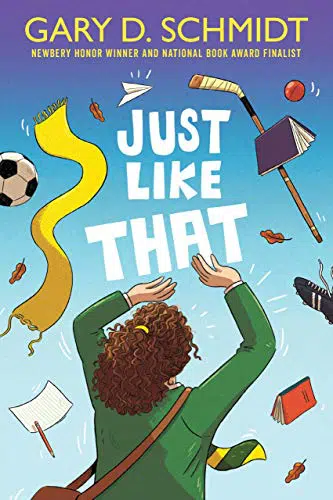
Okay, this is so interesting to me because one of the things I find fascinating is how … Gary Schmidt comes to mind. So an author like Gary Schmidt who writes incredible books, tells me that when he’s writing, he has no idea what’s coming next. There’s no way he would write an outline first. That doesn’t even make sense to him in the way a story is. And I always thought that was so interesting that somebody who’s so well versed in stories and how stories are made wouldn’t start … But you’re right, because I bet he’d be nodding through this whole thing. I know you’ve talked before about how if you were thinking this could happen in the story or that could happen in the story, I’ll just have to write them both and see what happens.
Jonathan Auxier (00:36:34):
Yeah, I do not recommend that method for anyone, but it is how I write, which is why writing 100 pages of a book often takes 5 or 600 pages of dead ends before I can even figure out what I’m doing. And again, I’m going to just kill this metaphor, I’m going to drive it into the ground, but ingredients list versus the steps and they are two different things. And the ingredients list is often extremely intuitive, but because I teach, especially young writers, I go, “What’s invisible there? What am I taking for granted that I assume they know that they don’t really?” So I do believe in teaching and thinking structurally, but I believe in putting it in its right context and also really saving most of that for after a first draft has been written.
(00:37:22):
I think for most writers, craft and structural tools are really, really powerful in revision and in editing. They are for many artists. Creative writers are artists and creating art. For a couple of people, it might be just the thing they need, but for most people, you’re actually limiting yourself before you even know what you’ve done. So for me, I’m a big believer in doing your best on the first draft and then going back.
(00:37:46):
And often I go back and I rewrite from page one all the time, but I let myself be really intuitive when I’m starting. And often structure appears because we all still have those rhythms, right? Okay, I’m getting a little itchy. The character needs to start to do something right. They need to take some steps to solve this problem that’s emerged. And that’s structural, that’s a moment that’s structural.
(00:38:10):
But also to use a different metaphor for writing, it’s a little bit like building a building. The structure will be there regardless. You need a load-bearing wall on any building that will stand. You could theoretically kind of make the thing and sort of prop it up and then walk inside and look around and go, “Oh, well, this wall right here is not presently load-bearing, but you need to make it load-bearing.”
(00:38:30):
And I think sometimes when you’re writing a story, you could write 150 pages of a story totally through intuition, and then you go, “Okay, I did that now, I’m going to see what happens at around the 25% mark, the first quarter, which most people call the end of the first act.” I can keep it just as it is, but I need to also have it serve this other function. How can I take this moment that I’ve written and make it do this structural thing?
(00:38:52):
How can I walk through the building that will collapse if I leave it, but for now it’s holding up for a minute, and go, “Well, we will need a load-bearing wall. There is a wall here, let’s just reinforce it. We need to run some electrical through here or the plumbing stack or whatever it is, and kind of turn those into structural elements.” Once you’ve gotten all your pieces that you intuitively wanted, now just make them do the job of structure and suddenly you have structure.
Sarah Mackenzie (00:39:19):
So then it’s almost like you’re using it to kind of look and see where the weak parts are or what needs to be shored up to make the whole thing work. But you weren’t letting the structure guide you in the first place. You were letting your intuition guide you.
Jonathan Auxier (00:39:30):
When I was young, I was very rigidly holding onto structure, but then it was years and years of rewriting to basically undo the rigidity of that structure. So you’re hooped either way. If you’re overly structural when you start, you’re going to spend time tearing that away. And if you aren’t writing structurally, then in revision you have to add that back in. And there is no wrong way as long as it gets done. The wrong way is to not pay attention to structure or not pay attention to your intuition and your actual curiosity. The order in which those things occur, not only does it change writer by writer, it probably changes day by day within each writer.
Sarah Mackenzie (00:40:11):
So how did your writing process then shift from let’s say, Peter Nimble, which you wrote when? When did that book come out actually?
Jonathan Auxier (00:40:18):
Oh, well, when it came out, it was nine years after I’d written it. It came out in 2011.
Sarah Mackenzie (00:40:24):
Okay. So fast-forward now nearly 15 years and more than 15 years if you think of when you first started writing it, to writing The War of Maps, what changed about your writing process? How is it different for you?
Jonathan Auxier (00:40:37):
Well, the first thing is with Peter Nimble, it’s actually hard for me to remember how I wrote that because I wrote that book in the way that some people get to enjoy their first books, which is in an emotional frenzy and panic that if this doesn’t come out of them, they’re going to die. So Peter Nimble, I wrote the first draft of Peter Nimble in 21 days. I wrote a chapter a day.
Sarah Mackenzie (00:41:01):
I did not know this. You might’ve told me this before, but I did not remember it. Oh my goodness. Okay.
Jonathan Auxier (00:41:05):
I wasn’t actually in a good place in life. I was studying playwriting in graduate school and I was learning that I was not a good playwright. It was a very competitive program. Everyone was more talented than me. I was good enough to get into this very good program, but I was not feeling it. And actually, it’s a two-year program and between your first and second year, you’re supposed to take your summer and write a draft of a full-length play that then you spend the year working on.
(00:41:35):
And I sat down to write a letter to my friends and family explaining why I was leaving the graduate program because I was so ground down. You are so broken down, you are so exhausted, you’re so overwhelmed. And I was in many ways not responding really well to it. I was demoralized. I was in complete crisis. So I sat down to write a letter to explain to everyone why I have to bail on this, even though I had moved across the country and kind of staked my whole identity on this.
(00:42:03):
But instead of writing this letter, I wrote the first words of Peter Nimble. And I just started writing and writing and writing and writing. And I did a chapter a day every single day. And I guess I was reminding myself why I cared about stories. It was the first time maybe ever in my life I was not writing for someone else, I was just writing the thing I wanted to read that I needed.
(00:42:28):
And then I put it away for several years. I came back to grad school and actually, I had unlocked some things. I came back that next year returning to the dramatic writing model and was incredibly prolific, extremely successful in the program. So all of these things came out of this moment. But this book, Peter Nimble, was the one that unlocked that.
(00:42:46):
And I just sat on it for years and while I was trying to be a playwright or later work as a screenwriter, which wasn’t a great fit for me. But I would come back to that manuscript for Peter Nimble, this weird little kid’s book, and just work it and work it and work it because I enjoyed being inside that story. It didn’t have any of the baggage or the stress. So that was very spontaneous, completely intuitive.
(00:43:11):
And sometimes your instincts are just awful. I was doing a library event in Ohio last week, and there were some serious Peter Nimble readers who had all these questions. And one of the things I revealed to them is in Peter Nimble and His Fantastic Eyes, he befriends a character named Sir Tode is this like think of like a Don Quixote type, a knight errant, who centuries before became cursed. So his body got fused with that of a horse and a kitty cat. So he basically looks like a cat with hooves and he has a mustache and he still talks a big game about being really brave, but he’s not terribly effective in combat.
(00:43:46):
And so he’s sort of Peter’s mentor, but also kind of a liability and they have a relationship. And Sir Tode, readers after Peter Nimble really, really wanted to know if they figured out if Sir Tode’s arc got closed with trying to find a way to undo his curse. And I wrote Sophie Quire and didn’t answer that question, and readers got even angrier. And I definitely deal with that issue in this last book, maybe not in ways you’re expecting.
(00:44:11):
But I was remembering when I was talking to this person about like bad ideas we have. And so for me, sometimes though his intuitions aren’t great, my idea for Sir Tode for several drafts was that not only was he cursed into the body of this cat, but he had all the same number of limbs as a human, a cat, and a horse when they were all mashed together. And so all my descriptions, he was like a cat who had like eight extra-
Sarah Mackenzie (00:44:37):
Like an octopus.
Jonathan Auxier (00:44:37):
… little legs like in his undercarriage, just hanging and dangling with little clacking hooves on the ends of it. It was a truly disgusting image.
Sarah Mackenzie (00:44:46):
It’s so gross.
Jonathan Auxier (00:44:47):
And it was impossible for readers to picture. And I was like, “But it’s funny.” And I believed in it all the way to the end until finally the 10000th reader was like, “You need to change this and just make him look like a cat.” And I was like, “You know what? You’re right.” And no reader has ever complained that he didn’t have enough weird gross limbs hanging off the bottom of him.
(00:45:08):
So the instincts are not perfect. And if I’d been a writer who’s like, “But it was my instinct, therefore it’s perfect, therefore it can’t be changed,” that’s a very precious writer. But that’s what the revision part is, is going, “Great, I’m glad I got there. Is this actually effective? Is this going to help a reader? Can a reader picture this? Or is it distracting and too weird?”
Sarah Mackenzie (00:45:28):
It just makes me laugh because I’m thinking about my 11-year-old who just finished all of these books. He’s actually read The War of the Maps before me. And I mentioned that I was talking to you today, and he said, “What I want to know is how does he come up with this stuff?” And I thought, “I don’t know if I can ask him that. That’s not going to be a question you can easily answer.” But he does love so much how the scop comes up in all of your books. Your books talk to each other too even outside of the series, like Peter Nimble Talks to The Night Gardener talks to Sweep. It’s just, I was going to say an Easter egg hunt for a reader, but it’s better than that because it feels like you only see it if you’ve read all of the books. You only see all of the connections if you’ve read all of the books. That’s so fun.
Jonathan Auxier (00:46:14):
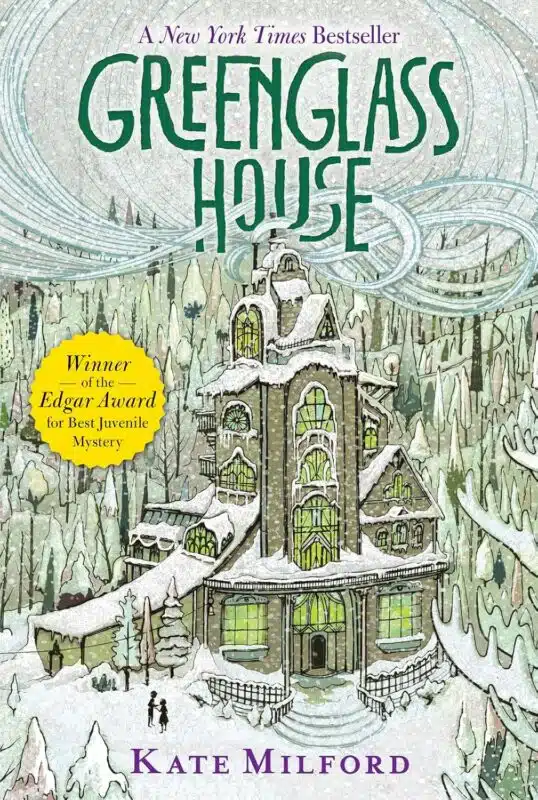
Well, and honestly, I’m a big fraidy cat, so I’ve literally never read a Stephen King book. I gather he does that with a lot of his books where the characters intersect and show up a lot. Kate Milford, who’s a writer I adore, who wrote the Greenglass House, she has a huge, very complicated shared universe, which is extra stressful because she has also published with a number of different publishers. And so I’ve been very fortunate that all my books are at Abrams, so it’s all in-house and I can pull from one and another. And I mean, you can do that anyway as an author, but it’s just a little more complicated.
(00:46:47):
I do have a lot of those Easter eggs, but to go into the point of how do I come up with that stuff, I will say I think my books, I go pretty deep philosophically, especially in this last one, but I have a lot of literary touchstones that I’m really heavily working with. So even though Peter Nimble is a fun story about a blind thief, it’s also like me going hard, kind of channeling the voice of someone like Samuel Johnson or Jonathan Swift, some of these literary writers and figures that a kid is never going to read, they’re not going to read until maybe they’re in college if they’re really nerdy.
(00:47:23):
And so that’s true always, but there’s another piece of me that I’m always trying to channel. I was a kid who I loved superheroes, I loved action and adventure and swashbuckling. When I was growing up, children’s books were very girl-coded. I mean, it’s still an industry that most of the authors are women by, I think statistically a wide margin. And I celebrate that because there’s a lot of industries where that’s not the case. So I’m all for the pendulum swinging here.
(00:47:49):
But when I was a boy growing up, there were not a lot of books, I felt like, new books that were being written for boys. You had to kind of go back. The reason I was reading Treasure Island as a kid is because there weren’t a lot of really great adventure books. And the few that did come out, whether it’s Hatchet or something like that, you can see it was like manna in the desert. People really freaked out and got really excited.
(00:48:12):
So all this to say, one of the things that might speak to what your son is talking about is I really intentionally went through these books. It started with Sophie I went really hard with this and then also in War of the Maps. Every scene, I would not allow myself to write the next scene until I had spent a serious amount of time asking myself, what is literally the coolest thing that could possibly happen next? If I have a card, I play it. I was never holding back. I was never like, “Yeah, I’m going to tell that cooler thing later.” I was always like, “What is literally the most shocking and cool thing? What is literally an image I’ve never seen before? Let’s assume I’m going to die the second I finish this book. I want to make sure this cool image appears.”
(00:48:51):
And so every chapter, there were several times where I was like, “Okay, I have all these big ideas. It’s like it’s guiding the Titanic. It’s a big slow moving ship that can’t avoid the iceberg.” And sometimes I’m like, “Or straight into the iceberg. What happens if I do the thing that feels unthinkable, like it will break my book, but it would be cool to see? Can I somehow keep this thing going even though I’ve done the unthinkable or the thing that feels a little reckless?” And again, it does take a lot of work in the backend because you make a whole bunch of really, really tricky problems for yourself for it.
Sarah Mackenzie (00:49:27):
Yeah, it sounds like you’re wrestling with it rather than making it do exactly what you want the story to do. It’s like you’re wrestling with it.
Jonathan Auxier (00:49:32):
It’s two selves. I am truly a kid in a candy shop. And then I’m the adult going, “Okay, but also you need your vitamins and you’re going to ruin your dinner. And also, I can’t afford all of this. And you’re breaking that thing.” And so it’s like little me and big me in the candy shop. But it’s important for me to let the kid do that stuff. But I often, along with questions I can’t answer, I usually, with almost every one of my books, I also try to give myself a technical challenge that is really hard for me.
(00:50:04):
So an easy example is Peter Nimble, the protagonist of that first book in The Vanished Kingdom series, he’s blind. And that was very, very hard to write because there’s a lot of sensory description or just stuff you take for granted. And I had to spend a huge amount of time going through that to make sure that the things that were happening were visual for the reader, but not cheating and visual for the character.
(00:50:27):
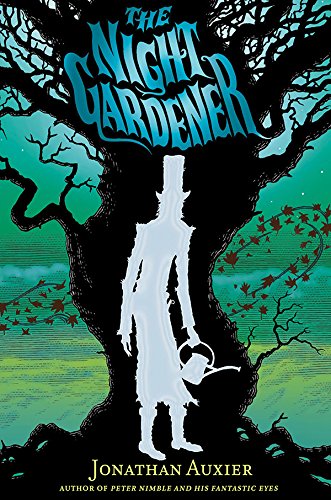
Night Gardener is this kind of creepy haunted house story where basically the plot only moves at night. It was incredibly challenging to figure out how do I build a story where what’s going on during the daytime, which is when the not haunted house stuff is happening, is just as not only engaging, but also is deepening and fueling what’s going on at night. And my wife talks about it as writing with one arm hand tied behind my back. It’s a huge headache and it creates a huge amount of churn and dead ends and wasted time, but it’s also the challenge that keeps me interested.
Sarah Mackenzie (00:51:05):
I keep thinking of the Chesterton quote, and I’m just curious if this came into your thinking as you were writing or thinking about this book, from Orthodoxy. I had to pull up the quote so I recite it correctly. “Fairytales say that apples were golden only to refresh the forgotten moment when we found out that they were green. They make rivers run with wine only to make us remember for one wild moment that they run with water.”
Jonathan Auxier (00:51:32):
Well, I really like Chesterton a lot, and he’s actually the inscription on the front of Peter Nimble. What you’ve brought up, speaks directly to the point of these things needs to be that they reorient ourselves or they reorient all of us to the wonder-filled reality around us. And again, it’s a mistake I make in my own heart as a reader and just as a person all the time. And so this is about giving myself hope, giving myself a new perspective.
(00:51:59):
Again, this book takes place right at the precipice before modernity really takes place in the modern world that we all inhabit and have inherited. But someone is talking about the change that’s going on that seems unstoppable and inevitable and sometimes heartbreaking and sometimes hopeful. And the observation, and I was very proud of this, I was hanging on to it for years because it felt like I had … When you talk about in the hero’s journey, snatching fire from the gods, this was my elixir, was that for thousands of years, wonders were things outside of ourselves.
(00:52:30):
If you wanted to see a dragon, you had to go to a land and you could physically see a dragon. But that meant you had to be the sort of person who could go there, only a few chosen. And they were out there and they were real, but only a couple people got to experience those wonders. We now live in an age where wonder is not something outside of us. Wonder is a question we ask inside our minds, and it is universally accessible to every single person who has the ability to live the investigated life, to think critically, to ask questions.
(00:53:05):
And in some ways, I would argue in our current age, we are so lucky to live in this moment where it’s been democratized. It used to be the world was moved by kings and princes and the chosen ones who get to be the heroes of stories. Magic was only accessible to characters who deserved to be the heroes in magic stories. But every single one of us now in the modern consciousness, in the mind, the way our minds work now, which it’s a little goofy, but I legitimately think the way we think and operate now is different than the pre-modern mind and consciousness.
(00:53:38):
And there have been some trade-offs. I think I’m more stressed about some things than other people, but also I’m not worried about cutting my finger and dying of infection. That’s nice,
Sarah Mackenzie (00:53:47):
Right? Yeah, the anxiety’s different.
Jonathan Auxier (00:53:52):
The anxiety’s different, but also it’s been democratized. Every single one of us, we might not be able to see a dragon in the world, but every one of us can close our eyes and picture a dragon, and I think that’s new. It’s an inheritance we have. It is bounty. The fact that we can read a story and see dragons, that is actually the modern miracle at work. That is the result of introspection and the rational life. The fact that we read books, little scratches on paper and worlds happen inside us, that’s actually what we get out of this.
(00:54:26):
We often think, for me at least, it’s a trade-off. I lose so much to not get to live in Middle Earth at the time of the elves, and instead I’m in the age of men, but the age of men got this and this is a heck of a thing.
Sarah Mackenzie (00:54:38):
Riches.
Jonathan Auxier (00:54:39):
And I want to be excited about that and I want readers to be excited. I don’t want them to finish a fantasy book and feel bummed and locked out of Narnia. I want them to feel like, actually I have the key. I don’t even need a wardrobe. I can just close my eyes and go there. What a gift.
Sarah Mackenzie (00:54:53):
Wow. I could talk to you about this all day. This has been so fabulous. Oh my goodness. I want to remind our viewers and listeners, The War of the Maps is coming out April 29th. Go pre-order your copy. Especially if you can pre-order it from your local bookstore or brick and mortar bookstore, do it, but pre-order it anywhere you can. Jonathan, I think you have a new podcast as well.
Jonathan Auxier (00:55:18):
Oh, yeah. If you can tolerate what I’ve been saying and you want more, have mercy on your soul. Clearly, I have a lot of ideas and a lot of thoughts about story and storytelling, and so recently I launched a podcast with a friend and colleague of mine named Matt Bird. He is a writer and story guru. He has a number of books about storytelling and a podcast he runs called The Secrets of Story.
(00:55:44):
Matt and I have been part of a mutual appreciation club for a while. We really like talking about story, and so we just launched a new podcast that’s very much in the same vein. It is called A Good Story Well Told, which is based on a Mark Twain quote where he basically just declares, “I like a good story well told. That is the reason I’m sometimes forced to tell them myself.” I don’t quite have the same swagger as Mark Twain, but I like that as just a clean summary of what I’m looking for.
(00:56:09):
And so the podcast is called A Good Story Well Told. And we are a text-first story craft podcast. So instead of starting with a concept, a structure, a framework that then we cherry-pick examples from stories, I’m a big believer in starting with the text and seeing what emerges from that. And so every episode we basically pick a specific text and mine it for little tools and tricks and storytelling principles that come from it.
(00:56:38):
We’re doing seasons, and so our first season is actually called The Shame Shelf, and it’s based on very famous movies and books that we know about and somehow have not yet read and feel really embarrassed about.
Sarah Mackenzie (00:56:49):
Amazing.
Jonathan Auxier (00:56:50):
And so every episode, Matt and I go back and forth and we finally sit down and get around to this thing we’ve been avoiding. So if you like to get nerdy about story and story craft, I hope it’s a good time. I don’t know, I like talking about this stuff, so.
Sarah Mackenzie (00:57:06):
I can’t wait to listen. This is totally my jam, you know it is. So I’m really excited. Jonathan, thank you so much for coming back on the show. I can’t wait to hear from readers who read The War of the Maps, and I’m just excited to find out what you do next.
Jonathan Auxier (00:57:20):
Can I say one thing to your listeners just before I part?
Sarah Mackenzie (00:57:22):
Please do.
Jonathan Auxier (00:57:23):
I just want to give a sincere, sincere thank you. When I first came on this podcast, Sophie Quire had just come out. Sophie Quire came out at a tricky point in my life. We had a very traumatic birth of a child. I had to cancel my book tour to be present in the NICU during that time. And the book, they had very high expectations and for various reasons it just kind of didn’t find its readership. It ultimately did. The book has had a nice life, but the thing that probably changed the fortune of that book, and therefore Peter Nimble and my ability to write this current one was coming on your podcast.
(00:58:02):
And I remember it was you and your daughter. And your daughter had really, really gotten into Sophie, and I was so excited about that because I had poured my whole heart into that book and I felt like … It happens sometimes. You write a book and it’s a crowded market, whatever. And you all really, really connected with it. Suddenly I was going to events and there would just be tons and tons of people there, and they were all passionate readers, specifically of Peter Nimble and Sophie Quire, and they were all Read-Aloud Revival listeners.
(00:58:33):
It changed the shape of my career. I wouldn’t have kept writing this story, which took years, but I am so excited that it’s here. Your community basically single-handedly willed this third book into existence. And I hope you all like it because it’s yours and in many ways I made it for you.
Sarah Mackenzie (00:58:57):
Oh my goodness. Jonathan, thank you. The community here is astounding. They’re such good readers, they’re such close readers, and I do know they absolutely love your books.
(00:59:11):
Now let’s go hear from kids about the books they’re loving lately.
Audio (00:59:17):
Hi, my name is [inaudible 00:59:20]. I’m five years old. I live in the Middle East. And my favorite book is [inaudible 00:59:34] in the book. Bye.
(00:59:34):
My name is Phoebe and I’m four. I just turned four on the next day. I am from Connecticut and my favorite book is Secret Garden because I like when she finds the key and goes to the secret garden and I love it. That’s why.
(01:00:00):
Hi, my name’s Dora. I live in Utah and I’m five years old and my favorite book is Hello Lighthouse. I like it because at first there’s a new lighthouse keeper coming and I like seeing the pictures and learning how they take care of the lighthouse. Bye.
(01:00:26):
Hi, my name is Maggie. I’m seven years old and I live in Utah. My favorite book is Dragon Girls. It’s by Maddy Mara. So in the book, they are girls that turn into dragons and they have to go on quests. There’s 16 books of them and they have to fight like Shadow Spirits, Fire Sparks, and Chaos Critters. And they have pets in the book that help them on their quest. So that’s what I like. Oh, and I also like the Tree Queen in it.
(01:01:00):
Hi, my name is Eliana and I live in New York. I am six years old and I recommend the Geronimo Stilton series because it is funny and about mice.
(01:01:15):
My name is Emerson. I’m nine and I’m from Kentucky. My favorite book is The Terrible Two. I like it because they play a lot of pranks.
(01:01:27):
My name is Hazel.
(01:01:29):
How old are you?
(01:01:30):
Three.
(01:01:34):
What’s your favorite book?
(01:01:35):
My favorite book is Jamberry.
(01:01:35):
Jamberry?
(01:01:35):
Uh-huh.
(01:01:41):
Why do you like Jamberry?
(01:01:41):
Because my dada like it.
(01:01:46):
Because daddy likes it?
(01:01:48):
Mama like it too.
(01:01:49):
Yeah, mama likes it too.
(01:01:50):
And Paul would like it too.
(01:01:50):
We all like it.
(01:01:55):
I’m Ingrid. I’m eight years old. I’m from Kentucky and my favorite book is The Wizard of Oz. What I like about The Wizard of Oz is there’s no scary things and there’s adventures. And she goes up in a tornado and lands in a different place. That’s what I like.
Sarah Mackenzie (01:02:25):
Thank you, thank you kids. Show notes for this episode are at readaloudrevival.com/262. Thank you so much for listening. I’ll be back in two weeks with another episode, but in the meantime, you know what to do. Go make meaningful and lasting connections with your kids through books.