John Hendrix (00:00):
I’m using the biography of Tolkien and Lewis to tell the story that I really want to tell, which is about myth and, where do myths come from? Why do fairytales and stories matter to us? Why do they matter to the universe? These were things that were really important to these men, and you can’t understand their writings without understanding or at least asking that question of the world and of stories. So, that’s the foundation-
Sarah Mackenzie (00:39):
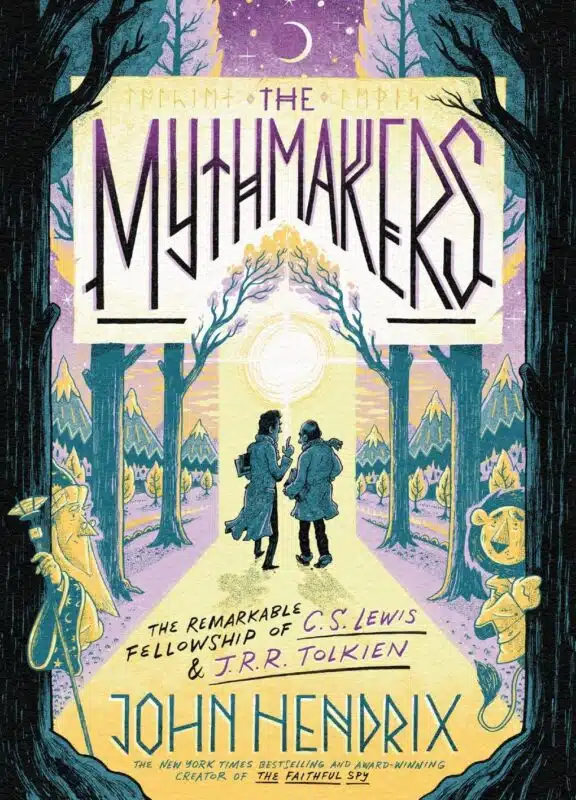
One of my favorite reads all last year was The Mythmakers by John Hendrix. This graphic novel tells the story of the remarkable fellowship of C.S. Lewis and J.R.R Tolkien. It’s marketed to kids, but I loved it a ton, and I really think any Lewis or Tolkien fans ages, I don’t know, 12 and up, are going to eat it up. I learned so much about what makes a myth a myth, and what’s different between a fairytale and a myth and a story. And learned a lot, in fact, about Lewis and Tolkien’s friendship, which I thought I already knew quite a bit about. Today, I invited John Hendrix, the author and illustrator of this book onto the show. By the way, this episode is both an audio podcast and a video. If you’d like to watch it, go to readalouderevival.com/video. I’m Sarah McKenzie. This is the Read-Aloud Revival, let’s get started.
(01:39):
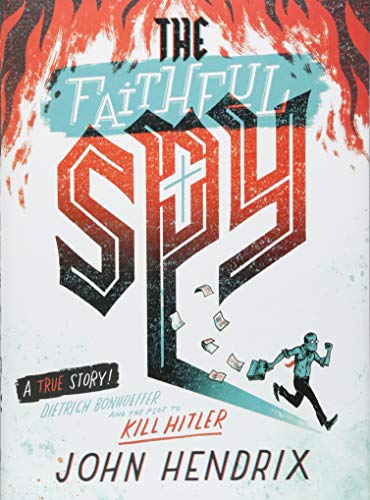
So John, you’ve been on the show before. You’ve been to Read-Aloud Revival before. I have sung the praises of so many of your books. I think The Faithful Spy, your graphic novel about Dietrich Bonhoeffer is just brilliant, and I thought you couldn’t really outdo it. So, I was so delighted by The Mythmakers, which is of course your graphic novel about the remarkable friendship of C.S. Lewis and J.R.R Tolkien. Tell me, where did this story spring from? Why did you need to tell this story?
John Hendrix (02:09):
Well, I did this just for you. I knew you would challenged me-
Sarah Mackenzie (02:11):
Oh, thank you. I knew it.
John Hendrix (02:13):
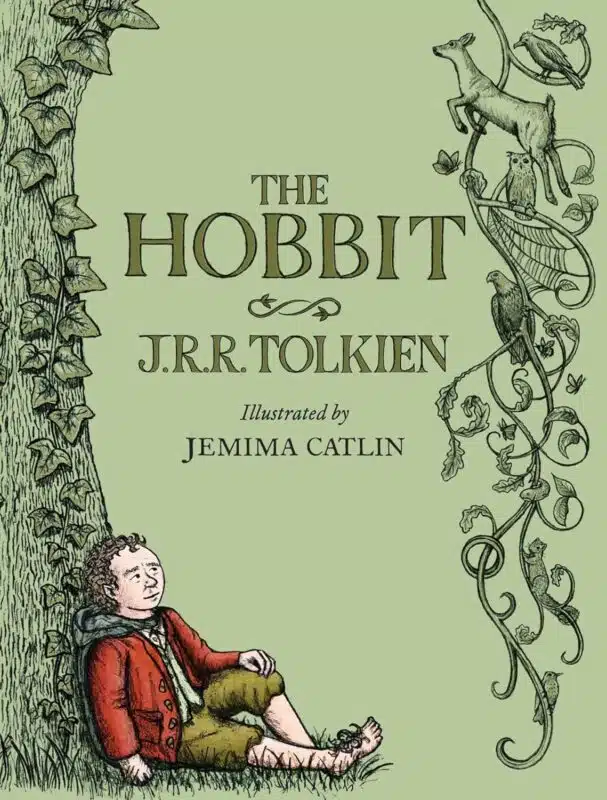
… to do a better book than Faithful Spy. No, this book came because I am a fan of these two writers and their work, and honestly, I just owe them so much. My imaginative landscape as a child was really transformed and dominated by The Hobbit and the Narnia books. And so this has always been a real passion project, that I always wanted to tell this story. It took me a while to get it onto the page, but yeah, I’ve been thinking about something like this for a long, long time.
Sarah Mackenzie (02:51):
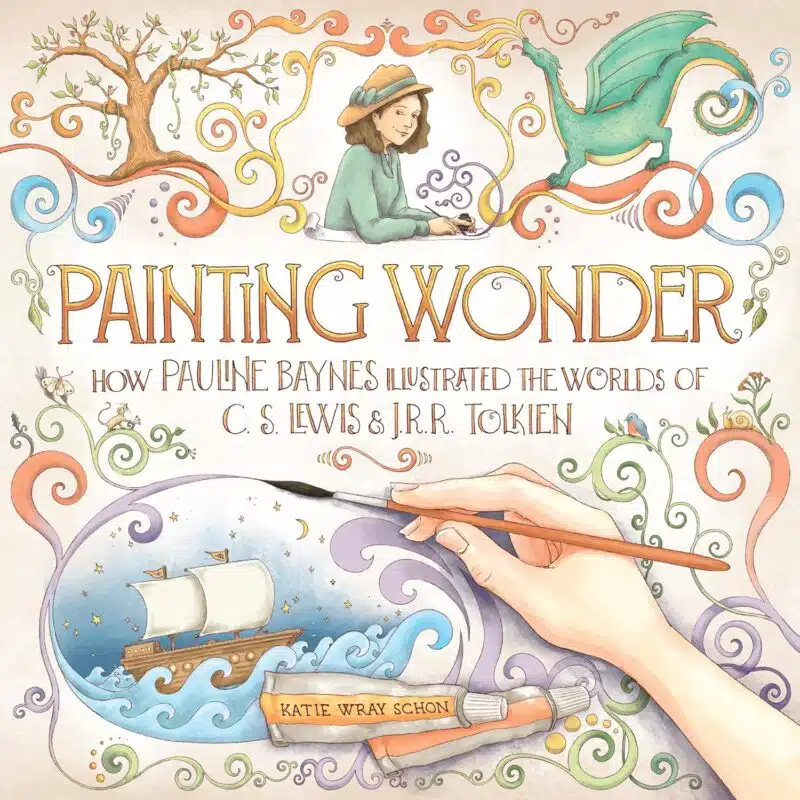
Well, as I was reading, I was thinking about what a challenge it must have been to decide what to leave in and what to cut out. I know just on the very previous episode of the podcast, I interviewed Katie Wray Schon, who’s the author and illustrator of Painting Wonder: How Pauline Baynes brought the worlds of C.S. Lewis and J.R.R. Tolkien to life. And one of the things that Katie ran up against while she was researching that picture book biography about Pauline Baynes, the illustrator of the Narnia books, is that there is very little documented about her, written about her, very little that she could pull from, which creates a certain challenge when you’re writing about someone. But I almost think the challenge might be greater with something like this, where you’ve got C.S. Lewis and J.R.R Tolkien, there’s so much. How do you even begin to decide what to read, what to research, what to look at? How do you decide when you’ve got enough? Did that feel like an insurmountable?
John Hendrix (03:49):
Oh, yeah, totally, or just the bigger problem. And I ran into this when I started doing Faithful Spy, a book about World War Two, I began to think, does the world need another book about this? And it’s the same thing with Tolkien and Lewis. There have been so many, hundreds of books about the Inklings about these two men, and there is always a bit of intimidation of, am I able to add anything? Am I able to take this story and make it my own? And there’s a lot of doubt that comes in any project.
(04:22):
And then you get past that and you think, I’m going to do this and you start reading and researching, and it’s just an avalanche of information. And of course with Faithful Spy, it was primarily a single biography. I mean, Hitler was sort of a co-character along with Dietrich in that story. But in this book, it is fully a cradle to the grave story of two men with really complicated lives. So, it was a lot to get it in. I mean, I started the page count at 176 to match Faithful Spy, and I kept adding signatures. It was like I would add 16 more pages and I’d be like, okay, that’s it, I’m stopping. And then it was like, okay, just one more and I think I can get it all in.
Sarah Mackenzie (05:05):
Well, because it’s not actually just a story, as if that’s just the story of cradle to grave, Lewis and Tolkien. It’s also an exploration of and story and how those things feed our imaginations. So tell me, because the structure of this book is so unique and so interesting, we of course have the story of Lewis and Tolkien being narrated by their avatars. Actually, could you give us a little overview for our listeners or viewers who haven’t yet gotten their hands on the book, tell us a little bit about how this is presented because it is so unique.
John Hendrix (05:38):
Well, I’m kind of playing a trick on you. I’m using the biography of Tolkien and Lewis to really just allow myself to tell the story that I really want to tell, which is about myth, and where do myths come from? Why do fairytales and stories matter to us? Why do they matter to the universe? These were things that were really important to these men, and you can’t understand their writings without understanding or at least asking that question of the world and of stories. So, that’s the foundation of why this story begins the way it does, which is what these two characters that seemingly show up out of nowhere in a library, Lion and Wizard, just two characters chosen completely at random.
Sarah Mackenzie (06:22):
Completely randomly.
John Hendrix (06:23):
And no, Lion and Wizard are in a library. They seem to know that they’re in a book and they seem to know that they’re on a quest, but they themselves seem to be on a kind of mythic journey that you get to follow along and enjoy their conversation, alongside learning about Lewis and Tolkien, whose stories are sort of paralleling what Lion and Wizard are going through.
Sarah Mackenzie (06:46):
And then you’ve got these portals, and these are so fun. They’re almost like choose your own adventure, but it’s choose to jump into the deep end if you really want to, that kind of idea. So at the end of this section, I’ll hold this up, there’s this option, there’s this door right here, which is oh, so inviting, right? And it says “The roots of myth,” this is portal number one, “The roots of myth, turn to page 188, or you may continue reading.” So of course, you can continue reading but I don’t know why you would because as soon as you get to this part, you’ve got to go back to this portal in the back where it’s like a deeper dive into something before you move on. How did you decide what to put in portals? What was that like?
John Hendrix (07:25):
Well, doors become a very important visual theme in the story, as they are in Lewis and Tolkien’s writing. Portal fantasy is a genre that we have from basically Lewis and Tolkien. So, these were really out of necessity. These were all within the body of the story initially, and my editor rightfully said, “You’re insane. This is way too much information to have in this one story.” And I kept telling him, “No, you have to know where myth comes from to get to later parts of the story,” and he was telling me to cut it, and this is what a good editor does. They really challenge the things that are most precious to you.
(08:07):
So after crying myself to sleep a few nights, I remembered my choose your own adventure past and thought, you know what? Doors are so central. What if we just basically allow this to be an end note that you can experience with the story or later? And in fact, with younger readers, I tell them, “You know what? Skip the portals the first time through and just get the story.” Older readers, if you want to take that detour, you can, but I found with if you’re 10 to 13 and you just feel like, I just want to keep on trucking with this story, I wrote it so that you can just keep on going.
Sarah Mackenzie (08:43):
For those of our viewers and listeners who are like, wait, myth, story isn’t it the same thing, fairytale? You’ll have to read the book to untangle it all and see where they all came from and what they all do that’s different. But do you have a way you like to talk about the differences of those kinds of-
John Hendrix (08:58):
Yeah, it’s actually really interesting. And what I’m doing in this book is, probably real scholars would want to throw the book out the window. I mean, I’m overly generalizing and making things very sort of legible for readers. And so to do that, I really have to sort of streamline some of these big ideas. And one of the most basic ones is that when we say myth, our modern minds here lie, or something that is false, right? So if I said the story of Genesis is a myth, you might be tempted to think, oh, I think that that is a false story, right?
Sarah Mackenzie (09:33):
Mm-hmm, or you’re devaluing it.
John Hendrix (09:35):
That’s right. And it’s more like saying all facts contain truth but not all truth contains facts. And one simple way you can think of that is just like poetry, right? When you are writing poetry, you are speaking about truth but it is not a documentary. Right? And so there are these stories in our past as human beings that always to the reader told them something true about the world. And that’s what myths and later epics and legends and folk tales and fairytales, all sort of orbit this idea. And I think to understand their stories and to understand a lot of the literature we read in the world, that’s an important context.
Sarah Mackenzie (10:17):
And it actually then helps us realize that then contrary to our very modernized idea of the word myth as being a lie, where we might feel like the story is actually being devalued. Actually, a myth then gets valued above a factual description of exactly a scientific, let’s say, description of exactly what happened. Because like you said, there’s so much more truth being communicated on so many different levels.
John Hendrix (10:43):
But then this is what Tolkien basically convinced Lewis of when he was an atheist, was that myth and fairytales are the highest form of human art because they say things about the human condition that can be said in no other way. They express things that are totally singular to themselves, and that’s why they have value. Because Lewis was challenging Tolkien at the time and saying, “As men of truth, as scholars, we should reject lies. And though the stories are pleasant and they are still lies, though breathe through silver.” That was his famous line. And Tolkien rebutted that immediately and said, “No, no, no, you don’t understand. This is like God’s secret Elvish. This is a way that we tell things to one another that can be said in no other form, and therefore it has this primacy, and that’s why stories matter to us.”
Sarah Mackenzie (11:37):
So then I guess through this entire graphic novel, it felt to me as a reader, like you were helping me understand that importance and that primal need for story while you’re unraveling the story of Lewis and Tolkien, Lewis’s conversion, their friendship, the sorrows of their friendship later in life. What do you think is the most misunderstood thing about their friendship?
John Hendrix (12:03):
Well, I think, let me frame it this way. They created or sub-created, as Tolkien would say, these two worlds that we understand very well, Narnia and Middle Earth, and they’ve been illustrated a gazillion times. They also sub-created this third fantasy world together, which I think is just as almost implausible as their other two worlds, and that is the world of the Inklings. Their own friendship is a bit of a fantasy world that we project a lot of our hopes and desires and longings. Who doesn’t want to go to the pub on a snowy afternoon and have a fire and a cider and read poems together and talk about the great things with your friends? I mean, I am an academic, I am a professor at WashU, and I only do that six or seven times a week. No, I never do that, right?
Sarah Mackenzie (12:54):
Right.
John Hendrix (12:55):
So there is a kind of fantasy or a myth to their own friendship, and I actually love that about their story, it’s why I wanted to do the book. I wanted to illustrate that myth, but also I wanted to really ground it in some of the hard truths that came out about their friendship too. Tolkien famously hated Narnia, and actually, one of the things I always tell people in the context of that is that Tolkien basically hated everything. It’s not special that he hated Narnia. He was very, very dismissive of other forms of art, and it’s just he was a persnickety Englishman. So again, those are some things that people think about when they think about the Inklings.
Sarah Mackenzie (13:38):
Yeah, that actually was helpful for me because I had heard that, Tolkien really didn’t like Narnia and always very much bothered me, and it still does kind of. But I have a little more sympathy for Tolkien’s view, getting to know him and his personality type and realizing like, oh, this was his default-
John Hendrix (13:57):
Oh, yeah.
Sarah Mackenzie (13:57):
… to anything was, yes.
John Hendrix (13:58):
The two of them are very much like the odd couple, and so you get that in the avatars of Lion and Wizard, and even the way their forms are, kind of short and round, tall and skinny. One is a mumbly sort of equivocator, the other one is sort of brash, making these bold predictions, always late. And that’s what was fun about Lion and Wizard in this story, in that I really wanted you to feel like you were spending time with the Professor Tolkien and Lewis, but also I did not want to do fan fiction. I did not want to. Anytime we literally see Lewis and Tolkien together in the book, that is a source conversation that has documentation to back it up. But Lion and Wizard kind of allow me this ability to go on adventures and to have the characters do things that are just a little more exciting than sitting in the pub talking, which is basically what Tolkien and Lewis did their whole life.
Sarah Mackenzie (14:51):
Yeah, you didn’t want to make a graphic novel of just that over and over and over again.
John Hendrix (14:53):
You can’t do 225 pages of that, yeah.
Sarah Mackenzie (14:56):
I mean, somebody probably could, but-
John Hendrix (14:58):
Actually no, you’re right.
Sarah Mackenzie (14:58):
… yours is far more exciting.
John Hendrix (15:01):
Actually, I would read that, yes.
Sarah Mackenzie (15:02):
Tell me about the color palette, because there is a very specific color palette, and we’ll put a few of these interior spreads on the screen so viewers can see this. And if you’re listening to this on the podcast, you can go to the show notes at readalotterrevival.com/261 to see some of these, but there’s a very specific, limited color palette going on here.
John Hendrix (15:24):
Well, just like Faithful Spy, I chose a very limited set of colors and it took me a while to get to this place like all work. It looks like when you read a book, it was just this stroke of genius and everything fell into place immediately. And I’m here to tell you, making books is a mess. Beginning to end, it’s just a total train wreck. But the colors were actually very interesting in this book because I wanted to have the same limited palette like Faithful Spy. But there’s also a trick that happens in the book where the colors all dim slightly as the book goes on, throughout the story. So it is printed in CMYK, it is not a Pantone color book, but-
Sarah Mackenzie (16:04):
Oh, okay.
John Hendrix (16:04):
… it is, it looks like it, and I wanted just that effect of everything sort of graying out as you get to the end. And then-
Sarah Mackenzie (16:12):
John, I didn’t notice this. What the heck? That’s amazing. I can see it now so clearly.
John Hendrix (16:16):
Yeah, yeah. Actually, I kind of think I maybe should have made it a little more overt, but.
Sarah Mackenzie (16:21):
I don’t know.
John Hendrix (16:23):
And then there is a kind of fifth color that comes in. There was a sequence at the end that’s a little fantastical, and that sequence has a color that has never appeared anywhere in the book. So, these kind of Easter colors that come into the story of purple, plum and gold, that was where that color palette first came from, conceptually.
Sarah Mackenzie (16:43):
Oh, that is so cool. Yes, I can see it. I’m looking at that final spread.
John Hendrix (16:46):
No, it is one of those things where you’re like, you dream that up, you’re like, oh, what if all the colors just dimmed a little bit? And then you’re like, okay, how am I going to make that happen? And we talked about tinting Pantones down, yeah, but in the final version, it’s a nice effect.
Sarah Mackenzie (17:03):
Well, and I actually really appreciate things like that that I wouldn’t get on my first or second read through. That would be like maybe I would’ve noticed it on a third, maybe, but now I’m noticing it because you pointed it out to me. But these are the kinds of things that make you go like, okay, now I’m going to read the whole thing again, keeping an eye on that.
John Hendrix (17:18):
Yeah.
Sarah Mackenzie (17:18):
I love it.
(17:24):
Did you have a favorite scene or section?
John Hendrix (17:29):
Oh, man. Yeah, I mean, there’s several that I just really enjoyed drawing. I mean, the Dragon Ride, Lion and Wizard are going to Dragon Ride to help explain one of the coolest things that Tolkien has ever written actually, which is this essay called On Fairy Stories, which no 12 or 13-year-old would ever read but the ideas in it are so good. And my core audience is a kid who has been assigned to Beowulf for the Odyssey, and they cannot get through it. And they’re like, why is this valuable? And this essay shines a lot of light on what fantasy does to us and why we read it and why it’s valuable. And so, I came up with this Dragon Ride as a way to sort of visualize some of these more abstract ideas, and I love that sequence in the book.
Sarah Mackenzie (18:13):
My oldest daughter is in graduate school in Scotland at the University of St. Andrews.
John Hendrix (18:19):
Oh, jealous.
Sarah Mackenzie (18:20):
And she is getting a master’s degree in theology in the arts and is writing her thesis on imagination and faith. I’m messing this up, she’s going to correct me later, but she’s drawing heavily from On Fairy-Stories by Tolkien. And she’s not yet read-
John Hendrix (18:34):
[inaudible 00:18:35].
Sarah Mackenzie (18:34):
… The Mythmakers, I can’t wait to put it in her hands, so.
John Hendrix (18:36):
Oh yeah, no, I hope I get cited. That’s my goal.
Sarah Mackenzie (18:40):
Oh, yes. That’s fabulous. Let’s see, what was the hardest part? What was the hardest part of creating this one? I mean, you’ve created so many different books before and they’re all so complex that I wonder if you tell yourself every time, “Next time I’ll pick, I’ll do something easier.”
John Hendrix (18:58):
Every time, or I say, “I’m never doing that again,” or some version of that. And this one was truly a 10,000 piece puzzle where I did not have a picture of what was on the box. So it just truly felt like with a lot of my books, I have a way that I wanted to feel when you are reading it, or I have a sense about the idea that you’re going to take away. That’s very clear, but then getting it into a form where it accomplishes that goal is extremely abstract.
(19:30):
So with this one, it just took so long. I mean, I spent 18 months, two years just writing and researching. And when I got to the finish line of just having written the thing and really loving the story, it was like, oh wait, now I have to draw the whole thing? It felt-
Sarah Mackenzie (19:48):
In panel, no less.
John Hendrix (19:51):
Yeah, I mean, I have never gotten to the point on a project where I was like, I need a studio. I need Studio Ghibli, I need the Disney studios to help me with this because I am just worn out. But every book has that sort of hurdle and once you push through it, then you’re usually on the down slope.
Sarah Mackenzie (20:09):
Yeah, I’m so curious about what… I mean, I don’t know if you can even describe this, what your manuscript would’ve looked like for this, because I’m looking at the panels and then their narrations in between and the portals.
John Hendrix (20:18):
Yeah, it’s a good question. I get it a lot like, oh, do you write first and then draw? And I always quote Bob Dylan, who was once asked, “Do you write the words of the music first?” And he said, “Yes,” and basically that is, I just equating myself with Bob Dylan, and that is the way I write, is I write a little bit and then I draw, and I put those into the manuscript. And I think about the page design, because unlike a lot of publishing relationships, Abram really, really trusts me where I get to design the in design file, I own the design template.
Sarah Mackenzie (20:55):
Oh, wow.
John Hendrix (20:55):
They give me a lot of freedom to typeset these books. And I studied design in college, so I feel like I have some chops there. But without the freedom to be able to reflow stuff, redesign the type, it would be really tedious. So, it is a back and forth process that again, is a total train wreck until you get-
Sarah Mackenzie (21:14):
I wondered about the design because as I was maybe 10, 20 pages into it the first time, I flipped, book nerd that I am, to, who designed this? This is so complicated. And then when it’s a book design and typesetting by John Hendricks, I was like, is there anything this man cannot do? That is the question.
John Hendrix (21:31):
Honestly, it’s probably the easiest way to do these kind of books, because again, you pull out… When my editor comes back to me like, “We got to cut this section.” Then it re-flows everything through the story. So it’s just a game of Tetris that’s really frustrating during the season of designing the actual page layouts.
Sarah Mackenzie (21:50):
So as you’re doing research and there’s so many elements of Jack and Toller’s young lives, of their friendship. I mean, as an author, I always feel like the hardest thing is not picking out what’s going to go in, but what to leave on the cutting room or floor. Did you have a central question or something that was guiding you as you decided what was going to go in this book?
John Hendrix (22:12):
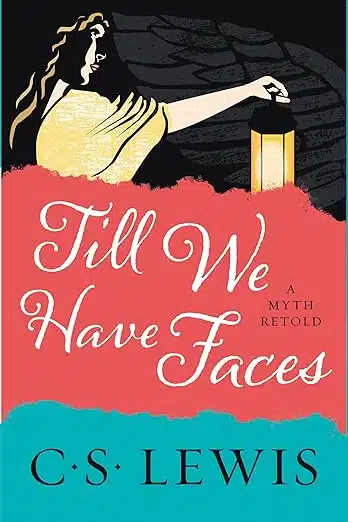
Yeah, I mean, there’s really significant things I left out. I mean, Lewis’s favorite book he ever wrote was Till We Have Faces, and he wrote it with his wife, Joy, and I don’t talk about that book at all, which is crazy. But again, the things that I decided to make important were all centered around, our work gets better in community, or what fellowship gives to artists. So their story and the way that they wrote is pointing at each other. They gave each other a gift that no one else could have given them, that allowed them to complete their journey. I’ve been saying it’s a lot Galadriel gives the fellowship this gift that they don’t understand when they get it, but it’s going to be really important later. And that was sort of the magic sauce between them. And so, anything that orbited both why myth, why fairytales, and why friendship? And those things together were kind of the stew that I was looking to create.
Sarah Mackenzie (23:16):
Yeah, right before you said the word stew, I was like, oh yes, like a soup. That’s so great.
John Hendrix (23:21):
I always use stew when I talk about my work because the act of just chopping up random things and throwing it into a boiling pot, that vibes with me, yeah.
Sarah Mackenzie (23:31):
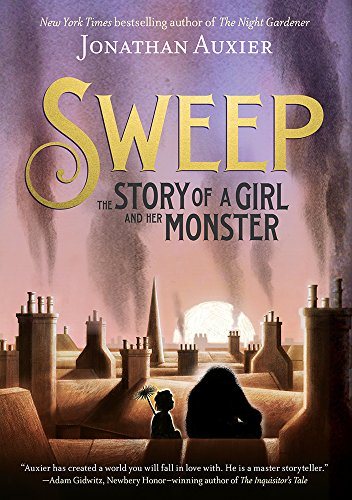
Well, it makes sense. I know you’re friends with Jonathan Auxier. I just finished reading, I think for the seventh or eighth time, Sweep: The Story of a Girl and Her Monster. It’s one of my all-time favorites.
John Hendrix (23:41):
Fabulous. It should have won every sticker imaginable, and I tell people that the time.
Sarah Mackenzie (23:46):
I 100% agree.
John Hendrix (23:47):
It’s a masterpiece.
Sarah Mackenzie (23:47):
It’s a masterpiece. Every time I read it, I am gobsmacked by how good it is. It is so good, it is so moving. It is funny, it is heart-wrenching. I sob, I laugh. Anyway, I just read it aloud for the first time to my 13 and 11-year-old twins, and at the very end of course, he has in the author’s note, story soup, and he talks about all the different ingredients that kind of got concocted in this pot. So, just knowing that you’re friends, and I mean, it feels to me anybody who’s doing creative work has this longing for what the Inklings had, for what Tolkien and Lewis had in each other.
John Hendrix (24:30):
Yeah, I mean, and I run a graduate program in illustration, an MFA IBC program at WashU and St. Louis. And basically, I’m trying to recreate the Inklings. I’m making a little treehouse where people can come and work together and have real community to be in each other’s creative lives, to encourage one another, because that is basically how we grow. I think the cultural liturgy of artists as primarily loners, or works of genius being solo efforts, I just think that’s really overstated. So, I heard about some of my students getting together over their spring break last year and getting a cabin and doing a writing retreat, and I was really touched by that. I was like, they have found a creative community together, I love that.
Sarah Mackenzie (25:21):
We can actually even see that in Lewis, at least in his young life. I don’t remember, I’m going to have to remember what Toller’s young life was like. I don’t remember off the top of my head. I guess I’ve-
John Hendrix (25:30):
Well, Tolkien had all of these clubs. He was obsessed with clubs, going back to when he was a kid. And then he got Jack involved with the Coal Biters, which were these men that would read Norse mythology and Icelandic together, and then later the Inklings. It was kind of a thing at the time too, it was just like little clubs were really fun. And that became just a through-line in Tolkien’s life, partially because I think he was an orphan. He was always looking for community and for family, and that found family and friends, especially after the war was really important to him.
Sarah Mackenzie (26:09):
Well, and then Jack and his brother in their young childhood had that whole fantasy world that was called something, I can’t remember now off the top of my head.
John Hendrix (26:16):
Bozen, yeah, or animal land, both of them, yeah.
Sarah Mackenzie (26:19):
Yes. When I found that out for the first time, I remember thinking, oh, that makes so much sense. And I think as parents watching our children do sort of this story soup making in childhood.
John Hendrix (26:31):
Lewis’ first impression of beauty was from his brother who brought in, very famously in his autobiography, he talks about his brother bringing in a little biscuit tin that he had put some grass and moss and pinecones and sticks and leaves and made this little garden of Eden that he had brought into the house for Jack to play with. And that was a touchstone memory for him of the idea of being able to create your own world and then enjoy it and take it inside and make it your own. And that memory of beauty basically birthed all of his creative works, if you could really sum it up in a singular moment.
Sarah Mackenzie (27:11):
I read somewhere, I don’t know if this is true, you would probably know if this was true, that Lewis said about Narnia, that he basically made a story with all the things that he loved in it, kind of like a story soup, I guess, or a story stew, like we’re saying.
John Hendrix (27:25):
Well, that is why Tolkien hated it. I mean, yes, it was absolutely-
Sarah Mackenzie (27:29):
Father Christmas and mythology.
John Hendrix (27:31):
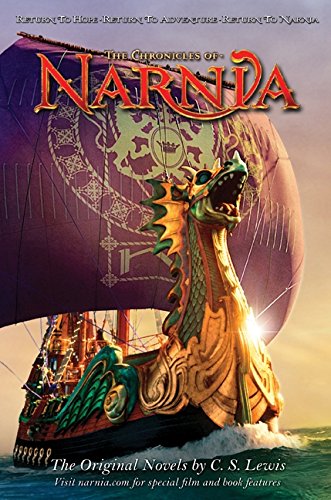
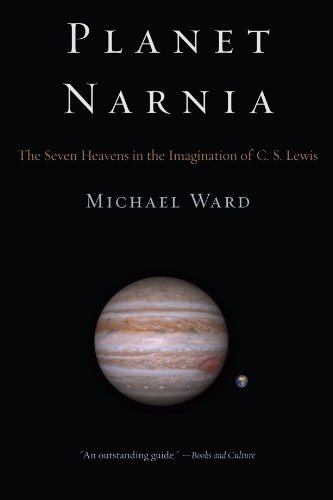
Oh, yeah, he could not believe what Lewis was doing. Yes, there is some truth to that. He always thought of it as a supposal, as opposed to an allegory. But for those of your listeners that are interested in this, there is an amazing book called Planet Narnia, which I read, which is this theory by Michael Ward, who is a professor at Oxford, who kind of refutes the idea that the Narnia books were kind of slapdash and just thrown together. And his theory was that each book in the Narnia series reflects one of the seven medieval heavenly bodies, which Lewis was obsessed with medieval cosmology. And so Jupiter, Mars, the moon, the sun, and he takes the sort of classic ideas associated with each of those planets and applies them to each book. And it sounds insane, but the more you read it, you’re like, I mean, I was fully convinced by the end of it, and honestly, it’s a very Lewis-inian thing to do. And so, it really is amazing.
Sarah Mackenzie (28:36):
Can we go back to what you said? You said Lewis thought of Narnia as a supposal rather than an allegory. Tell me more about that.
John Hendrix (28:42):
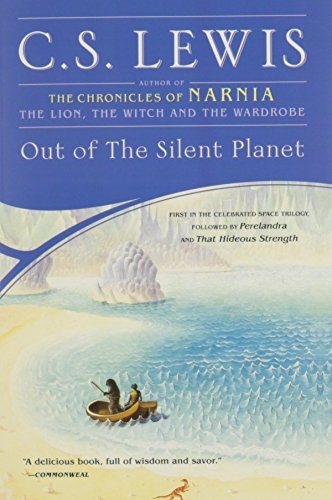
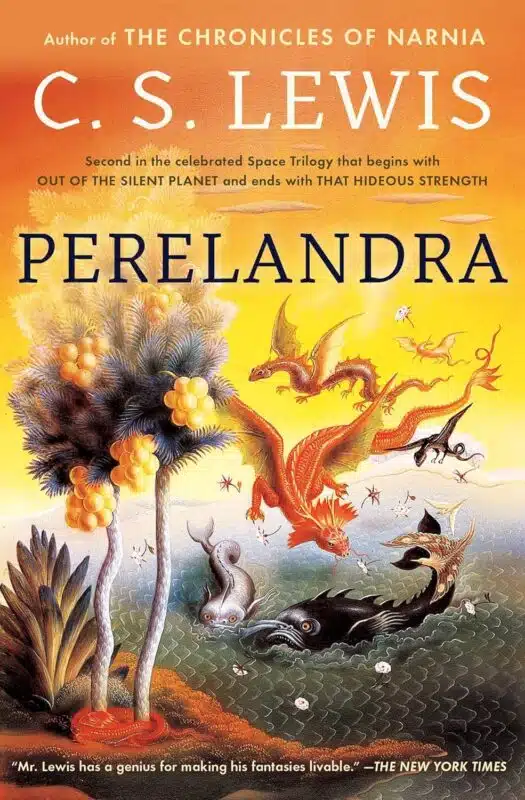
Yeah, he would always say that he never set out to convert anyone. He had these images in his head of a phone under a lamppost in the snow in the woods with a package. What’s the story? And so when finally Aslan, he described it as Aslan leapt into the story, and he always imagined, what if we took the basic mythology of the Christian story and suppose that mythology was placed in a different world, suppose that was reframed with a different set of criteria and characters and laws about the universe? What would that look and feel like? And so that’s what Narnia was to him. And actually, you could say that the Space Trilogy is also a kind of supposal as well. I mean, there’s a real through line between the Space Trilogy and Narnia, as the kind of themes he was exploring.
Sarah Mackenzie (29:37):
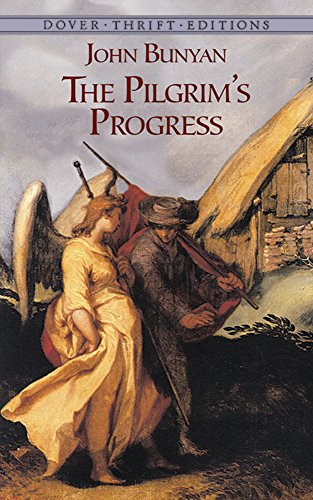
So that’s interesting, because it feels to me then a supposal feels like a, it’s almost opening up. Like Here, let’s take this mythology, put it in another land and see where it takes us, which kind of opens up the ideas. Whereas an allegory, if we’re thinking Pilgrim’s Progress or something, it almost feels like if you take a funnel, the opened up funnel, and we turn upside down because taking all these big ideas and consolidating it into, this means this and this means that, and this means-
John Hendrix (30:05):
It’s basically like a one-to-one in an allegory.
Sarah Mackenzie (30:08):
Yeah, yeah.
John Hendrix (30:08):
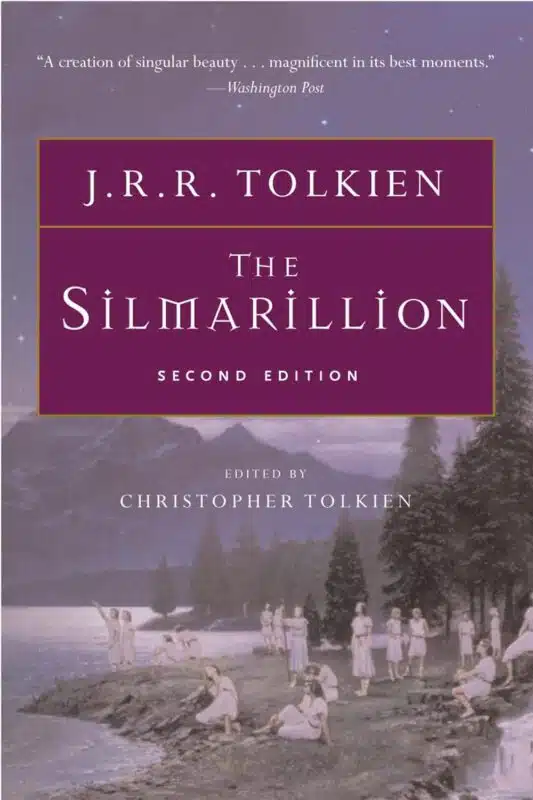
Yeah. And Tolkien famously said he hated allegory and criticized Narnia for some of those reasons. But of course, if you’ve ever read the Silmarillion, he basically did for the Old Testament what Lewis did for the New Testament in the Narnia books. I mean, the Silmarillion is Genesis. The first half of it is just Genesis re-skinned in Middle Earth language. And so-
Sarah Mackenzie (30:35):
Interesting.
John Hendrix (30:36):
They both were. And I mean, if I can say something about which writer was more obsessed with gospel themes, it was Tolkien by far. You could go through Lord of the Rings and come… I did this the other day. I was on a podcast where we were talking about this, and I came up with nine very clear themes in the books that are just head and shoulders over like Aslan at the stone table, which after you get past that book, it’s actually much more of just a fantasy series outside of the Last Battle. But there’s-
Sarah Mackenzie (31:06):
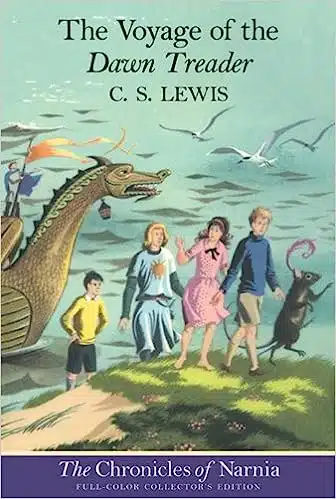
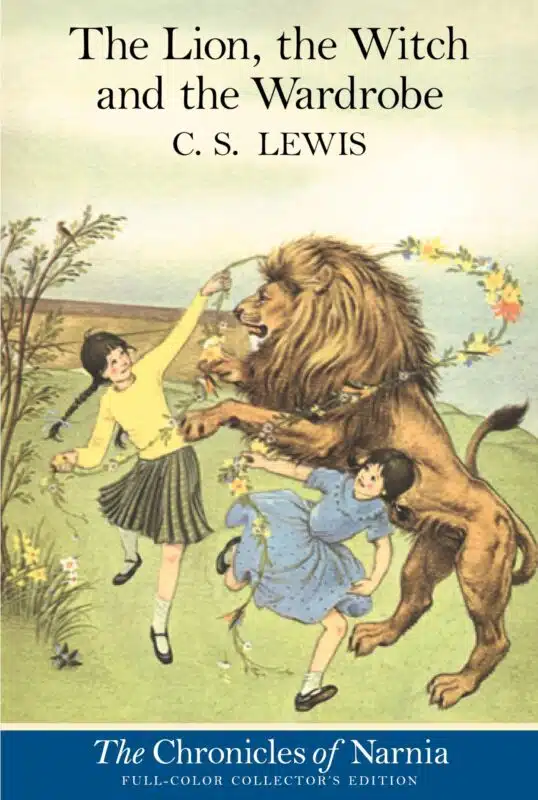
Yeah, and nobody accuses, accuses, but the Voyage of the Dawn Treader as being an allegory. It’s just The Lion, the Witch, and the Wardrobe.
John Hendrix (31:14):
Right, yeah. So again, they were actually very much doing the same project together their whole lives. And it’s of course something we can only see now looking backwards on it. But again, to that end is why I gave the book a sort of fantastical ending.
Sarah Mackenzie (31:37):
Talk to me about the, I don’t know what the word is, the, I was going to say dismantling, that feels like maybe a more violent word that I’m looking for, but of their friendship. And I felt it even as I was reading in the middle of when they’re at the Eagle and Child, the Eagle and Child, and they’re having these beautiful conversations and they’re pointing at each other’s work, like you said, and there’s this creative synergy happening, and I know it’s going to fall apart. And so I’m grieving it before it even comes because I know it’s coming. Talk to me about what happened between them.
John Hendrix (32:13):
Yeah, I had somebody write me an email that said, “I’m halfway through the book and I’m devastated because I think they’re not going to be friends by the end and I don’t think I could finish the book.” And I said, “I want you to trust me. I want you to finish the book. It’s going to be okay.”
(32:30):
And so, I mean, speaking just of my own theological point of view, this world is not our home. And for me, reflecting the reality of their friendship is in some way honoring the sort of condition of what life is here. And sometimes things are really, really hard and there is not a resolution that we long for. And I would say that they shared some of the most… They were not just friends, they were really bros, basically for 25 years. And then like a lot of friendships, there was a kind of dimming, there was a sadness, there was a kind of breakage that happened with some things that had to do with Lewis’ marriage and Tolkien’s Catholic beliefs. And they never were openly hostile. They would get a beer together in the company of the Inklings and friends throughout their lives, but that close fellowship that they had was never really repaired after his marriage to Joy.
(33:34):
And there is a kind of tragic loss to it because I mean, on one hand, they had this incredible hothouse friendship for 25, 30 years. I mean, the Inklings alone met for that for a huge period of time, from the late ’30s to the late ’40s. And that’s crazy to have a reading group that lasts that long and produces so much good work, but there is sort of inevitable loss that comes in this world. And I just didn’t want to shy away from that in telling their story.
Sarah Mackenzie (34:07):
Which also tells a deeper truth about, like you said, this world is not our home and this story not being at the end here. So, similar to the reader who wrote into you, I knew it was coming of course. So I was like, oh, but how are you going to put my heart back together at the end?
John Hendrix (34:25):
Let me tell you this. I wrote this story as a myth. All myths, as Tolkien told us in On Fairy-Stories, have what he believed to be the anti-catastrophe, or he called it the eucatastrophe, based on the word or the same root word as Eucharist, or thankfulness. And so Eucatastrophe is like the opposite catastrophe, and almost any good story has it. And Tolkien believed that the urtext for the Eucatastrophe is the biblical resurrection. So the way this thing works is you have the maximum amount of loss and pain with no hope of it ever being saved, and then immediately followed by maximum joy, sort of a reversal of the loss. And so, I’ll just say that I could not tell a myth without a true eucatastrophe in it. So, a.
(35:16):
Nd again, I had a little fun with the ending, I sweated over it. I really tried to make it worth the story itself and echo some of the things that I think Tolkien and Lewis believed themselves about the world. And so that was a challenge, but I’m happy with how it came out.
Sarah Mackenzie (35:38):
I think you’ve met your goals there, it’s very satisfying.
John Hendrix (35:42):
I like how mysterious we’re being. It’s very fun.
Sarah Mackenzie (35:44):
I know, everybody’s going to have to get the book at this point. Okay, this is a cruel question, but as we wrap up, you knew I was going to ask it, I’m sure. Two questions. I want to know who you are more like, Lewis or Tolkien.
John Hendrix (35:57):
Okay, I sort of categorize them. This is easy for me. I categorize them to help us understand their creative process in the book as sort of mythos versus logos, the sort of love of the word and fact, and then the love of the gesture and the story. And in some ways, you could call that a person, an analytical person, a logos person, or an intuitive person, a mythos person. And I’m much too intuitive by far. I write very intuitively. I think in big, broad shapes. I often struggle with detail. I mean, books like this are really challenging in the final pass where I need to go through and make sure everything I’m saying is accurate. There’s probably 10,000 individual facts in this book, and that really strains the way that I think about my own creative process. But we have wonderful people at Abrams, my editor, copy editors, fact-checkers. So yeah, we try to get most of them.
(36:51):
Okay, so if I’m stranded on a desert island and I have one series to take with me, Lord of the Rings or Narnia. Oh, man. So I’ve said I want the passage from Dawn Treader where Reepicheep goes over the wave basically to Aslan’s country. I want that at my funeral. I cannot read it without crying. And yet, I also would say the same thing of when Sam and Frodo are on the shoulders of Mount Doom and they see through the clouds Eärendil, the star of creation. That passage gets me every time.
(37:34):
I mean, I would probably just pick Lord of the Rings just for the sheer word count, just to have more things to read but yeah, it’d be pretty close. I mean, there’s actually something that happens every year about October. The first crisp day. I’m like, oh, it’s Fellowship of the Ring Time, and it just feels like something about the season makes me want to read those books.
Sarah Mackenzie (37:56):
John, thank you so much for coming on the show. That was great.
John Hendrix (37:59):
I do want to mention my… This is actually the other cruel thing that people do when they have you on. You talk about a project that you spend five years on, and then they’re like, “What’s next? What’s your next project?” And I’m always like-
Sarah Mackenzie (38:11):
What have you done for us lately?
John Hendrix (38:12):
Can we just read this book for the next three years? No, so I am working on my next long-form graphic novel is going to be about the Salem Witch Trials, and I’m really interested in telling this story for a kind of broad audience. Most people who know that story or they think they know that story from The Crucible or maybe Scarlet Letter or something, but I’m really excited about trying to tell maybe a scary story. And it’s way weirder than you think, it’s just a strange event. We’ll never know fully what happened, and I can’t wait to sort of unpack it for young audiences soon.
Sarah Mackenzie (38:53):
Where are you at in your own process of it?
John Hendrix (38:55):
Oh, well, I mean, initially it takes forever to read. So I’m reading and sketching out story drafts. And what I’ll do is I’ll write little snippets of things when it comes to me, and then I sort of rearrange them in a document together. And yeah, so look for this in 10 to 15 years, I guess. I don’t know.
Sarah Mackenzie (39:22):
Now let’s go hear from kids about the books they’re loving lately.
Graham (39:33):
My name is Graham Bickel, I’m from Wichita, Kansas, and I would recommend The Wingfeather Saga. Why? Because it’s full of mysteries, surprising surprises, and adventure.
Corinne (39:44):
Hi, my name is Corinne, I’m seven years old. I live in Wichita, Kansas, and the book I recommend is All-of-a-Kind Family, because they make friends with the librarian.
Amelia (39:58):
My name is Amelia Bickel, I’m 11 years old. I live in Wichita, Kansas. I like all books, but my favorite read-aloud is the Betsy-Tacy series. I think it’s a great classic for all girls to read. I like it because it makes me want to live next door to my best friend.
Speaker 6 (40:14):
What’s your name?
Faith (40:15):
Faith.
Speaker 6 (40:16):
How old are you?
Faith (40:17):
Four.
Speaker 6 (40:18):
And where are you from?
Faith (40:20):
Kansas.
Speaker 6 (40:21):
What is a read-aloud you would recommend?
Faith (40:26):
[inaudible 00:40:24], because she rips open the pillow and that’s my favorite part.
Speaker 6 (40:30):
Why do you like that part?
Faith (40:32):
Because it’s funny.
Speaker 6 (40:34):
Where do the feathers go?
Faith (40:36):
All over, even on the doggie.
Speaker 6 (40:39):
What’s the mommy do?
Faith (40:40):
Yell.
Speaker 6 (40:41):
Oh, no.
Faith (40:43):
She says, “I’m not going to yell.” Then on the other morning, the very last morning on the last page, she ripped up in the pillow and the mom again shouted.
Speaker 6 (40:55):
But then the mommy made it right, right?
Faith (40:57):
Yep.
Speaker 6 (40:58):
Oh, good, then they’re all good.
Faith (40:58):
And they picked up 100 [inaudible 00:41:02].
Speaker 6 (41:02):
What’s yours name?
Emmett (41:03):
Emmett.
Speaker 6 (41:04):
How old are you?
Emmett (41:05):
Six.
Speaker 6 (41:06):
And where are you from?
Amelia (41:07):
Kansas.
Speaker 6 (41:08):
What’s a read-aloud that you would recommend?
Emmett (41:10):
Wingfeather. It’s a really good book because when one of the kids grabs the knife out of Slarb’s pocket thingy, he slices him and Slarb turns around and he’s like a boy. And then-
Speaker 6 (41:25):
I think that was Commander Gnorm.
Emmett (41:26):
Oh, never mind. That was Commander Gnorm. And the kid, he finished him off.
Speaker 6 (41:38):
Who else do you think would like that book?
Emmett (41:40):
Boys.
Speaker 6 (41:41):
Yeah, and girls like it too, right?
Emmett (41:43):
Yeah.
Speaker 6 (41:44):
I like it, I’m a girl.
Emmett (41:46):
Yeah, that’s true.
Speaker 6 (41:48):
What’s your name?
Julia (41:49):
Julia.
Speaker 6 (41:51):
How old are you? You’re holding up three fingers. Good job. What book would you recommend?
Julia (41:58):
Over in the Meadow.
Speaker 6 (41:59):
What do you like about it?
Julia (42:00):
It breaks sometimes.
Speaker 6 (42:03):
It breaks sometimes because you love it so much.
Julia (42:06):
Yeah.
Speaker 6 (42:06):
Yeah.
Julia (42:06):
And then I started get tape on it.
Speaker 6 (42:10):
And then we get tape on it. Yeah.
Julia (42:13):
I love tape on it.
Speaker 6 (42:15):
You love tape on it.
Julia (42:15):
Mm-hmm.
Speaker 6 (42:16):
What do you love about the book?
Julia (42:19):
Yeah.
Speaker 6 (42:19):
Do you like that it’s a singing book?
Julia (42:20):
A singing book.
Speaker 6 (42:22):
Yeah, that’s fun.
Julia (42:22):
Over in the meadow.
Sarah Mackenzie (42:32):
Show notes for this episode are at readaloudrevival.com/261. I’ll be back in two weeks with another episode. In the meantime, go make meaningful and lasting connections with your kids through books.