RAR #202: For Kids Who Don’t Like Sad Stories
If you have a child who struggles with sad stories…a child who gets really uncomfortable when bad things happen and wants you to stop reading (or wants to stop reading themselves)… then this episode is for you.
And actually, it’s for them, too! In fact, it’s an episode you might like to listen to with your kids.
In this episode, you’ll hear:
- What to do if your kids get upset while reading sad stories
- Why you can predict what terrible thing might be coming (and when in the story it’ll happen)
- What the author is doing and why
- How to help your kids hang on to the story, and get all the way through to the hope
Click the play button below or scroll down to keep reading.

The Tent Poles Holding Up the Story
Have you ever been camping? Maybe you’ve slept in a tent?
There are many different shapes of tents: A-frame tents, domes, tunnels, cabins. They are different shapes, different sizes, and different colors.
Even though they are all different, those tents have a few things in common. They all:
- Provide shelter
- Consist of some kind of fabric that makes up the walls, ceiling, and floor
- Need poles or some kind of structure to hold them aloft
Tents are held up by poles. And stories are held up by a structure too.
Today I want to show you the poles that are holding up many stories and how they can help us understand what authors are doing doing in sad and scary stories.
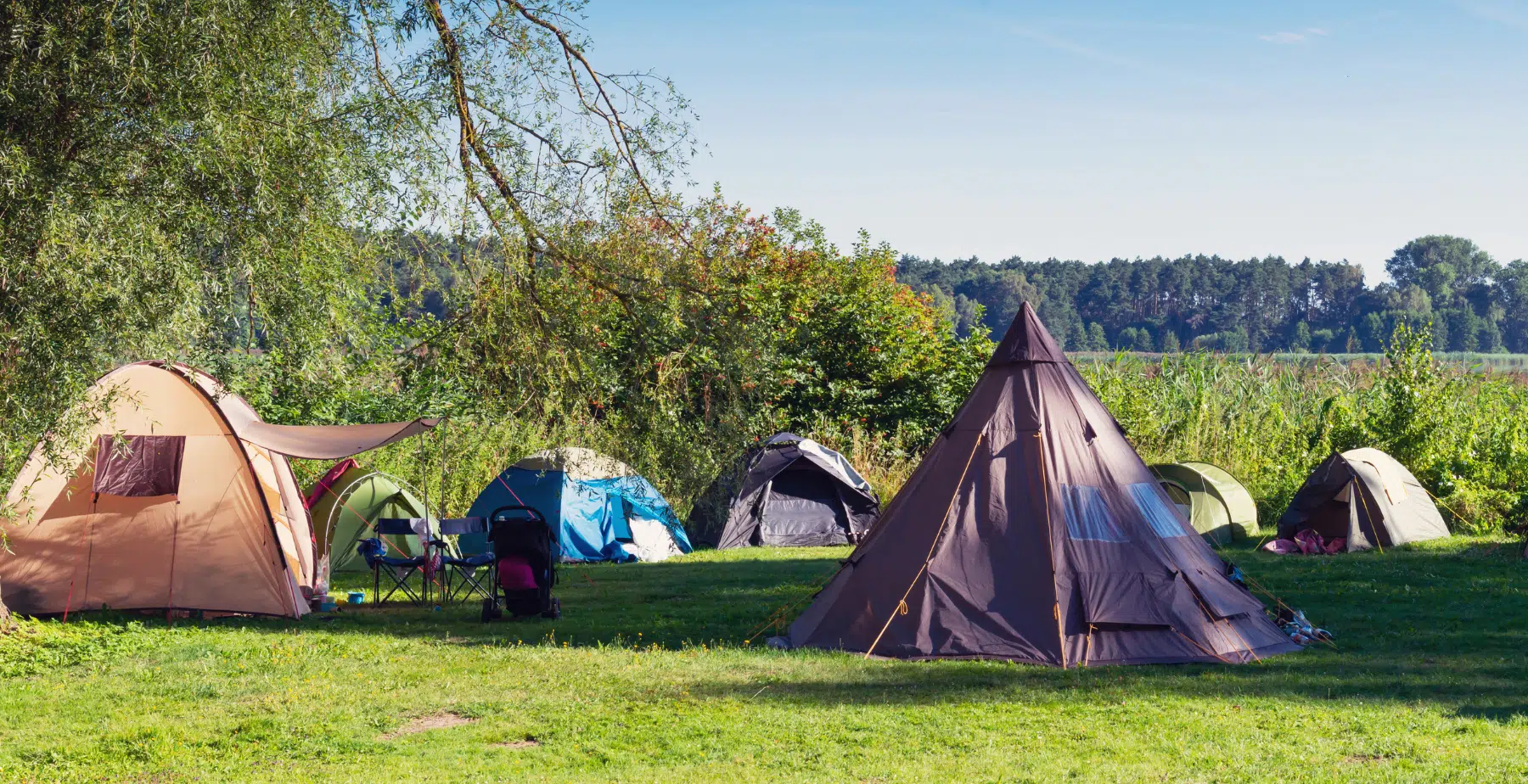
We can think of stories kind of like tents.
Stories, too, come in all shapes and sizes and are all different from one another.
But they all have a few things in common, too. They all have characters, for example. And those characters all encounter problems.
Knowing the structure of a story (or knowing what those poles are that are holding up the tent), can be really helpful.
It can help us understand why an author might have made something really sad happen.
The tent poles I’m talking about here aren’t there in every single story – but you’ll see some form of these tent poles in most of the stories you read.
Knowing Yourself, Knowing Your Kids
First, let’s be clear: there is nothing wrong with you if you get scared or upset when reading sad or scary stories.
God gave you all of your emotions–the happy, cheerful ones, and the sad and scared ones.
When we read, we feel strongly. That’s the way God made us. He designed us to respond to stories. So I’m not here to convince you that you shouldn’t get sad, or that your worry or discomfort is something you need to fix.
We read to live other lives, to visit new places, to travel through time, and yes, to feel deeply. But it’s wise, I think, to know your own limits.
And it’s wise for parents to know this about their kids.
When you feel really strongly as you’re reading a story, you can be grateful that you are fully alive and fully able to be the kind of compassionate, empathetic person who really cares about others.
Looking Beneath the Story…
What I’d like to invite you to do today is look with me at what’s just under the surface of the story.
We’re pulling the fabric back on the tent so we can see the poles that are holding it up.
Knowing how story structure makes a story work can often make those uncomfortable, sad, or scary parts of books a little less overwhelming.
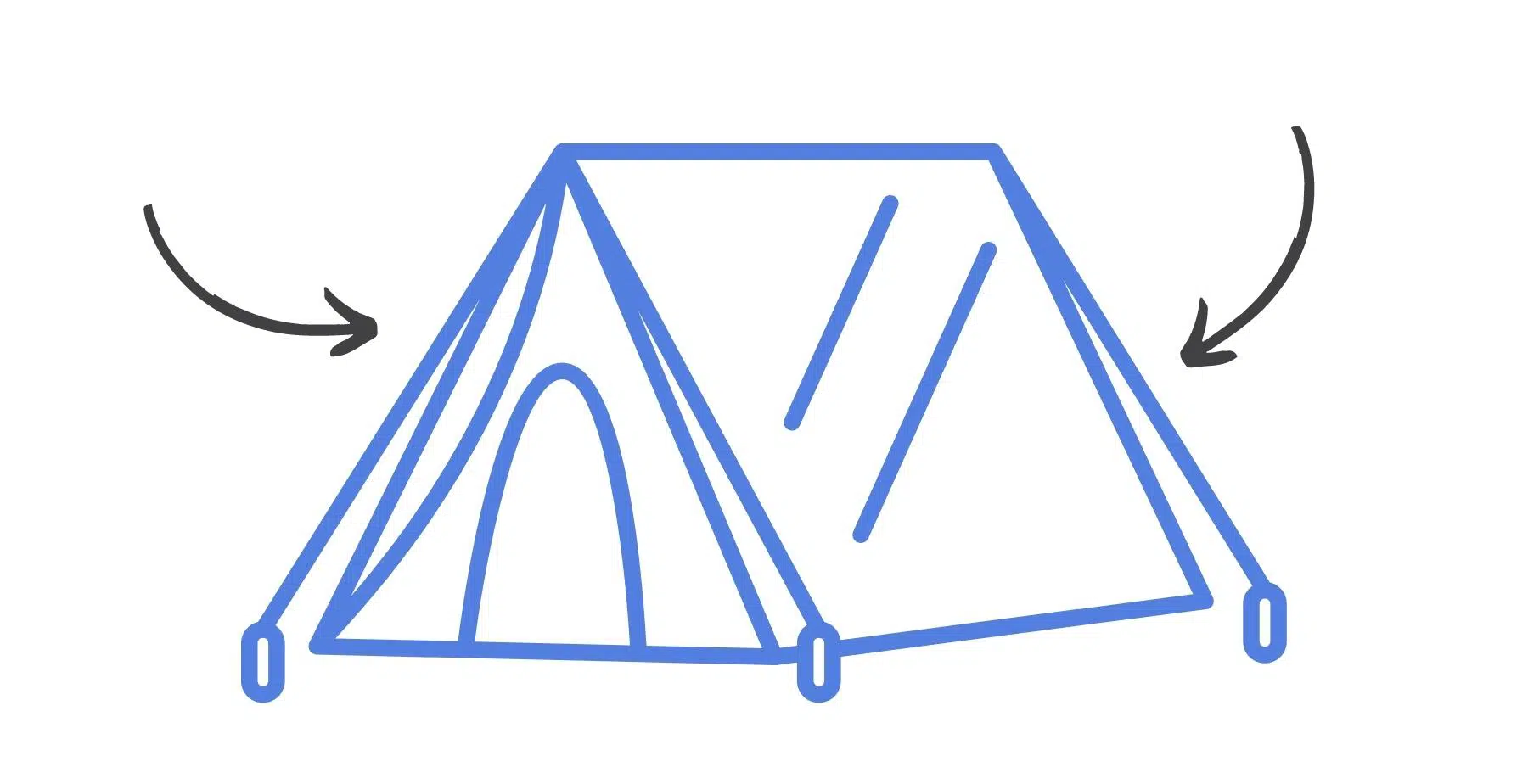
We might just better understand why the author chose to make that terrible thing happen. And we might just see the beauty of the story a bit more clearly when we look at them this way.
What Story Structure (Often) Looks Like
Jonathan Auxier taught a WOW: Writers on Writing Workshop in RAR Premium, and described story structure as these three parts:
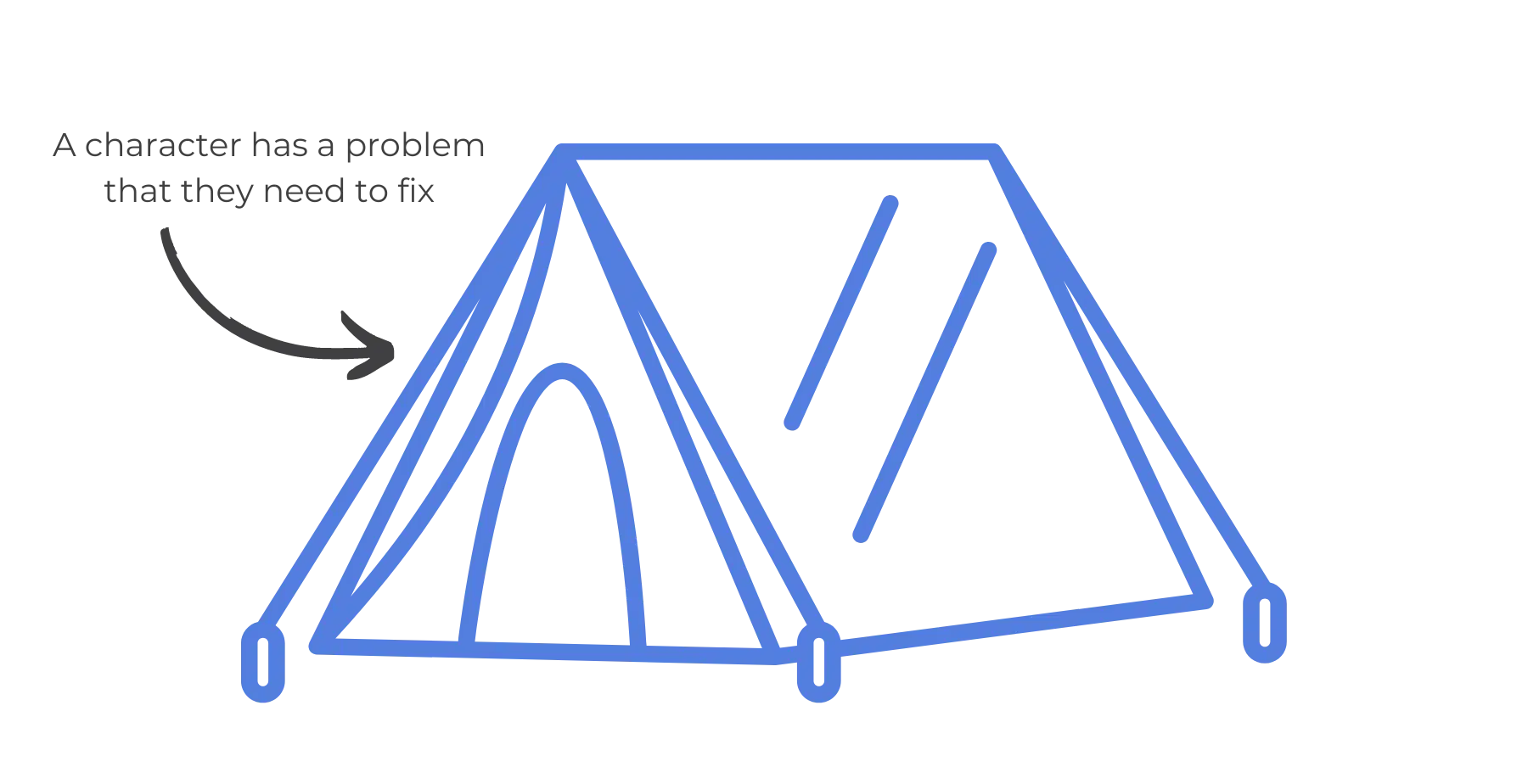
- A main character has a problem that they need to fix
- They take steps to solve that problem, and things get worse
- They discover the ultimate solution … and now everything is different
Of course, this is very simplified, but the pattern shows up in most stories that you read, and most movies you watch.
We’ve got a character, and that character has a problem.
If there’s no problem, there’s no story.
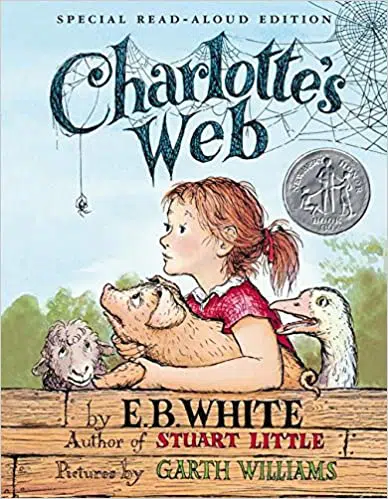
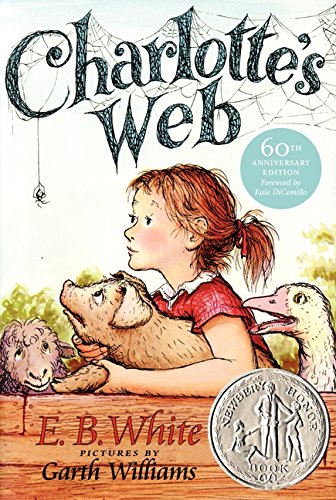
Let’s take a story most of us are probably familiar with: Charlotte’s Web.
Note: there isn’t a good way to talk about the structure of Charlotte’s Web without spoiling the ending. However, if you’re reading this post, you may very well benefit from having the ending spoiled a little before you read it for yourself.
Just know that if you read on, you’ll know how the story ends!
The Tent Poles in Charlotte’s Web
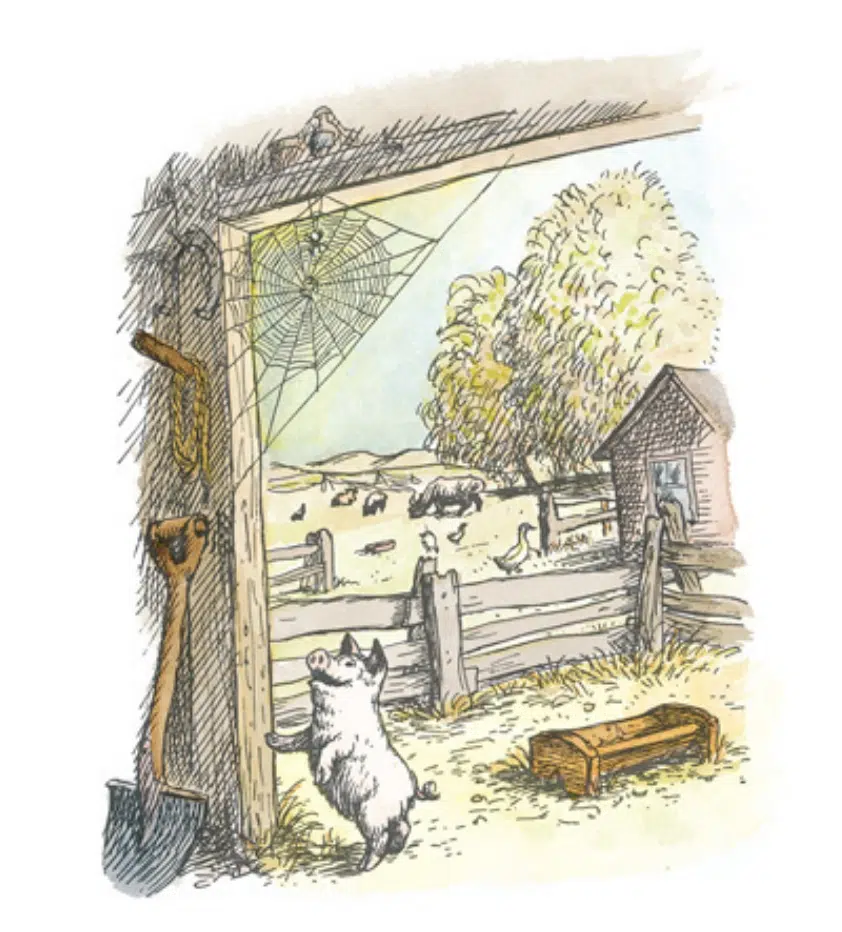
We begin Charlotte’s Web with a pig, Wilbur. He’s the runt of the litter—weak and helpless. Very early in the story, Wilbur discovers that his owners, the Zuckermans, are only keeping him so that they can eat him. (They are farmers, after all.)
On p. 50, Wilbur says quite dramatically:
“I don’t want to die. Save me, somebody! I want to stay alive, right here in my comfortable manure pile.”
His problem, then, is very clear to us: Wilbur wants to live. He wants to be saved.
Aha. This is one of those tent poles: A character has a problem they need to fix.
We know what this character wants: in Wilbur’s case, to live!
Something else is very important here at the beginning. Early in our story, Wilbur asks the other farm animals to play with him. They won’t, though.
“Pigs mean less than nothing to me,” the lamb tells him.
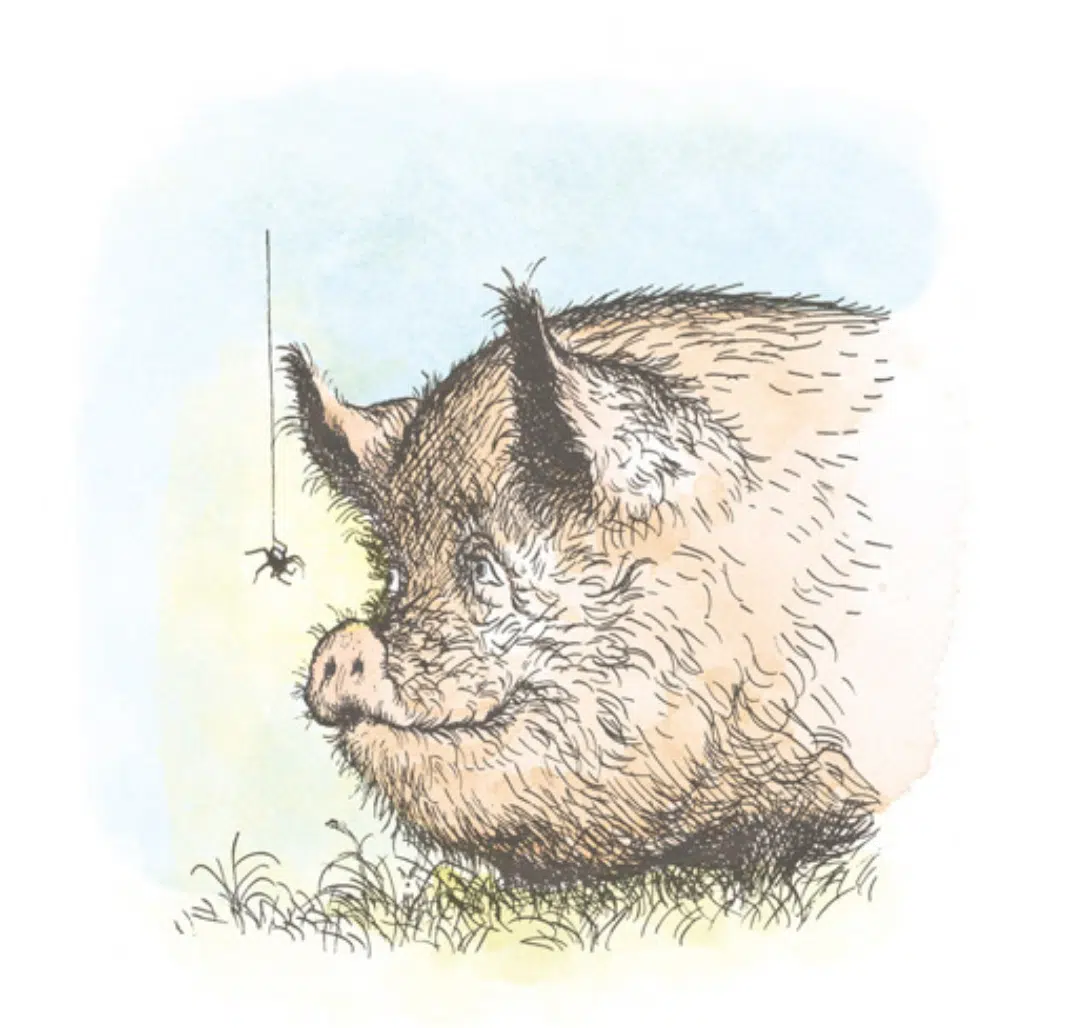
Wilbur is terribly lonely and desperately wants a friend. And he gets one in the spider, Charlotte. Charlotte is not only wonderful, she also promises Wilbur that she won’t let him die.
So now we know what Wilbur fears most: death
And we also know what he loves most: Charlotte
It’s a “take anything else away, but please don’t take away ____” scenario.
Wilbur would probably fill that in with “Charlotte” Please don’t take away Charlotte.
Oooh. This is important.
As soon as we know what the main character wants most and fears most, we can probably predict the hardest thing that’s going to happen in the story.
In fact, we can also predict when it will happen within the story.
“All is Lost”
At the 75% mark, we come to what storytellers often call the “All is Lost” moment.
If we know what the main character most fears will happen, we can almost always guess what’s going to happen at about the 75% mark of the story.
- If the main character most fears losing her favorite backpack, that backpack is going to be nowhere in sight at the 75% mark.
- If the main character most fears moving away from her best friend, the best friend will very likely move away at the 75% mark.
- If the main character most fears deep water, that main character is probably going to find himself in a deep pool or a lake at the 75% mark.
Because at about the 75% mark, the main character has to overcome their greatest fear to get what they most need.
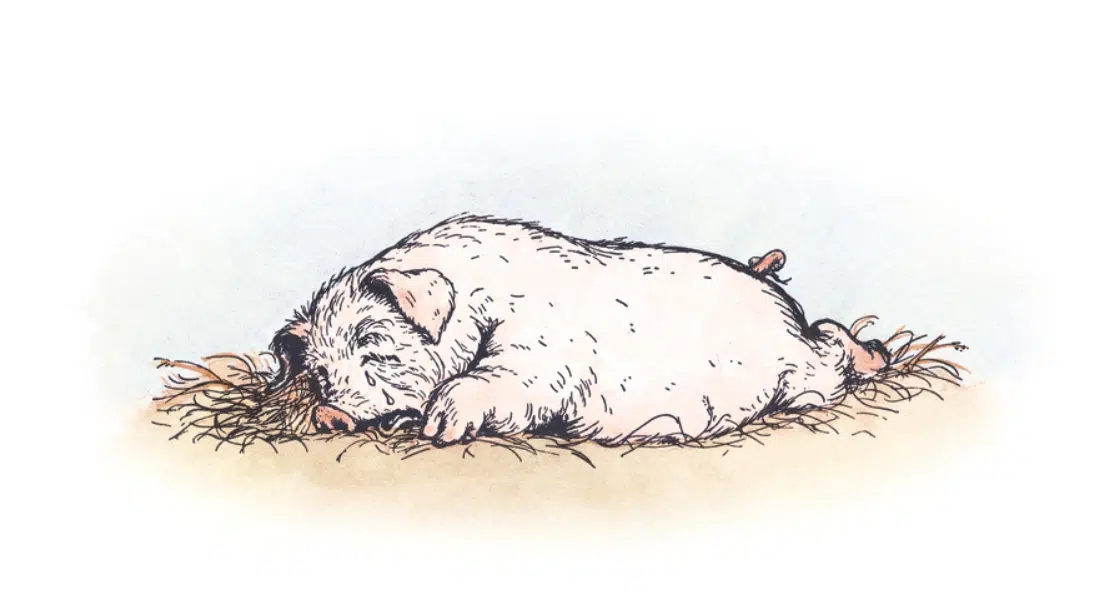
In our example of Charlotte’s Web, we can pretty confident that at about the 75% mark, Wilbur is going to be very close to death, and he might even lose Charlotte.
And in fact, that’s what happens.
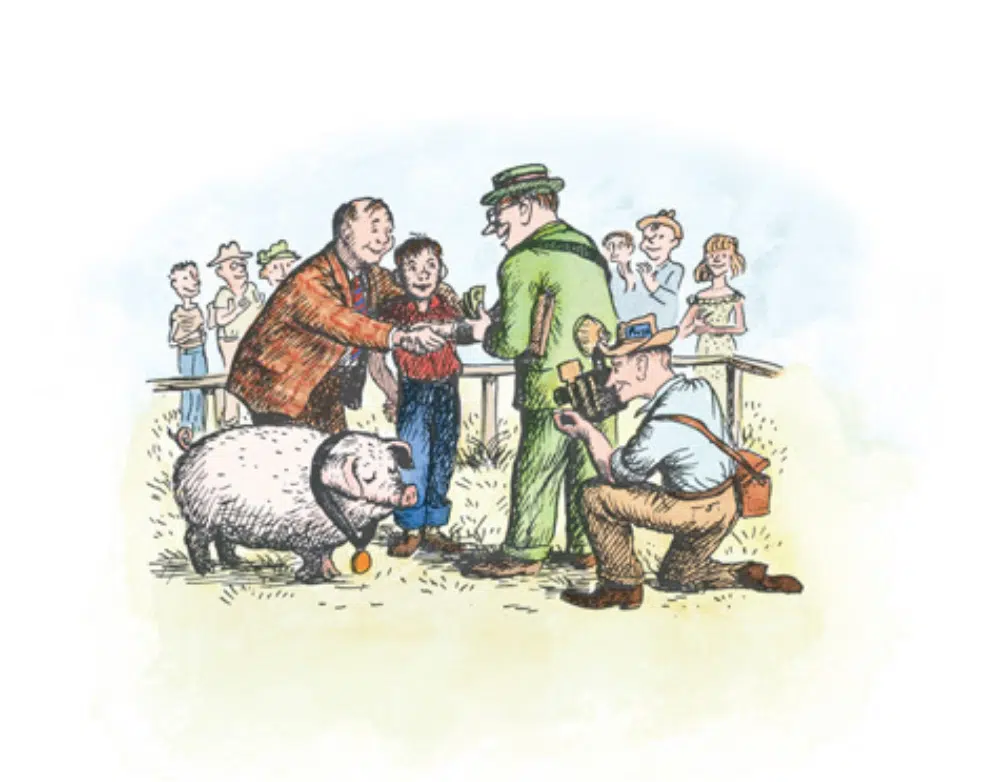
Charlotte and Wilbur have tried to save Wilbur’s life by making him win the blue ribbon at the fair. After all, who would slaughter a prize-winning pig, just for bacon? The rat Templeton tells Wilbur has failed in his attempt to stay alive. He hasn’t won the blue ribbon he needed to keep from being slaughtered.
“I noticed a big blue prize on the front of his pen. I guess you’re licked, Wilbur- no one will hang any medal on you.”
So now surely he’ll die, right?
At the end of that chapter, we also see Charlotte’s health fading:
“Charlotte crouched unseen, her front legs encircling her egg sac. Her heart was not beating as strongly as usual and she felt weary and old.”
Now… you know what we said Wilbur loved more than anything. And unfortunately, that often means the character will lose that thing they love more than anything.
In Wilbur’s case, he does lose Charlotte. She has had her babies, and it’s now time for her to die. So Wilbur will be saved, yes—but he loses the thing he loves most, his one and only friend.
This may be one of the saddest literary moments I can think of.
We’re Not Done Yet!
But of course, the story doesn’t end there. There’s still a quarter of the story to go, in fact.
Authors don’t write sad and scary stories or torture their characters just because.
They do it because in a story, the character needs to face their biggest fear in order to become who they need to be.
Stories show us again and again that we can overcome what we fear. That we can keep going, even when something bad happens, and that soon, things might look different, but that’s OK. Sometimes, it’s even better than before.
But our character needs to overcome his weakness. And what was Wilbur’s weakness?
Remember back at the beginning, when he was a dramatic, weak little runt? He threw himself down and cried at bad news, instead of doing anything about it. He wanted to have a friend, but didn’t know how to be one.
So what Wilbur needed was to become strong and determined, and to be a good friend.
Take a Close Look Here
This is one of those tent poles I want you to see. I want you to know it’s there.
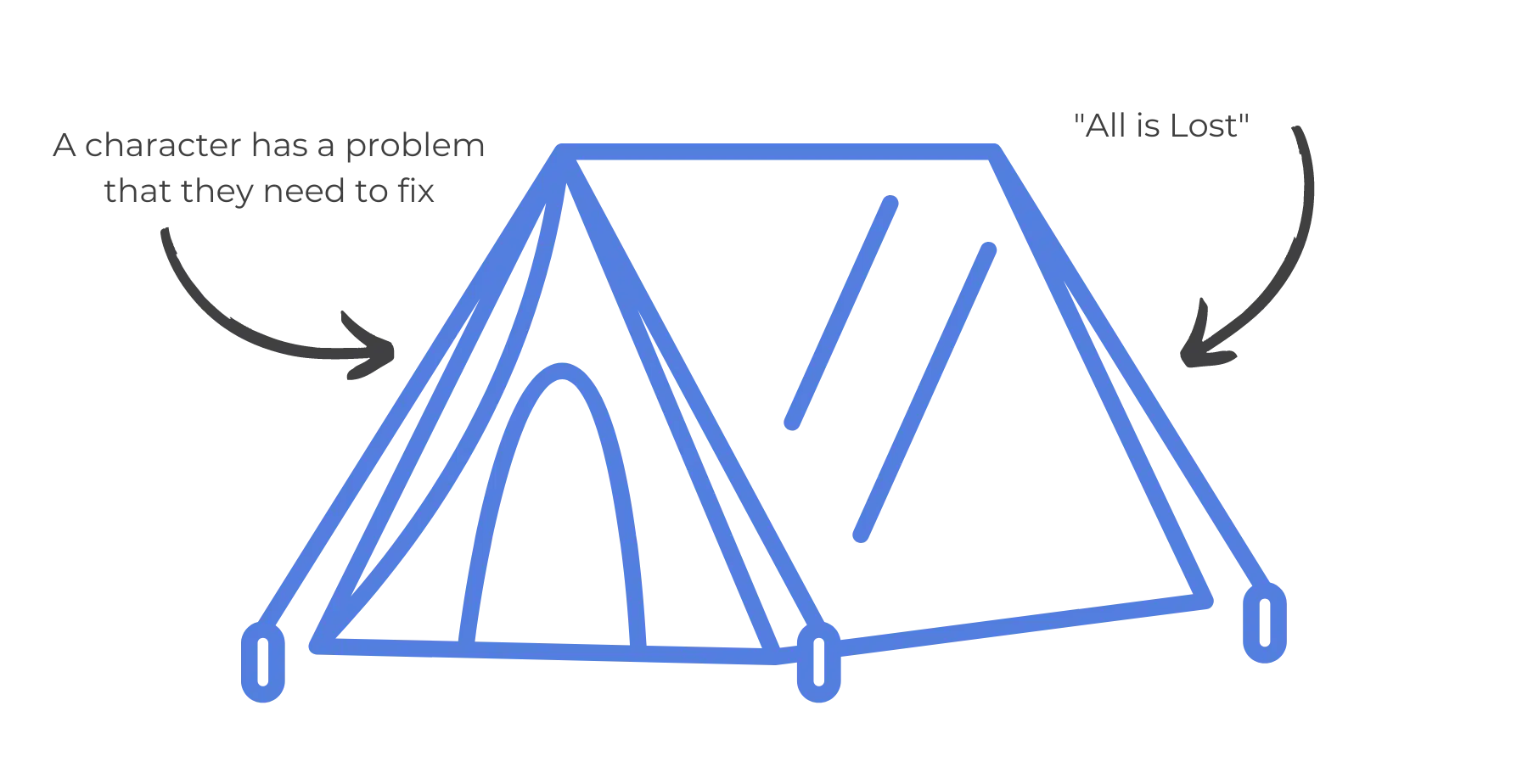
Because if you know, when you first start a story, that what a character most fears will likely happen at around the 75% mark in order for them to become who they need to be, then you might not be quite as caught off guard when it does happen.
And even better, you’ll know what the author is up to.
And On Toward Hope…
After Charlotte dies, her babies start hatching from the egg sac, and Wilbur is momentarily elated. Then they do what they were born to do—they fly away on their silk threads to start their lives elsewhere, and Wilbur begs them to stay. Three of them do.
He’s a different pig than he was at the beginning. He’s strong and determined, and knows how to be a good friend (as demonstrated by the careful way he tends to Charlotte’s babies while they are in their egg sac.)
And, as it says at the very end:
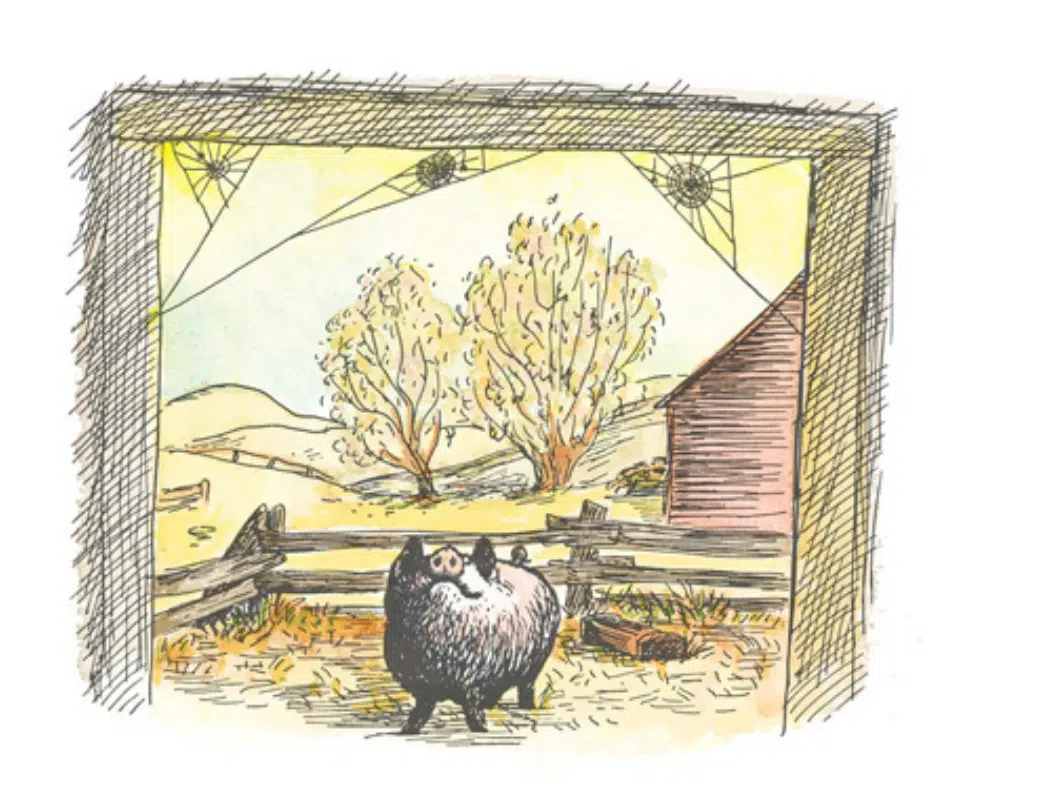
Life in the barn was very good—night and day, winter nad summer, spring and fall, dull days and bright days. It was the best place to be, thought Wilbur, this warm delicious cellar, with the garrulous geese, the changing seasons, the heat of the sun, the passage of swallows, the nearness of rats, the sameness of sheep, the love of spiders, the smell of manure, and the glory of everything.”
So we have a character who has a problem, tries different things to fix it, and at the 75% mark, it almost always looks like “all is lost” and that thing the character most fears, he or she loses.
But only so that the story can show the character what they need. Because the story never ends at the 75% mark. They overcome their weaknesses, and life is better than before.
We Can Bear It
What this all means is that by reading a sad story, we get to bear witness to a character overcoming odds and becoming who they need to be to fix the problem they started with.
It can also help because when we get to that sad part – we know it’s not the end.
The character hasn’t become who he/she needs to be yet. They have to overcome their weaknesses.
Kate DiCamillo once wrote about her friend, who read Charlotte’s Web over and over as a child. Kate asked her why she re-read the book so many times. Did she hope if she read it again, things would turn out differently?
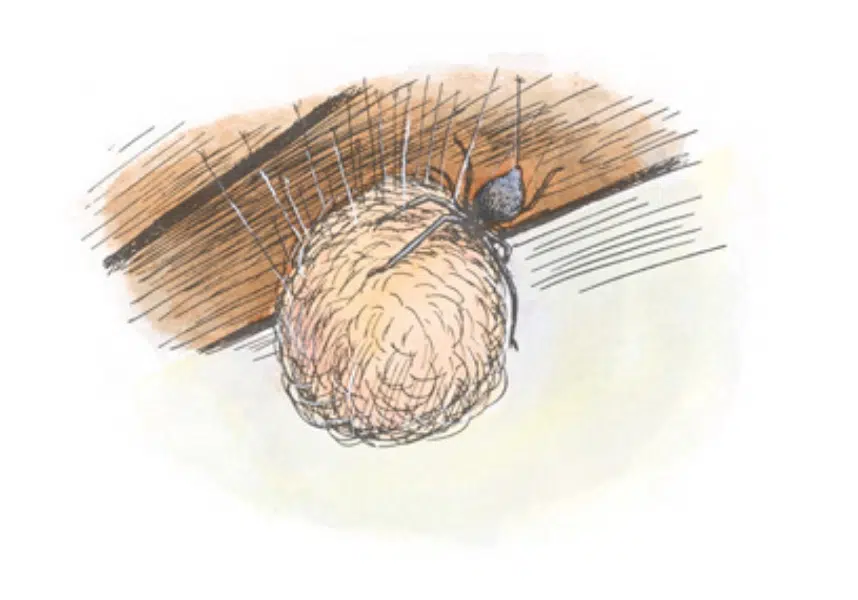
‘No,’ she said. ‘It wasn’t that. I kept reading it not because I wanted it to turn out differently or thought that it would turn out differently, but because I knew for a fact that it wasn’t going to turn out differently. I knew that a terrible thing was going to happen, and I also knew that it was going to be okay somehow. I thought that I couldn’t bear it, but then when I read it again, it was all so beautiful. And I found out that I could bear it. That was what the story told me. That was what I needed to hear. That I could bear it somehow.’
And so that’s what a story does. It helps us see that others can face what they think they cannot face.
And so can we.
An Example from Frog & Toad Are Friends:
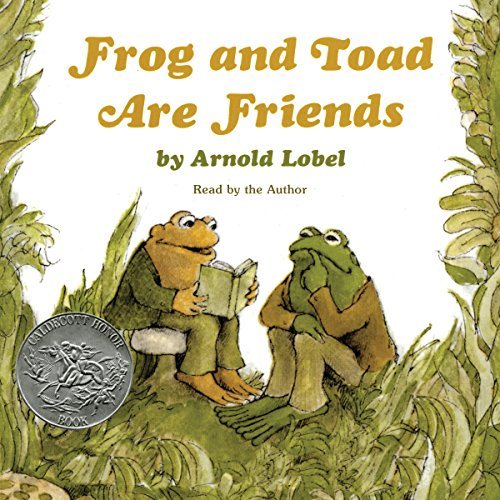
Have you ever read Frog & Toad’s “A Lost Button?”
In that story, Toad has a problem – he’s lost his button. He wants his button more than anything. Take anything else, but give me my button!
So he spends the story trying to find it (and failing). And at the 75% mark, we really think he’s not going to get that button.
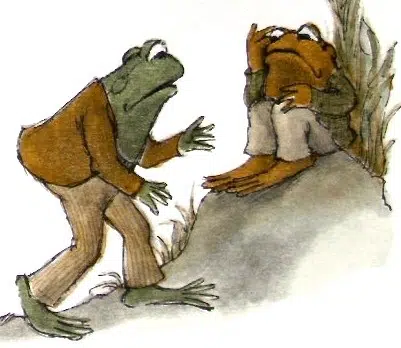
The story says:
Toad put the thin button in his pocket. He was very angry. He jumped up and down and screamed, “The whole world is covered with buttons, and not one of them is mine!”
And then Toad slammed the door.
But that’s not the end, right?
No.
In the end, he DOES get his button. But first, he has to overcome his weakness.
His weakness was that he wasn’t very kind to his friend Frog while they were looking for his button. He valued his button over his friend for the whole first part of the story.
In this story, Toad overcomes his weakness of anger, and even though we don’t think, at the 75% mark, that he’ll ever find his button, he does … in the end.
Very, very sad things can happen here at the “All is Lost”
In a really sad book, the 75% mark may be a point where someone the main character loves more than any other dies. It may be that someone they love moves away.
But calling it the “All is Lost” can help you.
When you name it, you remember what is happening underneath the tent. It has to happen to hold the tent up.
The author knew that what the story needed was for the main character to face the thing he or she was most afraid of happening, in order to become the person he or she needed to become.
The Best Stories Leave Us with Hope
Knowing that at the 75% mark, the main character will face their biggest fear and knowing it won’t end there can help you.
If you know this is what is happening beneath the story, you might just feel a little better about the sad parts. If you know this about a story, it might help you when you get to that sad or scary part of the book.
You can ask yourself: “What is the author doing here? Why did he or she put this in here?”
Because you know that an author, when writing, is often asking himself or herself, “What’s the worst thing that could happen to my character?” and then … THEY MAKE THAT HAPPEN.
I know, authors are the worst. :)
But the best stories, even though they might take us to somewhere really, really sad, leave us in a place of hope.
First we have to watch the character face the thing he thinks he cannot face. Then, we see the character (and hopefully, we see ourselves, in our own real world) in a whole new light. With new eyes.
The characters become who they need to become, and we become who we need to become. Because as Julian of Norwich says:
All will be well, and all will be well, and all manner of things will be well.
Look for the Tent Poles; Look for the Hope
The next time you read a story, see if you can find the tent poles underneath.
Ask yourself at the beginning: what does this character want more than anything? What do they fear more than anything?
So then what might happen at the 75% mark?
And then when you’re at the 75% mark, ask yourself: what weaknesses will the character need to overcome?
Sometimes this can be hard to see while you’re reading, and is much easier to see after you’ve finished.
And remember – it’s OK to not like really sad stories. Even E.B. White cried while narrating the audiobook in a sad part of Charlotte’s Web. In fact, it took him 17 tries to get through recording the saddest part of his book, Charlotte’s Web, for the audiobook.
If you are someone who really doesn’t like very sad stories, there are so many really great stories … read those like crazy.
Also, for parents, go to trusted sources for good stories that leave us with hope like:
And, maybe some day, sad and scary stories will get easier. Maybe just knowing about tent poles will make reading sad books easier!
Whatever you do…
Don’t let the fear of sad or scary books keep you from reading.
Look for the tent poles, look for the hope.
If this is interesting to you, be sure to watch the Storytelling Made Simple Workshop RAR Premium. This is part of our WOW: Writers On Writing series, where kids learn writing techniques from today’s best published authors.
You can find out more at RARpremium.com.

Books mentioned in the show

Links mentioned in the show


You might also like…
- Reading ‘messy’ books about hard topics with kids
- Inputs to nourish the soul
- My kids aren’t good about picking books at the library. What do I do?
Sarah Mackenzie (00:00):
If you or any one of your kids find the sad or scary moments in books to be nearly unbearable, if maybe you or your kids get really uncomfortable when bad things happen during the stories you're reading or listening to, this episode is for you. In fact, it's an episode you might like to listen to with your kids. I'm Sarah Mackenzie. I'm really glad you're here.
(00:34):
You're listening to the Read-Aloud Revival Podcast. I'm your host, Sarah Mackenzie, homeschooling mama of six and author of The Read-Aloud Family and Teaching from Rest. As parents, we're overwhelmed with a lot to do. It feels like every child needs something different. The good news is you are the best person to help your kids learn and grow, and home is the best place to fall in love with books. This podcast has been downloaded 7 million in times in over 160 countries. So if you want to nurture warm relationships while also raising kids who love to read, you're in good company. We'll help your kids fall in love with books and we'll help you fall in love with homeschooling. Let's get started.
(01:30):
Have you ever been camping? Maybe you've slept in a tent. There are a lot of different shapes of tents, right? A-frame tents, domes, tunnels, cabins. If you look at a camp site with lots of campers, you'll often notice several different kinds of tents. They're all different shapes and different sizes and different colors. But even though they're all different shapes, sizes and colors, those tents have a few things in common. They all provide shelter. They usually consist of some kind of fabric that makes up the walls, the ceiling, the floor, and they all need poles or some kind of structure to hold them aloft. Otherwise, a tent is really just a heap of fabric on the ground. If you forget your poles at home, you probably have to go back to get them. The tent won't be of much use to you without them. Tents are held up by poles and stories are held up by a similar structure.
(02:30):
Today, I want to show you the poles that are holding up many stories. We can think of stories, kind of like we think of tents. They come in all shapes and sizes. They're all different from one another, but they all have a few things in common too. For example, they all have characters. And those characters all encounter problems. Well, knowing the structure of a story or knowing what those poles are that are holding up the tent, it can be really helpful and it can help us understand why an author might have made something really sad or tragic happen in a story we were otherwise loving. Now the tent poles I'm talking about here, aren't in every single story you'll read, but you'll see some form of them in most of the stories you read.
(03:20):
I want to say right here at the beginning, that if you are reading a story and get sad or scared, there is nothing wrong with you. If you find that you are maybe more sensitive and can't quite handle the intensity of stories that your siblings can, for example, that's okay, there's nothing wrong with you. God gave you all of your emotions, that happy cheerful ones and the sad and scared ones. And when we read, we feel strongly. That's the way God made us. He designed us to respond to stories. So I am definitely not here to convince you that you shouldn't get sad or that your worry or your discomfort is something you need to fix. No way. In fact, I would encourage you that if you know you have a hard time with particular kinds of stories, that's really good information. That's information, actually, that adult readers use all the time when we're choosing books.
(04:15):
It's a good thing to know about yourself. As you're choosing books and deciding what you're going to read next, what kind of stories make you feel uncomfortable? What kind of stories are not your favorite and which ones are?
(04:26):
We read to live other lives, to visit new places and travel through time and yes, to feel deeply. But I think it's wise to know your limits. Parents, this is a wise thing to know about your kids because is informed self-aware adults do this all the time. They filter and decide which stories they're going to read or which movies they're going to watch based on the filters. They know, "What can I handle? What am I able to sift through and sort through? This is good information. This is discerning." And self-aware adults avoid topics that are too much for them. I avoid certain movies that I know are just going to either show me something or describe something or take me somewhere I don't want to go. And the same thing can happen with books. Not every book is for everybody. And following your gut to say, "This book or story is not for me right now," can be a really wise decision.
(05:22):
So when you feel really strongly kids and adults, as you're reading a story, you can be grateful that you are fully alive and fully able to be the kind of compassionate, empathetic person that really cares about others. So my advice today is not to read books that are sad, even if they're very troubling for you. Rather, what I'd like to invite you to do in this episode is look with me at what's just under the surface of the story. So we're going to like pull the fabric back on the tent so that we can see the poles that are holding it up because knowing how story structure makes a book work can often make those uncomfortable, sad, or scary parts of books, a little less overwhelming. We can understand why the author chose to do this terrible thing to this character. We can see the beauty of this story a bit better when we look at them this way.
(06:15):
At Read-Aloud Revival, we hear sometimes from parents of kids who really struggle anytime, anything bad at all happens in a story. And I'll tell you what, my now 18-year-old daughter, Allison, she as a four-year-old child became very, very distressed whenever Pooh, Winnie-the-Pooh got stuck in the honey tree. And I don't mean like she was a little worried. I mean, she was distressed with a capital D and I really worried that she was overly sensitive and she was not going to be able to handle stories at all because as far as story problems go, getting stuck in the honey tree is kind of mild. But she did outgrow that. And for many years, I was pretty careful about the intensity of the stories that she encountered, and I'm really glad I was. That's what discerning parents do. We watch our kids and we respond to what they need and what they're ready for. And we kind of help them with their training wheels as they're ready to be able to ride on their own. So again, use discernment, be your child's ally. You are the best expert on what your kids are ready for.
(07:20):
This podcast episode and the post that goes with it is a resource to help you. If you find that your kids are having a hard time when anything goes wrong in a story, and they're struggling to enjoy stories because of that, you might find what I share in this podcast to be useful. And you might want to share it with them so they can hear about what's going on underneath the story, because it really can help.
(07:53):
Now let's talk about what story structure looks like. I'm talking about those tent poles. What are those tent poles? I am a total story structured nerd. So I could nerd out about this for hours and hours with you, but I won't for your sake. And for the sake of this podcast, I want to talk specifically about a couple of points in story structure that can really help our sensitive readers. So I'm going to way simplify it for this podcast.
(08:19):
Now, Jonathan Auxier, who's one of our favorite middle grade writers and YA writers at Read-Aloud Revival, he taught a WOW: Writers on Writing Workshop in RAR Premium. And WOW: Writers on Writing Workshop is a series of workshops where we invite our kids' favorite published authors to come teach our kids elements of the writing craft and they're one of the most popular parts of RAR premium. If you've got kids who want to write or who maybe need a little bit of a boost when it comes to their writing to do something fun and useful, and they would like to learn from the writers of their favorite books, you definitely want to check those out. Those are in rarpremium.com. So he taught this WOW: Writers on Writing Workshop and described story structure as these three main parts.
(09:09):
Number one, a main character has a problem that they need to fix. Number two, they take steps to solve that problem and things get worse. And number three, they discover the ultimate solution and now everything is different. I'll say those one more time. Number one, a main character has a problem that they need to fix. Number two, they take steps to solve that problem and things get worse. And number three, they discover the ultimate solution and now everything is different.
(09:41):
Now this is pretty simplified, but this pattern of three shows up in most stories that you read, most movies that you watch. It's the underlying structure of a lot of stories. We've got a character. That character has a problem. Now, if there's no problem, there's no story. Think right now, if you can, of a story that you recently read or of a movie you recently watched. Got it, got one just in your mind? Okay. Who was the main character? Say it out loud. Who is the main character? All right. Toward the beginning of the story, did that character have a problem? It might not be in the opening scene or the opening chapter, but toward the beginning of the story in the first 10%, 20% of the story, did they have a problem? Probably. Otherwise, there wouldn't have been much of a story. There wouldn't have been much to say.
(10:33):
So I think I'm going to walk you through this part of the structure, seeing the tent poles, with a story that most of us are probably familiar with. And I'm actually going to choose a movie for this because sometimes it's easier to see in movies and movies, of course, are just stories that we watch with our eyes. We're taking them in through a different sense than a story written on the page or that we're listening to with our ears. So let's talk about Toy Story because most of us have probably seen Toy Story.
(11:02):
Now in Toy Story, the first movie, we have a main character Woody. Woody is a toy cowboy who belongs to the human child, Andy. And in fact, Woody is Andy's very favorite toy. So life is pretty good for our main character at the very beginning, because being the favorite is pretty nice. But then Woody's life changes because on his birthday, Andy gets another toy, space ranger Buzz Lightyear. Aha. Now Woody's rank as favorite toy is challenged because Buzz Lightyear has a laser. His helmet does this cool whoosh thing. He's basically amazing. Now we know something important right here at the beginning of Toy Story. We know that our main character Woody wants more than anything to remain Andy's favorite toy because he believes that being the favorite is where he gets his worth and value. It's what makes him special or that's what he thinks makes him special.
(12:07):
This is one of those tent poles. A character has a problem that need to fix. We know what this character wants. In Woody's case, he wants to be Andy's favorite. And we know what the character fears most kind of like a take anything else away, but don't take away this. You can imagine that with your character. So whatever story you thought of when I said, hey, think of when you just finished either a or a movie, did the main character have a problem? You can probably imagine at the beginning of that story, the character saying something like, "Take anything else away, but just don't take away..." Fill in the blank. What would that be? In this example of Toy Story, Woody might answer that as, "Take anything else away, but please don't take away Andy." Or, "Please don't take away my spot next to Andy."
(12:58):
Okay, this is really important, because as soon as we know what the main character wants most and fears most, we can probably predict the hardest thing that's going to happen in the story. In fact, we can also put addict when the hardest thing will happen in the story.
(13:27):
At the 75% mark, or this is about three fourths of the way through the book. So kids, if you were dividing your book into four equal sections, part one, part two, part three, part four, and that's the whole story. Once you've read the first three of those, in a movie, when it's three quarters of the way done with the movie, about the 75% mark, we can call this the all is lost moment.
(13:52):
If we know what the main character most fears will happen, we can almost always guess what's going to happen at about the 75% mark of the story, that horrible thing that they most don't want to happen. So if the main character most fears, let's say losing her favorite backpack, that backpack is going to be nowhere in sight at the 75% mark. Or if the main character fears moving away from her best friend, the best friend will probably move away or the main character will move away from the best friend at about the 75% mark. If at the beginning of the story, we understand that the main character fears deep water more than anything, that main character is probably going to find himself in deep water, like a deep pool or a lake or something at the 75% mark. Because the 75% mark, about three quarters of the way into the book, the main character has to overcome their greatest fears to get what they most need. I'll say that one more time. At the 75% mark or about three quarters of the way into the book, the main character has to overcome their greatest fears to get what they most need.
(15:08):
In our example of Toy Story, we can be pretty confident that at about the 75% mark, Woody is going to lose Andy, because that's what he fears most. He's going to lose Andy in order to get what he most needs. And what does he most need? Not necessarily what does he most want? We already know what he wants. He wants to be Andy's favorite. What does he need? Well, hmm. Think back to the beginning of Toy Story. Maybe what Woody most needs is to understand that he's valuable, even if he's not the favorite, even if Andy loves Buzz Lightyear just as much as he loves Woody. Or maybe Woody needs the love of not just Andy, because at the beginning, he seems like he doesn't think he needs the friendship or love of anyone else. If he's got Andy, he's got everything he needs, but we all know that you don't just need the love of one person. He needs the love of other friends too. So maybe he needs one of those things to either understand he's valuable, even if he's not the favorite, or the friendship and love of others.
(16:08):
But what actually does happen at the 70% mark of Toy Story? I'll tell you. I'll remind you. Andy's about to move and Woody and Buzz are not with him, so he's going to move without them. They're actually stuck with Sid, this terrible child who's about to launch Buzz Lightyear with a rocket, which will probably kill Buzz Lightyear. And now we're pretty sure Woody is going to lose everything he wanted, Andy, because he's nowhere near Andy and Andy's about to lose. And he's about to lose Buzz Lightyear too. And throughout the story up until this point, Woody and Buzz have become pretty good buddies throughout the movie. That means that Woody's about to lose everything that mean something to him. But of course the story doesn't end there. There's still a quarter of the story to go, in fact. One fourth of the story left.
(17:03):
Now, authors don't torture their characters just because. They do it because in a story, the character needs to face their biggest fear in order become who they need to be. Stories show us again and again and again that we can overcome what we fear, that we can keep going even when something bad happens, and that soon things might look different. And that's okay. Sometimes it's even better than before. So Woody has to make room for more relationships than just friendship with Andy. And he has to make room for Andy to love another toy.
(17:41):
So in the end of the Toy Story, Woody and Buzz end up landing with Andy safely, they get back to Andy safely. And actually in the end of the story, Woody gets both. He gets what he wants, Andy, and he gets what he needs, friendship with Buzz and the love of someone besides just Andy. And the space for Andy to love both of them, Woody and Buzz. So you see we have a character who has the problem. He tries different things to fix it. And at the 75% mark, it almost always looks like all is lost. And that thing the character most fears, he or she probably loses, but only so that the story can show the character what they need because story never ends at the 75% mark.
(18:33):
So this is one of those tempos I want you to see. I want you to know that 75% all is lost moment is there, because if you know when you first start a story that what a character most fears will happen, probably is going to happen at around the 75% mark in order for them to become who they need to be, then you're not going to be quite as horrified or shocked when it does happen. You now get to bear witness to that character overcoming odds and becoming who they need to be to fix the problem they started with. It could also help be because when you get to that sad part, you know it's not the end. The character hasn't become who he or she needs to be yet. They have to overcome their weaknesses.
(19:20):
And I'll tell you parents, this is a part in the story where if I'm watching a movie or reading a book with my kids and I have one who really wants to bail here at the 75% mark, I'm usually pretty reluctant to let them do that because we're letting them end it at the hardest worst part of the story. 75% mark is almost always the hardest, worst part of this story, as far as the character being in deep trouble. And so helping your child keep reading, it's only going to go upward. Once we to 75%, you're kind of like deep down in the valley, as far as the character and what they're facing, and it's only going to go upwards. So keep going, because it's going to get better.
(20:01):
In Woody's case, he had to overcome his own weakness and his weakness was selfishness. He was selfish at the beginning of the movie. He wanted Andy all to himself. He didn't feel like he needed friendship with anyone else. And that was a weakness. He had to overcome that. Actually in Toy Story, Woody ended up having to rescue Buzz. At first, he thinks Buzz is the reason his life has just gotten awful. And by the end of the movie, he and Buzz have such a good friendship that he rescues Bud from that horrible kid Sid in order to get both of them back to Andy. So he actually had to save Buzz's life and make room for Buzz in his heart in order to get what he wanted, which was Andy. So then you can remind yourself that at that 75% mark, this hard thing is going to help the character become who they need to be.
(20:53):
Have you ever read Frog & Toad's, A Lost Button? I love Frog & Toad. So in this story, Toad has a problem. He's lost his button. He wants his button more than anything. Take anything else, but don't take away my button. Give me back my button. So he spends the story, trying to find it and failing. And that's really the essence of what a story is. A character has a problem and they try things and they fail to get it. And at the 75% mark, we really think Toad is not going to get that button. In the story, the text says this:
Speaker 2 (21:29):
Toad put the thin button in his pocket. He was very angry. He jumped up and down and screamed, "The whole world is full of buttons and not one of them is mine." Toad ran home and slammed the door.
Sarah Mackenzie (21:49):
But that's not the end, right? No, because this is the 75% mark. In the end, Toad does get his button, but first he has to overcome his weakness. His weakness in this story is that he's not very kind to his friend Frog while they were looking for his button. He valued the button over his friend and he was rude and angry and he let anger get the better of him. So in this story, Toad overcomes his weakness of anger, and even though we don't think at the 75% mark that he'll ever find his button, he does in the very end. In a really sad book, the 75% mark might be the point where someone the main character loves more than any other dies. It might be that someone they love moves away. Very, very sad things can happen here at the all is lost moment.
(22:47):
And calling this moment, the all is lost, can help you because when you name it, you remember what's happening underneath the tent. It reminds you that the tent isn't all there is. There's a pole underneath there holding that tent up. And this pole is called the all is lost and the author put it there on purpose. It has to happen to hold the tent up. It has to happen to make the story work. The author knew that. The author knew that what the story needed was for the main character to face the thing that he or she was most afraid of happening in order to become the person that he or she needed to become. So then knowing that at the 75% mark, the main character will face their biggest fear and knowing it won't end there can help you. Because if you know that this is what is happening underneath the tent, if you know this is what is happening underneath the story, you might just feel a little better about the sad parts.
(23:43):
If you know this about a story, it might help you when you get to that sad or scary part of the book. You can ask yourself, "Okay, what is the author doing here? And why did he or she put this in here." Because when an author is writing, they're often asking themself, "What's the worst thing that could happen to my character?" And then they're making that happen. I know this because I read a lot of writing books and I'm in a lot of writing trainings. And I talk to a lot of authors and this is a question they ask themselves, "What's the worst thing that could happen to my character?" And then they make that happen. I know authors are the worst. Why do they do this? They do this because this is what a story is. A story is a character with a problem. And they have to things to fix their problem and fail until it looks hopeless. And then they overcome their weakness in order to succeed.
(24:33):
And the very best stories, even though they might take us somewhere really, really sad, leave us in a place of hope. So first we have to watch the character face, that thing he thinks he cannot face. And then we see the character and hopefully we see ourselves in our own real world in a whole new light with new eyes. The characters become who they need to become and we become who we need to become. Because as Julian of Norwich says, "All will be well, and all will be well, and all manner of things will be well." and when you get to that all is lost moment, you can remind yourself, "Whew, we are at the 75% mark. It's supposed to look hopeless. All will be well, and all will be well, and all manner of things will be well."
(25:29):
So the next time you are reading a story or watching a movie, see if you can find the tent poles underneath, see if you can find the two tent poles I really told you about. One at the beginning, where you're finding out what does this character want more than anything? And what do they fear more than in anything? Because once you can answer those two questions, what do they want more than anything? And what do they fear more than anything? You can probably make a guess as to what that tent pole at the 75% mark, that all is loss is going to happen.
(26:00):
And then when you're at the 75% mark, you can ask yourself what weakness does this character have to overcome? Because that will remind you that this character is not done yet. They've just got to overcome their biggest weakness. And sometimes this can be really hard to see while you're reading or while you're watching the movie. And it's easier to see after you've finished it. So sometimes I just read a story and don't worry about any of this at all. But afterward, especially if I got really up set at the 75% mark, I might take a second and go back through and see if I can pick out those tent poles. See if I can recognize what was it that the character wanted and what did they fear most of all? And what was the weakness they had to overcome? What was the always lost moment? What was the worst thing that could happen to this character? What probably happened at that 75% mark?
(26:50):
Remember we are all made differently, but just how God intended, not any one of us is a mistake. So it's okay to not like really sad stories. So even if you have this tent pole strategy and you can remember, "Okay, this is the 75% all his lost moment, and I know what the character wants and I know what the character is afraid of." And you have all this information and you still think, "But I really still don't like sad stories," that's okay. There's nothing wrong with you.
(27:18):
Even E.B. White, the author of Charlotte's Web, when he was narrating that audio book, the saddest part of that audio book took him 17 times to try to get through the recording of it. So he's there recording this audio book that he wrote. He could have made it come out differently, but it took him 17 tries to get through reading the saddest part of book without crying. So if you are someone who just really doesn't like sad stories, there are a lot of other stories that are not as sad, that are not as dark or as heavy. And so read those like crazy.
(27:57):
And then parents, as you are helping discern which books are a good fit for your kids, and as you are trying to help up your more sensitive readers, find books that stretch and grow them, but don't make them feel uncomfortable or put too much of a burden on them. Use book lists and trusted resources to help you pick those. Of course, we have tons of book lists at Read-Aloud Revival, readaloudrevival.com. You can use all of those. I also highly recommend the book recommendations at redeemedreader.com. They have great book reviews, especially for books that are coming out more recently. And they just give you a heads up as to the kind of content that your child might encounter in the book. And that can be really helpful.
(28:39):
And then another place I often go is commonsensemedia.org, because there people will put reviews or just comments about different hard things that come up in the book. So they can be a good way for you to preview is this a good fit for my child at where they are right now? So go to those places. Preview what a story might contain and it kind of give you a little insight as you discern what's a good fit for your kids.
(29:02):
Remember, you are the expert on your own kids. So there is no one book list that they have to read, or there's no book that every child must read or nothing like that. You get to choose. And so you can choose to get books that are lower in intensity or higher in intensity, depending on the way God made your child and what they're ready for. And then maybe someday, sad stories will get easier. And also maybe just knowing about the tent poles, knowing what's holding the story up will make reading sad books a little bit easier, because you can kind of back up and see it from a bird's eye view or like a more cerebral view of like, "Hmm, what is the author doing here?" But whatever you do, don't let the fear of sad or scary or intense books keep you from reading. Look for the tent poles, look for the hope.
Abigael Lee (29:57):
Hello. My name is Abigael Lee. I'm nine years old. I'm from Dearborn, Michigan. My favorite books are Caps for Sale because the monkeys are [inaudible 00:30:05], and Juniper Jones because she is hilarious and mischievous.
Anna Liss (30:10):
Hi, my name is Anna Liss and I'm eight years old. And my favorite book is Angelina Ballerina.
Speaker 5 (30:17):
And why do you like Angelina Ballerina?
Anna Liss (30:19):
Because she dances and I always wanted to be a dancer.
Caleb (30:26):
Hello. My name is Caleb and I'm seven years old. My favorite book is the Boxcar Children. My favorite part, when they find the Boxcar. Bye-bye.
Ali (30:39):
My name is Ali. My favorite book is The Little House. I'm three years old and I'm from Georgia.
William (30:51):
My name is William and I'm six years old and I'm from Georgia. And one of my most favorite books is The Wild Robot. It's because she lands on a wild [inaudible 00:31:03] and she learns about the animals and becomes their friend.
Sarah Mackenzie (31:08):
Oh thank you so much kids. I love hearing about the books that you are enjoying and you've picked some winners in this group. If your kids would like to leave a message for the podcast, you can go to readaloudrevival.com/message. That's where they can leave me a voicemail. If this episode has been interesting to you, be sure to check out the WOW: Writers on Writing Workshop inside RAR Premium. It's called storytelling made simple and it's taught by Jonathan Auxier. It's just one of the workshops he did for us. And both of his workshops, and in fact, all of our Writers on Writing Workshops have been really excellent. So you can learn more at rarpremium.com to find out how your kids can take workshops from some of today's best published authors.
(31:56):
Thanks for listening. We'll be back next week with another episode, I can't wait. I'm glad that you're here. And in the meantime, you know what to do. Go make meaningful and lasting connections with your kids through books.
(32:16):
So many of us feel overwhelmed in our homeschool. There's a lot to do and it feels like every child needs something a little different. The good news is you are the best person on the planet to help your kids learn and grow, and home is the best place to fall in love with books.
(32:43):
I'm Sarah Mackenzie. I'm a homeschooling mother of six, the author of Teaching from Rest and The Read-Aloud Family. And I'm the host here on the Read-Aloud Revival Podcast. This podcast has been downloaded over 8 million times. And you know, I think it's because so many of us want the same things. We want our kids to be readers, to love reading. We want our homes to be warm and happy havens of learning and connection. We know that raising our kids is the most important work of our lives. That's kind of overwhelming, right? You are not alone.
(33:26):
In Read-Aloud Revival Premium, we offer family book clubs, a vibrant community, and Circle with Sarah coaching for you, the homeschooling mom. So you can teach from res, homeschool with confidence, and raise kids who love to read. Our family book clubs are a game changer for your kids' relationship with books. We provide you with a family book club guide and an opportunity for your kids to meet the author or illustrator live on screen. So all you have to do is get the book, read it with your kids and make those meaningful and lasting connections. They work for all ages, from your youngest kids to your teens.
(34:12):
Every month, our community also gathers online for a Circle with Sarah to get ideas and encouragement around creating the homeschooling life you crave. They're the most effective way I know to teach from rest and build a homeschool life you love. We want to help your kids fall in love with books and we want to help you fall in love with homeschooling. Join us today at rarpremium.com.