Christmas Picture Books That Make the Nativity Feel New Again
The Nativity is such a familiar story throughout the Western world that Christians and non-Christians alike can recite the story. We know the Wise Men and their gifts, we know the shepherds and the Star, we know the story so well that sometimes the story of the birth of Christ can lose its wonder and awe.
This year for RAR Premium’s Christmas School we decided to choose books that help us see the story of the Nativity through fresh eyes and renew our sense of wonder. This year’s Christmas School looks at the Nativity in three ways: through the hopes of trees, the eyes of a (very darling) mouse, and the grief of a particular wood carver.
On today’s episode, I’m joined by author Karma Wilson, RAR Premium Coordinator Leilani Curtis, and illustrator P.J. Lynch to introduce you to these wonderful stories.

・ Christmas School ・
A Simple Plan for a Peaceful Christmas Season
Bring your family together with Christmas School, a 3-week family book club that helps you connect with your kids and make beautiful memories at this special time of year.
In this episode, you’ll hear:
- Why Karma Wilson wanted to write a child-forward take on the Nativity story and how that goal shaped the story
- How three trees give us a new perspective on the transformation and hope in the Nativity
- How P.J. Lynch altered his typical approach for the illustrations for The Christmas Miracle of Jonathan Toomey
Some links are affiliate links
Books and Resources Mentioned in This Episode:


Sarah Mackenzie (00:05):
Welcome to the Read-Aloud Revival podcast, the show where we help your family make reading a way of life. I'm your host, Sarah Mackenzie. I'm the author of Teaching From Rest, The Read-Aloud Family, and a few picture books. Today on the podcast, we're going to talk about one of my favorite stories, one that so many of us are so familiar with, the story of the nativity. Now, here's the thing. The nativity is such a familiar story throughout the Western World that Christians and non-Christians alike know it by heart. You might not know how Joshua won the battle at Jericho or the story of Paul's conversion on the road to Damascus, but you know that a young woman gave birth to Jesus of Nazareth and placed him in a manger because there was no room at the inn. You know about the wise men and their gifts. You know about the shepherds and the star. In fact, the birth of Christ is such a familiar story that we can lose the wonder and awe at the heart of it.
(01:10):
But something that I just love about books is their ability to help us see differently, to see the world anew. Books, as G.K. Chesterton says, make rivers run with wine only to make us remember for one wild moment that they run with water. We get to see familiar things with fresh eyes. Seeing the nativity story through fresh eyes is exactly what we set out to do with Christmas School this year. Now, every year inside Read-Aloud Revival Premium, we share a simple plan for a peaceful Christmas centered on books, family, and of course, Jesus' birth. Thousands of families join us to slow down, savor the season, and wait in joyful hope for the birth of our Lord. This year's Christmas School looks at the nativity story three ways, through the hopes of trees, through the eyes of a mouse, a very darling mouse I might add, and through the grief of a particular woodcarver. After all, the nativity is, as Pope Leo put it, a love story that draws us in.
(02:24):
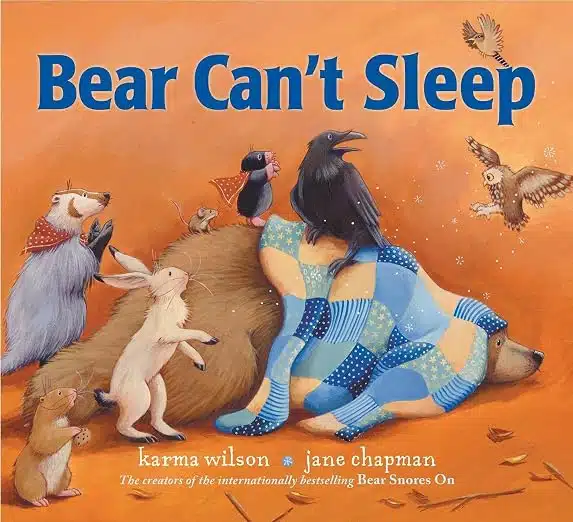
Today we're going to talk with three fabulous people about three fabulous books that help us look at the nativity with fresh eyes. Let's get started. Today, I am welcoming one of my very favorite picture book authors onto the show. She's probably one of your kids' favorites too. I'm talking about Karma Wilson. She is the author of those bear books that you love, Bear Snores On, Bear Can't Sleep, Bear Wants More, so many others. In fact, the newest book in this series, Bear Feels Sad, was just nominated for a High Plains Award. Today, what I want to chat about with Karma is this book that I love so very much, and I hope you read with your kids this Christmas, Mortimer's Christmas Manger. First of all, Karma, welcome back to the Read-Aloud Revival. I always love chatting with you.
Karma Wilson (03:18):
Thank you. It's so good to be here. I really appreciate you having me on. And my friend Sarah is very excited, I must give her a shout-out. Sarah, hi, I love you.
Sarah Mackenzie (03:29):
Oh, that's so fun. Hi, Sarah. Karma, tell me ... Mortimer's Christmas Manger, this is just one of my very favorite books of yours. It's one of my favorite Christmas picture books. It's sweet and surprising in the best ways. And I think it's one of those picture books you sit down to read aloud with your kids and you start laughing because of the illustrations, and Mortimer's just too endearing. Can you tell me where this book came from? Do you remember?
Karma Wilson (03:55):
I do. And I'm glad that it makes people laugh because it came to me at a very, very hard, difficult time in my life, and I had ... I'll try not to cry. I had had a miscarriage and I needed something, and I reached out to God and I said, "Please send me something that will pass hope onto people," and let them know that He loves them and He loves everybody. And so crying in bed at night, it came into my head and it was an amazing experience actually. It was very, very wonderful to me. And that story just kind of flowed from there, and I found myself laughing, and it was very cathartic. Well, yeah.
Sarah Mackenzie (04:42):
Well, I can imagine as you were writing it-
Karma Wilson (04:44):
It's too depressing, I'm sorry.
Sarah Mackenzie (04:46):
No. Mortimer tugging and lugging the nativity characters around and rolling around in the manger ... I mean, when you saw the illustrations from Jane Chapman, were you just so delighted?
Karma Wilson (05:01):
I was, and of course I love Jane, and she does all the bear books as well. So yeah, to see little Mortimer come to life and his own little expressive personality, similar to mouse and the bear books, but very much his own character, it was really, really amazing. And I loved just watching the progression from the sketches to the final art, it was very edifying. Jane is amazing, she's just an incredible illustrator.
Sarah Mackenzie (05:33):
This is my favorite illustration, which I'm going to hold up for people who are watching this on YouTube, but I'll describe it for you, Karma, and also for our listeners, which is the page that says, "Then into bed crawled Mortimer. He fell fast asleep in the soft, warm hay." And this illustration of Mortimer laying in the bed, which we know is the manger, whom he ... making sure he got that baby out of the way.
Karma Wilson (05:57):
Yes. Like, "Get out of here."
Sarah Mackenzie (06:00):
I mean, it's just too much. It is so fabulous. One of the things I love about this book, and the books that we're reading Christmas School this year are that they help us ... So many of us know the nativity story in and out. We hear it every year. We understand it. We've read it a million times in our Bibles, but to be able to experience the nativity story from a different perspective, like to look at it fresh with fresh eyes, from the eyes of Mortimer who has no idea who this baby is that he just knocked out of bed, you know?
Karma Wilson (06:35):
Right.
Sarah Mackenzie (06:35):
So delightful. And so I just really appreciate that fresh take on ... When you were writing this book, did you know Mortimer had to be a mouse or how did that happen?
Karma Wilson (06:47):
I feel like there's a lot of really beautiful Christian books that are really heavy and that tend to lose children. And at that time, I really wanted to write a book that was child-forward, I guess you could say, and it really pulled them into the story. So for me, that was a big part of it, is that I wanted it to be approachable. And I tell kids this on my school visits, I really feel that anthropomorphic reaches everybody. So it includes everybody, it doesn't leave anybody out. And so a mouse came to me immediately, and then Mortimer, the name Mortimer followed shortly thereafter. I have since found out that Mickey started as Mortimer, and I did not know that.
Sarah Mackenzie (07:37):
Wait, Mickey Mouse, like Disney's Mickey Mouse?
Karma Wilson (07:39):
Yes.
Sarah Mackenzie (07:39):
Really?
Karma Wilson (07:40):
Yes.
Sarah Mackenzie (07:40):
I did not know that either.
Karma Wilson (07:42):
Yes. Isn't that crazy? So anyway, it was an interesting tidbit to me.
Sarah Mackenzie (07:46):
Well, one of the things that's tricky for a picture book author, I think, at least in the picture books that I've written, is leaving room for the illustrator, is making sure that I'm not overstepping, because one of the things we like to talk about around here is how a picture book is this alchemy of visual storytelling and storytelling through language. When you're writing, do you purposefully think through leaving parts for the illustrator? Or what comes up for you when I say all that?
Karma Wilson (08:14):
Yeah, I definitely try to leave things very open for the illustrators. I do try not to put in too many illustrator notes or guide them along because that's kind of the beauty of the job for them, is they get to interpret my words and take it where they want it to go. But sometimes there's jokes that need to be described just to make sure, but it's very, very rare, and I do like to leave things open-ended for the illustrator, and I like to give them lots of opportunities to bring out the humor on their side. I know Jane has said that my books have really stretched her in that area, so that's nice to hear, and it helped her to grow. For my book, A Dog Named Doug, I said, "I am writing this book for the illustrator." I left it very open-ended completely, and I said, "We need to find an illustrator who has an incredible sense of humor." And they did a great job, and I left all the jokes kind of open for them, and I didn't describe them in the words.
(09:14):
But yeah, I think that it's really important to give leeway to that illustrator and allow them to put their own mark into the book. I know a lot of young writers when they hear that you don't get to pick your illustrator, they're flabbergasted, they can't believe it, and they hate giving up that control. And I remember being a young writer and kind of feeling that way too, but it's very, very important part of the process. And they're their own artist and their own creator, so it's really an amazing marriage of the words and the pictures, and the two different personalities come through together and they become their own thing. I think with Mortimer that's apparent, and especially with the bear books where the two of us together over many, many books created this cast of characters that's just very important to a lot of people. It's a very huge blessing in my life.
Sarah Mackenzie (10:07):
Yeah. It's like an instance where the sum is greater than its part, where two plus two doesn't just equal four, it's like it equals 10 or something, which-
Karma Wilson (10:16):
Yes, exactly.
Sarah Mackenzie (10:17):
You couldn't really do it without each person sort of bringing their own creative genius to bear, and then alchemy of those things combining is what gives us this really great experience.
Karma Wilson (10:25):
Yeah.
Sarah Mackenzie (10:26):
We talk a lot around here at Read-Aloud Revival about books that are worthy of childhood or worthy of ... I think I first heard that phrase from Andrew Clements who wrote Frindle. He passed some years ago, but he's written lots of novels, chapter books really of school stories. Frindle's my own personal favorite, although he's got some other fabulous ones as well. And he was telling me at one point that when he writes a story, he had two boys, if I remember correctly, I hope that's correct, and he would think, "My stories, would this be worth my child's time in their childhood?" Because childhood is such a short time we want to make sure that it's something that's worthy of childhood. If you were thinking of what makes a book worthy of childhood, what comes to mind for you?
Karma Wilson (11:15):
Gosh, I read absolutely everything under the sun as a child, and I like to look at books as there are those deep connection books and then there are the lighter books. So there is like Thanksgiving dinner books, is what I say, so there's this very full, complete, deep, meaningful thing, and then there's popcorn books, and there's a place for all of them, in my opinion. But like I said, I read everything, so there was no leaving anything out for me. I went to bed with books and not stuffed animals, as my mother will tell everybody who they ever talk to.
(11:59):
But as far as what makes a book really something that speaks to me, I think very rich language and not talking down to children. So any book that treated me like a child, I didn't like as a child. So I like the books that make me think, and I like the books that make kids think, and I see that in my grandchildren too. They don't mind if they don't understand the word, they love learning. So I like rich language, I like big ideas, and I like assuming that children are smarter than we give them credit for.
Sarah Mackenzie (12:38):
I love that. I feel like I can see that in your books because your books are so-
Karma Wilson (12:42):
That's a huge compliment.
Sarah Mackenzie (12:43):
They're so delightful, delicious really to read out loud, which is because of the language that you use in them, and because you're not talking down to the children who are loving them. So I love that so much.
Karma Wilson (12:55):
Yeah. Thank you. Thank you. That means a lot to me. That's a huge goal of my books. And I've had some editors say, "Hey, this isn't in the vocabulary list." And like, "What does that mean?" Throw the vocabulary list away. That's what books do, they teach children new words.
Sarah Mackenzie (13:16):
Yeah, exactly. Oh, Karma, thank you so much for coming back on the show. I just love chatting with you. I love this book.
Karma Wilson (13:23):
Thank you.
Sarah Mackenzie (13:24):
I think families who haven't read it yet are going to just be delighted. You're right, so many of the, especially Christmas nativity books are serious, which is fine and beautiful, but this is-
Karma Wilson (13:35):
Yeah, there's a place for it.
Sarah Mackenzie (13:36):
Yeah, exactly. I love this idea of a Thanksgiving feast and popcorn because we like them both.
Karma Wilson (13:41):
Thank you for having me, Sarah. I just really appreciate it.
Sarah Mackenzie (13:50):
So next I'm going to be joined by a returning guest, Leilani Curtis, who is our Read-Aloud Revival Premium Coordinator. She's the one making all the magic happen behind the scenes with our amazing family book club guides, of course with Christmas School. And so I wanted Leilani to come chat with me on the show about one of the book choices that we love so very much for Christmas, A Tale of Three Trees, which is a traditional folk tale that is retold in picture book form, as you can see here. You may have seen this one by Angela Elwell Hunt and it's illustrated by Tim Jonke. And Leilani, I am so glad you're here. Welcome to this side of the show. You're always working magic behind the scenes, but I love having you on the show.
Leilani Curtis (14:36):
Oh, thanks so much, Sarah. It's truly an honor to get to join on this episode today.
Sarah Mackenzie (14:40):
Well, it's fun, especially because you and I are the ones who always pick the books for family book clubs for Christmas School. If people heard us in our meetings doing that, they would be like, "What is happening here?" I think. It is not just like we're trying to find good books, because we do that for our book lists at Read-Aloud Revival, we are choosing really good books that we think are going to be a solid win that'll help you our kids love God and love each other better because of their good stories, but when we're choosing a book for a family book club it's much more, there's so much more to it. There's so many more variables.
(15:14):
We're considering so many different things, but the Tale of Three Trees was a pretty easy yes for both of us. So for our listeners and viewers who are not familiar, this is a story that ... It looks like an Easter book, right? Because there's green and spring. It's actually an interesting one because it not only tells the story of the nativity, but it captures the whole of Jesus's life and ministry. So it takes us from the manger to the resurrection, and it's a story of hope and small beginnings. What was going through your mind, what you were thinking about when we were choosing this book?
Leilani Curtis (15:50):
Yeah, it was so much fun as we were thinking ahead to this year's Christmas School, and just really seeing this beautiful focus on the nativity coming to light, and trying to find books that were coming at it from these different angles. And I love this book because, yes, I think we often see it at Easter because of the way that it finishes through at the end of the book, but remembering that His whole life, what we're celebrating at Christmas really is beautiful and it's so meaningful. It's about Jesus coming, Emmanuel, God with us, but that that is not the completion of the story, that we then get to walk it through His power. We see that in an example on the Sea of Galilee, and then again through the end, and all being told through this very simple approach, if you will, and kind of a timeless approach of using these trees as characters in a way that I think really resonates with every age.
Sarah Mackenzie (16:48):
Yeah, it does. I mean, I've read it so many times, and I think every time I read it I notice something differ ... it meets me in a different way because I'm a different person when I read it again, like I've lived other things. I think the same thing is true for our kids too, there's so many layers. I'm going to read the first little bit to our listeners. So once upon a mountaintop, three little trees stood and dreamed of what they wanted to become when they grew up. So we immediately have trees as our main characters, which is an interesting point of view, an interesting perspective. They each want to do something great and something specific, and that's part of the charm of the end of the story is it doesn't turn out exactly how they expect it. It turns out better because God's plans are always better than ours.
(17:32):
But what I love about this personification of trees, let's just talk about what that is, so our main characters are trees, and whenever a object is given traits of a human and made into a character, we call that personification. It's basically we're giving non-human objects human qualities, right? And in the case of the Three Trees, we have three main characters and we've got these trees who are imagining and dreaming about what good thing they will do in their life as a tree. I think it's an interesting idea for this whole story to be told through trees in particular, and especially because trees feel pretty symbolic.
Leilani Curtis (18:12):
Yeah, I love that it's trees. And I want to go back to when you read the opening line, that line of, "Wondered what they were going to be when they grew up." I feel like that is just an immediately relatable feeling for children, for adults, when we maybe think back on what our dreams were and what they turned out to be later, so immediately relatable. And I think trees in particular have such a beautiful way of mirroring that human journey of transformation. Trees can transform, and that's exactly what we see in this story. And their transformation often takes time and patience, just as we're reading about them growing or other stories that we may read about a tree growing from a sapling into this large oak, that takes years, and it takes time. And they are exposed to all kinds of circumstances in their growth, but hopefully their roots are growing strong, and they are strengthening and they are reaching always upward. There's something very hopeful about that to me.
(19:15):
So they're growing, they're hoping, and we see that in these trees. They're having dreams of what they hope that they'll get to do in the future. And then in this story we see them being cut down, and that initially is, it's a very hopeful moment that, "Okay, it's time. This thing I waited for, I'm ready. I've been waiting all my little tree life for this. I'm ready to become what it was that I was dreaming of becoming." So I've really appreciated ... In a few videos that we've been making for Christmas School this year, we're diving into one of your favorite topics, which is so fun to hear about, and that's the hero's journey, which is specifically about transformation. And so we see it in so many stories as you point out, but especially in this one too, I think. And so I just think these trees do a beautiful lasting job of communicating that experience.
Sarah Mackenzie (20:05):
Yeah. It almost feels inevitable. When you finish the book, you're like, "Oh, this story couldn't have been told any other way. It had to be trees." That's what it feels like when you're reading it.
Leilani Curtis (20:14):
Yeah. And I also love that this is a folk tale, as we see ... on the cover it says a traditional folktale. It's been retold by Angela Elwell Hunt and she did a really beautiful job. But I think part of the beauty of this being a folktale and relating it to trees is that trees are ... they're so timeless. Every generation knows and understands trees, and so as this story has been passed from generation to generation, we all understand this quality of hope, of growth, of transformation.
Sarah Mackenzie (20:44):
Yup. And because trees become, in this story they've become something very unlike what they were at the beginning.
Leilani Curtis (20:49):
Right.
Sarah Mackenzie (20:50):
That transformation ends up feeling very personal. Every one of us dreamed of what they wanted to become when they grew up is such a universal ... we all do it. That's what we all do, we all dream, but we still do it when we're in our 40s, believe me.
Leilani Curtis (21:03):
Yeah.
Sarah Mackenzie (21:06):
Do you have a favorite illustration in this book?
Leilani Curtis (21:08):
Oh, I do. And I think it's in the middle of the transformation, if you will. And so it's this picture of the first tree who had dreamed of being a treasure chest and holding the greatest treasure in the world.
Sarah Mackenzie (21:19):
Yes.
Leilani Curtis (21:19):
And again, this tree is so hopeful, "I've been cut. I'm ready to become that chest." And they're in the woodcarver's workshop. I think what I love so much about this is that this is a disappointing moment for the tree. It's realizing, "I'm not turning into what I wanted to turn into," and yet the way that the illustrator created this spread, this woodcarver looks so caring to me. He looks like he takes a lot of care in his craft, a lot of pride in his craft, that he is making a very sturdy manger. This is not a quick job. He is being very intentional about it. It's a very warm, clean workshop. So I think that just reminded me just in my own life where maybe something that felt disappointing was still in the hands of a God who knows what He is doing, and who's being very intentional about the changes that He's bringing in my life. I just really love looking at this particular picture.
Sarah Mackenzie (22:16):
Well, it's funny that that is your favorite because my favorite is the opposite end of the coin of that, which is when Jesus is being placed in the manger by Mary here. The reason I think it captures me especially is so tied to what you just said, which is why I think it's so fun. You were saying that the carpenter looks caring, and that he's taking his time in making something beautiful. And what I noticed on this page with Mary putting the baby Jesus in the manger is actually she says ... Well, first of all, Joseph says, "I wish I could make a cradle for him," which is like, "I wish I could make something beautiful enough for this treasure of ours," like, "I wish I could create something that's worthy of this baby." And the mother squeezed his hand and smiled as the starlight shown on the smooth and sturdy wood, "This manger is beautiful," she said.
(23:06):
And then you look at the manger and it is. It's very simple and elegant. There's this tongue and groove, I think that's what that's called. I'm not a carpenter. I don't know it, but I'm pretty sure this is called tongue and groove. And it's just beautiful. And I think, okay, it's not just like ... Okay, whether or not the actual manger was tongue and groove beautiful, that doesn't actually even matter. What matters here is she's like, "Oh, look at this practical thing that is so beautiful. We could put the baby here." And it reminds me of this, it's a Christmas carol and a Christmas poem called People Look East. It's one of my absolute favorites, and it goes, "People, look east. The time is near of the crowning of the year. Make your house fair as you are able. Trim the hearth and set the table. People, look East and sing today. Love, the guest is on the way."
(23:55):
And there is something like when I'm putting up Christmas decorations or laying out a table for a Christmas dinner, I always think of this, make your house as fair as you're able. And it just feels to me like that is what's happening here. This carpenter who didn't know what this manger, he thought he was making a feeding trough for animals, but he still put all this care into making it beautiful. There's just something so meaningful in that. So that one's my favorite.
Leilani Curtis (24:24):
That is such a beautiful poem. Thank you for sharing that. I just love that whole transformation, which again is why we loved it so much for Christmas School.
Sarah Mackenzie (24:31):
Yes, exactly. Exactly. It's also a really great read aloud to Easter.
Leilani Curtis (24:35):
Yup. Just keep it out.
Sarah Mackenzie (24:35):
Just keep it out.
Leilani Curtis (24:37):
Easter's coming.
Sarah Mackenzie (24:38):
Yup. Audrey and I have talked on the podcast before about how books inspire us, inform us in virtue, help us love the things that are true and good and beautiful, orient us toward these good virtues without being overtly preachy, which I think is really important because a story is bigger than that. It's bigger than a lesson or a didactic, "This is why you should X, Y, Z." It reminds me of this quote I heard from Andrew Peterson. He heard it from somewhere else. He doesn't know where. It's one of those quotes that we have no idea where it came from, but I first heard it from Andrew, and I love it so much. It is, "If you want a child to know the truth, tell him the truth. If you want a child to love the truth, tell him a story."
Leilani Curtis (25:22):
Yes.
Sarah Mackenzie (25:23):
And this is a story that helps us feel the truth deep in our bones and love the truth. I think it's a really great example of a story that's not hitting you over the head with it, but is just an invitation to be like, "Look at this. Isn't this beautiful?"
Leilani Curtis (25:40):
Yeah. I really appreciated that conversation you and Audrey had because I agree. I think that when I think about myself, even if I'm reading a book, I mean, sometimes it can have its place, but when a book is maybe telling me something as opposed to showing me something, there's a natural wall that I have to overcome.
Sarah Mackenzie (25:58):
Sure. Yeah. Yeah.
Leilani Curtis (25:59):
Whereas a story I feel like sits side by side to you, in the same way you were just saying like, "Hey, let me show you. I want to share this with you," that we're sharing this story together. And I think that's because of the folk tale qualities that we talked about, the personification, the way that these trees are so relatable to us in terms of transformation and hope, even confusion on, "Wait, this is what I thought was going to happen and that isn't what's happening." And then seeing how that all plays out later, I think that allows us to just think on the experience of these trees in a personal way that gives me time and space to see like, "Do I see myself in that story? In what ways have I related to some of those experiences?" And it becomes very personal, and so I really appreciate that approach.
(26:54):
I think this book does a good job of inviting us into a meaningful experience where we are loved, where we see that maybe our role in a story isn't always what we had thought or imagined that it would be, but that if we know the Lord, our invitation to put our faith in Jesus results in a life that is more than we could ask or imagine. And I think that this book does a beautiful job of that.
Sarah Mackenzie (27:18):
It's such a great time of year for this because it's the end of the year and so we're reading about these trees. They want to live meaningful lives basically. They want to do good things. They have big dreams. They are going to in ways that they don't expect, and even when things that look like bad news ... I think it's the tree that said it wanted to stand on the mountaintop and point to God, ends up being cut into lumber and is later used in a way that I'm not going to spoil for the listeners and viewers, but is later used in a way that does absolutely point to God. But there was this page in which the third tree was confused when the woodcutter cut her into strong beams and left her in a lumber yard. "What happened?" The once tall tree wondered. "All I ever wanted to do was stay on the mountaintop and point to God."
(28:00):
And it's like at the end of the year we have this opportunity to think of even these things that are ... this happens so much in our real lives, like, "Why is this happening? I'm just trying to please God here. How is this possibly," and it's like, "Oh, His plans are better than yours. Just wait." And so at the end of the year we have this whole new fresh year ahead of us and none of us knows what's coming. It's like, "He's got good stuff for you." It doesn't always feel like good things in the moment, but it's always good. So it's just a really beautiful reflection, I think, not just for kids, but also for us as tired, overwhelmed moms who really want to please God and are like, "Why is this so hard?"
Leilani Curtis (28:36):
No, as you were talking I was thinking about each of them, how as a manger, it's a lot of hard, smelly work or lonely work that each of those trees went through, whether that was feeding the masses of animals that were coming through or dealing with smelly fish, the second ... the boat found itself dealing with fish on a boat for years. And as you described the third tree, I think that's an encouragement, it's encouragement to my heart.
Sarah Mackenzie (29:01):
I cannot wait for everyone to read this book. I think you all are going to love it just as much as Leilani and I do. Leilani, thanks for coming on the show.
Leilani Curtis (29:09):
Thank you for having me.
Sarah Mackenzie (29:15):
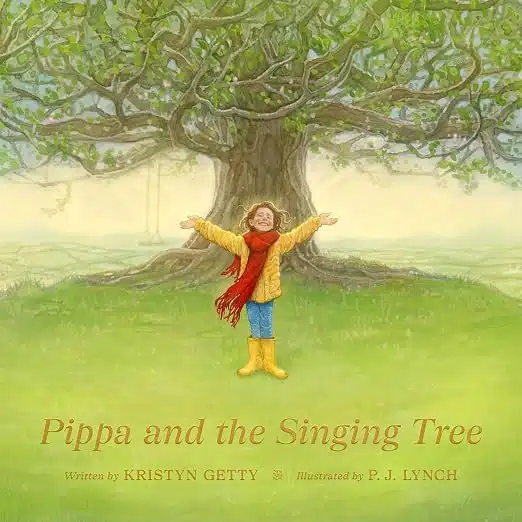
Well, I have a treat for you today because here on the show is P.J. Lynch. He's an illustrator of many books that we love, Stopping By Woods on a Snowy Evening, Pippa and The Singing Tree, The Boy Who Fell Off the Mayflower, and the book we're going to talk about today, which is The Christmas Miracle of Jonathan Toomey. His work has won many awards. He's an absolute favorite here at Read-Aloud Revival. His lush illustrations always give you so much to look at. He's been here before, but it's been a while, so welcome back to the Read-Aloud Revival, P.J. I'm so glad you're here.
P.J. Lynch (29:46):
It's great to be back, Sarah. Thank you so much for having me.
Sarah Mackenzie (29:50):
Oh. Well, The Christmas Miracle of Jonathan Toomey has become such a classic for so many families. It's a beautiful story. What were your first thoughts when you received the manuscript for it? I wonder.
P.J. Lynch (30:01):
Yeah, that's interesting because I remember thinking there's a lot of words in this story.
Sarah Mackenzie (30:07):
It's really text-heavy, especially for a picture book. It's not a typical picture book length.
P.J. Lynch (30:11):
Yeah. And then I was looking for things that I wanted to illustrate. And up until then I had been doing fairy stories and fantasies, and this was a very subtle, moving, dramatic story, but without any big set piece images, so it was all much more intimate. And as I was reading it, I was falling in love with the story because it's so beautiful and charming, and the characters are so strong. So I was loving all that, but at the same time I was thinking, "Can I illustrate this?"
Sarah Mackenzie (30:45):
Okay. Yeah, "Can I do it? Can I bring it?" Do the images come to you in your mind as you're reading a manuscript for the first time or does it take while?
P.J. Lynch (30:53):
No, they come immediately as I'm reading it, almost the first time, certainly by the second time.
Sarah Mackenzie (30:59):
Okay. Yeah.
P.J. Lynch (31:00):
And then I'd start doing thumbnail sketches and planning out. And in my head I used to think that I did lots and lots of thumbnails and I'd find my way towards the final picture, but when I look back in the thumbnails from Jonathan Toomey and other books, I sort of got it first time the way I wanted it. The image is strong in my head.
Sarah Mackenzie (31:25):
Yeah. Yeah, you can see it. Well, so for our listeners who have not yet read the book, this is the story of a rather grumpy, for good reason, we'll find out when we read the book, a woodworker who meets an exuberant little boy who has a wish, and they kind of work together. One of the things we're doing with our selections for Christmas School this year is reading books that help us look at the nativity from different perspectives because it's one of those stories you hear over and over again. And one of the things I love about this book is it kind of brings this freshness to this old story that we already knew. And there's so many metaphors between Jonathan Toomey's life and the nativity as he's carving this nativity. But one of the things that I love in particular is your use of facial expressions because I think the faces in your characters are so detailed, they do so much work, they do so much storytelling. Tell me about that.
P.J. Lynch (32:18):
Well, going back to your earlier question, how did I feel about this new story, which is a different type of story. I realized that I couldn't illustrate it the way I had illustrated maybe 10 books already in my career at that stage, because I used to just sit down and make up faces, and I'd look at myself in the mirror and I'd imagine myself as a princess or an ogre or whatever. So that's how I came to create my images, but with this one I knew it required more authenticity, more believability. And I was a big fan of Norman Rockwell's and I started looking at books of Norman Rockwell, and seeing how he had used photographs and how he worked really hard to get the right model, to get the right costumes, and I though that's the only way to do this book. So I took a leaf out of his book.
Sarah Mackenzie (33:14):
Tell me about using models.
P.J. Lynch (33:17):
Well, I had a friend of mine in mind for Jonathan Toomey. He didn't have a beard or anything, and he was a young man, and Toomey's younger than he seems to be in the book. So I had this friend in mind because he had a good face. He's a good-looking guy, but it's more interesting than that, and I wanted to work on his nose and his eyes. And his wife was a very good friend of mine, and I thought, "Oh, she'll do for the widow as well." So I got the pair of them to model as the main two characters. And my friend Nicole was absolutely brilliant as the widow, and Nicholas, they're a married couple called Nicole and Nicholas. And they were both such good actors, and I got them dressed up, and I got another little boy to act to the part of Thomas, and they all worked together.
(34:14):
We acted the part out, and I was with my camera running around, getting them to do it again and again, which was fine for Nicole and Nicholas, but Jack, he was only seven, so a bit more tiresome for him, but that's how I did it. It was a very different approach from my usual approach, but it was inspired by Norman Rockwell, who's a great hero of mine.
Sarah Mackenzie (34:37):
I love this so much. I don't know if I realized it was inspired by Norman Rockwell. It feels to me really beautiful that in the story, and I don't want to give away too much, but in the story there is a need for the artist to have a model as well actually. I knew that you used models in your art from a previous conversation we've had, but this time when I was reading The Christmas Miracle of Jonathan Toomey I was like, "Oh, it feels very meta." The story is the artist in the story also needs to draw his inspiration from real people, real grief, real emotional experience, I guess.
P.J. Lynch (35:20):
Wow, I never saw that echo before.
Sarah Mackenzie (35:20):
Yeah. So cool.
P.J. Lynch (35:20):
You're right. You're so right.
Sarah Mackenzie (35:22):
One of the other things I love about the illustrations is the use of dark and light. And I'm encouraging the kids who are reading the book to really look at the way you use light and darkness from the beginning, to inside Jonathan's house to the end, and what that makes you feel. When you're making art, is that something you're consciously thinking of? Is it something that sometimes you're like, "Ooh, I got to press on that further. I got to make that darker or make that lighter," the contrast? I don't know. What is it like?
P.J. Lynch (35:50):
It's always been my great interest, shadows and lights. And I've always drawn, rather than drawing out lines and drawing little dot eyes and things like that, I'm much more interested to see how the light falls in a face, and how if you make the light more stark it can change the nature of the face and the expression. So I've always been really interested in that, and I use that technique or that thought process when I'm making faces up. I've done a few books where I consciously don't use models.
Sarah Mackenzie (36:25):
Oh, okay.
P.J. Lynch (36:26):
And I remember all the stuff that I've done from my book work with models, and also because I draw from life a lot. I go to life drawing regularly. And I always think that when you've drawn anyone's face from a hundred different angles, because that's what I do when I'm drawing models, you just get to know stuff and you get to see what effect light's falling on faces. The way the cast of an eye can change someone's expression or a more subtle expression where someone's just ... like Toomey just looking into the flames of the fire. When I was reading that part of Susan's story, I knew I needed to work with really good models, and I needed to work a lot to get just that thoughtfulness. And luckily Nicholas is a brilliant actor, he's an architect, he's not an actor, but he was able to do it. He was able to get into the part. And it took a while for us working together for him maybe to feel unself-conscious about it, but we got there. We got There.
Sarah Mackenzie (37:33):
I'd love to hear more about ... You said you go to life drawing a lot, and I know there are a lot of young and old, actually, artists here who are like, "I want to learn from artists that I love." What do they do? So what would you say? Do you have advice or tips, or any insight at all on somebody who heard that and was like, "Oh, I should try life drawing?"
P.J. Lynch (37:55):
Yeah, because it might be going a little bit out of fashion. I mean, a lot of my illustrator's friends, a lot of them are using purely digital means. I use digital occasionally, and I scan my paintings into a computer. But I've seen a lot of people are using Procreate and Paint, and it's kind of miraculous what you can do on a computer. I love the old magic where people used to get their hands dirty and paint with colored paints and struggle to get the right color. That's when I've always done my best work, when I'm really getting something done in reality rather than on a screen. So that would be my advice, just to draw on paper, and if you can draw people sitting across from you in a coffee shop, that's great experience. It really speeds up your line if you're doing that.
Sarah Mackenzie (38:52):
Yeah. One of my adult daughters is an artist. She just graduated from art school and most of her art is digital in Procreate, but she gives herself an assignment, I don't remember how many times a week now, where she takes just her sketch pad and goes into real life and just draws what she sees.
P.J. Lynch (39:08):
And the thing is when you make a habit of it you sort of think, "This is what I want to do."
Sarah Mackenzie (39:13):
Okay.
P.J. Lynch (39:14):
Then you get seduced back by the miraculous things that Procreate can do. And as I said, I scan my originals, put them into Photoshop, and then it is miraculous that you can change the color on someone's clothing, all those kind of things. Mind-boggling. But I think working with a pencil, working with charcoal is something I do a lot with kids, and just getting dirty and making marks on the surface, it's just unbeatable.
Sarah Mackenzie (39:47):
I love that. So many of our families, Read-Aloud Revival families are reading The Christmas Miracle of Jonathan Toomey this year, and I just wonder if there's anything in particular you'd love to share about it, or that you would love them to notice, or just a behind the scenes thing that you're like, "Okay, this is kind of fun to know?"
P.J. Lynch (40:01):
Well, I've given away a lot about working with my friends in the [inaudible 0:00:40:05]. It's worth knowing that so many years have passed, we've just had the 30th anniversary edition of The Christmas Miracle. Jack, the little boy, he's now a doctor.
Sarah Mackenzie (40:16):
Oh, wild.
P.J. Lynch (40:19):
It's hard to believe. I haven't seen him for a long time, but I do know, he was in contact with me and I though that was absolutely great. And Nicole and Nicholas, they're still together, wonderful couple of people. They're all looking a little bit older. It's probably time for a sequel, I think.
Sarah Mackenzie (40:36):
Yeah, that's right. Oh, goodness. Oh, wouldn't that be something? You might have to tell Susan that.
P.J. Lynch (40:43):
It'd be a great idea.
Sarah Mackenzie (40:45):
So tell me what's new. Anything new?
P.J. Lynch (40:48):
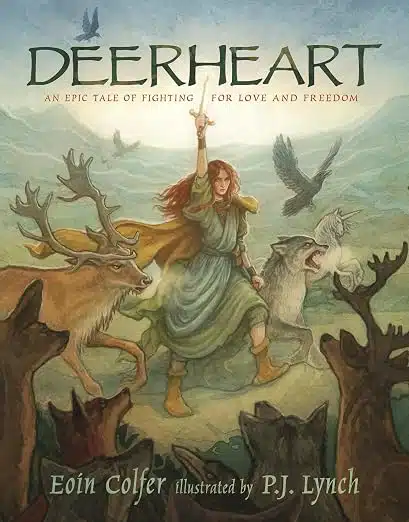
Well, I'm very excited that we've just got a new book out, myself and Eoin Culfer, who I've collaborated with Eoin several times. And our new book is just out in America this month. So do you want to see it?
Sarah Mackenzie (41:00):
Yes, I'd love to see it.
P.J. Lynch (41:05):
Here it is, Deerheart. And it's Eoin at his absolute best. It's a fantasy story. It's set in the ancient mythic past of Ireland. And Eoin knows exactly the kind of things that I love to illustrate, and he keeps dropping them in for me.
Sarah Mackenzie (41:23):
Just like little gifts, like, "Yeah, drop that."
P.J. Lynch (41:26):
Yeah, like a little gift. There's lots of tough things to illustrate as well, but it's a wonderful story, and it's just come out in Ireland last month, and now it's out in the US as well.
Sarah Mackenzie (41:36):
Amazing. Well, thank you so much. Thank you for illustrating this book and all of your books. We are such fans of your work at Read-Aloud Revival.
P.J. Lynch (41:44):
It's been a great pleasure. Thanks for having me.
Sarah Mackenzie (41:51):
I hope you enjoyed those little conversations about three different books that give us a fresh take on the nativity story, a story we're so familiar with that sometimes we fail to really experience it. And I hope this year the nativity feels fresh for you because of these books. Now, let's go hear from the kids about the books that they're loving lately.
Natalia (42:12):
I'm Natalia. I'm from Manitoba, Canada. I like this book. It's called Beneath The Swirling Sky. What I like about it is that they save the sister, their sister from the paintings. The weird thing is that they can jump into paintings.
Atticus (42:41):
My name is Atticus and I'm eight years old, and I live in Idaho, and a book I recommend is Heart of a Shepherd by Rosanne Parry.
Speaker 7 (42:54):
What's your name?
Faye (42:55):
Faye.
Speaker 7 (42:56):
How old are you?
Faye (42:57):
Five.
Speaker 7 (42:57):
And where do you live?
Faye (42:57):
In Idaho.
Speaker 7 (43:01):
And what book do you recommend?
Faye (43:03):
James and the Giant Peach.
Speaker 7 (43:07):
What's your name?
Livy (43:08):
Livy.
Speaker 7 (43:10):
Livy. How old are you?
Livy (43:12):
Three.
Speaker 7 (43:14):
Three. What's your favorite book?
Livy (43:16):
Squashy.
Speaker 7 (43:18):
Squashy. And he's from The Princess in Black and the Giant Problem. Why do you like that book?
Livy (43:29):
I just do it. I just like it.
Speaker 7 (43:29):
You just like it.
Sarah Mackenzie (43:31):
Thank you so very much, kids. The show notes for this episode are at readaloudrevival.com/291. That's where you're going to find all the show notes, all the links and things that we mentioned in today's show. I hope you join us for Christmas School. It is going to be an opportunity for us to revisit the nativity with fresh eyes, to see the whole thing anew, and really experience the awe and wonder of the birth of our Lord. So you can find out more at readaloudrevival.com. I hope you do, and I'll be back in two weeks with another episode. In the meantime, you know what to do. Go make meaningful and lasting connections with your kids through books.