RAR #287: Bringing the Outside Into Your School Year with Ginny Yurich
The heart of homeschooling is relationships.
Building meaningful, lasting connections is the real secret sauce of reading aloud with your kids. Those connections are also built when you spend time in nature together.
Sounds simple, right? Read books. Go outside. But it can also feel like yet another thing to add to your already packed to-do list. How do we make time in our already full days to get outside with our kids?
We’ve got an absolute treat for you today on the show. Ginny Yurich, the founder of the global 1000 Hours Outside movement, is here to talk about how families can bring the transformative power of nature into their everyday lives.
She candidly shares her journey from indoorsy kid to overwhelmed mama to the fall afternoon that planted the seed of 1000 Hours Outside. We also dig into the benefits of spending time in nature, and of course, practical strategies for spending more time outside.
In this episode, you’ll hear:
- The lifelong physical, social, emotional, and academic benefits of spending time outside
- How accessible 1000 hours really is
- Practical ways to get more time outdoors, how to engage older kids, and why it doesn’t have to be that complicated
Some links are affiliate links
Learn more about Ginny Yurich:
Sarah Mackenzie (00:00):
It seems so simple. We don't even realize necessarily transformative power that those very simple activities can have. And I think that's actually the real secret sauce of reading aloud and time in nature, is that it connects us to each other, which is what actually matters to all of us more than anything else.
Ginny Yurich (00:16):
Right. Well, I think in this world where everything is so fast-paced and there's a lot of competition, especially in the United States, and I think that we need as parents, constant reminders to slow down and choose the simple things. We have to be reminded of those things because I think they seem too simple, and there's a lot of people selling a lot of programs that are good, but if you take up all the time with those types of things and you don't have time for the simple, and the simple, it works, it still works. It will always work.
Sarah Mackenzie (00:58):
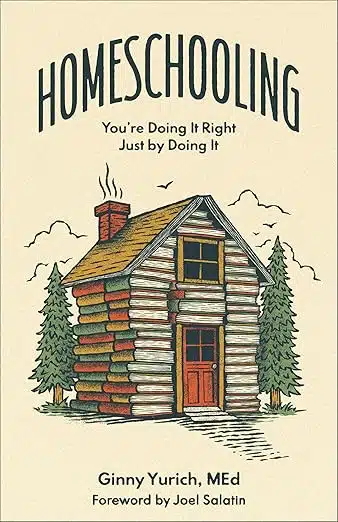
Welcome. Welcome to the Read-Aloud Revival Podcast. I'm Sarah Mackenzie, and this is the show where we help you make meaningful and lasting connections with your kids through books. I have a treat of an episode for you today because one of my favorite people is here. Ginny Yurich is the founder of 1000 Hours Outside. It's a global movement that really helps parents experience the transformative power of nature right in their own backyard or right outside of their own windows, just in nature. We're going to be talking all about it. She's also the author of several books, the newest, I believe, is Homeschooling: You're Doing It Right Just By Doing It. Is that the newest one, Ginny?
Ginny Yurich (01:39):
That's the newest one. Yeah.
Sarah Mackenzie (01:41):
Awesome.
Ginny Yurich (01:41):
And technically the title is just Homeschooling.
Sarah Mackenzie (01:44):
Oh, is it really?
Ginny Yurich (01:45):
Yeah. Yeah. That wasn't taken, so I took it.
Sarah Mackenzie (01:49):
You know what? That's kind of amazing. Well, welcome to the show. This has been a long time coming. You and I had dinner, I don't know, a couple of months ago now. That was just ... It was one of the highlights of my spring.
Ginny Yurich (02:03):
Oh, same. We had to wait in a long time for the buffet.
Sarah Mackenzie (02:06):
It was worth it because we had great conversation while we were waiting.
Ginny Yurich (02:09):
It was. It was so much fun. It's been a long time coming for me. It goes back 10 years, 10 years for me, when our oldest was eight years old. So we have five kids that are about eight years, well, maybe he was 10, so they're about eight years spread with our five kids. And when the oldest one was little, eight or nine, maybe 10, I was starting to feel really burnt out with homeschooling, and we just did a last minute like, "We're going to go tomorrow to this homeschool conference." I didn't know anybody. I didn't know who any of the speakers were. And I've told you this story. And I went into the vendor hall, you're kind of just like, "Whoa." If you've never gone to one you're like, "Who are all these people?" All of these booths set up. I didn't even realize how many resources there were, and there was the longest line.
(02:55):
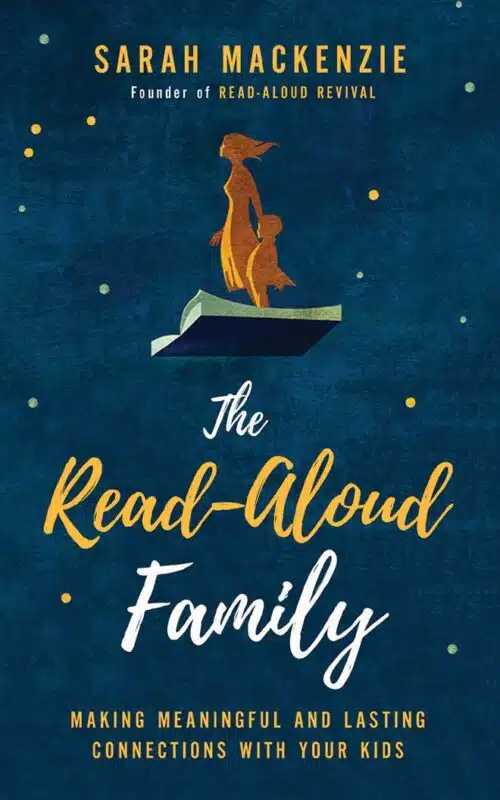
I was like snaking through the whole vendor hall for your booth, and you weren't there yet, so people were just waiting in line. I couldn't wait in line because I had little kids and everyone's crying, but I was like, "Well, certainly I should get this person's book." And I got your bag. It was like a combo deal. I got The Read-Aloud Family. And I still use the bag. It's blue. It's like a bright blue. It's a great bag. And then I came home and I was like, "Why would I have bought in a book about reading out loud?" And then it sat on my shelf for a couple months, and then when I finally read it I was like, "This is a balm to my soul." It is one of the best books I'd ever read, and I was so grateful. So that's when my story intersected with yours unbeknownst to you.
Sarah Mackenzie (03:41):
Amazing.
Ginny Yurich (03:42):
Probably close to a decade ago.
Sarah Mackenzie (03:43):
That's wild. That is just absolutely wild. I love that so much. And I also completely know the experience of opening your bag and pulling something out and being like, "What? How did this get here?"
Ginny Yurich (03:55):
Right, and I wonder if people say the same thing, like, "Why would I buy a book about going outside?"
Sarah Mackenzie (04:00):
Well, that's really interesting because one thing about what we do here at Read-Aloud Revival, and what you do at a 1000 Hours Outside is that it's actually really simple. I mean, these are the things that I think one of the reasons why it's so ... I'm trying to figure out how to even say this. Yes, everybody has the outside available to them in some capacity, and it's right there and it seems so simple, like, "Why do I need to read a book about going outside with my kids? Why do I need to read about reading aloud with my kids?" Right, there's books, we read. You read aloud to your little kids, whatever. And it's like, "Oh, yeah," but we don't even realize necessarily transformative power that those very simple activities can have, not just the benefits of reading aloud on the intellect or the formation of [inaudible 00:04:55].
Ginny Yurich (04:54):
Vocabulary.
Sarah Mackenzie (04:55):
Yes, yes. And not just going outside. We can think of all these benefits, which we're going to talk about in a second, of going outside, but also the connections that are formed. And I think that's actually the real secret sauce of reading aloud and time in nature, which we're going to be talking about, is that it connects us to each other, which is what actually matters to all of us more than anything else.
Ginny Yurich (05:16):
Right. Well, I think in this world where everything is so fast-paced and there's a lot of competition, especially in the United States, I'm sure people listen in from all over the world, but we have a very competitive culture, and so there's this constant comparison. And I think that we need, as parents, constant reminders to slow down and choose the simple things. And we need to be reminded of all the benefits of reading out loud to our children, which include the relational ones, but also include a tremendous amount of other benefits. I learned them all through your book, The Read-Aloud Family. And same with nature, right?
(05:46):
There are tremendous benefits. It does help with social skills, and it does actually change the brain. It helps with cognition. But we have to be reminded of those things because I think they seem too simple, and there's a lot of people selling a lot of things and a lot of programs that are good, but if you take up all the time with those types of things, and you don't have time for the simple, and the simple, it works. It still works. It will always work.
Sarah Mackenzie (06:09):
Yeah, that's so true. And it feels like what your work is, what you do at 1000 Hours Outside, it is ... connection and relationship feels so central to what you're doing over there, which is exactly why people are listening to or watching this show as well, because we're wanting to connect with our kids. So maybe for those of our listeners and viewers who are not familiar with what you do at 1000 Hours Outside, I'd love if you could share your story a little bit about how this project came to be.
Ginny Yurich (06:37):
Sure. So I am not an outdoorsy person. In fact, I went on a trip a couple years back. We got invited to go out to Moab, Utah. It was me and one child, and only one child wanted to go, so that worked out well, to go to Moab, Utah and go on this rafting trip down a river. And you're on the river for five days, and you go to the bathroom in a bucket.
Sarah Mackenzie (06:55):
Oh, hold on.
Ginny Yurich (06:55):
Yes?
Sarah Mackenzie (06:56):
I expected you to say you were on the river for five hours. Did you say five days?
Ginny Yurich (07:00):
Five days. Five days. It was an incredible experience. It's no phones. Your phones don't work and we loved it. But before the trip, they had a couple extra things that you could do, and one of them was rappelling. I guess it's what it's called. You basically walk backwards over a cliff's edge holding a rope in a harness, and then you kind of lower yourself down. You've got this glove on so that you don't burn your hands, and you've got to hold one hand behind your back and one hand's on the rope, and you're letting go. I don't know. Sarah, I could not do it. I tipped. I tipped. And then I was like ... Basically, it was like I was lying on a bed in the air screaming. That's what I was doing, screaming and crying. And my daughter thought it was so funny, and the guide was like, "We've never had anyone like this." [Inaudible 00:07:48].
Sarah Mackenzie (07:49):
Ginny, you're one of a kind.
Ginny Yurich (07:50):
So that is like I am not an outdoorsy, naturally outdoorsy person. Actually, I do love to read. I grew up on Nancy Drew books and playing the piano. Those are both indoor things. But because I grew up in the '80s and '90s, I did go outside a lot. People did. That was what kids did. We walked a mile to school. We walked a mile back. We played in the yard in the afternoon. We biked around the neighborhood. It just was kind of like one of those things you don't really think about. Even though I wasn't an outdoorsy person, I still spent a fair amount of time outside as a kid. Well, when I became a mom that wasn't in my mind at all. I didn't know it was important. You just kind of go to the park here and there. And we had these kids, and I just felt like a tidal wave of exhaustion and just confusion.
(08:38):
I was like, "These kids are so needy. Why do they like me so much? Why do they want to be around me all the time? Why are they crying?" I don't know. I was not prepared for it at all. I was a teacher before, and I was a pretty good teacher, so you're kind of competent at life. I went from being competent to incompetent, completely incompetent, and I didn't enjoy it. I had these three little kids in three years and I wasn't enjoying being a mom. I love my kids. The day to day, I was like, "This is rather awful." And so I was just doing all these programs. We do the library program. You know how much work that is. You got to pack up all these kids. You got twins at the end. You're packing them all up. You're carrying all those car seat things that are so heavy. You're afraid someone's going to get hit in the parking lot. You got to make sure everyone gets in through the doors.
(09:25):
Then they're like nursing, then your boob shows. I mean ... Right? You're nursing and then the other kids are fighting. I'm like this is ... I would bring all kinds of snacks. Nobody wants to listen to the story. Then they'd do a craft. And I would just feel so undone by like 11:00 AM, and I would be like, "Josh, when are you coming home?" And he'd be like, "What? It's not even lunch." And it was every day you're up all night. I tell people that I wouldn't even drink water because if I was going somewhere, like the zoo, I was like, "How exactly am I supposed to go to the bathroom?"
Sarah Mackenzie (10:01):
Yes, right.
Ginny Yurich (10:03):
Who ... It's just-
Sarah Mackenzie (10:04):
Yes, it's a logistical nightmare when you were a mother of all young children. Yes.
Ginny Yurich (10:07):
Am I supposed to hand my screaming baby off to someone I don't know while I go pee? I don't know what to do. So I wouldn't drink water. And that was sort of the gist of these early childhood years. One of the programs I did was MOPS, which is now called MomCo, and that was supposed to be a great one because you could drop your kids off. There was these older women that would watch the kids. Well, mine always screamed because they were so obsessed with me.
Sarah Mackenzie (10:33):
I love that comment you made earlier. You're like, "Why do they like me so much?"
Ginny Yurich (10:36):
I know. These kids are clingy. So they'd bring my kids back, so I'm always bouncing kids. Anyway, by the grace of God at my table, I had a friend ... You just get put with who you get put with, right?
Sarah Mackenzie (10:49):
Yes.
Ginny Yurich (10:50):
And I had a friend at my table named Angela Brace who lives in Texas, and she lived in Michigan at that point because her husband was in residency. And she had similar, like several kids, she's a lot calmer than me, but her oldest kid was one year older than mine, Whitley. He just graduated last year. Then there's Maggie. Oh, everyone's graduating now. It's so much longer since this story. But we were both planning to homeschool, and she was one year ... her child was one year older than mine, so she was researching. I was like, "This is great. Just tell me everything you're learning."
Sarah Mackenzie (11:25):
Yeah.
Ginny Yurich (11:26):
And so she came to MOPS one day and she said, "Ginny, I read this thing by Charlotte Mason." Now, I did not know who Charlotte Mason was. I didn't learn for a very long time that Charlotte Mason is dead, and has been dead for quite a long time. I know some Charlottes, it's not like she had some super weird old-fashioned name that no one has anymore to clue me in. So it was like Charlotte Mason's from the 1800s, but she just said, "Charlotte Mason says that kids should be outside for four to six hours whenever the weather is tolerable." And I was like, "That's dumb."
Sarah Mackenzie (12:01):
That's insane. Right? Yeah. Yeah. Yeah.
Ginny Yurich (12:03):
Who would ever do that? And I would think about all the things that we went to. Swim lessons, it's 45 minutes of just wet kids, crying kids. The library program, same thing. I was like, "Who would do anything for four to six hours? That sounds horrible." But then she goes, and that's what I'm thinking in my head, I didn't say it out loud because I didn't want to be a bad friend, she's like, "Well, we should try it." And I thought, "No. No."
Sarah Mackenzie (12:26):
That's terrible.
Ginny Yurich (12:29):
Yeah. I was like, "[Inaudible 00:12:31] the kids play Play-Doh only lasts like 12 minutes. Four to six hours, what are they supposed to do?" And then she goes on to say, "Charlotte Mason says you're not really supposed to bring anything." And I was like, "You're not supposed to bring anything? Shouldn't I bring my train table? What in the world you're not supposed to bring? What are they going to do?" But you're so desperate for friendships in those years that you kind of just go along. And so in 2011, in the fall, in Michigan, which is a beautiful time of the year, I went with Angela Brace, and we each had three kids at the time, her three kids, my three kids, they're all four and under, to a park in Farmington Hills, Michigan. We brought a picnic blanket and a picnic lunch, and we walked over this little bridge to this huge grassy area, no playground, no play structure, which in a lot of ways is easier because you're not nervous that the kid's going to fall off or wherever that fireman's pole thing is, and the kids just played.
(13:22):
And I tell people it's the best day of my life because it was the first good day I had as a mom. I had not had a good day as a mom until that day. And the kids played, and I don't even really know what they did, they chased each other. And we each had babies that were nursing, and they'd nurse and sleep. And we had conversations that didn't get interrupted, and it was beautiful, and I felt recharged. And that's really where 1000 Hours Outside started. It started as an answer for me as a young mom, and I felt like if I could be a better mom, a more present mom, a less hurried mom, then it would be better for our family. But then what I noticed within a couple of weeks was that the kids were thriving. All of a sudden they're eating better, sleeping better, playing together better, they're more imaginative in their inside play, all of those things, and it took me down a path.
(14:12):
Sarah, just like you know there's all these books about reading out loud, there's all sorts of books about the cognitive, social, physical, of course, emotional, and then for families that are interested, spiritual benefits of getting kids outdoors.
Sarah Mackenzie (14:25):
Yeah. I resonate with this so much because when you have a moment like that where something like this changes the way you feel about your motherhood, when motherhood feels so hard and like a slog, I think it is why people get ... the people in your community, the people who've been moved by a 1000 Hours Outside, by this movement, are zealous about it. And I think it is because exactly what you said, it transforms your own experience as a mother, but also your kids. So one of the things I've noticed is that my kids are just more pleasant to be around when they've been outside. They're just nicer. It's the exact opposite of what happens if I let them have screens for too long. And then all of a sudden everything is like ... I feel like the attitudes in my house could melt an airplane. They're just like, "Oh, goodness." It's opposite.
(15:21):
Tell me more. I know there's a million, there's too many for us to talk about today, but give me a quick ... For the mom who's like, "Okay, I'm listening, but tell me what actually just going outside do for you?"
Ginny Yurich (15:33):
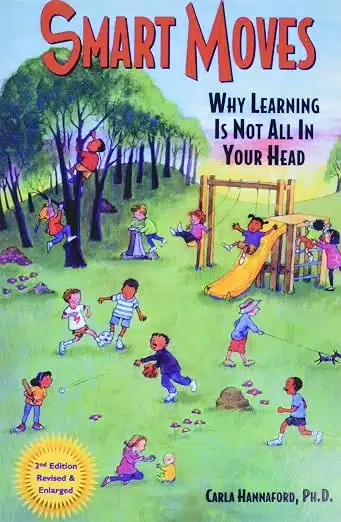
Okay. I'm going to give three books, three books. I'm going to start with Smart Moves by Dr. Carla Hannaford. The subtitle is ... So this is great because I want to give books on Read-Aloud Revival.
Sarah Mackenzie (15:42):
I know. I was like, "Oh, girl, you just know how to do it, don't you?"
Ginny Yurich (15:47):
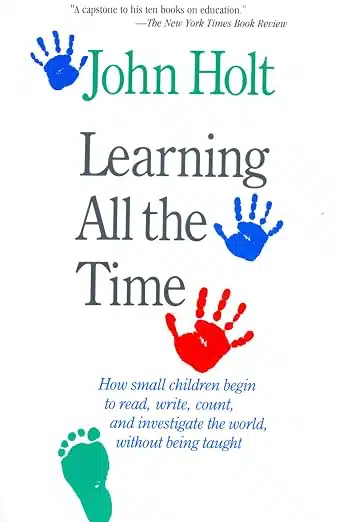
I do. I do think that a parent, and I'm sure you say this all the time, but my life has changed because I've read books. I sit where I sit only because I've read books. And when our kids were younger, my goal was a chapter a day, and if you can read a chapter a day, you're getting through a book every week and a half. That's a lot. That's a lot of input into your soul and into your mind. And so I read books like John Holt's Learning All the Time. That's a life-changing book. It's how young children learn to read, write, investigate the world and do math without being taught. What a book. It's a short one. All these books, they really changed me. Your book changed me.
(16:21):
And so I read a book called Smart Moves by a woman named Dr. Carla Hannaford. Now I've had the opportunity to talk to Dr. Carla Hannaford, she's now in her 80s. And she says that she didn't learn to read until she was 10. It's one of the first things she'll tell you, because I think that's kind of something that ... She said it didn't matter quite so much when she was a kid because she's in her 80s, but it is something that would stand out. She didn't learn to read till she was 10 years old, that's fourth-ish grade, third, fourth grade, and now she's a PhD. So just for the parents whose kids are like, you know? I think there's a range there. I don't know. I'm sure you-
Sarah Mackenzie (16:56):
Oh, there is. We could do a whole episode on it.
Ginny Yurich (16:58):
Right. And your kids have their own timeline. That's a side point. Her book, Smart Moves: Why Learning Is Not All In Your Head, she had a statistic in there that really drove home the point of how incredible time outside is and movement for kids. She had a statistic that said elderly people who dance regularly have a 76% less chance of developing dementia. And elderly people who play a musical instrument have a 69% less chance of developing dementia. And the point that she was driving home is that complex movements enhance and protect brain function. So when you get your kids outside and they do all of this movement, like they're rolling around or they're on the tire swing, or they try and climb a fence, they ride their bike, then they do no hands, they learn how to skateboard, this can go all the way through childhood, they rappel and they're able to keep their body upright, I couldn't, all of these things are actual enhancements of the brain, and they help the brain to move quicker and to have these quicker synapses.
(18:00):
Sensory input does the same thing. So your kids are out and they're playing in the grass, they're feeling all these different things. Your baby, your baby is feeling the stimulation from the breeze. All of it is enhancing the brain and protecting the brain. All of the benefits, similar to reading out loud, are lifelong. They're lifelong benefits. So that was something that really stuck out to me that was important because the world is changing fast, and so I would like for our children to have quick adaptable brains, and getting outdoors, reading out loud, these are the types of things that help to build that for them. So that's just one small piece.
(18:35):
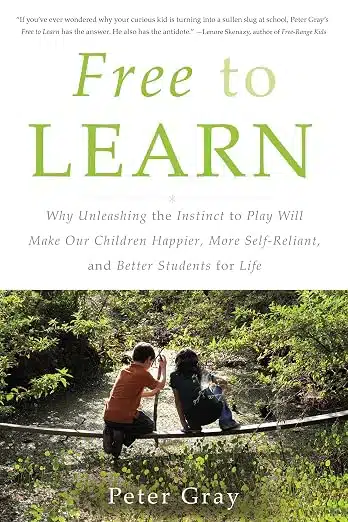
Another book, Free to Learn by Dr. Peter Gray talks all about mixed age play, and so when you've got kids outside, that's what they're doing often. You go with another family, find a friend, the kids are playing in all these mixed age ways, and it helps the younger kids as they're maturing, it helps the older kids to be more empathetic. That matters a lot too. So this is helping with their social skills, and this is a world where they say the human skills are the important skills. So there's a lot going out there. It's like an emotional balm for the soul.
(19:05):
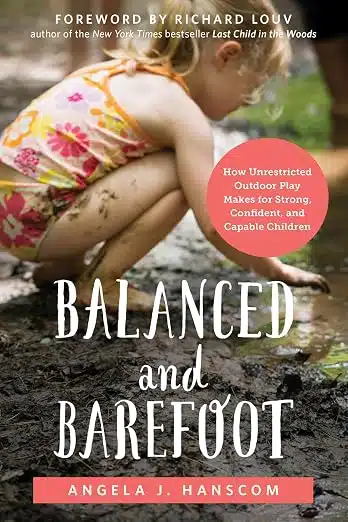
There's a third book I would say called Balanced and Barefoot by Angela Hanscom. She talks a lot about getting your babies outside, but similarly, talking about these emotional benefits and how the ... She's an occupational therapist for kids, a pediatric occupational therapist, and she said all of a sudden the wait list for occupational services for kids just skyrocketed. It's similar timeframe to all of this influx of screens. And she talks about how just getting them outdoors is a protective measure for so many of these different things and struggles that kids might have. And then obviously their physical bodies, even the eyesight, your eyes are meant for long distance looking, they're meant to relax and see far. Your joints are meant to turn in different ways. You're meant to walk on uneven surfaces. There's a woman I love named Katy Bowman, and she talks about your thoracic container. I'm like, "I don't even know what that is."
Sarah Mackenzie (20:02):
Me neither. I didn't know I had one.
Ginny Yurich (20:04):
But she's like, "When kids hang, they're meant to hang. They got strong hands and they're climbing, and it's helping." And then that translates to, "Are you able to sit at a desk? Do you have core strength? Are your fingers ... Have you done a lot of manipulation with your fingers so that you can write with a pencil?" It all is interrelated. I guess the point is, it's just even exposure to sun, it is so remarkable. It's like an endless amount of benefits.
Sarah Mackenzie (20:31):
Yeah. Yeah. I just was reading something the other day that was talking about, like for us, to even regulate our nervous system or stress. And I was looking at it for myself, but I could see this being true for my children, is something you just mentioned, which is we're meant to look at things far away, and that it will immediately reduce ... I don't have the actual data, I don't remember exactly what it said, but it was like it will reduce your stress level, your cortisol levels, and help you regulate your nervous system just by ... if you've been doing close work, that includes reading or work out on a screen, even in your house everything is close, to go on a walk and where you're looking out, I'm looking out my window, which is why I keep looking over here, looking out over a far distance. So it's just the things we don't even realize that it's doing.
Ginny Yurich (21:21):
Yeah.
Sarah Mackenzie (21:22):
Okay, this the other thing I love so much, is that what I'm hearing you say is so much of the things you're doing outside it's not like you're like, "Okay, you're going to go outside and you're going to bring an obstacle course and relay, and actually all the equipment."
Ginny Yurich (21:34):
No. Right, "Here's our scavenger hunt." Just another thing for the parent to try and finagle. But this is where we started with Angela who was like, "Don't bring anything with you, just food." You need food and water and bring a friend, that helps quite a bit, but that's it. And then that's the other part of it, is the creativity and the imagination. These are kids who are coming up with something out of nothing. They're becoming resilient because it's hot out there. People ask, "Well, what about when it's cold? What about when it's hot? What about the bugs?" There is a lot. It's uncomfortable. Most of the days are not 70 and blue skies and sunny. Most of the days are not that. It's humid or it's cold or whatever, but this is helping to increase resilience. It's really all of those skills that matter more today than they ever have.
Sarah Mackenzie (22:21):
Yeah, so true. So true. Okay, so I'm bought in. As I'm listening to you, I'm like, "That's what we're going to do this evening actually after dinner." We're going to go to a park for the whole rest of the evening or an outdoor space. Actually, there's something you said about that, how you went to an outdoor space where there wasn't a play structure. I almost wonder in some ways if that's almost, I don't know how to say this, but like-
Ginny Yurich (22:47):
It's easier.
Sarah Mackenzie (22:47):
It's easier because then if you go take them to a play structure, they're like, "Oh, I know what to do with this. You play on it." And then when they're done, they're sort of like, "Now what, mom?" Like you're needing to provide the entertainment, but if we just go to the woods ...
Ginny Yurich (22:59):
Yeah. That's a really good point, Sarah. Right. Because isn't that what's happening a lot with some video games and television? It's someone else's imagination, so is a play structure.
Sarah Mackenzie (23:09):
Yeah. Oh, yeah, that's right. Yeah. Not that a play structure is bad, but also that a-
Ginny Yurich (23:17):
It can get boring. Kids can get bored because it's a-
Sarah Mackenzie (23:19):
It's not an invitation to-
Ginny Yurich (23:21):
Prescribed six number of things that you can do on it.
Sarah Mackenzie (23:24):
Yeah.
Ginny Yurich (23:24):
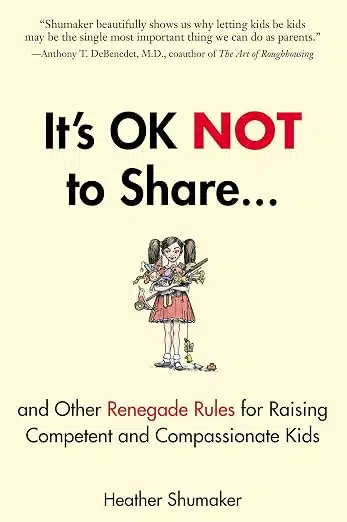
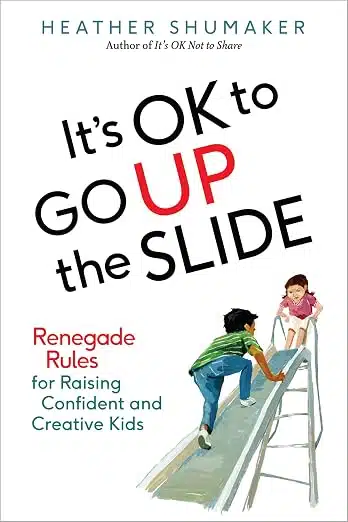
And then they start to do all the things that you're like, "Oh." There is a book called, well, it's by Heather Shumaker, she has a book called It's Ok Not to Share, and then she has another book, something about climbing up the slide. It might be like It's OK to Climb Up The Slide. But that can be awkward if you're at a playground with a bunch of other parents, and your kid is the one that's climbing on the outside.
Sarah Mackenzie (23:42):
They're like, "Oh, the homeschoolers just got here."
Ginny Yurich (23:44):
Right. That's right. So there is benefit of going to a place that's just nature, and your kid is learning to plumb the depths of their soul to come up with their own entertainment.
Sarah Mackenzie (23:57):
Okay. So let's talk about the elephant in the room, which is time, because I think that's probably the thing that's on most of our listeners' and viewers' minds right now. They're like, "Okay, I love this idea. Yes, I'm bought in, but I have no idea. I have so much to do." Many, many of our listeners and viewers are homeschooling. So they're trying to do school day stuff and extracurriculars, and a dentist appointment, make dinner and laundry, and how on earth are they going to spend a thousand hours outside? I think that can feel a bit like a daunting number. Right when we're releasing this episode it's the beginning of a new school year, so we already feel like sort of the crush of a lot of new things that we need to do. Talk to me about making time.
Ginny Yurich (24:37):
Okay, let's talk about the number. So I used to be a math teacher, so I am like a-
Sarah Mackenzie (24:41):
I didn't know that about you.
Ginny Yurich (24:43):
Yes. Yes, I taught high school math for several years, so I'm kind of a numbers person to begin with. But what piqued my interest was this started with a number, charlotte Mason said four to six hours outside, but whenever the weather is tolerable, and I think that's a really important caveat. It is not tolerable in January and February in Michigan. It is not tolerable in July in Florida. So that's a really important caveat. I don't think kids are supposed to be outside for four to six hours every single day. So we were trying to get outside for two to three times a week. We're looking at the best weather days. We were under-scheduled in these early childhood years, and so we'd meet up. And if it was in the middle of the winter, it would be shorter. And if it was in the peak of summer, which is beautiful in Michigan, we might get together at 10:00 in the morning and stay till 6:00 PM. That type of thing. It might be a little bit of a longer day. You're outside all day. It's great.
(25:32):
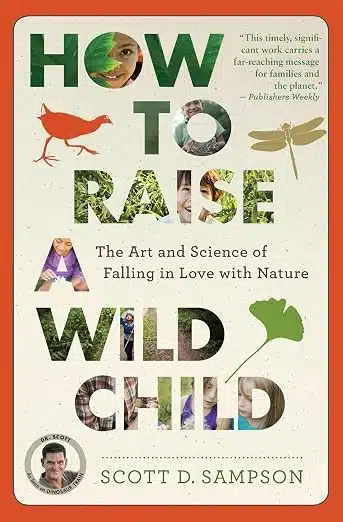
So the number comes some from that, some from Balanced and Barefoot by Angela Hanscom where she says, developmentally, kids need about three hours of time outside a day for optimal development. And that's from birth through adulthood, so your teenagers included. And then what really got me was I had read a statistic years back in this book by Dr. Scott Sampson, who was the PBS dinosaur-trained guy, and he has a book called How to Raise a Wild Child, and he had a statistic in there that said the average child in America, in the United States, is outside for four to seven minutes a day, but on screens for four to seven hours. And that is such a disparity between those two numbers. They're outside for four to seven minutes, on screens for four to seven hours. That's what prompted me to start to figure out how much time are we outside.
(26:22):
So we were outside for about 18 to 20 hours a week on average, which at that time, and I feel like the numbers have gone up, was about 1200 hours a year. And that was the exact amount of time the average of kids being on screens in the United States, was 1200 hours a year. And I just thought, "Wow," of how full our life was. All these experiences that we've had, these relationships that we've built, the creeks that we've played in, all the things that we've done, what if all of that time had gone to screens? We're not anti-screen. We use screens. We have TVs. We have iPads. We have video games. We have all the screens. However, when you fill your life with all the things you want to fill it with first, and you leave the leftover time for screens, it really provides you a wonderful life.
(27:11):
So that's where the number came from, 1000 hours. It could have been 1200. It could have been 1200 hours, but 1000 Hours Outside is catchier. And so our goal, and this is really the foundation of our school, our homeschool, our goal is to hit that number within the year. Now, when our kids were really small, sometimes we missed it. The number doesn't really matter. It is research-backed to a degree that Angela Hanscom talking about it, and she'll say-
Sarah Mackenzie (27:38):
But you didn't just come up with a number out of nowhere is what you're saying?
Ginny Yurich (27:40):
[Inaudible 00:27:41].
Sarah Mackenzie (27:40):
It's a database. Yeah.
Ginny Yurich (27:43):
And it's about balancing it out. If we have 1200 hours to give to screens, certainly we have some time then to ... Let's take some of that time back and swap it for getting outside, for reading out loud, those types of things. But the premise is to look at it over the year, because I don't think that every family can go outside for two hours every day or three hours every day. Like you said, some days you're going to the orthodontist. If you've got a large family, you're going to be there all day. Some days you've got doctor's appointments. Some days you've got your homeschool co-ops. You have all of these different things going on, and so we're looking at over the course of a year.
(28:19):
In Michigan, we spend more time outside in the summer, a little bit less in the winter, but simply by having a goal, that's it. And your goal might be 500 hours. We've got these little tracker sheets that have a thousand spaces on them. So each one could be 30 minutes or each one could be 15 minutes, but the point is keeping it in the forefront because it's so easy to forget how important it is.
Sarah Mackenzie (28:43):
I really like the idea of using one of your thousand-hour trackers for those of us who are not anywhere close to that amount of time, just theoretically speaking. I feel like being able to use your trackers to like, "Okay, we're going to start small," because I'm always big on like, "Let's make this as manageable as possible. We all have so much on our plate already." But I love this idea of going like, "Okay, each of those spaces is going to be 15 minutes for me right now this year." And then if we get to a place where we're like, "We're nailing that, now let's make a challenge of making it 30 minutes." I love that. That's a great adaptable use I think.
Ginny Yurich (29:18):
Let me check on, because you did ask about the specifics about time.
Sarah Mackenzie (29:21):
Yeah.
Ginny Yurich (29:22):
There are a lot of things that you could do outside that you do inside, so we could start there. Can you take your schoolwork outside? Can you take your read aloud time outside? Can you take it to the porch? Can you take it to a park? Some people fold their laundry outside. There are different things that you can do. People used to shell their peas on the porch, things like that. So are there inside things that you can take outside? Are there little bit of lengthy periods of time, two hours here or there where you could call up a friend and say, "We're going to consistently, on Fridays from 12:00 to 2:00 or 12:00 to 3:00, we're going to go to the park." If you have a little breathing room in your schedule, sometimes you'll stay because the kids are occupied.
(30:00):
If you are wanting to read, if you are listening and you are a reader, you're like, "I mean, I love to read," that's sometimes where you can do it because they're actually playing and they're engaged. I feel like Mother Nature felt to me like another mother, and so there's like someone engaging my children so I could read a chapter or two of a book I love. I want to read God of the Woods. I mean, there's all these books out. I read Broken Country, I think it was called. Okay, but it had some inappropriate parts, so don't judge me if ... but it did have an amazing ending.
Sarah Mackenzie (30:41):
Listen, I remember when my older kids were younger, and my sister had come to visit and we were outside. I can't remember exactly where we were, if we were at a beach or we were ... it couldn't have been the beach because at that time I wouldn't have been able to bring a book to the beach and let them play. I can now. Probably at a park. I remember she was just like, "You always have a book." And I was like, I think ... For me, it wasn't to read aloud, it was definitely to read to myself. And I was like ... I think my entire goal in motherhood is to occupy the children long enough that I can read for a little bit longer, and what I'm hearing you say is Mother Nature is a very helpful companion.
Ginny Yurich (31:18):
It is. It is. And also include it as part. It is part of their education. This is whole child development. This to me is the foundational. If you can just read aloud and get your kids outside, that's probably 90% of it, right? Okay, then you can do a little bit of math.
Sarah Mackenzie (31:36):
Absolutely.
Ginny Yurich (31:37):
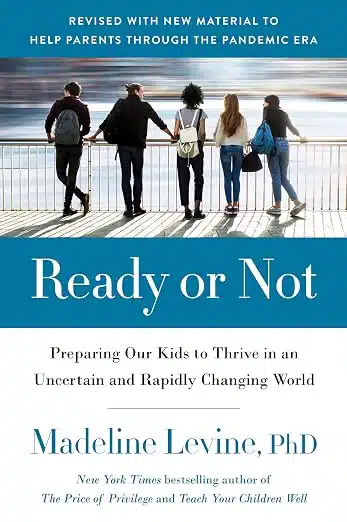
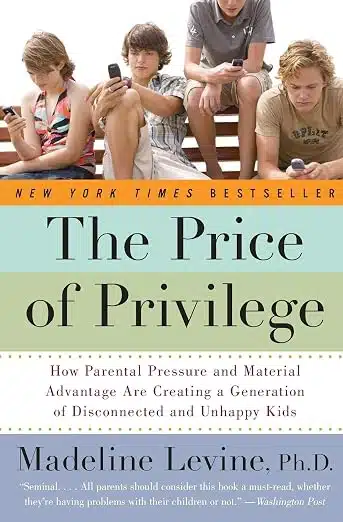
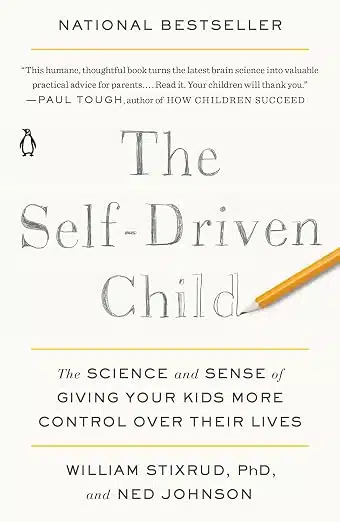
The calculator and the AI, I mean our world is changing. And I read a book by Dr. Madeline Levine, it was called ... I can't remember what it was called, but people will be able to find it because she only has a couple of books. I think it's called It's Not the Price of Privilege. It might be called Ready or Not. It's a phenomenal book. She says, "We get so scared. The world is changing so fast that we double down on the old ways, like the high stakes testing, and all of this homework, and all of this seat work." And it's a paradigm shift, it's a paradigm shift to say, "Look, I'm going to raise a child who has self-efficacy, who is creative, who loves life, who knows themself, who has this grand imagination." Even the part about control. There's a book by Dr. William Stixrud called The Self-Driven Child-
Sarah Mackenzie (32:28):
I am ... You're going to get back to that in a second. One second. You have all of these books and author names just stored right here and you remember what they all said. It's like magic. This is magic. You're a unicorn. Go ahead. Keep proceeding.
Ginny Yurich (32:43):
I almost forgot Madeline Levine. Dr. William Stixrud talks about how lack of control is the most anxiety producing experience that we can have, lack of control. When we take kids outdoors they get a whole megadose of control. They get to choose what are they going to do, what are they going to play, how are they going to do it, how are they going to get along with their friend. And I think so much of schooling, and it could be homeschooling, and I used to be this type of homeschool mom, and I've been able to kind of pull away from it some over the years, but where I'm like the orchestra director and, "You do this and you do that, and let me check this box, and we're going to." And that does produce anxiety for kids, and there's a trade off. There is a trade-off. Because that makes me feel good because I have control. Well, you have control.
(33:33):
So then you have to kind of almost choose a little bit more anxiety for yourself for the sake of your child having control of some of the parts of their own day, and outside gives them that. Now, I can't check a box and say, "Well, they learned the difference between toads and frogs." It's not that. It's very open-ended, but it's a trusting in growth. It's a trusting in the child that they're going to ... Dr. Peter Gray says they're biologically designed to self-educate. So there's a trusting there, and I think by getting outdoors or doing this read aloud times, you start to see that beautiful growth that I'm not in control of, that I can't check the boxes off of. So time outdoors is something that we choose to make time for because it's a whole child activity. And at the same time, it's good for me as the mother, and it's good for our family as a whole.
Sarah Mackenzie (34:35):
Yeah. I love this so much. Also, you can read aloud outside, and I mean, listen.
Ginny Yurich (34:40):
Absolutely.
Sarah Mackenzie (34:42):
We're getting so many. Okay, tell me-
Ginny Yurich (34:44):
I think that's actually really important because people sometimes think, "Well, you got to be climbing Mount Everest," and you don't. You can be laying in a hammock reading a book. Exposure to full spectrum light is so unbelievably important. I think there are 100 body systems that respond to the day and night cycle. So you can actually measure the amount of lux illumination outside. You can have a little meter. Photographers use that. So you can say when you're inside it might be 400 lux, which is a candle. One lux I think is one candle. But when you go outside, even on a gloomy day, it's 3000, and that's sending all sorts of signals. Most of light, we think about light as so that we can see, we can read our book, but really light is a signal for your biology.
Sarah Mackenzie (35:28):
Yeah. It's so good.
Ginny Yurich (35:30):
So do your read aloud out there.
Sarah Mackenzie (35:32):
It's not that you're always having to do outdoorsy things outdoors.
Ginny Yurich (35:36):
Right. Right. You can fold your laundry. You can shuck your corn. I don't know. Now we're back to the [inaudible 00:35:44].
Sarah Mackenzie (35:44):
I just really hope that someone listening to this right now is shucking corn and will write in and be like, "I was doing it as you said that." Ginny, what do you do about the kids that like, I'm just picturing my 13-year-old twins, like me being all of a sudden sort of, "We're going to be outside more," and just them sitting there and being like, "What am I supposed to do?"
Ginny Yurich (36:08):
Okay, this is a very good question. This is a very, very good question. Because if you're jumping in mid-adolescence you're going to have to be a little bit more creative, and it just is what it is. Everyone can do a hike. I wouldn't say everyone likes a hike. Everyone can do a hike, half mile, mile. There's stuff out there to be engaged. I notice at around 11 to 13, if we go to the park, the pre-teen and teens just sit in a circle and talk, and that is a form of play. So if you go on a hike with some friends, they're going to talk to each other.
(36:37):
But just yesterday, our oldest son who is 18 years old, was at a birthday party, and the people have a pool. And the dad had taken this piece of heavy machinery of some sort, I'm going to send you a video actually after we're done, and he had attached this two ropes and this board, this wooden board hanging down from this high piece of heavy machinery above the pool, and they were playing chicken. So it'd be like two kids would hang on each side of the board, and using their legs, try and get the other person to fall first.
Sarah Mackenzie (37:15):
Oh, my goodness.
Ginny Yurich (37:17):
Oh, this actually is a really good example of showing, first of all, that there's always ... That's an extreme example, very extreme, because people are like, "I don't have a pool or the heavy machine. Also, my neighbors wouldn't approve." Whatever. But give ... If they like to fish, you have to find their thing. And so that starts maybe around 11, 12, 13, where it's like, okay, the picnic with the friends, tea party is not really going to cut it anymore. So you find out, do they like to mountain bike? Do they like to skateboard? Do they like to travel to different places? Do they like to fish? That's a good one. And your 13-year-old may like to read a novel sitting up in a tree. But there can be a little bit more effort to try and figure out some of those older kid, what do they like out there type things. But I do think that a hike always works.
Sarah Mackenzie (38:19):
A hike is great, yes. Two, because most of us are also trying to find time to move our own bodies, most of us as in mothers, so that just feels like okay.
Ginny Yurich (38:31):
It's a win-win.
Sarah Mackenzie (38:31):
It's a win-win, yeah.
Ginny Yurich (38:33):
Actually, I'm glad you brought that up. I wanted to say this real quick, because there was a time, and I don't know if you felt this way too, there was a time when I felt very jealous of mothers who were born just a couple decades before because they just kicked their kids outdoors. And I had a neighbor growing up, the neighbors across the street, she had four kids, and she locked them out all summer. They couldn't go inside. And I just remember thinking, "What is she doing in there?" The kids are super athletic, very healthy. I'm not quite sure, like eating, drinking. I don't even know what happened, but they're outside all summer. Yeah, what's going on with these kids?
(39:07):
And so when I became a mom and I was so overwhelmed, I was like, "Ugh, if only I would've been a mom 15 years ago, I just could have kicked everybody outside and gotten the things done that I needed to get done." But I do feel like in this day and age, it has mattered so much for me and my own soul. So I'm actually very grateful in retrospect that over the last, I guess, 15 years, I've spent close to 15,000 hours outside with my children. It turned out to be a great thing.
Sarah Mackenzie (39:37):
Yeah. Because I know that, especially when I'm feeling overwhelmed ... Oh, actually, okay, so my youngest three, there was a time when they were one, one, and two, right? And I had all these older kids. My single parenting strategy at one point, once the twins started crying, there was a time of day where they would just start crying and they would not stop, and I had one trick up my parenting hat, and that was put them in the stroller and walk. That's just it. I didn't have a triple stroller, but I had a thousand babies, and so I have all these pictures. I'll see if I can find one for the show notes. I have all these pictures of the twins in our double stroller, and then there was Clara in the umbrella stroller that I had like-
Ginny Yurich (40:21):
Jimmy rigged?
Sarah Mackenzie (40:22):
Yes, together. It's the only thing that makes everyone stop crying, including me.
Ginny Yurich (40:29):
Yes. Yes. And that's so good. People ask, they ask a lot of times, Sarah, what counts as being outside? So I think there's a misconception or there's just a thought like it's got to be something grandiose, and so people will ask, "Does time in a stroller count?" It's like, "Well, of course it does."
Sarah Mackenzie (40:45):
Because they're probably wondering-
Ginny Yurich (40:46):
Think about-
Sarah Mackenzie (40:47):
I can see that, like, "Do they need to be moving?" But you're saying there's benefits to movement.
Ginny Yurich (40:54):
No, think about all of-
Sarah Mackenzie (40:54):
And there's benefits to just being outside and folding your laundry, or sitting outside and taking a nap.
Ginny Yurich (40:59):
That's right. That's right. So think about the fresh air that the child is exposed to that's in a stroller. Think about all the things that they're seeing. Think about the long distance looking. Think about the surround sound of nature sounds. There's so much. Just that rhythmic movement, the sound of the wheels on the pavement. So it all counts.
Sarah Mackenzie (41:18):
All right. I'm sold, obviously. I'm pretty sure our viewers and listeners are sold. Where is the best place to start? Well, first of all, I want to mention this book, and we're going to put this in the show notes. If you are listening to this and you're like, "I mean, yes, I want this, and this is a new," especially right now when this episode is airing, "it's a new school year, and I want to make going outside a key fundamental piece." Go outside and read aloud, and your homeschool year is going to rock. It really is going to be.
Ginny Yurich (41:48):
It is. It is.
Sarah Mackenzie (41:48):
Yeah.
Ginny Yurich (41:49):
I'm grabbing my other books.
Sarah Mackenzie (41:50):
Okay, great.
Ginny Yurich (41:51):
I want to show.
Sarah Mackenzie (41:51):
Yup.
Ginny Yurich (41:52):
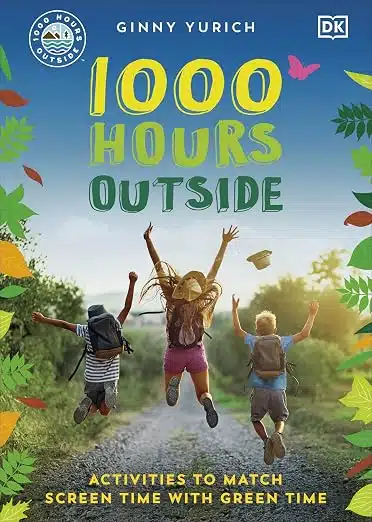
Okay. So this 1000 Hours Outside book, this is a DK book. It's a fantastic book. It is a book about activities. So if you're trying to find activities of things to do, this is a fantastic book. We actually had user submissions for some photos, and we had 17,000 photo submissions. So there are ... I know. That took a lot of time to go through. So there's winter, spring, summer, fall. It's a beautiful book and kids like it. I think it's a reminder. You have it out, your kids are going to open it up and they're going to say, "Look, mom, I want to do this. I want to do that." Whatever the activity is, it's a reminder of all the wonderful things that are outside.
(42:28):
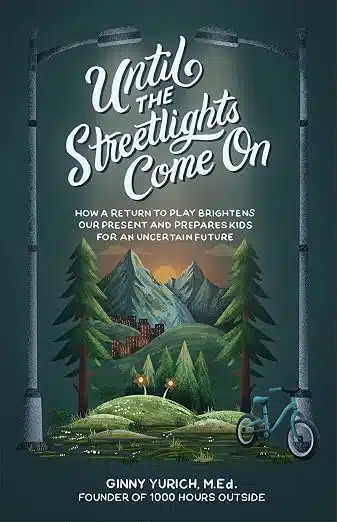
I have a book that's probably in part somewhat similar to The Read-Aloud Family called Until the Streetlights Come On, which is about what we've talked about. Why should we go outside? The subtitle is How a Return to Play Brightens Our Present and Prepares Kids for an Uncertain Future. That's really what I want. That's actually all I want. I want a good today that prepares us for tomorrow, and that's what I believe reading does. That's what I believe these simple things that are often forgotten, getting outside, it's going to give you a good today. And a good today leads to a prepared tomorrow. And that's that one.
(43:02):
And then my newest one is called Homeschooling: You're Doing It Right Just By Doing It, which is what I believe wholeheartedly. I think there's a lot of shaky needs when we start to homeschool because you don't realize there's all these different ways that people do it. I remember being like, "Wait, what?" And people be like, "What kind of homeschooler are you?" And I was like, "Huh? What? What kind? What are my options?"
Sarah Mackenzie (43:26):
The tired kind. That's the kind.
Ginny Yurich (43:29):
The I have no idea what I'm doing. I didn't even know there were kinds kind, that's the kind I am.
Sarah Mackenzie (43:33):
The crying in the bathroom every day by 11:00 AM. Is that a kind?
Ginny Yurich (43:37):
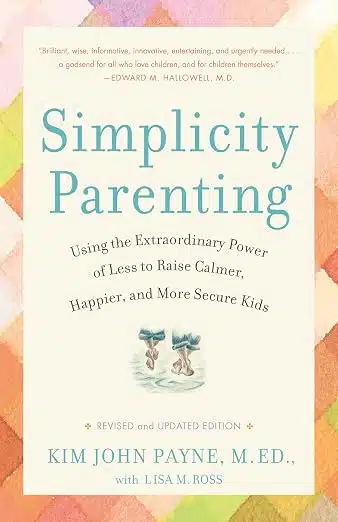
Yeah. But I believe that so many of the parts of it that often actually are looked at as negative. So for example, a homeschool child often has a lot of unstructured time because the parent cannot, you just can't, whether you have one child or six or 12, you just can't fill all that time for them like a classroom teacher might. And so sometimes you feel like, "Oh, I'm failing them," but actually the unstructured time is what's so important for them and their growth. There's a statistic that says by 2030, Kim John Payne talks about this, Kim John Payne is one of my favorite people ... Actually, Simplicity Parenting is a great kickoff book.
Sarah Mackenzie (44:15):
It is a great book, yeah.
Ginny Yurich (44:16):
Just the life in parenting.
Sarah Mackenzie (44:18):
Yup.
Ginny Yurich (44:18):
He says we're living in an undeclared war on childhood. But he said by 2030, which is very soon, 75% of jobs will be had by entrepreneurs or those who are juggling several different careers at once. 75%. So most of our children are entering into an economy that looks different than a 30-year career with a pension. In fact, the statistics say that these kids are going to have seven careers in a lifetime, and that's not seven jobs, that's seven careers. So how easy is it to transition into that when you spent your K-12, basically entire childhood, being told what to do for a vast majority of it? That's the school day plus homework.
(45:00):
So these are things to really consider because homeschooling is the best choice we have ever made, hands down. I do not regret it for one second. It looks different now than it did when we started, and that maybe would make you think, "Oh, we did it wrong," because we've changed. But no, you're giving your kid a front row seat to how to build a life, and how to adjust, how to change for the seasons, all of those types of things, and those are my books.
Sarah Mackenzie (45:28):
Ginny Yurich, I love you. I love you. I'm so glad you came on the show. I hope everybody listening and watching the show is as inspired as I am today to get my kids outside. Thank you so much for coming on the show.
Ginny Yurich (45:41):
I adore you. You have changed my life. I want you to know. And I know so many people say the same thing, but they don't get a chance to tell you in person. You changed my life. You helped to calm, the Read-Aloud Family just calmed me so much, and just reminded me of all the beautiful things that are out there for us as a family, and that we can just enjoy them. It doesn't have to be so structured and stressful, we can trust, we can trust in those things. And so I commend you. I thank you. We love Christmas School. Love. We did just ... Well, the one I'm thinking of was ... I'm blabbering, but I just want to say how much we loved it, and we went and made candles. Was the Joe Sutphin Christmas Carol one?
Sarah Mackenzie (46:26):
Yes. Yes, yes.
Ginny Yurich (46:28):
It was so heartwarming, and I love that you do that. I'm thankful, thankful for the support, for the vision, for your faithfulness in your calling, and to remind families that what they're doing is worth it, and this is such a treat. I mean, I could never have imagined whenever ... a decade ago when I grabbed your book and bag, that I would get an opportunity to talk to you one day, so thank you. Thanks for all you're doing.
Sarah Mackenzie (46:54):
It is an absolute joy. All right, now let's go hear from the kids about the books that they are loving lately.
Owen (47:10):
Hello, my name is Owen, and I'm from Memphis, Tennessee. And I would recommend Harry Potter books because they're fun and scary.
Speaker 4 (47:23):
Hello, my name is [inaudible 00:47:25] and I am 12 years old. I am from California. A book that I recommend is The Hunger Games because it has a lot of fighting, and it's a fun book to read when you want to read one of Suzanne Collins' book. Thank you. Bye.
Kieran (47:47):
I'm Kieran. I'm eight years old. I am from Partridge, Kansas. I like the book Facing the Fugitive written by Katrina Hoover Lee. I like it because they go on adventures that I would like to go on, and it makes me feel like one of the characters. So it's like I'm going on one of those adventures.
Jack (48:16):
My name's Jack. I live in Memphis, Tennessee. And I love mom and dad.
Sarah Mackenzie (48:26):
What's your favorite book?
Jack (48:26):
Redwall.
Ginny Yurich (48:31):
Why do you love the Redwall books?
Jack (48:32):
Because they're fun and scary.
Louis (48:37):
Hi, my name is Louis, and I'm from Memphis, Tennessee. And my favorite book is Secret of the Hidden Scrolls, and I love it because it's fun.
Sarah Mackenzie (48:54):
Thank you so very much, kids. Always love to hear your book recommendations. Show notes for this episode are at readaloudrevival.com/287. There were a ton of books mentioned in this episode, so you're going to want to head to those show notes to grab those book recommendations for yourself, and all the resources and research that Ginny referenced. So much research. I hope you loved this episode as much as I did. I'll be back in a couple weeks with another episode for you, but in the meantime, you know exactly what to do, go make meaningful and lasting connections with your kids through books.