RAR #282: Sparking Creativity with Research
When you think about the various work that goes into making a children’s book, research probably isn’t at the top of your list.
It might not make it on your list at all!
But research is often an essential part of the process. And I can tell you from personal experience that research can be a time-intensive, sometimes overwhelming, but often the most delightful task.
Today on the show, we’re hearing from some incredible authors and illustrators about the research that goes into children’s books. Whether you’re an aspiring author or a curious reader, you’re in for some surprises.
In this episode, you’ll hear:
- Two big reasons why authors do research, whether they’re writing a biography, historical fiction, or even fantasy!
- How every research question can be a doorway, from talking with subject matter experts to primary sources to searching your own heart and mind
- The challenges and opportunities in having too little or too much information available about a person or topic
Some links are affiliate links
Books and Resources Mentioned in This Episode:
- research as leisure activity – by Celine Nguyen
- Katie Wray Schon
- The Chapin Library Williams College
- Candace Fleming
- The Kerlan Collection of Children’s Literature
- Patti Callahan Henry
- John Hendrix Illustration
- Caroline Starr Rose
- Jonathan Auxier
Sarah Mackenzie (00:00):
When you think about the various work that goes into making a children's book, research probably isn't at the very top of your list. It might not make your list at all, but research is often an essential part of the process. And I can tell you from personal experience that research can be a time-intensive, sometimes overwhelming, and often delightful task. Today on the show, we're talking about the research that goes into children's books. Whether you're an aspiring author or a curious reader, you're in for some surprises.
(00:51):
Welcome to the Read-Aloud Revival, the show that helps you make meaningful and lasting connections with your kids through books. I'm your host, Sarah Mackenzie, and I'm the author of The Read-Aloud Family, Teaching From Rest, and a growing collection of picture books, one of which required copious amounts of research. Like I said, research probably isn't the first thing you think of when you think about picture books or even a middle grade novel. Although, as a listener to this podcast, you do probably think about research more than the average person.
(01:25):
So let's start with the basic question. Why would a children's book require research? Well, first off, the type of book plays a big role in whether research is required, right? Nonfiction picture books, including picture book biographies, you know how much I love those, they need to get the facts right. Because these stories are such excellent transmitters of information and ideas, authors want to make sure that the details they include are actually true. Historical fiction, whether as a picture book or a novel, also requires research, because the stories are made up, but they're set in a real time and place, right? And they often happen during real events. So accurate details make the stories more believable, more immersive, and then those details form an impression. The impression that a historical period gives to a young reader especially is very important.
(02:21):
Now, secondly, research has a way of sparking curiosity and provoking questions. In other words, research can lead to incredible story ideas. This is why even fantasy authors often include research as part of their process. Now, if you haven't done much research since college or high school, you might associate the task with the stress of final exams and term papers, that kind of thing. But research doesn't have to feel like homework, especially when you're in charge of the subject matter, nor does research need to mean sticking your nose in a 1,000-page reference volume. Thank goodness.
(03:01):
Now, for many children's book writers, research is traveling to a place firsthand or chatting with an expert or sifting through a box of old postcards at the local historical society. I mean, research can be fun. In a wildly viral essay, the writer and designer, Celine Wynn, described research as a leisure activity inspired by "idiosyncratic passion and interest". She writes, "It's fundamentally about play, a life where it's just fun to be reading, learning, writing, and collaborating on ideas." How delightful. Research as leisure, or even better, research as play tells us a lot about why research is important to authors. It's not only about the facts and logistics, it's about the thrill of discovery and delight at unexpected details. It's about encountering something new and strange that you haven't encountered before. Research sparks creativity for authors, who then in turn spark creativity for our kids.
(04:10):
But in the words of LeVar Burton, "You don't have to take my word for it." Throughout this episode, you're going to hear from authors who rely on research for a wide range of reasons and use it in a variety of ways to write stories for kids. We'll start with an overview of what the research process can entail, move on to some of the practical pieces like getting in touch with an expert or using primary sources, and then we'll take a look at combing through all the cool stuff you dig up, and we'll close with a thoughtful take on following your curiosity. Let's dive in.
(04:55):
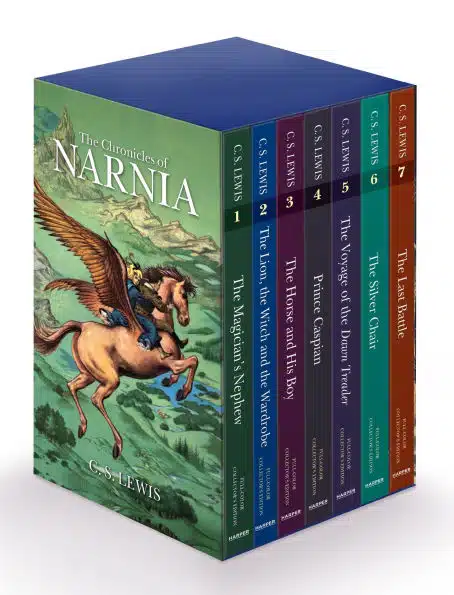
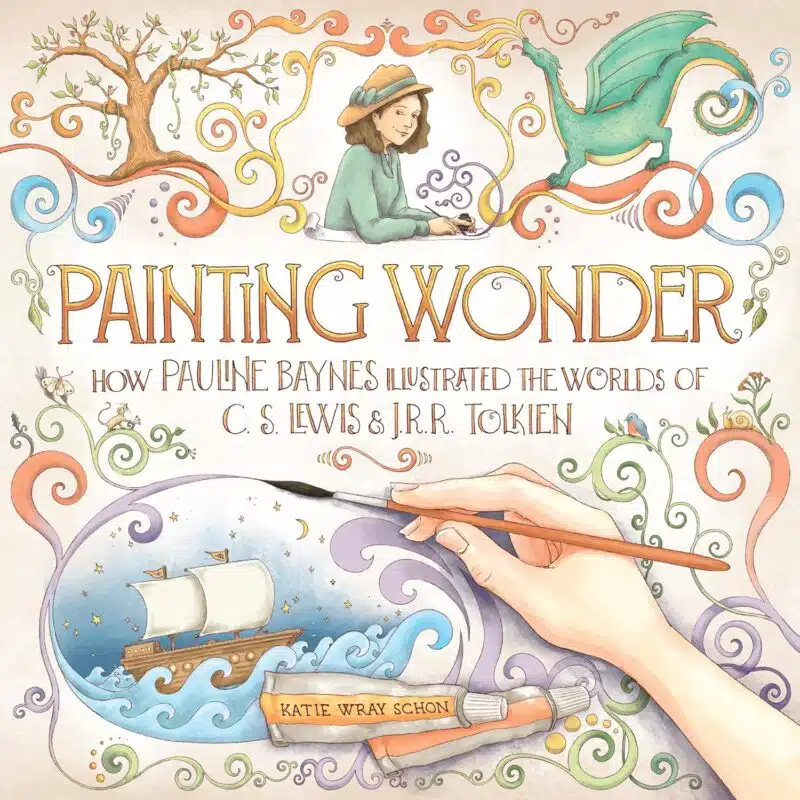
Last year, Read-Aloud Revival's publishing house, Waxwing Books, published Painting Wonder, a picture book biography of Pauline Baynes, who is the woman who illustrated all the Narnia books and who created the official map of Middle Earth. I asked the author of this book, Katie Wray Schon, about what made writing and illustrating the book challenging. Was any part of the process more challenging than you expected it to be?
Katie Wray Schon (05:29):
I would say once I had the writing where I wanted it to be, which took a lot of revisions and it took a lot of reframing. There's so many different ways to approach somebody's life if you're trying to boil it down to 600 words. And then from there, I think probably the thing that surprised me most was how much I felt like I had to research before I drew anything. And some of it was very quick and some of it was a little more in depth, but when you're creating something that's historic, any object you put in there, any flower, any boat, any of these things, you can't just make it up anymore, you have to know that it's appropriate for the time period. And hopefully I got it all right, but it just took a little more preparation in a different way than other image making that I'd done.
(06:17):
And there is not a lot of documentation of Pauline's life. As famous people go, it's relatively unknown, there were not a lot of pictures of her, especially as a young person. And so, it was this mix of really trying to reach out and find as much as I could, and also just knowing that I had to look at, okay, what was the fashion in the time, in the place where she was to try to come up with the outfits as opposed to having an actual photo of her that I could just draw from.
Sarah Mackenzie (06:46):
There's so many different elements here, because we are working on another historical fiction picture book right now at Waxwing, where just this last week I was reviewing illustrations and someone on the team was like, "Wait a second, I think she wouldn't have a glue bottle that looked like that at that time. She would have a pot of glue instead of a bottle of glue." That kind of thing that is why you need so many different eyes on it. Talk to me about the research. Where did you go? Like you said, there was very little documented about Pauline.
Katie Wray Schon (07:12):
There's a wonderful tribute website that some of her friends made, and actually obituary. She passed away in 2008, and so all of the obituaries were online and so I was able to sort of get and read through those. There is mention of her in some of the longer works about C.S. Lewis or Tolkien. She gets a page here or there, and so digging through those. And there's an old magazine, it was a publication put out by Penguin in the, I want to say 60s or 70s, and they had an interview with her. And so, it was really bits and pieces here and there. And then after a while I got brave enough to send an early draft to some of her friends and acquaintances and I was put in touch with her son-in-law.
(08:00):
And so, that was very helpful and very confirming, because again, there was not a ton to pull from and you have to bring this story to life and talk about her as a child and I wasn't there. And so, that was really wonderful, because they were very kind and supportive and excited and gave me that feedback of, "Yes, this feels right." There were some things like, "Oh no, it was this and not that," or, "This and not that." And honestly, part of rewriting the book that one time was recognizing, okay, I don't have every detail. I can't write a manuscript that focuses in on very specific tiny details of what was happening at that moment. I have to use that constraint of not having a line by line story of her life to capture the feel of it.
Sarah Mackenzie (08:52):
And also, I can imagine it feeling almost, I mean, searching for a needle in haystacks. I was trying to find a better metaphor, because that's so cliche. But actually, you kind of do. I mean, even as you're gathering, I know this is how I felt when I was writing about Barbara Cooney, I was gathering as much as I could find and I just had no idea what was going to be useful or not until I was just like, "It doesn't matter. Right now I'm just gathering it no matter what."
Katie Wray Schon (09:13):
Right. Right, right. You just try to just take it all in. Also, I can't believe I didn't mention this, trying to see and absorb and hunt down on eBay or wherever I could find as much of her work as I could. And then one of my favorite moments actually in sort of research and part of this project was I went to at Williams College in Massachusetts at the Chapin Library. They have a special collections library and they were given all of her work, her sketches and things like that. Except the Narnia stuff, I think is with the Narnia estate, but the rest of it, everything else she gifted to them, because there was a librarian there who was a big collector of hers and very, very knowledgeable about her work.
(09:58):
And so, going there and sitting down with the actual pieces of paper that she drew on was incredible and it was such a reminder of just how talented she was. And you see it, of course, in her books and in her drawings, but reproduction, especially in chapter books, especially was not as wonderful as we would want it to be sometimes. And so I mean, she just had so much detail, these beautiful little drawings. So that was really wonderful. That really gave me this boost to just keep going with this. Because it's a long process and you question sometimes, is this the right thing? Is this even valuable? Does the world need this? And then sitting down with that work and saying, "Yes, the world needs this."
Sarah Mackenzie (10:45):
Yes. So let's see. Katie used the web, found secondary sources using Pauline's more famous collaborators, perused a vintage magazine, visited an archive, and talked to some of Pauline's actual friends and family. That's a lot of work, but all of these avenues of research came together to bring Pauline's story to life. Okay. Katie mentioned that she actually got to talk with Pauline's son-in-law, and that part of the research, talking to people about the thing you're researching is an avenue that is often overlooked.
(11:25):
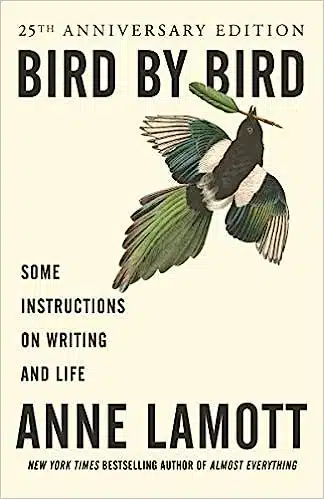
In Anne Lamott's classic book on writing, Bird by Bird, there's a whole essay titled, Calling Around, that begins like this. "There are an enormous number of people out there with invaluable information to share with you and all you have to do is pick up the phone. They love it when you do, just as you love it when people ask if they can pick your brain about something you happen to know a great deal about, or as in my case, have a number of impassioned opinions on. Say you happen to know a lot about knots or penguins or cheese and the right person asks you to tell him or her everything you know. What a wonderful and rare experience." I mean, for those of you who are RAR Premium members, just look at what happens when someone asks me about picture books, making those looking closely videos where we explore books together is one of my very favorite things to do.
(12:24):
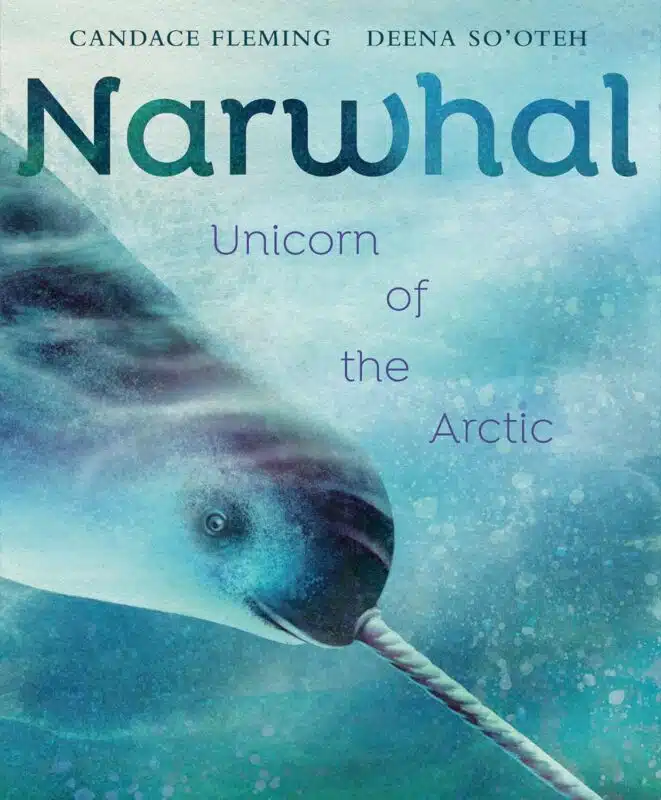
Recently, author Candace Fleming stopped by our RAR Premium Family Book Club to talk all about her exceptional nonfiction picture book, Narwhal: Unicorn of the Arctic. In fact, she told us that the book was inspired by an encounter she had with some kids at a museum who explained to her that narwhals weren't real. She decided she wanted to make sure that more kids knew about these unusual and very real creatures. So naturally, our astute RAR readers wanted to know what kind of resources she used in her research. One of those resources, the world's foremost narwhal expert. They also wanted to know what resources you used for research and how you decided to... What did you use to learn about them?
Candace Fleming (13:20):
I looked at some books written about narwhal, but here's my thing. If I'm looking at a science book, I don't look at anything older than five years.
Sarah Mackenzie (13:28):
Ooh, talk more about that.
Candace Fleming (13:29):
Yeah. Well, the reason is, is because science changes, right? We discover new things, old information we discover isn't accurate, things we used to think aren't true. And so, I only, only use information that's five years or younger. And even then I question it. So after I do my initial research, and I'll look at some online articles. I'm very careful about what I look at though. I'm always worried about what's reliable and what's not. So I only tend to look at scientific journals, that sort of thing. But after I've finished, then I contacted an expert. And I would say that you guys, if you're doing research, always contact an expert. Seriously, truly. And if you have a good question after you've done some research and you have some question that you need answered or you'd like them to verify, they will always do.
(14:20):
I've never had an expert say no. And not just me, but [inaudible 00:14:24] that I've worked with, they want to answer your question. Here's the thing, this is why we all write nonfiction and I think this is the same reason somebody is an expert in a narwhal. Kristin Laidre, she is the narwhal woman. Anyway, she's the narwhal scientist. Always go for the best too. That's what I would tell you. Find the best. She loves them so much that she wants to share that love with kids. You pass along that love. Suddenly you have this empathy for narwhals. You care about narwhals. And that's the same reason I write nonfiction. It's the same reason I wrote about narwhals. It was like love. I fell in love with them and I want you guys to love them too. And so, for me to make you love them, I'm going to write you a really great book or I'm going to try to write you a really great book.
Sarah Mackenzie (15:10):
I love Candace's advice to get in touch with an expert. And they may be more common than you think. Your neighbor, local librarian, or grandparent might have more to share with you than you realized. All you have to do is ask. Another form of research involves something like a treasure hunt. Katie mentioned that one of her favorite experiences was sifting through Pauline Baynes' archive, including her original illustrations. An archive in this case is a special collection of non-book materials that libraries and foundations collect. You might often hear an archive referred to as a famous or influential person's papers. Archives include a person's letters and journals and notes.
(15:56):
For example, a couple of years ago I took the RAR team to visit the Kerlan Collection, part of the children's literature research collections at the University of Minnesota. This collection houses gobs and gobs of original illustrations and drafts and correspondence for many picture book authors and also illustrators, including Tomie DePaola and Barbara Cooney. And on that trip, we were able to see some of the earliest iterations of our favorite picture books. It was so cool.
(16:30):
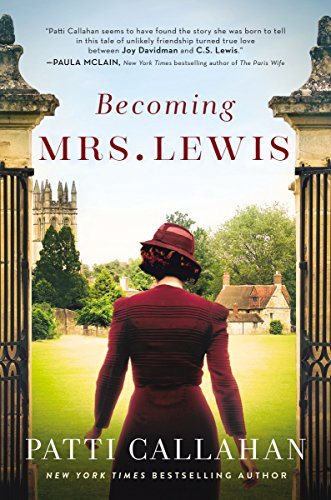
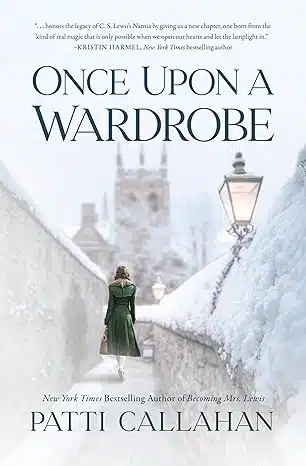
But back to the idea of a person's papers, letters and journals are examples of what we call primary sources. Primary sources are records that are kept by the person you're researching or by people who knew that person. In this clip from an RAR Premium Mama Book Club, Patti Callahan Henery shares how she relied on primary sources for her novels, Once Upon a Wardrobe and Becoming Mrs. Lewis. And yes, I'm sneaking in a novel for adults here, but the peek into her research process, it was too good not to share with you.
(17:07):
A lot of people were asking about what your research looked like. I know there has got to be a balance here between what you are researching and bringing out that's accurate and then also what you need to lend your imagination to and imagine, because you don't have the exact answers for that particular thing.
Patti Callahan Henery (17:30):
So I'm going to address a little bit, Becoming Mrs. Lewis, which is my novel about Joy Davidman, because that's where this book started unknowingly, but that's where it started, because I was doing my research about her. And when I talk about research for a real person like her or Lewis, the main thing I rely on is what we call primary material. I don't want to hear what somebody else said about what they said. I don't want somebody else's opinion about what they said. I just want what they said. And so, I want Joy's letters, Lewis's letters, Lewis's comments, Lewis's sermons, Lewis's work, Lewis's poetry, Joy's poetry, the letter. Now, the letters between them are lost to time. If Douglas Gresham, her son passes away and we find a cache of letters, that would be amazing, but he says they're gone and I believe him. So those letters are gone, but we have the letters they wrote to other people about each other and about their life.
(18:36):
So when I was doing my research for becoming Mrs. Lewis, I kept seeing in his life during that time from, they were together from 1950 to 1960, they started becoming pen pals in 1950, which is the year that The Lion, the Witch and the Wardrobe came out. And so, while I was doing my research, I kept seeing these moments in his life that I could see in The Lion, the Witch and the Wardrobe. And not in a scholarly way, not in a, "I'm going to give you a bullet point list," but as an author who knows that things of our life can be alchemized and rise up in work that we don't even notice, I could see pieces of his life.
(19:22):
So what I did is, I sat down and I picked the seven moments I wanted to write about before I even dove into the scholastic research of other people's work on The Lion, the Witch and the Wardrobe. And then I just started to narrate what those were and why I believed I saw them inside The Lion, the Witch and the Wardrobe. And then I just dove deeper and deeper and deeper. In fact, of course, one of the primary inspirations for The Lion, the Witch and the Wardrobe is when children came to live with him and his brother Warnie during World War II, and I didn't know that it was called, most people don't, it was called Operation Pied Piper. And when I found out that research, then I dove down a whole nother rabbit hole that led to a whole nother novel. So his life is so full of these little nuggets that you have to sit still and dig for. But for me, it's always about the primary material.
Sarah Mackenzie (20:20):
I think you can see how archival research can really draw you in, right? You know something once existed that would be oh so useful to you, like the letters between C.S. Lewis and Joy Davidman, but they're completely absent from the archive. So you dig and you dig to no avail. That's on way research inspires stories. We want to fill in the blanks. Even if those letters are lost to time, we can still imagine what they might have said.
(20:52):
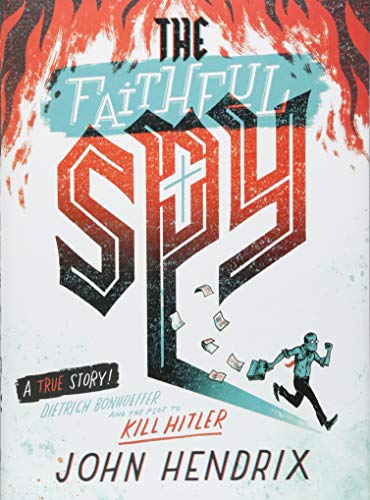
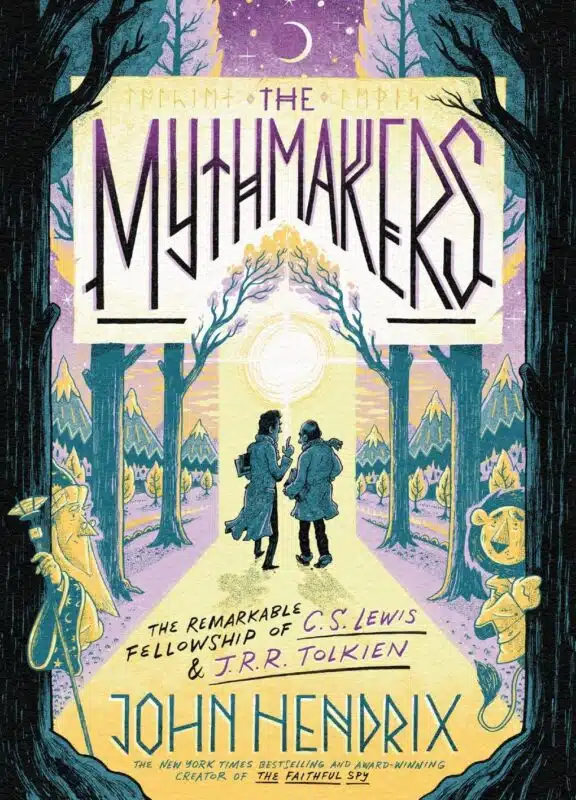
Okay, let's stick with Lewis for a bit. You know I love to. We can add in Tolkien as well. John Hendrix wrote and illustrated a graphic novel about the friendship between these two epic authors, pun totally intended, and the importance of myth in our lives. Now, unlike the illustrator they had in common, Pauline Baynes, there are mountains of information about these guys. When you've got so much to work with, how do you cut it down to something you can actually work with? By the way, John also wrote The Faithful Spy, a graphic novel about the story of pastor and theologian Dietrich Bonhoeffer, which was also a daunting research project and I love that book.
(21:40):
Well, as I was reading, I was thinking about what a challenge it must have been to decide what to leave in and what to cut out. I interviewed Katie Wray Schon, who's the author and illustrator of Painting Wonder. And one of the things that Katie ran up against while she was researching that picture book biography about Pauline Baynes, the illustrator of the Narnia books, is that there was very little documented about her, written about her, very little that she could pull from, which creates a certain challenge when you're writing about someone. But I almost think the challenge might be greater with something like this where you've got C.S. Lewis and Tolkien. There's so much. How do you even begin to decide what to read, what to research, what to look at? How do you decide when you've got enough? Did that feel like an insurmountable?
John Hendrix (22:33):
Yeah, totally. Or just a bigger problem. And I ran into this when I started doing Faithful Spy, a book about World War II. I began to think, "Does the world need another book about this?" And it's the same thing with Tolkien and Lewis. There have been so many, hundreds of books about the inklings about these two men and there is always a bit of intimidation of, "Am I able to add anything? Am I able to take this story and make it my own?" And there's a lot of doubt that comes in any project.
(23:06):
And then you get past that and you think, "I'm going to do this." You start reading and researching and it's just an avalanche of information. And of course, with Faithful Spy, it was primarily a single biography. I mean, Hitler was sort of a co-character along with Dietrich in that story, but in this book it is fully a cradle to the grave story of two men with really complicated lives. So it was a lot to get it in. I mean, I started the page count at 176 to match Faithful Spy and I kept adding signatures. It was like I would add 16 more pages and I'd be like, "Okay, that's it. I'm stopping." And then it was like, "Okay, just one more and I think I can get it all in."
Sarah Mackenzie (23:49):
Well, because it's not actually just a story, as if that's just the story of cradle to grave Lewis and Tolkien. It's also an exploration of myth and story and how those things feed our imaginations. So tell me, because the structure of this book is so unique and so interesting. We of course have the story of Lewis and Tolkien being narrated by their avatars. Actually, could you give us a little overview for our listeners or viewers who haven't yet gotten their hands on the book? Tell us a little bit about how this is presented, because it is so unique.
John Hendrix (24:22):
Well, I'm kind of playing a trick on you. I'm using the biography of Tolkien and Lewis to really just allow myself to tell the story that I really want to tell, which is about myth. And where do myths come from? Why do fairytales and stories matter to us? Why do they matter to the universe? These were things that were really important to these men. And you can't understand their writings without understanding or at least asking that question of the world and of stories. So that's the foundation of why this story begins the way it does, which is with these two characters that seemingly show up out of nowhere in a library, Lion and Wizard, just two characters chosen completely at random.
Sarah Mackenzie (25:06):
Completely randomly.
John Hendrix (25:07):
And Lion and Wizard are in a library, they seem to know that they are in a book and they seem to know that they're on a quest, but they themselves seem to be on a mythic journey that you get to follow along and enjoy their conversation alongside learning about Lewis and Tolkien, whose stories are sort of paralleling what Lion and Wizard are going through.
Sarah Mackenzie (25:30):
And then you've got these portals, and these are so fun. They're almost like choose your own adventure, but it's like choose to jump into the deep end if you really want to, that kind of idea. So at the end of this section, I'll hold this up, there's this option, there's this door right here, which is oh so inviting, right? And it says, "The roots of myth, this is portal number one, the roots of myth, turn to page 188, or you may continue reading." So of course, you can continue reading, but I don't know why you would, because as soon as you get to this part, you've got to go back to this portal in the back where it's a deeper dive into something before you move on. How did you decide what to put in portals? What was that like?
John Hendrix (26:09):
Well, doors become a very important visual theme in the story, as they are in Lewis and Tolkien's writing. Portal fantasy is a genre that we have from basically Lewis and Tolkien. So these were really out of necessity. My editor, these were all within the body of the story initially and my editor rightfully said, "You're insane. This is way too much information to have in this one story." And I kept telling him, "No, you have to know where myth comes from to get the later parts of the story." And so, he was telling me to cut it. And this is what a good editor does, they really challenge the things that are most precious to you. So after crying myself to sleep a few nights, I remembered my choose your own adventure past and thought, "You know what? Doors are so central. What if we just basically allow this to be an end note that you can experience with the story or later?"
(27:07):
And in fact, with younger readers, I tell them, "You know what? Skip the portals the first time through and just get the story." Older readers, if you want to take that detour, you can, but I found with, if you're 10 to 13 and you just feel like, "I just want to keep on trucking with this story," I wrote it so that you can just keep on going.
Sarah Mackenzie (27:27):
Coming up with a structural solution that enhances the story in order to deal with the avalanche of information he had, amazing.
(27:45):
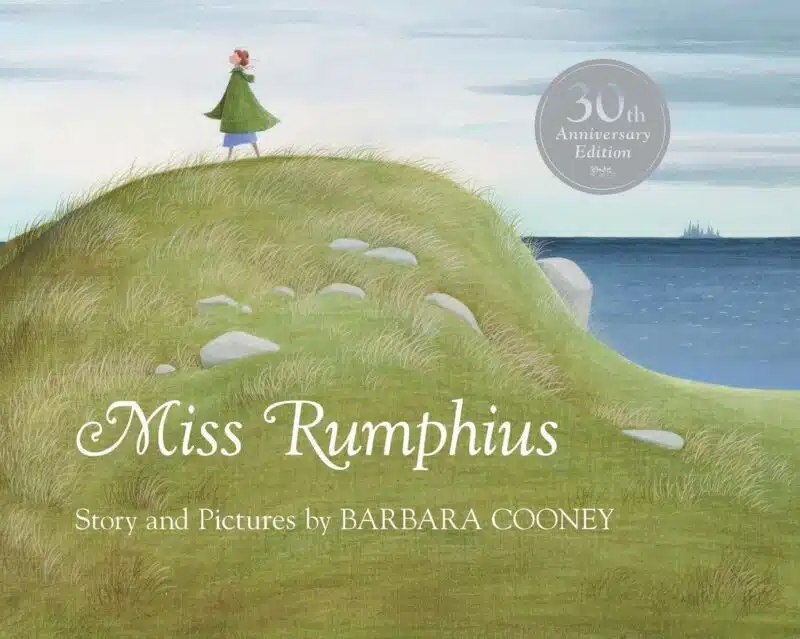
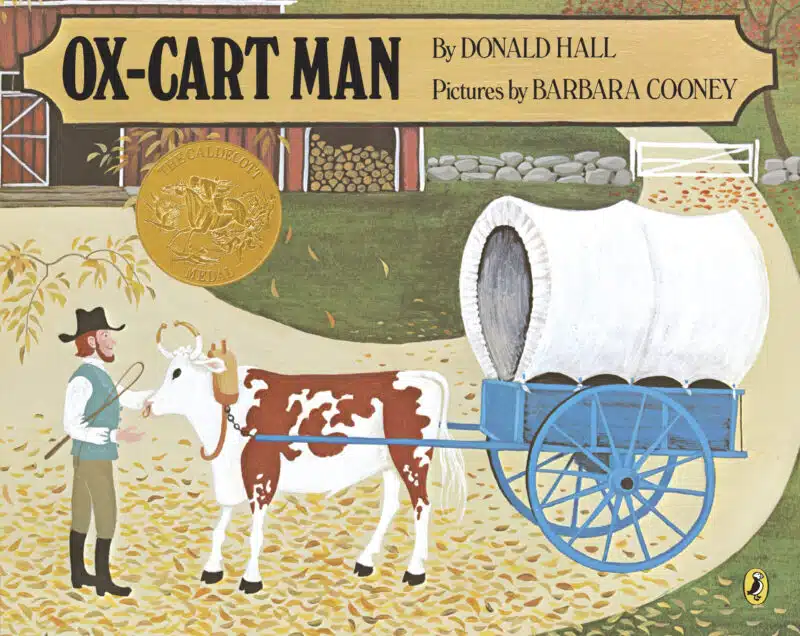
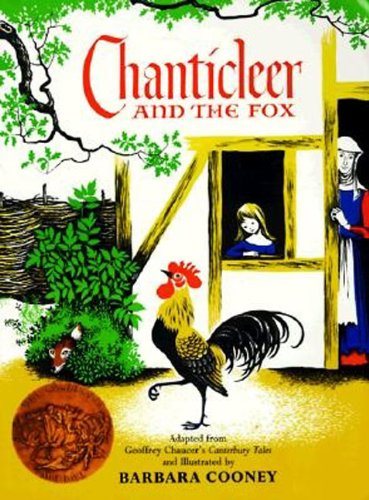
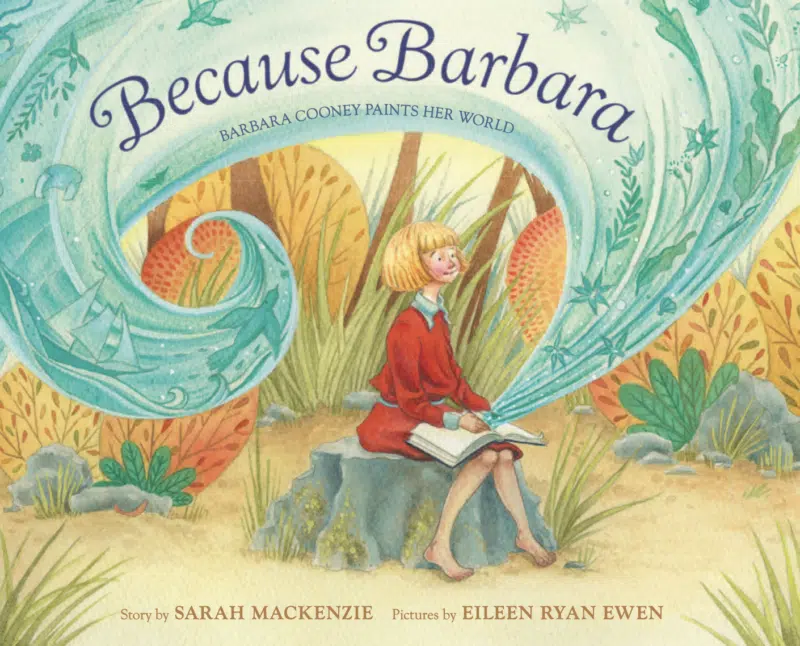
So I don't just love picture books and their authors, I am also a picture book author, as hopefully you know. One of my picture books is a biography of Barbara Cooney. Barbara Cooney was the author of classics like Miss Rumphius, Ox-Cart Man, Chanticleer and the Fox. In this clip from an RAR Premium Family Book event soon after the release of Because Barbara, I shared how I did some of the research for that book. Then in a clip from the podcast episode we made about the making of Because Barbara, I talk about the challenge of finding the through-line in someone's whole life story. You'll also hear from my editor, Caroline Starr Rose, about how she thinks about taking the many stories of a life and distilling them down into something that fits in a picture book.
(28:42):
So you can tell I'm a Barbara Cooney fan, because I can't stop writing about her. But it wasn't just that book, it was all of her other ones too. And I kept reading them and loving the illustrations and loving the stories, and I was just really captured by how these books kept appearing to me as the best ones on my shelf. I read so many other picture books with my kids, but the ones that I kept saying, "This one is better than the rest of them," were oftentimes illustrated by Barbara Cooney, so I got curious. Who is this lady? I've never heard of her outside of her name being on the cover of a book, so who is she? So I started sort of researching. There wasn't a ton of information about her. There was just enough though, that I found out she was a mother of four children, and I also found this super cool collection of books. I'm going to show you the one that I used for this one.
(29:35):
I had to buy them on eBay, because they're library reference books, the kind of books that at the library they don't usually let you check out, you have to use them in the library, but these ones were, this was discarded, because they don't use it anymore. So I bought it on eBay and it's the Newbery and Caldecott Award speeches. So whenever a book gets awarded, a Newbery Award or Caldecott Award, the author or illustrator who receives that award gives a speech at this fancy dinner. And those speeches are all recorded in these collections of reference books. So I started collecting these and I read what Barbara said about writing Chanticleer and the Fox, which was the first Caldecott she won, and then Ox-Cart Man, which was the second one she won.
(30:25):
And here I'll just show you with some of my notes. Do you write in your books? If they're my books that I own, I write in my books. You'll see it here. I'll show you. I wrote notes, I've underlined different parts that I thought might be really interesting. And as I was learning about her, oh, I see Q1. Look, I'm coming up with questions, questions that I'm asking myself. Let's see what that even says. "How come you are an artist?" This part where I underlined here must be what I thought she would've said when someone asked her, "How come you're an artist?" Or I read over here, "How come you're an illustrator?" So as I was reading, I was thinking, "Oh, she's answering these kinds of questions in here." Let's see what else I have in here. Oh, not only is there the speech that Barbara gave, but there's also an article at the end of each spot by someone who knew that author or illustrator.
(31:14):
So this was by a friend of hers, Constance Reid McClellan, and she says, "Barbara Cooney is a multifaceted woman. She's an accomplished gardener. She grows flowers to cut, vegetables to eat, and herbs with which to season. She's a master in her kitchen from," I don't know how you say this, "Hot cuisine to lowly but nourishing whole wheat bread and white loaves for rolled watercress sandwiches." That's a detail you might've remembered from the picture book, right? That's where I got it. I didn't just make up that she liked to make watercress sandwiches, I found it. "Year after year, her Christmas tree is a lasting memory for all children who see it, lighted as it is with tiny candles and hung with cookies cut freehand into the shapes of dragons and bicycle riding bears and of characters from her books frosted in color. Always there is perfection, flair, and detail." So you can see on this page as I was reading, I underlined and I even drew a Christmas tree to remind myself, "Come back to this."
(32:12):
So as I was researching about Barbara, I was taking all of those notes I showed you and then I started thinking, "If I was to tell the story of Barbara herself, what would I want to make sure was included?" The hardest part for me about writing this book was actually finding the through-line. A good biography isn't just birth to death of someone's life. I mean, some biographies are a birth to death of someone's life, but usually not the good ones. And Barbara deserved better. Also, she was kind of a Renaissance woman. She did all sorts of things. And not just making stories, but a whole bunch of creative things in her life. A picture book also doesn't give you a lot of room. You have to tell your story in as few words as possible. So that was my challenge. In a picture book biography, I could tell one story about Barbara Cooney. Which one should I tell?
(33:17):
Well, I don't know how many versions of this book I drafted, so many. And there were lots of different through-lines that I could have run with, through-lines about the kind of mother she was, through-lines about how she learned how to illustrate, through-lines about all of her different relationships. But I wrote a whole bunch of different ones, and once I was satisfied with one of those versions, I did what I always do when I finish a manuscript, I sent it to a very particular person and asked her to put it through the ringer. Caroline Starr Rose is an author of several picture books and middle grade novels, and she is always, always, always the first person I send my picture books to. Before I let anyone else on the face of the planet see them, Caroline gets the manuscripts first. At this point, I needed a critique. I needed someone who wasn't afraid to tell me everything that wasn't working as well as I probably thought it was.
Caroline Starr Rose (34:18):
A true critique? I feel like I am attending a one-person masterclass where I'm the only student, I have this professor who knows me in and out, knows my work in and out, can anticipate my strengths and weaknesses and gives me direction that is, I could have never learned. I could have read 500 books on craft and all my years of knowledge from reading, which are invaluable, it's just condensed in such a way because it's geared toward my work specifically.
Sarah Mackenzie (34:53):
So I sent my manuscript to Caroline for the critique and I waited. And what Caroline sent back is called an edit letter. And in an edit letter, the person doing the critique tells you a little about what's working and a lot about what's not.
Caroline Starr Rose (35:11):
I have the edit letter that I wrote you right in front of me. So what I wrote is, "This is such a gorgeous tribute. It is so, so, so beautiful. Your imagery is lovely. I hope you're proud."
Sarah Mackenzie (35:23):
Not everything about it was working though. Some of it just wasn't. So Caroline flagged those parts, some word choices, some story choices, some plot points. I read her feedback and I rewrote the story a few more times.
Caroline Starr Rose (35:39):
It can be rough. It can be rough to receive a critique. And I want to make sure that, to the best of my ability, what I'm offering is received not as, I think you are terrible, or... It's going to be more than a pat on the head.
Sarah Mackenzie (35:57):
It was not a pat on the head, even with that lavish praise she did give me at the beginning for what was working. And she affirmed the part of the story that I had struggled with the most, that through-line. What's the one story? What's the one hurdle that Barbara is going to overcome in this book? What's the one story I want to tell? See, Barbara's life was so rich and so abundant. I had a lot of different directions I could have taken the book in. I landed on a story about a girl who saw beauty in the world and spent her life trying to get it on the page so she could leave the world more beautiful than she found it. When you read it, you might think, "Well, that's the obvious story about Barbara Cooney." It was not the obvious story when I was digging through all my notes. When I was reading and talking to people and taking notes, that wasn't the obvious through-line, but that's the through-line I found. And Caroline said in her critique, "Yes, that's the through-line. You got that."
Caroline Starr Rose (36:56):
I love that idea of being in love with the world, and it makes me think of, there's an EBY quote that says something like, "All I've wanted my writing to say is that I'm in love with the world," or something along those lines. It stirs so much satisfaction looking at these people's contributions. Because it is, they're love letters that are heartwarming to the recipients, the people that get to read and that get to experience these stories.
Sarah Mackenzie (37:19):
Being in love with the world, I think is just another way to say insatiably curious, insatiably interested, insatiably willing to ask questions and search for answers. Luckily for authors like me, it's also the beating heart of a great story.
(37:39):
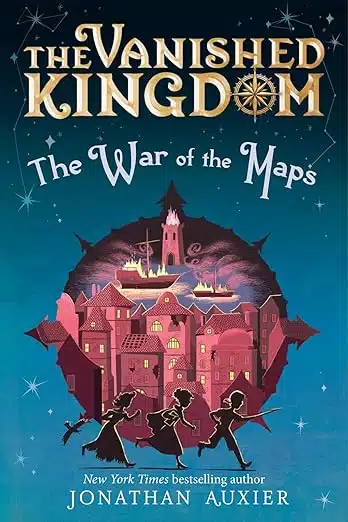
And speaking of the insatiable willingness to ask questions and search for answers, I want to close this episode with something a little different from what you might expect when you hear the word research. When I spoke to Jonathan Auxier about his book, The War of Maps, he told me that every story he writes is an attempt to answer or at least explore an unresolved question. Here, the research isn't done in archives or reference materials, but in your own heart and mind. This is research as theory or philosophy. It's research that investigates the human experience and weaves its way into stories that present something deeply true.
(38:33):
The pattern that I'm noticing is that your books are almost a way to resolve cognitive dissonance. Now I'm curious about your new book and the guiding question for that one, if you're willing to share or if you feel like it's not something you should share.
Jonathan Auxier (38:46):
That's a big, big piece of it, is I think so much in our cultural moment, but also historically. The War of the Maps is this pitched battle between a world of ration, reason, and a world of magic. And it's a zero-sum game and it's life or death. And I think where I ultimately come to is that the great damage and lie is the idea that it is a war. We are told that we have to choose sides. We are told that it is us versus them, when really they are two different ways of being and they're not mutually exclusive. And so, I like your language of both, because they both are obviously real, because they're both obviously inside you, and they both obviously have truth and resonance, and they both obviously have limits to how much they can explain.
(39:30):
And this is a big, big book. It is by far the most ambitious thing I've ever written sort of emotionally, certainly plot-wise, thematically. When my agent finished reading the first draft... And I'm the only children's author he represents, he only represents. So I think he thinks he was giving me a compliment, I got my dander up, but he was like, "I think you're trying to write a book for grownups." And I was like, "Well, I don't know about that. You're insinuating that children can't handle this." And I think we underestimate children at our peril. I know at that age, I was plagued by all of these questions.
(40:04):
So the question is, how do you reconcile the fact that we don't live in a world with magic and how do you reconcile what is clearly the beautiful yearning that stories of fantasy and stories of magic place inside us? Because one way that a lot of people respond to fixating on things that are not tangible is they have a contempt for the world around them, the material world and their present world. They are so fixated on preserving a hypothetical or an imaginary thing that they disregard suffering that is in front of them, duties and roles that are in front of them. They have scorn for the world that we actually all inhabit with actual real-life human beings who have actual lives and needs. And that is not the whole story, but that is one of the very compelling and heavy threads.
(40:55):
And so, I was writing this book to explore that instinct in myself and to interrogate it, because I think it yields really bad fruit. And so, if fantasy, imagination, magic, all of this leads a person to that place, why does it do that and what does it mean?
(41:14):
So even in The War of the Maps, there's two factions, very flawed and also very beautiful in each their own way, and our characters, our main characters are basically thrown into those two different communities and each engage with them and they see the allure of each of those communities, and ultimately the frailty and the dysfunction of them as well. Again, I think my goal is to find a more capacious third way that lets two things be true.
(41:43):
I can't have that scorn for the world that's my children's world. I can't not feel hopeful. I can't not see the beauty. I think children are in some ways more philosophically and theologically-oriented than adults allow themselves to be, because adults have to pay taxes and just keep a roof over their head and change diapers. And adults are actually thrown into the trenches of this very quotidian, horrible grind, but when you're a little bit younger, you have the time and the space. The sky really is the limit. You really can ask any question. And questions aren't threatening to your sense of identity the way I think they become later. The older you get, the more dangerous questions should be. And really, no question should be dangerous. Every question should be a doorway if it's come to in good faith, I think.
Sarah Mackenzie (42:28):
Every question can be a doorway. It doesn't matter if it's a question about narwhal habitat, the childhood of a favorite illustrator, the friendship at the heart of beloved stories or something inherently unanswerable. Research, no matter what form it takes, is the way through. Curiosity is the key. Discovery, often unexpected, is on the other side. And this is why research matters, whether fantastical or historical, whether scientific or just good old-fashioned fun. Research is a spark that can light the fire of creativity in us all.
(43:12):
Several of the clips in today's episode were from exclusive RAR Premium events. Every month we host an author or illustrator for an online event where they answer kids' questions and share more about their process. These events are part of our Family Book Club, which also features a monthly book selection, exclusive guide, a language art supplement, and more. We also have a whole library of Writers On Writing, or WOW workshops for your kids that feature our favorite authors sharing fun and useful ideas for improving writing and storytelling. Plus RAR members automatically get access to our summer and Christmas school programs. To learn more about RAR Premium, go to rarpremium.com. Now, let's go hear from the kids about some of the books they've been loving lately. What's your name?
Child 1 (44:06):
[inaudible 00:44:09]
Sarah Mackenzie (44:09):
And how old are you?
Child 1 (44:11):
Four.
Sarah Mackenzie (44:12):
And where do you live?
Child 1 (44:13):
In Indiana.
Sarah Mackenzie (44:16):
Indiana. And what is your favorite book?
Child 1 (44:18):
Spooky Old Tree.
Sarah Mackenzie (44:21):
Berenstain Bears and the Spooky Old Tree. And why do you like that book?
Child 1 (44:22):
It's Spooky.
Sarah Mackenzie (44:25):
It's spooky. And say bye.
Child 1 (44:32):
Bye.
Sarah Mackenzie (44:36):
What's your name?
Joseph (44:37):
Joseph.
Sarah Mackenzie (44:38):
How old are you?
Joseph (44:39):
Seven.
Sarah Mackenzie (44:39):
Where do you live?
Joseph (44:39):
Indianapolis, Indiana.
Sarah Mackenzie (44:47):
And what's your favorite book?
Joseph (44:48):
The Penderwicks.
Sarah Mackenzie (44:51):
And why do you like The Penderwicks?
Joseph (44:54):
Because there's four sisters and they go on adventures together and they met a boy named Jeffrey. Bye.
Sarah Mackenzie (45:13):
What's your name?
Child 3 (45:14):
[Inaudible 00:45:14]
Sarah Mackenzie (45:14):
And how old are you?
Child 3 (45:14):
Four.
Sarah Mackenzie (45:14):
Okay. What's your favorite book?
Child 3 (45:14):
Ballerina.
Sarah Mackenzie (45:17):
Ballerina, Swan Lake?
Child 3 (45:18):
Ballerina, Swan Lake.
Sarah Mackenzie (45:23):
And do you like it because of all the pretty dresses and the owl man? Yeah, okay. Say bye.
Child 3 (45:25):
Bye.
Sarah Mackenzie (45:32):
Okay. What is your name?
Lila (45:33):
Lila.
Sarah Mackenzie (45:35):
How old are you, Lila?
Lila (45:35):
I'm three.
Sarah Mackenzie (45:38):
Three. And where are you from, Lila?
Lila (45:41):
Omaha.
Sarah Mackenzie (45:42):
What is your favorite book?
Lila (45:44):
Horsey one.
Sarah Mackenzie (45:45):
The Little Blue Truck?
Lila (45:45):
The Little Blue Truck.
Sarah Mackenzie (45:50):
There you go. Yeah. It has got a horsey in it. What's your favorite part about that book or why do you like it?
Lila (45:54):
Because I like it.
Sarah Mackenzie (45:57):
Yeah, because you like it. You like the horsey? All right. What is your name?
Isaac (46:02):
Isaac.
Sarah Mackenzie (46:03):
Where are you from Isaac?
Isaac (46:05):
From Omaha.
Sarah Mackenzie (46:06):
And how old are you?
Isaac (46:07):
Four.
Sarah Mackenzie (46:09):
Four. And what is your favorite book?
Isaac (46:12):
Luke Goes to Bat.
Sarah Mackenzie (46:13):
Luke Goes to Bat by Rachel Isadora. Why do you like this book?
Isaac (46:18):
Because it has a baseball guy in there.
Sarah Mackenzie (46:22):
What does the baseball guy do in the book?
Isaac (46:24):
Bats.
Sarah Mackenzie (46:24):
He bats. Yeah. Jackie Robinson is in there, isn't he?
Isaac (46:30):
Mm-hmm.
Sarah Mackenzie (46:30):
And how does he hit the ball?
Isaac (46:33):
Hits it with his bat.
Sarah Mackenzie (46:35):
Yeah. You like the home run part, right? Yeah, okay. That's a wrap. Thanks so much for joining me today. I hope you're inspired to research in one of the many ways possible for you. The show notes for this episode are at readaloudrevival.com/282. And don't forget, you can head to rarpremium.com to get access to more of those fabulous author interviews that are always inspiring and will help turn your kids into book lovers. I'll be back in a couple of weeks with another episode, but in the meantime, you know what to do. Go make meaningful and lasting connections with your kids through books.