RAR #277: Inspiring Heroic Virtue in Our Kids
We talk a lot around here about the incredible impact stories have on our kids. They build empathy and connection, letting us walk a mile in another’s shoes. And some stories also help us see what it looks like to be brave and courageous, even in the face of fear or daunting challenges.
Today, Audrey is back to talk with me about how stories inspire courage in our kids and ourselves and can connect us to profound truths, no matter how fantastical the setting.
In this episode, you’ll hear:
- How stories become companions to us through challenging seasons
- Which stories that have shaped Sarah and Audrey’s own lives
- The ways myths can echo profound truths to us that feed our hearts and minds and inspire heroic virtue
Some links are affiliate links
Books and Resources Mentioned in This Episode:
- Anne Lamott: 12 truths I learned from life and writing | TED Talk
- Best of RAR: How Read-Alouds Inspired the Wingfeather Saga with Andrew Peterson
- On Fairy Stories, J.R.R. Tolkien
- Myth Became Fact, C.S. Lewis
- Wingfeather Fans Book List
Audrey Menck (00:13):
Welcome to the Read-Aloud Revival podcast. I'm your host, Audrey Menck.
Sarah Mackenzie (00:18):
Wait, wait, wait, wait. I am your host, Sarah Mackenzie. Welcome to the Read-Aloud Revival podcast, the show that helps you make meaningful and lasting connections with your kids through books. Today, on the show, my daughter Audrey, how long have you been waiting to do that, Audrey?
Audrey Menck (00:34):
All my life, I think.
Sarah Mackenzie (00:36):
Hilarious. We're going to be chatting about how books and stories inspire courage, not just in your kids but also in you. Do stick around until the end because we have a brand new book list that you're not going to want to miss.
(00:52):
Audrey, welcome back.
Audrey Menck (00:54):
Happy to be here.
(00:57):
Let's jump right in. You wrote a book, you've written a few books actually, but the one I want to ask you about today is The Read-Aloud Family: Making Meaningful and Lasting Connections with Your Kids through books and in, I believe, chapter 3, you share the tale of George Washington and the cherry tree. Could you just start us off by reading that?
Sarah Mackenzie (01:20):
Yes, absolutely. This is the Read-Aloud Family: Making Meaningful and Lasting Connections with your Kids through books, chapter 3.
(01:26):
"Drew was four when he first heard the story of George Washington and the cherry tree. I hoisted him, sweaty and smelling of earth and grass, onto my lap one summer morning and read aloud the legend of when young George Washington received a hatchet at only six years old. The story goes that in his youthful foolishness, George used the hatchet on one of his father's prized cherry trees. He immediately regretted his rash decision, knowing that a whipping was likely coming his way as punishment for carelessly destroying his father's property. When his father approached him about it, the boy drew himself up and proclaimed with bold honesty, "I cannot tell a lie. I did cut it with my hatchet." Surprisingly, George did not get in trouble for his actions. In legendary wisdom, his father declared that an honest son was worth more than a thousand cherry trees."
(02:25):
"Drew listened intently while I read this story, then ran out to the backyard to play with his sisters. Later that afternoon, while scrubbing the overflowing stack of dishes from the previous night's spaghetti dinner, I looked through the window above the kitchen sink just in time to notice Drew hacking at my yellow tea roses with a large stick, his little body swinging from side to side in exuberant destruction. I threw the dish rag on the floor, flung open the sliding glass door and shrieked for him to stop, demanding he tell me just what on earth he was doing. He dropped his stick and turned, glittering brown eyes toward me as a wide smile spread across his face. "Ask me if I did it," he exclaimed, proudly pointing at the drooping rose bush, and then I knew. I sank wearily onto the back step. "Did you beat down my tea roses?" I asked weakly. He scrunched up his face and puffed out his chest, "I cannot tell a lie."
Audrey Menck (03:32):
I just love that story. I don't remember this exact day, but I can just picture little Drew being so proud of himself for telling the truth in that moment. But I think it's such a good illustration of how stories can really impact us and hopefully not always to make the same mistakes, as the characters that we're reading about, and hack down our mother's tea roses, but really to walk a mile in another's shoes, not only that, but even more to see what it's like to be heroic, to be courageous and brave even in the face of fear. I think there's a couple of things that happen here. Of course, there's the example to imitate, but also there's a companionship and courage, "If George did it, I can too." There's a certain kind of friendship that forms as well, which I think is really unique and special.
Sarah Mackenzie (04:20):
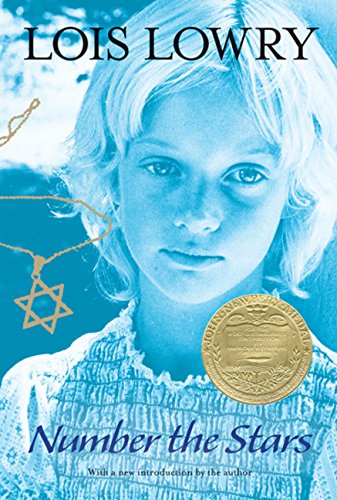
It's funny because, just this week, we've been reading aloud Number of the Stars by Lois Lowry, and I was reading about the part where Annemarie's mom breaks her ankle. I was going to say sprains her ankle, but I think she actually breaks her ankle on a path running through the woods. As I read, it says Annemarie finds her mom on the ground and then asks her how she is and her mother looked up with a pained drawn look on her face.
(04:47):
I just happened to look up at Emerson, one of my 12-year-olds, as I said that, and I watched him. He was laying on the couch, and I watched him change his face. He was changing it like what would a pained drawn face... You could see him doing it. You might notice this with your kids when you're reading aloud. It's really interesting if you watch when people are doing something, their body is being described, like a stance or a expression or something. A lot of times, our kids will actually act it out as you're saying and as you're reading it aloud. And just noticing that this week where I was like, "Oh, my goodness, that's what he's doing, he is now doing exactly what Drew was doing when he was four, 'My poor tea roses,' I knew it." That kid is 20 years old now and still giving me a run for my money. But I'll tell you what, that was very on the mark for Drew at four years old.
(05:43):
I wonder, do you have any experiences like this from your own reading life?
Audrey Menck (05:47):
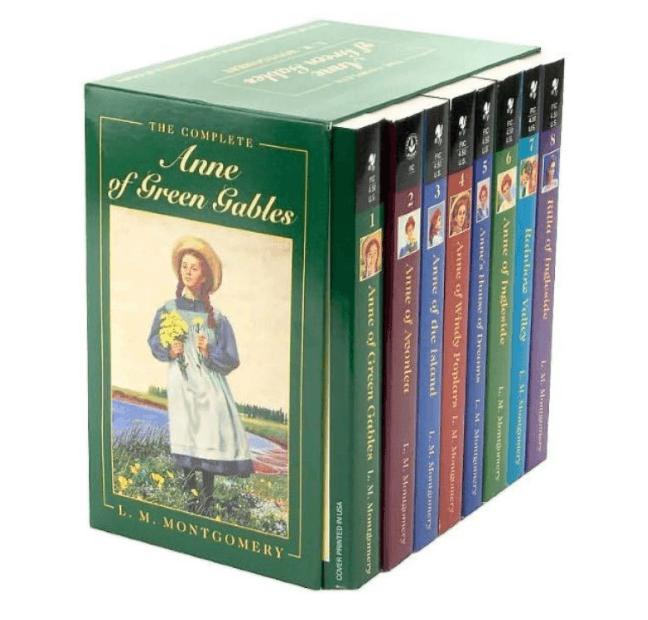
Yeah, I am a huge fan of the Anne of Green Gables series, and I know I'm not alone in this. I'm sure many of our listeners can agree wholeheartedly with that. But I think the book that really stood out to me the most, there's six books in Anne's kind of canon of stories about her life and then there are a couple about her children at the end, is book number 3, Anne of the Island. I think I read it every single year I was in college because, in it, Anne is at university and she's studying to be a teacher. There was something so comforting about the experiences that she was walking through.
(06:23):
Even though she was inexperienced many decades ago in Canada and I was in America in the 21st century, I was just still so comforted by the same through lines in our lives of needing to study and forming relationships with friends and all this figuring out who you are and what you're going to be about in your life, and walking with Anne through that and just sort of experiencing... In a book, you get to experience both their internal dialogue and externally what's happening, which sometimes you don't even necessarily have with your friends. So I think that that was a really big gift to know, "Oh, these things that I'm thinking and feeling, Anne is too, and she's here with me in a certain sense through this book." I would often walk around campus with my earbuds and listening to Anne of the Island, and I just found a real friend in that book.
Sarah Mackenzie (07:16):
Which is one of those things that is not easily quantifiable, or I don't even know that I realized exactly that's happening, or it's happening, like you said, when you're on a college campus when you're already grown. It's not something that's didactic like, "I'm going to sit down and I'm going to read Anne of Green Gables to you so that you develop a friendship with Anne, so you feel less lonely in the world." That's not how that works, right? In the same way, I think as mothers we do have this temptation to lean into didactic teaching, try to make something a moment of clear instruction, which of course there are a lot of opportunities and needs for clear instruction, like teaching your child to look both ways before they cross the street or hold your hand when they cross the street, teaching your child to look someone in the eye and shake their hand, or how to behave at a meal or whatever.
(08:02):
There are those stories placed to shine here. It's not in being a role model for our kids in the sense of like, "Do it just like this character did." Not like that, but more like an inspiring them toward this heroic virtue, inspiring them to overcome obstacles. Because if we read stories with our kids, we're giving them the chance to walk a mile in the shoes of someone else and see them overcome odds since all stories are about characters who have to overcome really difficult things. I think one of the most powerful things we can do when we give our kids stories is let their own sense of courage, their own sense of being in the world, being formed by the truth and the goodness and the beautiful things that are in stories.
(08:46):
Anne Lamott gave this TED Talk in 2017, and I love this quote from her TED talk. The TED Talk was called 12 Things I Know for Sure, and she says...
Anne Lamott (08:56):
You can't run alongside your grown children with sunscreen and chapstick on their hero's journey. You have to release them. It's disrespectful not to.
Sarah Mackenzie (09:09):
"As they grow and move out into the world, they'll face struggles in work, relationships, and all manner of situations. We can't bear the brunt of it all for them, and we don't really want to, anyway. We want our children to be brave, kind, honest, and how will that be possible if they've never had the opportunity to face fear, unkindness, and the temptation to do wrong?" I think that's one of the things that is... I keep wanting to say the unique gift of a story or of a book is that there really can't be courage without fear or... What does she say here in hers? "We want our children to be brave, kind, and honest, and how will that be possible if they've never had the opportunity to face fear, unkindness, and the temptation to do wrong?" Those virtues only show up in hardship, and stories give our kids a really beautiful way to watch characters face challenges and react to them not always with virtue, but then see what happens then and experience life and feel what that feels like. It's just this really human experience.
(10:16):
We allow our kids to live vicariously through these stories and be inspired toward a sense of courage, especially because pretty much every story you read has a character who's facing seemingly impossible odds. There's actually this part in most stories that storytellers call the all is lost moment, and it is basically the moment when it seems like there is no possible way out. In some of the writing classes that I've taken, when we talk about the all is lost moment, I have a writing teacher who will say, "If you know how your character is going to get out of it, it's not hard enough. We got to push it harder." So that as you're writing this story, you are writing a struggle for your character that feels impossible, and then you got to figure out how the hell they're going to get out of it.
(11:00):
But that's the kind of thing you are reading. You're reading what is... It does seem like impossible odds. And then I think what happens is we give our kids these stories where they're watching those things and they're living vicariously through the characters. They're being less lonely, like you're saying with the Anne book. They're given a companion for the trials in their life.
Audrey Menck (11:21):
Absolutely. From the moment I learned about all this last moment, I started to pay attention. If you notice, even if you just watch a movie, a film, about the last 15, 20 minutes of the film, there'll be this moment where it feels like everything is going along the way it should be, and then there's this all is lost, everything seems like it's going to fall apart, and then it resolves in hope. And I think that that is also the importance of not only you have a companion in the places that feel really difficult in the hardest parts of life, but also that doesn't get the final word, and hope gets the final word.
Sarah Mackenzie (11:55):
Well, it's so interesting because there have been times when your younger siblings have come to me, reading a book, and they'll just be crying or really upset or like, "Oh, my goodness." They'll say, "This book is terrible, Mom, you'd never guess what happens," and I'll ask them, "Show me where you are," what I mean is tip the book like this, "Tip it so I can see where you are." Because if they tip a book and I see them here, if you know enough about story, you start to realize, you know what the storyteller is doing there, or the midpoint. But you get to about three quarters of the way through and if they're struggling with that, that's because they just hit all is lost. So I can tell them, "What is happening right now?" And they'll go, "The all is lost." I'm like, "Keep reading. Keep reading. Never quit a book at the all is lost."
Audrey Menck (12:39):
Yeah, keep going. It's such a good reminder. Don't quit when it gets hard in your book or in life too.
Sarah Mackenzie (12:47):
Yes. Listen, if your book is too hard and you're struggling here, that's a whole different story. We can talk about that on a different episode, but never quit at the all is lost.
Audrey Menck (12:57):
So true. Is there a book that stands out to you as one that does this really well?
Sarah Mackenzie (13:05):
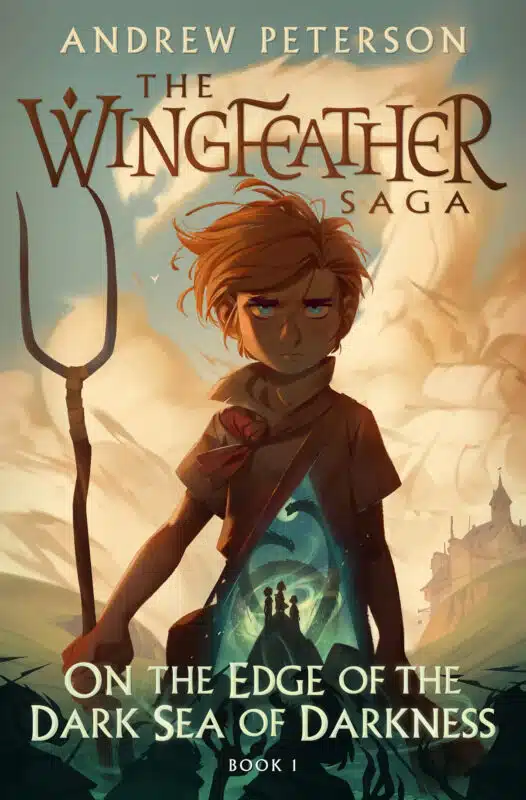
Yes, as far as inspiring us toward this heroic courage, I think the one that comes to mind for me is The Wingfeather Saga. It starts with On the Edge of the Dark Sea of Darkness by Andrew Peterson, who's been a guest here at Read-Aloud Revival many times. I love these books so much. We have read aloud these books in our home, we've listened to them on audio, we've read them ourselves. We are major Wingfeather's fans. What's interesting, I think, about this particular book, the series, I would say, just the whole world, because the whole series is phenomenal, it's fantasy. There's no part about this story that makes you think it could happen in real life, so it isn't like our kids are reading...
(13:48):
We were talking about the story with George Washington and the cherry tree, even though that's a legend and historical sources say that never happened, which makes sense. It's a legend, right? Still, it could happen. It's a story that could happen. Then we think, "Well, okay, so realistic stories can be inspiring." But actually with The Wingfeather Saga, nothing in that story could happen. We have these Igiby siblings and they basically have to face off with the fearsome Fangs of Deng. There's all these mythical creatures that are quite terrible that Andrew had so much fun, clearly, creating. It's in an imagined land called Anniera, and those siblings end up having to find a lot of tenacity that I think none of them realize they had at the beginning. They're completely different characters from the beginning to the end of each book.
(14:37):
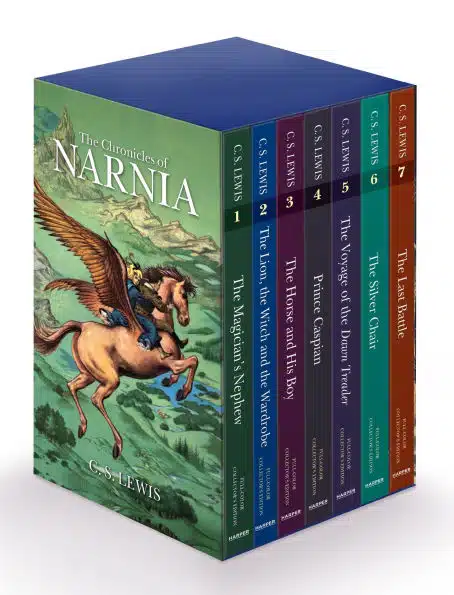
This is something fun if you've got... if I have any listeners listening who have Wingfeather, fans, it's very interesting to think about what are the three siblings, the three Igiby kids, what are they like at the beginning of each book compared to how are they at the end of each book. And then do that for each one. It's startling. There's such a shift, but in this case that book sweeps you into a completely different fantasy world and still we have characters who are facing seemingly impossible odds and an all is lost moment, and we're watching them make choices. I think what happens when you read a story like this, it's very much like what happens with Narnia, is we read the story and then we close the book and you look at your actual life, the actual world you live in, and you see it differently. You see yourself differently. You wonder if you have inside of you what Leeli or Janner has inside of them. In Narnia, you wonder if you would do what Lucy would do or would you eat the Turkish delight like Edmund would.
(15:45):
That fantasy world, I think it's really interesting. We oftentimes talk about reading as an escape, an escape from life, which I think in olden days sometimes it was seen as frivolous to read fiction because it was like, "Well, you should just... This is an escape from your real life. You should be focusing more on your real life." Interestingly, I think that is true that stories often give us an escape from our everyday lives and there's value in that, but actually I think the broader value comes from the fact that stories help us escape to our lives. Because you read something like The Wingfeather Saga and you're immersed in a completely different fantasy world with these completely different characters, then you close the book and you see the actual world you live in with fresh eyes, and that is like a renewal. It renews us for our actual lives rather than just an escape as though we're trying to hide from it.
(16:40):
Now, I feel like I'm going on a major rabbit trail, but this is just how I feel like the stories that we read don't just inspire courage by giving us good examples, because sometimes the examples in our stories are not courageous, and that's also an example. That's also showing us something. Sometimes justice doesn't win in a story. Sometimes characters make decisions they shouldn't have, and they never have to face consequences for it in a story. All of these things are forming us as we're watching how these relationships impact the other characters in the book, how we are like or unlike the characters that we're reading. It's basically giving us the opportunity to bear witness and, our kids, the opportunity to bear witness again and again to characters facing obstacles, in the end, usually overcoming them, but then all the messy human stuff that happens along the way.
Audrey Menck (17:32):
Oh, absolutely, yeah. I think Chesterton says it, I think it's Chesterton, who says this, that in fairy stories, in these fictional tales, something like, "Rivers will run with wine to remind us that they run with water." I know that Tolkien talks about this in his essay On Fairy Stories where he talks about how, entering into fairy land, we're able to return to our lives afresh and see the green grass and the blue sky as something new again. It sort of is more of a rejuvenation and a refreshment, an escape that fills our cup and restores us to return to reality.
Sarah Mackenzie (18:13):
Yeah, it's like we don't even realize how amazing it is that the apple is bright red on the tree until we read a book and see that they're golden. And then all of a sudden we can look at our apples a little differently. Exactly, the river running with wine, and then we're shocked and amazed that it runs with water. So good.
Audrey Menck (18:28):
The thing that I think is important for us to touch on here is Scripture. In the book, in this chapter, you talk about these stories in the gospel where Jesus is working miracles, he's healing the sick, raising the dead, and how these stories really speak for themselves about God's mercy and kindness. We don't necessarily need to wrap it up in a bow and say like, "See, God is good. See, God is abundant." When He feeds the 5,000, when Jesus feeds the 5,000 on the hillside, that speaks for God's abundance. The whole Bible is filled with story and poetry. What's even more than that is that we're being ultimately caught up in this greater story of the saving work of Christ. We have this pivotal role to play in this actual story that's still ongoing and taking place, and there is a call to heroism for all of us as His sons and daughters, as heirs to the kingdom of heaven.
(19:31):
Something that I think is really striking is that we are made in the image and likeness of the living Word, right? In John 1, "In the beginning was the Word, and the Word was with God, and the Word was God." I just love that God not only loves words so much to give us the word of God in scripture, but to also become the Word in flesh, right? The Word made man. So when we're talking about stories, we're not just talking about narratives and characters that we create, but really we're talking about the way in which we're able to draw others and also be drawn into ourselves, the story of God's love for us, and the Word, capital W, in whose image we were made.
Sarah Mackenzie (20:11):
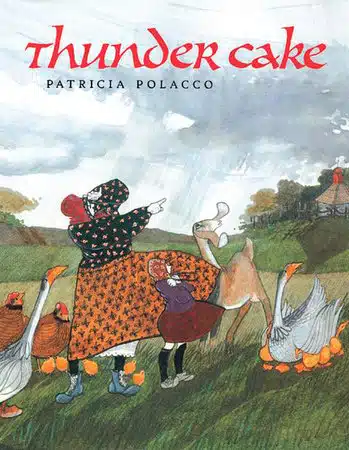
This is, of course, true for stories that are literal accounts. What happened in the gospels are historical narratives of what happened when Jesus was walking the earth, but it's also true of stories that aren't literal in a precise sense. I remember this interview with Patricia Polacco, who is a beloved children's book author and illustrator. Thunder Cake is my own favorite book by Patricia Polacco. It's my own favorite, but there are several fabulous books. I was interviewing her and she was talking about how her own [foreign language 00:20:44] would tell her all of these fantastical made-up stories, her and her brother, she would share all these stories. She said, "At the end, when we were kids, we would always ask, '[foreign language 00:20:54], were the stories true?' At which point, [foreign language 00:20:58] would say, 'Of course, they're true. Well, but they didn't happen exactly like that,'" which of course leads us right into the idea of...
(21:08):
It sounds funny. You can kind of imagine that, but actually she was touching on something incredibly deep there, which is that a story can be true without happening exactly like that, which leads us right into the significance of myth, and I feel like we would be a bit remiss not to discuss C.S. Lewis's understanding of myth. I just love it when I hear you... Of course, for those listeners who don't know, Audrey has a degree, a master's degree in theology and the arts, so we can talk about this stuff all day long, but I love it when you talk about myth.
Audrey Menck (21:40):
Yeah. In our modern language, we tend to think of myth as something that's false. But in his book, Miracles, Lewis defines myth as, quote, "... at its best, a real though unfocused gleam of divine truth falling on human imagination."
Sarah Mackenzie (21:58):
Well, saying that again.
Audrey Menck (22:00):
Myth is, "... at its best, a real though unfocused gleam of divine truth falling on human imagination." In other words, he's saying that myth is something that communicates Truth, capital T, not by its precision, but by its resonance, by what it stands for and reveals most deeply, not necessarily what it means in the very literal sense of the term, which is totally at the heart of what Patricia Polacco's [foreign language 00:22:28] was saying. Whether or not this story happened exactly the way she told it, it's still communicating something that's true. It still is true.
(22:37):
So Lewis writes in his essay Myth Became Fact, quote, "The heart of Christianity is a myth which is also a fact. The old myth of the dying God without ceasing to be myth comes down from the heaven of legend and imagination to the earth of history. It happens at a particular date in a particular place followed by definable historical consequences." And then he goes on and he says, "If God chooses to be mythopoeic, and is not the sky itself a myth, shall we refuse to be mythopoeic? For this is the marriage of heaven and earth, Perfect Myth and Perfect Fact, claiming not only our love and our obedience, but also our wonder and delight."
Sarah Mackenzie (23:20):
I love that, "Claiming not only our love and obedience, but also our wonder and delight," because that is actually what stories do, they inspire that wonder and delight and then, in turn, claim our love and obedience. There's so much happening here, especially when you said earlier, "God loves words so much, he became the Word..." Also, we are stories. We are born into a story. He gave us stories. We are stories. And then all the metaphors in the world that echo the truths in his word, it all just weaves together into this really beautiful thing that can't be shrunken down to, "This story is true, and so it's meaningful. And this one did not happen exactly like that, so it's therefore not true." Right? I think we all know this, deep.
(24:10):
Just going back to the example of Number of the Stars by Lois Lowry, which is historical fiction, right? I was just reading this aloud with my 12s and 13-year-old. Here's a historical fiction story that could have happened exactly like that. Since it's historical fiction, it's placed in a real time with real events, but the particular characters and the sequence of events in this story are made up, and yet there are a lot of profound truths that are woven through that story about what it means to be courageous, about what it means to do what's right even when it's difficult, about the importance of...
(24:47):
The thing that stuck out to me this time, and I've read this book multiple times, I don't know if it's ever hit me the same way it did this time, was the importance that the resistance, the Danish resistance, put on only giving the people who were working with them as much information as was absolutely necessary. So you were delivering packets or people or a basket with bread, cheese, and something underneath it that you don't know what, and they only tell you as much as you absolutely need to keep you safe. That was just an interesting idea that really stuck out to me because it came up multiple times in that story. So we have all of these truth-y things in the story that bubble up out of a story that did not happen exactly like that.
(25:25):
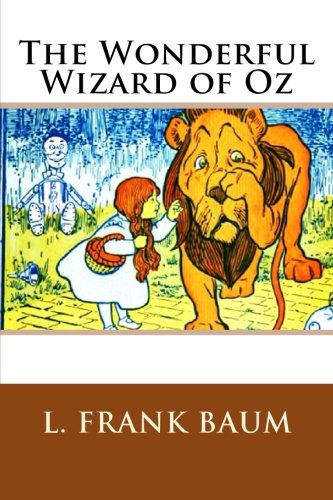
This is also reminding me of an experience we had of these deeper meaning, deeper things that we consider when we read books together. When you and one of your sisters and one of your brothers or younger, I think you were probably like 8, 6, and 4, or 9, 7, and 5, something like that, and we were reading The Wonderful Wizard of Oz, which is an absolutely excellent read aloud. There was some point in the story we have the Scarecrow and the Tin Man who are arguing over whether it's more important to have a heart or a brain like, "Which is more important?" I asked, "Well, what do you guys think? What's more important, a heart or a brain?" And without missing a beat... Do you remember what you said?
Audrey Menck (26:11):
I'm quite confident that what I said was, "A brain. Hello?"
Sarah Mackenzie (26:14):
Exactly like that, probably.
Audrey Menck (26:16):
I'm an intellectual. It's nothing else, yeah.
Sarah Mackenzie (26:20):
Exactly. Totally hits. Allison, who was always in her tutus and dresses and fairy costumes-
Audrey Menck (26:28):
Our whimsical girl, yeah.
Sarah Mackenzie (26:31):
... instantly was like, "But how would you love? How would you love God? How would you ever fall in love?" She was very distressed by this. It was such an interesting conversation. It was a remarkably philosophical conversation with such young children, which was fun too because it was like it turned up this great conversation that I don't think would've just come up on its own. This story actually fed us, led us into this conversation, but it's relevant here because we're talking about feeding the mind and the heart.
(27:05):
Actually, the real answer is you can't choose the mind or the heart, that God created us with both to feed each other and to rely on each other. In the same similar way, we of course have moral law and objective truth, and we also have story and a song and a poetic knowledge that comes not from facts that are memorized, but from stories. I think it's like the mysterious quality of this... It's mystery. It's also very ordinary, and it happens every time we read a story. And then it was also given to us in Scripture, a God who became man, a myth that has become fact, without losing any of its mythical quality in the process.
Audrey Menck (27:53):
Mm-hmm, and that is the miracle, right?
(27:55):
Well, I just have to read a line from the Read-Aloud Family where you write, "Happily ever after is hardly a myth," In here, we mean myth in the false sense, right? "For those who believe in the promise of eternal joy in heaven, the quest for truth is tucked into every story. And when we read such stories to our children, they can't help but hear it. It's the roar of the lion, the song of Aslan, the call we were created to answer. It beats within each of us already, however faintly, and it encourages us that we have what it takes to do what is right in the face of hardship when no one is looking and when we would rather do what is easy."
Sarah Mackenzie (28:37):
I think it's precisely because stories reveal to us what is most deeply true, that darkness will not overcome the light, that make stories so powerful, and it's why I believe they're the most powerful vessel to inspiring that kind of heroic virtue in our kids. Not because we're looking for books that have role models for our children the way that we are trying to be role models for our children, but in a way that unlocks or opens up an exploration of these deep truths that show up in stories that show up every time we have a character who has to face insurmountable odds and overcome them or overcome their own weaknesses to become who they need to be in order for the thing that they want or need to happen to happen. When all of this happens through a story, it's this invitation for us to honor the way God made us, which is through story, and reveal these deeper truths that can't really be revealed any other way.
(29:36):
Andrew Peterson, back to the author of The Wingfeather Saga, I heard him say it once... He was actually quoting somebody else, so he hates it when I say, "Andrew Peterson said this," because he's like, "Well, I was quoting somebody else that I don't know where they got it from." There is a saying, we shall say, that Andrew told me first. That's the first time I've ever heard it, "If you want a child to know the truth, tell him the truth. If you want a child to love the truth, tell him a story," and I think there is probably no better summary of everything that we've talked about today than that. We want our children not to just know the truth, but also to love it.
(30:14):
So a story is a way to inspire that heroic virtue and to get as close as they can to truth, because it's so much closer when you are watching Aslan. Let's go back to Narnia for a second. When you are standing there watching Aslan dead on the stone table, that is as close as you can get to the crucifixion right there in your... The whole story leading up to it and all of the emotions going through you as you're reading that story just doesn't get closer than that. "If you want a child to know the truth, tell him the truth. If you want a child to love the truth, tell him a story."
(30:51):
Speaking of Andrew Peterson and The Wingfeather Saga, I promised at the top of this episode that we have a brand new book list, and we do. We have so many kids who are major Wingfeather Saga lovers at Read-Aloud Revival that we made you a book list of books that we think you'll love if you love The Wingfeather Saga. Because when you get through that series and you think like, "Oh, my goodness, what else can I read? I love this series so much," we get that question a startling amount of times, so we have made you a book list.
Audrey Menck (31:27):
We got you covered.
Sarah Mackenzie (31:28):
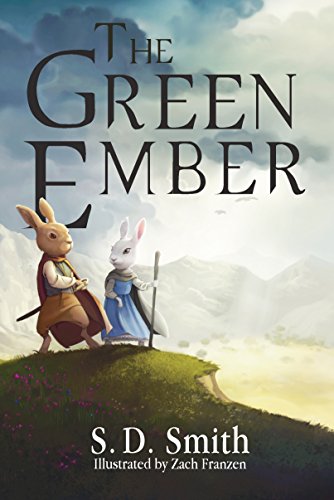
A whole book list of recommendations if you love The Wingfeather Saga, if you love The Chronicles of Narnia, if you love The Green Ember, any of those kinds of books, you're going to love the books on this book list.
(31:39):
To grab that book list for free, you can go to readaloudrevival.com/277, since this is episode 277, and you can grab the book list for free there. And I would also encourage you to grab a copy of the Read-Aloud Family if you want some more funny stories of my kids, maybe taking some of the things that we've been reading about in our read-alouds and living them out in an interesting way. I think I have another funny story or two specifically about how The Wingfeather Saga impacted my kids. But, actually, there's a whole chapter on how stories inspire heroic virtue. You can get that anywhere, the books, for yourself.
(32:15):
We hope you enjoyed today's episode. Audrey, thanks again for coming back. I just keep talking you into coming back over and over and over again. We'll see how long I can get away with this.
Audrey Menck (32:24):
Thanks for having me. Thanks for listening, everybody.
Sarah Mackenzie (32:29):
Now let's go hear from the kids about the books that they're loving lately.
AUDIO (32:34):
My name is Ariana. I'm six years old, and I live New Zealand, and my favorite book is A Little Bush Maid, and the author is Mary Grant Bruce. I like about it because they've got lots of horse rides and things, and they rescued their father's friend.
(32:55):
Hello, I'm Olivia. I'm eight years old. I live in Texas. I would recommend the whole series of Vanderbeekers because they get to go places without their parents and they get to go on lots of adventures.
(33:11):
Hello. My name is Emma, and I'm 10, and I live in Minnesota, and one of my favorite books is The Witch of Blackbird Pond. It's about this girl named Kit, and she sails on a ship to live with her relatives. She makes friends with Hannah, who is known as the Witch, and she's a Quaker. When the people burn Anna's house, Kit helps her escape.
(33:32):
What's your name?
(33:32):
Annabelle.
(33:34):
How old are you?
(33:34):
Four.
(33:36):
And where do you live?
(33:39):
In California.
(33:40):
What book do you like?
(33:42):
Dim Sum Palace.
(33:43):
Why do you like Dim Sum Palace?
(33:45):
Because I like the little girl.
(33:48):
And what's your name?
(33:50):
Gracie.
(33:51):
And how old are you?
(33:52):
Three.
(33:54):
Where do you live?
(34:00):
In America.
(34:00):
In America? Yeah? What book do you like? Duck & Goose, Find a Pumpkin?
(34:06):
Yeah.
(34:06):
About the book you're holding?
(34:07):
Yeah.
(34:08):
And why do you like that book?
(34:10):
Because I like the trees.
(34:12):
I'm Hadassah, and I like Milly-Molly-Mandy, and I live in Chicago, and I'm five years old. I like her, Milly-Molly-Mandy's adventures with stuff.
Sarah Mackenzie (34:29):
Thank you so much, kids. I always love hearing your recommendations. We would love it if your kids left a message that we can air on the show. For them to leave a message, just go to readaloudrevival.com/message. There's a button you can click there, and your kids of any age, toddlers to teens, we love them all, they can tell us their name, where they're from, and a book that they loved lately, and we will definitely air it on the show.
(34:55):
The book list I mentioned today, the book list for kids who love Wingfeather Saga, is in the show notes, and those show notes are at readaloudrevival.com/277. I'll be back in another couple of weeks with another episode. But in the meantime, you know what to do. Go make meaningful and lasting connections with your kids through books.