Best of RAR: Why Read Aloud to Kids Who Can Read Themselves
Why do we read aloud to our kids? Especially those who can read to themselves?
This is a topic that comes up all the time at Read-Aloud Revival and it’s one I’m super passionate about. It’s foundational to what we do around here and I firmly believe it’s vital to our kids becoming lifelong readers.
In this episode, we’re talking about the impact reading aloud has on our children, regardless of their independent reading level. Research shows that there are many benefits to reading aloud to your kids, and today, we’re going to focus on five of the most important ones.
In this episode, you’ll hear:
- How books educate the heart as well as the mind, growing perspective and empathy
- The incredible impact of reading aloud on academic performance, language development, information processing, expression (the list goes on!)
- How reading aloud builds community, strengthens family bonds, reduces stress and anxiety, and enriches time spent together
Some links are affiliate links
Books and Resources Mentioned in This Episode:
- Get the one-page “Why Read Aloud” guide by filling out the form above or text WHY to 33777 and we’ll send it to you
- “Why Fiction May Be Twice as True as Fact: Fiction as Cognitive and Emotional Simulation” by Keith Oatley in the Review of General Psychology (1999)
- “Simultaneously Uncovering the Patterns of Brain Regions Involved in Different Story Reading Subprocesses” in PLOS ONE (2014)
- “Mirrors, Windows, and Sliding Glass Doors,” Rudine Sims Bishop
- RAR #33: The Research Behind Reading Aloud, Dr. Joseph Price
- Becoming a Nation of Readers from The Commission on Reading (1985)
- Institute for Excellence in Writing
- RAR #130: Reading Aloud as an Obstinate Act of Love, with Meghan Cox Gurdon
- RAR #77: What the Scholastic Reading Report Means for You, Andrea Pinkney
- The Importance of Reading Aloud to Big Kids | Brightly

MUSIC (00:00):
(Music)
Sarah Mackenzie (00:13):
Hello, hello, and welcome to the Read-Aloud Revival podcast. I'm your host, Sarah Mackenzie, and I am delighted you're joining me today for this episode. In this episode, we're going to revisit a previous conversation we had on the podcast: why we read aloud to our kids. Our little ones, of course, I think we all know why we read aloud with our little ones, but also why we ought to be reading aloud to our kids who are quite capable of reading on their own. Now this is a topic that we get asked about all the time here at Read-Aloud Revival and it's one that I am super passionate about because it feels foundational. It's really, really important. Research shows that reading aloud makes a tremendous impact on our kids regardless of their own reading level.
(01:05):
Now I know so many of you feel this exact same way about reading aloud with your kids who can already read themselves, and you've asked for a resource that you're able to share with your kids' teachers, family members, doctors, anyone who works with children, and a resource that offers a quick explanation of why we ought to be reading aloud to our kids, even past the age when they can read on their own. So in this episode, we're going to focus on the impact reading aloud makes on the lives of our kids.
(01:35):
And yes, we've also made a one-page simple PDF that you can distribute as widely as you like that lists these benefits of reading aloud. You can grab it, make copies of it, distribute it at your local library, doctor's offices, schools, send it out to friends. It's at readaloudrevival.com/why, W-H-Y. Or you can text the word "Why," W-H-Y, to the number 33777. So you send a text message to 33777, just put "Why" in the text. It's a quick resource that will help the people in your life understand why we should be reading aloud with our kids. Again, that's "Why" to 33777.
(02:21):
Okay. So what are the benefits of reading aloud? Well, the Center for Teaching at the University of Iowa lists both evidence-based and anecdotal evidence. I want to focus particularly closely on five of those benefits. So let's begin with number one. Number one: Reading aloud develops bigger picture perspective and empathy. Now listen, every story you've ever heard is about a character who needs something and wants something, and they have to overcome obstacles, both internal and external, to get it. That's what a story is, a character on a journey of transformation. Every time your child hears a story, or reads one on their own for that matter, they're stepping into the shoes of another person. They're walking a mile in those shoes. Books are different from movies or even the real flesh and blood people in our lives because in books we get into the mind of the character. We're privy to their thoughts. That's not something we usually get in other forms of storytelling, like movies or plays or TV shows. It's certainly not something we're privy to in our real life relationships.
(03:40):
But when we read a story, we really do get to slip on the shoes of someone who is living a life different than our own, sometimes very, very different, and seeing the world from their point of view. Keith Oatley, a cognitive psychologist at the University of Toronto, helped conduct a study which showed that reading fictional stories increases the reader's empathetic response to people in their real life. I'm going to say that again because it's really important. Reading fictional stories increases the reader's empathetic response to people in their real life. In fact, researchers at Carnegie Mellon University found that reading a story gives the brain similar network connections as actually living through the experience yourself. That means vicarious reading isn't as vicarious as we might have thought. In her excellent article, Mirrors, Windows, and Sliding Glass Doors, Rudine Sims Bishop explains the phenomenon that happens when we read.
Rudine Sims Bishop (04:48):
I wrote a piece, maybe 1990 it was published, which I called Mirrors, Windows, and Sliding Glass Doors. Children need to see themselves reflected, but books can also be windows. And so you can look through and see other worlds and see how they match up or don't match up to your own, but the sliding glass door allows you to enter that world as well.
Sarah Mackenzie (05:17):
According to Bishop, books function as windows, offering views of worlds that might be real or imagined, familiar or strange. Sometimes, books are mirrors that transform the human experience and reflect it back to us. So we see ourselves in the book. We see others in the book. And other times, they are sliding glass doors in which readers have only to walk through an imagination to become a part of whatever world has been created or recreated by the author. So books give us this opportunity to see other points of view, to see our own experience, and then to imagine new points of view. We want our children to know without a doubt that people are people, whether or not they look like us, talk like us, or act like us, and that every last person on this Earth deserves to be loved because each and every one of us is made in the image and likeness of God.
(06:18):
Windows, mirrors, sliding glass doors. It's why Britain's former children's Laureate, Chris Riddell, said, "A good book is an empathy machine." When we read with our children, we give them an education of the heart and the mind. We read together because stories teach us how to love. And that's all just number one. Let's talk about another reason to read aloud with kids who can already read on their own.
(06:51):
Number two: Reading aloud improves academic performance, vocabulary, and information processing skills. So educational experts are constantly on the lookout for what could potentially give our kids better academic results, smaller class sizes, continuing education for teachers, longer school days, shorter school days, bigger budgets. Maybe, but one thing we know for sure is that reading aloud makes a tremendous difference here and it doesn't cost a thing. Dr. Joseph Price, whom I've interviewed on episode 33 of the Read-Aloud Revival podcast, is an associate professor at Brigham Young University and he specializes in economics of family and education.
Dr. Joseph Price (07:42):
What reading does is it opens up the ability to think about problems. It gives you kind of this cognitive advantage that spills over to other topics. And so originally we were thinking, "Oh. This nice thing we can do is we can look at the effect of reading to your kids. And it should only affect reading scores, it shouldn't affect math scores, and this will allow us then to separate the role of reading to your kids." But the more we thought about it, lots of kids trip up over word problems. They trip over understanding the language of math. And I think the kids that are equipped with the ability to acquire vocabulary and just encounter new materials, it's going to allow them to do well at science, math, history, anything that involves any kind of words.
Sarah Mackenzie (08:20):
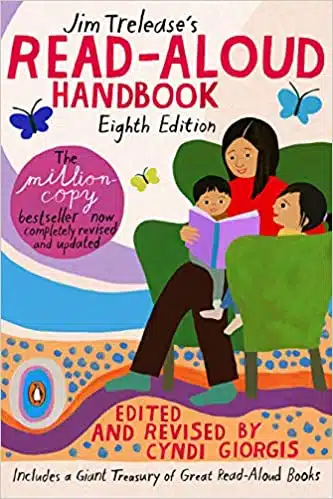
Now his research demonstrates that one extra day per week of parent/child read-aloud sessions during the first 10 years of a child's life increases standardized test scores by half a standard deviation. Now for those of us who don't speak in deviations all the time, that's hard for us to wrap our minds around because what does half a standard deviation even mean? A lot, Dr. Price told me in that episode. A whole, whole lot. Think 15 to 30 percentile points. In the Read-Aloud Handbook, Jim Trelease suggests that the academic benefits alone of reading aloud are so great. If someone invented a pill to deliver those benefits, there would be a line for miles and miles to get it. The 1985 Commission on Reading stated that, "The single most important activity for building the knowledge required for eventual success in reading is reading aloud to children." The single most important activity? This is huge.
(09:33):
Reading aloud is free. It doesn't even take all that much time day-to-day to do it. I mean, if you were to read aloud for about 30, 35 minutes per week, you would read 30 hours over the course of a year. That would make a tremendous difference long-term. Jim Trelease also described the results of research conducted by the Organization for Economic Cooperation and Development and that showed that the more children are read to, the higher their test scores are, sometimes by as much as half a year's schooling. He then goes on to say that reading aloud has proven to be so powerful in increasing a child's academic success that it is more effective than expensive tutoring or even a private education. That is a lot of work that reading aloud is doing for our kids' academic success. For something that's free, that's a lot of academic gain.
(10:31):
Okay, let's move on to number three of why we want to read aloud to kids who can already read for themselves: Reading aloud models fluency and expression. So when our kids listen to us reading aloud or when they listen to an audiobook, they're not only getting language that they'd see if they were reading words from a page, but they hear how the language sounds. They hear the rhythm, the cadence, the intonation. So not only are we decoding the words for our kids who are listening, but we pause at commas and periods just naturally, right? Our voices go up a bit when we get to a question mark. We add an emphasis for exclamation points. Andrew Pudewa from the Institute for Excellence in Writing points out that there is no other place where children get grammatically correct and sophisticated language patterns other than from books, from listening to books.
(11:30):
They don't get grammatically correct and sophisticated language patterns from TV or media of any kind, social media, any kind of media. They don't get it from talking with their friends. They don't even get grammatically correct and sophisticated language patterns from talking with adults, from talking with us. I'm not speaking in grammatically correct, sophisticated language patterns right now. They usually don't even get them from books because when a child reads a book with their eyes, they skip stuff. They skip words they don't recognize. They skip all those connector, tiny words. This is why it's faster to read a page of text silently to yourself than it is to read it out loud, right? Because if I was to hand you a page from, let's say Heidi, the book Heidi, and ask you to read it silently to yourself, you could do that faster than if I read it aloud to you. Because when I'm reading it aloud to you, I'm reading every single word in order. And when we read with our eyes, our eyes scan and skip stuff and process it faster. It's just how it works.
(12:39):
What that means is that our kids aren't getting grammatically correct, sophisticated language patterns stored in their brain as well when they're reading from the page with their eyes. They get it much, much better when they're listening through their ears, when the language is coming in through the ear, which gives reading aloud and audiobooks something of an edge when it comes to storing sophisticated, grammatically correct language patterns into the brains of ourselves and our children.
(13:08):
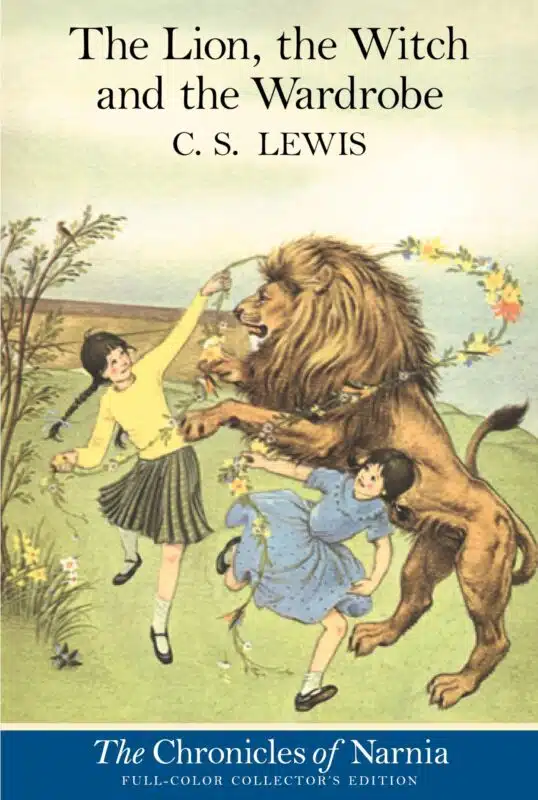
Now, in episode 130 of this podcast, the Read-Aloud Revival podcast, Meghan Cox Gurdon reminded us that a child's receptive vocabulary, so what he or she understands, might be as many as three years ahead of his expressive vocabulary, what he can say. In fact, a child's reading level doesn't typically catch up to his or her listening level until about the eighth grade. That means we can read aloud books to our kids that are substantially more complex and rich in language, and those sophisticated, grammatically correct language patterns that we're talking about, then they could read with their own eyes. It's why a five-year-old may or may not be able to read The Lion, the Witch and the Wardrobe on their own, but you definitely can read it aloud to them and they can follow, no matter whether they can read at all or not, right?
Meghan Cox Gurdon (14:04):
We have a false idea of reading aloud versus reading with the eyes. There's almost a hierarchy of goods. And there's the assumption that reading with your eyes, decoding graphic symbols with your eyes, and processing what you're reading in your brain is in some ways superior to taking it in through your ears, reading by listening. And I think this is unduly limiting because speech, which is how we of course process storytelling, someone reading aloud to us, is our natural language. Those of us who can hear, that's how we learn language. We learn from hearing and speaking. So it's very natural. It's very easy for us. And one of the really beautiful things about reading aloud to a mixed group of people, and it might be a mixed classroom, it might be a group of children of different ages or of different abilities, is we bring a story within reach of those who are competent readers and those who are struggling readers, and they get it at the same time and with the same ease. It's like reading aloud is a gift. It's a rising tide that lifts all boats to use in economic argument.
Sarah Mackenzie (15:03):
Yeah.
(15:04):
In Meghan Cox Gurdon's book, The Enchanted Hour: The Miraculous Power of Reading Aloud in an Age of Distraction, she writes this, "An adult reading aloud does far more than impart a story. He or she also shows by tone of voice, phrasing and pronunciation how complicated sentences can be tackled, subdued, and enjoyed. And while all that is happening, the child is soaking up fresh ideas and unfamiliar words." Amazing, right? It feels too easy to make this kind of an impact, and yet it does.
(15:38):
Let's move on to number four. Number four of why we should read aloud to kids who can read on their own: Reading aloud builds community. If you're feeling frustrated or at odds with your kids, I suggest you try reading aloud. The magic of it is that when you're reading that story, you are rooting for the same character, you're hoping for the same victory, holding your breath at the same time or crying or laughing out loud or worried about the same villain. You are, in other words, reminded that you're on the same team. You're reminded that you have more in common than otherwise. That's something we can all probably use as a reminder, especially as our kids get older, when we're parenting or teaching or otherwise spending time with the kids in our lives.
(16:25):
The discussions that stem from stories, the stories that are shared together, can be just as enriching and important. We grow closer to those that we've shared experiences with. And when we've read a story together, we've shared an experience. We've walked that mile in the shoes of another, right? We talked about earlier how reading the fictional story gives our brain a similar experience to having done it together, with each other. So now we have another shared experience to draw from, another connective tie to one another.
(16:58):
This is why in that same book by Meghan Cox Gurdon, she quotes Susan Pinker and says, "A tsunami of neurochemical benefits gets unleashed when a parent and child cuddle over a book, stress and anxiety downshift for starters. As soon as the parent puts his or her arms around the child, hormones flood their bloodstreams, relaxing them and engendering mutual trust." This doesn't just happen for the kids. It also happens for the adult who's doing the reading aloud. And listen, I could use a flood of calm in my own bloodstream most of the time I'm with my kids. Maybe the simplest way to say this is when we read together, we like each other more, and that seems reason enough to me.
(17:50):
Number five: It slows down and enriches time. Can we talk for just a moment about this supreme gift that reading aloud gives us in this area of slowing down and enriching time? Going back to that research from the Center for Teaching at the University of Iowa that I mentioned at the top of this episode, "In a world of soundbites and half-formed ideas expressed quickly in electronic formats, students benefit from hearing complete ideas expressed with originality and attention such as one finds in literary language." We are full of soundbites and quick things that our attention spans are being moved so quickly from one thing to the next, that a book offers us a longer experience. It slows down time. Not only that, but reading aloud requires that we be present with our kids, not just with them physically, but with them. It's an act of love to read to another person because by doing it, we're saying, "You know what matters right now, kid? You. Spending time with you."
(19:04):
So reading aloud, number one, develops bigger picture perspective, and empathy, number two, improves academic performance, vocabulary, and information processing skills, number three, models fluency and expression, number four builds community, and number five, slows down and enriches time.
(19:30):
According to the Scholastic Kids and Family Reading Report, and we talked about this report more in depth with the vice president at Scholastic, Andrea Davis Pinkney, in episode 77, but according to this report the older kids are, the less likely it is for parents to read aloud with them. The report says, in fact, "When asked why read-aloud decreases or stops, parents most commonly cite the fact that children can read on their own." But let's think about the benefits we've already talked about. Bigger picture perspective, and empathy, improve vocabulary and information processing skills, modeling fluency and expression, building community, slowing down and enriching time. Are any of these rendered unnecessary as our kids get older? Might we even have an argument that as our kids enter their teens, all of these skills and abilities become more important than ever? And can you think of another way that all of this heavy lifting can be done with nothing more than a library card in 10 or 15 minutes at a time that would make this kind of significant impact on the lives of our kids?
(20:48):
In an article on Brightly that I'll link to in the show notes, Melissa Taylor mentions that only 17% of parents of kids ages nine to 11 read aloud to their children, and that number diminishes as the kids get older, although 83% of kids say that being read aloud to is something that they really loved or liked. Our kids want to be read to, they want to spend time with us, and we want all the benefits for them that reading aloud offers. So why read aloud with kids who can read themselves? Well, why ever not? There's literally nothing to lose and there's so very much to gain. I can't think of a better way to spend our time.
(21:35):
Now, if you'd like a one-page PDF that bullet points these benefits of reading aloud to kids of all ages, you just need to text the word "Why," W-H-Y, to the number 33777, or you can head to readaloudrevival.com/why to grab it. You have permission to make copies and distribute it as widely as you'd like. Now let's all go spend 10 minutes to read aloud to our kids.
(22:07):
Now, let's go hear from some kids about the books that they are reading and loving lately.
Ian (22:14):
Hi, my name is Ian. I'm from Texas. I'm 11 years old. My favorite book is Big Dumb Eyes by Nate Bargatze. He's a comedian. It's about his life.
Ethan (22:31):
Hello. My name is Ethan and I'm 10 years old. I live in Virginia. My favorite book series is the Wayside School book series because it's about a bunch of kids who go to a really wonky school where a lot of weird things happen.
Theo (22:47):
Hi, my name is Theo. I live in Idaho and my favorite book is Actual Size. I like it because it has a Siberian tiger in it and a gorilla's hand.
Bella (23:06):
Hello, my name is Bella and I'm seven years old. I live in Virginia and my favorite book series is The WellieWishers. I like it because it's about girls with a huge imagination.
James (23:24):
Hi, my name is James. I am seven years old. I live in Idaho and my favorite book is Night of the Ninjas, #5 in the Magic Tree House series. I like it because Jack and Annie learn the way of the ninjas and how to be safe from the samurai.
Sarah (23:44):
Hi, my name is Sarah and I'm 12 years old and I'm from Murfreesboro, Tennessee. My favorite book is called Words on Fire by Jennifer A. Nielsen. The reason why I like this book is because the main character does something right, even though she could be severely punished. Thank you.
Delilah (24:03):
Hello. My name is Delilah and I live in Florida. A book I highly recommend is Heidi by Johanna Spyri because Heidi, the character, is inspiring, kind, and loving. Bye.
Sarah Mackenzie (24:18):
Brilliant. Thank you so much for your messages, kids. I hope you enjoyed this episode. Don't forget to grab the PDF at readaloudrevival.com/why or by texting the word "Why" to the number 33777. I'll be back in a couple of weeks. In the meantime, you know what to do. Go spend 10 minutes making meaningful and lasting connections with your kids through a read-aloud.
MUSIC (24:46):
(Music)