Best of RAR: When Your Developing Reader Resists Reading
We know that we want our kids to love to read. And it’s important (really important!) to give them the best chance fall in love with books. That’s why so many of us get worried when we have a child who doesn’t love reading. It’s a valid worry.
What can be done about it?
On today’s episode of the podcast, I share ideas for what to do when your child doesn’t love reading. We can’t exactly make our kids into readers, but we can give them the best chance possible that they’ll become readers for life.
In this episode of the podcast, I’m sharing simple tips to help your kids become voracious readers, and why the single most important part of your child’s school day is free, voluntary reading.
In this episode, you’ll hear:
- Why helping your kids fall in love with story is the the key to helping them fall in love with reading
- The way short, frequent phonics and reading sessions propel budding readers toward fluency and ease
- How to become a book-matchmaker for your child
Click the play button below to start listening:
Books and Resources from this episode:
- Phonics and Spelling Recommendations
- Early Readers Book List
- Series for Developing Readers
- Best of RAR: Is My Child Dyslexic?
- RAR #191: Helping your ADHD or Dyslexic Child Love Reading
- RAR #176: Homeschooling with Dyslexia

Sarah Mackenzie (00:14):
Hello, hello. Welcome to the Read-Aloud Revival Podcast. This is the show that helps you make meaningful and lasting connections with your kids through books. I'm your host, Sarah Mackenzie. I'm the author of Teaching From Rest: The Read-Aloud Family, and I'm a mother of six. I'm so glad you're here for this episode, because not all of our kids become voracious readers on their own. And in fact, if your child is a developing reader, a child who hasn't yet gained fluency, reading is probably pretty far down the list of things he or she would like to do with their time. It's really helpful, I think, to remember that early days of learning to read are really difficult. Reading still isn't easy. It's not enjoyable for a child who has to sound out every third or fourth word. It's exhausting, right? So, it's no wonder they don't love it.
(01:10):
In today's episode, we're going to talk about strategies to help hook your developing reader. And then of course, I'll give you some book suggestions that they might just find too good to pass up. I have some good book lists for you.
(01:27):
Let's talk about developing readers. And these are readers who haven't yet gained fluency and ease in their reading. Reading is still hard work. Whether they're sounding out words or they just are needing somebody to sit right next to them while they're getting through that sticky word, trying to figure out each sentence as it comes. It's just taking a lot of their energy and mental energy. These are developing readers. Really, any reader who finds reading to be hard work, they might not even need your help sounding out the words, but it just takes a lot of their mental energy and stamina to do the reading. I think it's worth taking some time to talk about this, because I'm pretty sure that as much as all of us want our kids to love reading, and I'm pretty sure you do, if you're watching this video or listening to this podcast, we should know that that is an unrealistic expectation for a child for whom reading is hard.
(02:24):
First of all, this is a human nature thing, right? We don't really like to do things that are hard. When we have to do hard things day after day for a really sustained amount of time, it's not exactly a recipe for helping us love whatever that activity is. An image that I find to be really useful here is the image of someone climbing a mountain. When we're asking our developing reader to read with their eyes, we're essentially asking them to climb a mountain. We can do that. They can do that. You can climb a mountain. It's worthwhile. It's an important thing for them to do, to be able to read, right? And they need the practice. We can encourage them and we can give them the time and space and practice and the tools, but it's still hard work. So, when they get to the top of that mountain or the end of the book, as it were, mixing metaphors here, they might not exactly be eager to climb another mountain right away.
(03:26):
They don't want to slog through, use all that mental energy and all their intellectual faculties to sound out words, to slog through some reading. They get to the top of the mountain and it's not like you can show them another mountain and be like, "Now scale this one." They need a minute, right? I think it's just worth it to know that asking our developing readers to fall in love with reading while they're still developing is tricky. It's just not likely to happen on its own, especially if a child is having a particularly hard time learning how to read.
(03:58):
There are a few things you can do though. Number one, we can help our developing readers fall in love with stories. This is way easier than you might think. Let's talk about the importance of falling in love with the stories themselves. It's worth thinking about here, I think, because it's a rare person who actually falls in love with the act of reading. And by that, I mean, the act of decoding the letters and symbols on the page and knowing the words that they represent, right? Even if you're a lover of reading, do you get a thrill from sounding out a word, or from seeing T, H, E on a page and knowing that it says the. No, people who love reading aren't like, "I love decoding and sounding out every word on the page." In fact, good readers and voracious readers, they don't decode anymore. They're not sounding things out. We don't fall in love with the decoding or the act of learning to read. We fall in love with the stories, the words, the descriptions, the information, and the way it's presented.
(05:07):
So, the best way to help our kids fall in love with reading is to help them see that they are already in love with stories. That's really what we as humans want most. And honestly, if our kids love stories, then they will have a natural incentive and motivation to want to read, right? Because they can get the stories for themselves without having to wait on anybody else or have access to an audiobook, or have access to someone who has the time to read to them. So, we really want to help our kids fall in love with stories or recognize their own love of stories. The best way to do that, I feel like I need a trumpet here. The best way to do that is to read aloud. You already know this, right? We really want to give our kids an expectation that books and stories are amazing, that books are where the best stories live, right?
(06:00):
And if all we give our kids are beginning reader books, that's not exactly motivating in the sense that they think, "Oh, I really want to be able to get more of this for myself." Go, dog, go, or see Spot run is so compelling. I can't wait until I can read it without any help at all. That's a completely different experience than if I was to read to my child The Lion, the Witch and the Wardrobe, or The Green Ember, or Adventures with Waffles, or A Place to Hang the Moon. When we read rich stories, our kids are immersed in this land of stories, in this world of storytelling, and they get a different sense of, "I want more of that." When you read a really good story, your kids want more of it.
(06:47):
So, we want to read aloud, especially when our kids are in this, "I don't love reading phase," when they're developing readers. Humans are made for story. We were created for it. We cannot help it. You as a human actually cannot resist listening to a story if someone starts telling you one. It's the way God made your brain, and it is an absolute hunger for stories. It's why when you're in church on Sunday, you might not remember anything that was said in the sermon, but if the pastor told you a story, I bet you'd be able to retell it, at least in part. It's because our human brain is compelled towards story, it's the way we were created.
(07:26):
We see this because our kids love TV shows. They love movies, which are, you guessed it, stories in visual form, right? So, give them stories read aloud. Give them stories in books, the kinds of stories that they will want to thirst for, the kinds of stories that they'll go, "Oh, I want more of that." Give them something to long for. Actually, we need to be spending far more time reading aloud than we should doing phonics or practicing instructive reading lessons, which we'll talk about here in a second, because that also plays an important role. But the thing that we should be doing the most of is reading aloud or letting our kids listen to audiobooks, preferably both. Then they're getting so many stories in through their ear, and they're finding out that stories and books are the thing that they want to be able to read for themselves. And that's just a really important thing to keep in mind. The phonics instruction, the reading instruction's important, but they really need to spend more time listening to good language, listening to beautiful stories than they do practicing the act of reading with their eyes.
(08:37):
So, let's talk about that act of learning to read with your eyes, because if we help them fall in love with stories and recognize their own love of stories, if we're filling their lives with stories that are compelled toward them, we also want to offer them practice and instruction so that they can develop reading speed and reading ease, fluency, so it becomes easy for them. That's actually a recipe for helping our kids want to read, right? If they are read-aloud stories and they have a story rich life, and then they have time to practice learning how to read and then reading becomes easy for them, they'll want to read more often than if reading is a chore. That's just how it works, right?
(09:17):
Now, this isn't really an episode on the nuts and bolts of teaching a child how to read, but I know a lot of you have questions about resources like for teaching kids how to read, the phonics and reading instruction. So, I'm going to mention quickly here, I do have a page on the Read-Aloud Revival website with my recommendations for phonics and teaching instruction for reading. We're going to put a link to that in the show notes, or you can just go to readalouderrevival.com/phonicsandspelling, and that's where you'll see my recommendations there for phonics instruction.
(09:49):
But regardless of what programs you actually use to teach, reading, the key is actually to make those instruction and practice sessions short and frequent. Short daily phonics lessons will help your child learn to read much better than a lesson twice a week that lasts longer. If you were to do 10-minute lessons five days a week, that's going to be far superior to one 50 minute lesson or two 25 minute lessons. When I would do a phonics lesson with my own kids, and out of my six kids, none of them were early readers, and five of them I would call very struggling readers. I would only do about 10 or 15 minutes a day, that's it. I actually set a timer on my phone to remember to stop after 10 or 15 minutes. It was not hard really to remember to stop, because it was painful for everyone involved. Even if they were still doing fine at the end of that 10 or 15 minutes, I would cut it short and say, "We're done. Let's move on to something else."
(10:46):
Because that short dailiness is really the operative words. That's really the thing that matters here. 10 or 15 minutes a day is very, very likely enough, as long as it's done consistently. I'm not saying every day, but consistently, and you're using something solid and you're getting to it frequently and those lessons, they accumulate like a snowball in their mind, right? The more often that you roll that snowball down the hill, it gets bigger and bigger until reading becomes easy.
(11:13):
Now, as part of your phonics, whatever program you're using, you're probably going to be using early readers as part of that instruction where they'll practice reading stories. And I do have a list of my favorite early readers, because some early readers or practice reading books are really painful for everyone involved, and some are quite delightful. So, we will link to that list of some of my favorite early readers in the show notes. By early readers, I should mention that I mean those books that are used to practice sounding out words for developing readers. Any readers that come with your phonics program, books like Frog and Toad, Little Bear, The Cat in the Hat stories, Bob Books, those are all early readers, and they help our kids with their phonics practice, except for the rare occasion, Frog and Toed being one of them. They're not usually particularly amazing stories, but they do help our kids get the skill and the speed, fluency kind of all adding up to ease in their reading and that's really important.
(12:21):
So although like I said, there are some pretty delightful ones. Again, check the show notes of this episode for that book list because I think you'll like what you find there. Okay, so we're reading aloud, right? We're helping our kids fall in love with good stories. We're giving them short lessons in phonics and instruction. And now we want to find books that make reading irresistible, that really lure our kids into wanting to read. This is where we turn just like becoming, making reading easy to turning a developing reader into a voracious reader. And this I think is where book series come in, and they are so helpful. If you can figure out a series of books that will be of really high interest to your child, you can ignite enthusiasm that they really need to break through those hardest days of learning how to read.
(13:14):
It propels them. It gives them a motivation to keep struggling up that mountain if they're climbing a mountain, right? And they want to do it again and again, because the stories are so good. Now, once they bond with a favorite character, they've got some skin in the game. They can't wait to find out what happens next, which is why a series works so well for this. They feel like they're visiting a friend. They can't wait to find out what happens next to their friend in the series. Now, there are a lot of series for this particular age and stage of reading, and it's because of this. It's because once we've given our kids the skills to decode and we've given them a love for stories through books, then they need a lot of practice.
(13:56):
Now, they need a tremendous amount of practice reading words with their eyes on the page so that it becomes fast and easy, just like you became a better driver the longer you've been driving, right? When you were first learning how to drive, you had to think through every single motion and action that you took, and it was kind of exhausting. But now if you hop in your car and drive to the grocery store, it's not usually that exhausting of our experience, it's kind of secondhand, right? Just like if I handed you the mouse and the motorcycle, you could probably read the first chapter and think it was not difficult to read, right? But there was a time in your life when that would have been difficult to read. And so what we want is we want our kids to get to that part where it's easier.
(14:38):
Now, every child is different and you never really know which series is going to work for each child, but I do have, I'm sure this is a shock, a book list, a favorite series. Of course we do. We have a list of favorite series for you. These are chapter books that are meant to lure in or hook your developing readers. Again, kids who can read, can decode, but still need relatively short chapters, maybe some illustrations sprinkled in there, some really high interest plots and characters, lots of adventure, book series that just get your kid to want to read some more, to want to climb the next mountain until climbing that mountain is not so exhausting.
(15:25):
One of the keys here is that when your child can read, but it hasn't become easy yet, this is a very critical part of your child's reading life. This is what we mean actually by developing readers, kids who can read, but it's not quite easy. And the best way to make it easy for them is just to help them get better at it. And the best way to help them get better at it is just to read a large quantity of words with their eyes.
(15:54):
Now, if your child reads a large quantity of words, reading will get easier. But of course, we don't want to do this in really long stretches. When I say large quantity of words, I just mean like for 10 or 15 minutes a day your child is able to read something that feels kind of easy, but makes it so that it's faster and easier and easier and easier to read those words and sentences and paragraphs. And as it gets easier, you'll find that your kids enjoy it more. It's just the way we humans work, right? We enjoy things we're good at. We enjoy things that come kind of easy to us. This is why I think a series in particular can help so much because it helps us get in that large quantity of words and stories that our kids really enjoy, really like.
(16:37):
So, let me give you the real secret juice here to how you use a series to hook your developing reader, because it's more than just finding the books and shoving them at your kids. What I suggest is that you choose a series, and again, you can go to our book list, our favorite series for developing readers. We'll put it in the show notes of this episode. Choose a series from the list that you think might appeal to your developing readers. So, just look at the covers and the titles and just see, this one looks like it might interest them. And then you read the first one aloud. That's key. You read that first one aloud. But let me tell you, these are not usually amazing read alouds because they're chapter books. They're written for kids in this exact stage who have figured out how to decode and sound out words and know a smattering of sight words, right?
(17:28):
But reading just hasn't become easy. They're written for kids to read to themselves. So you're not going to find the same quality of language as you would in a book that I would normally recommend that you read aloud. The books that are on most of the Read-Aloud Revival booklists are excellent Read Alouds. The books on this particular booklist are different. They have simpler language, simpler syntax, because they were written for the express purpose of helping a child become a reader who finds reading to be easy and is fluent in it. So, you're just going to read the first book out loud and if the book is received unenthusiastically, you just choose a different series and read aloud the first book from that one. Okay? So once you have that, you're going to do that until you find a series that your child really engages with.
(18:21):
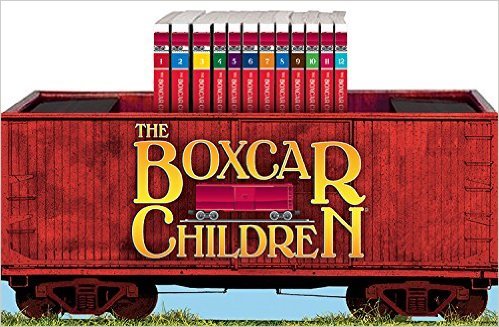
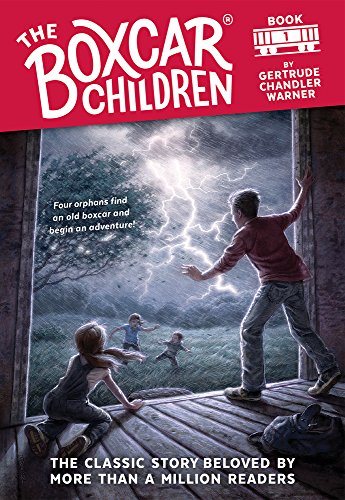
Just read aloud that first book and then when your child goes, "Oh my gosh, at the end, I love that book." You can say, "The good news is there's more where that came from. There are more books in this series." Oftentimes there are lots more, especially if you're reading something like The Boxcar Children or The Magic Tree House. There are a lot more books where that came from, right? But again, we have a whole list of tons of different series that we love for if your kids like fantasy, if your kids like historical fiction, if your kids like funny books, if they like contemporary books, we've got them all. They're all in that book list, so check that out.
(18:57):
Then what you do after you've read aloud the first one is you purchase the second book in this series, if you can. You can always get it from the library. The reason I tend to suggest that you purchase the second book in the series is, because if you buy it, you're not feeling rushed by library due dates. If it takes your child a long time to get through it, it just releases the pressure. Because once you have that second book, you're going to tell your child like, "Huh, you know what? I'm not going to be able to read this one aloud to you, but I bet you could probably read most of it on your own. I can help you with anywhere you get stuck."
(19:32):
Here's an example. Let's say you read the first book in the Magical Animal Adoption Agency series. That's a great fun series by Kallie George. And so, you read the first book and then your kid is very excited and finds out that there are more in the series. You're like, "Yes, there's more in the series." So, you buy the second book, and it comes to the house and you leave it out on the counter or somewhere they're going to see it and they'll go, "There's another one?" And you go, "Yes, I found another one. Gosh, I'm not going to be able to read it to you, but I bet you might be able to read it yourself."
(20:05):
Another tip here is to encourage your child then to read it when you're nearby so they don't get super frustrated. So, maybe while you're cooking dinner, or folding laundry, or something. You're nearby and you're available so that when they go, "Mom, what's this word? What's that word?" You can just answer them quickly. Otherwise, they'll get frustrated a lot more easily and they might quit because again, when something is hard and we're running into a lot of stumbling blocks, it's really easy to walk away or quit. But if somebody's there helping you over those really quickly and easily, you're more likely to stick with it. And again, remember, at this stage, reading with their eyes is exhausting. Reading with their eyes is hard, it's tiring.
(20:47):
But you're not hovering, right? You don't have to sit next to them. You don't need to look at all the words. It's okay if they read some of them wrong, it's not that big of a deal. They'll still get the gist of the story, so you don't have to make sure they can read every single word just right. You don't need to hover. Maybe you're doing some chores, whatever, you're nearby. And when they say, "Hey mom, what's this word?" You come over and you look at it and you tell them. Here's the key, and it's a really, really important one. When your child needs help with a word in this phase, don't ask them to sound it out. You do that during a phonics lesson. You do that during your school day if you're teaching your child how to read. But for this system of trying to lure your child into a series, a developing reader, you don't say, "You know how to read that word," or, "You read that word yesterday," or, "Just sound it out."
(21:45):
No, resist, resist it. When your child is reading from the series and your child struggles with a word, just tell them what the word is. Remember your goal here. Your goal isn't to get extra phonics lessons in. We're not trying to get extra phonics practice in. We've got to keep our first goal primary. Keep the first things first. Our goal is to help our child want to read so that then they have some intrinsic motivation that propels them through those tough moments up the mountain, right? So that they want to pick up another book, so that they want to pick up another one after that. And no, this is going to be enjoyable, and dare I say easy, because if I get to a word I don't know, I can ask my mom and she'll just tell me what the word means. You're doing your child a better service just to tell them the word than to ask them to sound it out.
(22:41):
If the book ends up being too hard and your child gets frustrated or asks how to read every single word, then you can try sitting next to them. You read a line, they read a line, you read a page, they read a page, or just choose an easier book. Remember, the more words your child reads with their eyes, the faster and the easier it's going to get, they'll enjoy it more and then they can move up to harder words and harder books. I've even done this where I have read most of the sentences on the page and every once in a while I just stop and point to a word and then the child reads that particular word. The bottom line is you cannot help your child too much. You cannot help your developing reader too much. So don't worry about making this too easy on them.
(23:26):
You want this to be easy on them. The most important thing is that you don't ruin the story by trying to turn it into a lesson, because your child may love Nate the Great, or Ranger in Time, or the Boxcar Children, but as soon as you turn that into a lesson, they are not going to enjoy it anymore. And we want our children to love the story and let them fall in love with the story. The reading skill comes with time and practice, especially the more often they do it, then they'll be more inclined to do it more often. It's this really happy cycle. If it's an enjoyable, easy process for them, it's a happy cycle. Now, I would be remiss not to mention this. If you are concerned about the difficulty one of your kids is having learning to read, maybe they're seven, eight, nine, 10.
(24:17):
I've had late readers at all of those ages, basically. If your child is struggling to learn how to read at that age and you think, "There might be something else going on," get some help. If you're reading aloud, you're doing short, frequent phonics lessons, and you still think, "Something might not be working here. This still feels really hard." I would encourage you to look up your local resources for help. Sometimes it's dyslexia. We have a podcast, Read-Aloud Revival Podcast on Dyslexia. You can go look up if you think that might be a thing. Sometimes it's a vision therapy issue because what often presents as dyslexia is actually a failure of the eyes to team and track. Essentially, your eyes aren't working together. I'm way oversimplifying this, but the idea behind vision therapy is that it's like physical therapy for your child's eyeballs to help them work together so that they look at the same thing and track together.
(25:13):
So anyway, sometimes it's dyslexia. Sometimes it's a vision therapy issue. Your child might actually need some assistance. So look up resources, get help. You do not need to struggle at home alone, hoping that something that you do sticks. I would encourage you to continue reading aloud and do more of that than anything else. That good language coming in through the ear is what's going to help your child love stories, and it's going to be what stores patterns of grammatically correct, sophisticated language patterns in your child's brain. That's the most important thing. Then you're also going to want to do short phonics lessons. Again, you can go to the show notes if you want my recommendations for your phonics or reading program. But I think even more important than which program you use is that you do short, frequent lessons, not like long, hard slogs. And then if you're still feeling like there's something else missing here, get some help.
(26:05):
See if maybe there's a dyslexia issue or vision therapy need that could help your child. And then also, I just want to remind you that learning to read takes the time it takes. You can't rush it. We can't rush it. No amount of whatever you do is going to rush the process. Your child's going to learn when they're ready to learn. So having a bit of patience, a bit of trust that you're doing the right things and that your kids will fall in love with books. If you can create this environment where stories are something that the family treasures, where it's likely to happen, that your kids fall in love with books, you read aloud a lot, your phonics lessons are short and sweet, and use those series as a way to propel your child to be practicing more and more and more. And I think what you're going to find is that it takes the time it takes, and your children will become readers.
(26:59):
I cannot overstate the impact of you keeping your kids stalked in books that are hard to resist. All the book lists I mentioned, the list of early readers, the series books, as well as the resources for learning how to read. All of that's in the show notes at readaloudrevival.com in the podcast section. So, go check those out. Now let's go hear from the kids about books that they're loving lately.
Porter (27:31):
Hello, my name's Porter. I am six years old. I live in Kokomo, Indiana. I like Harry Potter and the Sorcerer's Stone. I like it because there's lots of magic in every book. Bye-bye.
Mallo (27:49):
Hi, my name is Mallo. I'm 11 years old and I'm from Portsmouth, England. A book I'd like to recommend is The Storm Leopards by Holly Webb, because it's really exciting and includes interesting information about how to help snow leopards and why they're endangered.
Ella (28:05):
My name is Ella. I'm from Pennsylvania and I really like the book Reading with Remmy by Gina Gallagher, because my grandma wrote it and I really like dogs. Remmy, the dog helps Finley read and I also like reading too.
Ada (28:20):
My name is Ada and I'm four and a half, and my favorite book is Pippi Longstocking. And I like it because she says you can never take monkeys with you anywhere, and she throws her leg up too high and her shoe lands in a river.
Sarah Mackenzie (28:40):
And where do you live?
Ada (28:41):
In Oregon, Milwaukee.
Isaac (28:44):
Hi, my name is Isaac. I'm six years old and I'm from Bogota, Columbia, and my favorite book is Calvin and Hobbes, because it's silly in a comic.
Mae (29:03):
Hi, I'm Mae. I'm from Kansas, and I will be recommending Fabled Stables, because I love magical creatures and Fabled Stables has so many magical creatures. I like how Auggie saves all the magical creatures, and Willa is a wisp and I've never heard of a wisp before in a book before. Thank you.
Lorae (29:37):
Hi, my name is Lorae. I'm from California and I like Beezus and Ramona. I like Beezus and Ramona, because Ramona's always optimistic.
Sarah Mackenzie (29:52):
Thanks so much, kids. Absolutely love your book recommendations. All of the links I talked about in Today's episode are in the show notes. Go to readaloudrevival.com and check out the podcast section, and you can find the list of early readers, the list of our favorite series. You'll find some phonics and spelling recommendations. And then just keep in mind, just my final encouragement to you is to remember that the most important thing is not when your child learns to read, it's that your child loves stories, because nobody is asking you today or tomorrow how old you were when you learned how to read. It doesn't have any bearing on whether or not you're a good reader later on, but if we can give our kids a love of stories, they will be readers for life.
(30:40):
Thanks for joining me, and I'll be back in a couple of weeks with another episode. In the meantime, you know what to do. Go make meaningful and lasting connections with your kids through books.