RAR #286: Why We Write
Why do we write, anyway?
Over the past few months on the podcast, we’ve talked a lot about how reading aloud benefits kids academically, how it develops their resilience, empathy, and virtue, and even reduces physiological stress. Today on the show, we’re diving into the flip side of reading: writing.
Without writing, we’d have no stories to read. But creating books to share with others isn’t the only reason why writing is so important. Writing also has tremendous benefits to the person sitting down and putting words on a page.
In this episode, Audrey and I talk about some of the many reasons to invite your kids –– and yourself! –– to write and we’ll share a few of our favorite exercises and tips for getting everyone’s creativity flowing.
In this episode, you’ll hear:
- Why creativity is available to every single one of us, even if we wouldn’t consider ourselves to be artists
- How writing helps us slow down, notice details, cultivate attention and presence, and uncover what we’re thinking even when life is busy and messy
- How writing, like reading, has the power to connect and transform us
Some links are affiliate links
Books and Resources Mentioned in This Episode:
- Join RAR Premium to access the First Line Freewrites Workshop
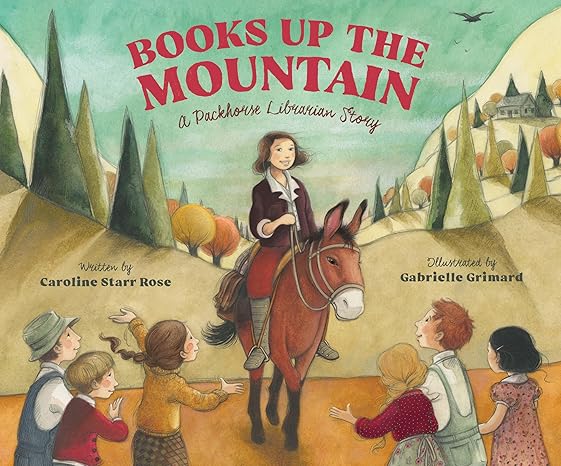
- Get Books Up the Mountain
- RAR #280: Books Take Us Places
- RAR #283: Our Favorite Reads for Forming Virtue in Our Kids
- Best of RAR: Why Read Aloud to Kids Who Can Read Themselves
- The Lazy Genius Collective
- To a Group of Writers, on the Occasion of the 100th Anniversary of the “Libreria Editrice Vaticana” (the Vatican Publishing House) (24 June 2026)
- Storykind Podcast – Kelly Yang and Kate DiCamillo
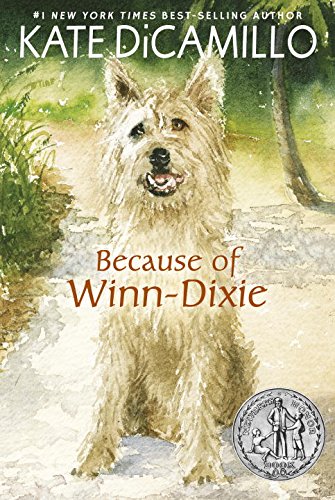
- Kate DiCamillo’s Drafts of Because of Winn-Dixie
- The Kerlan Collection of Children’s Literature
- RAR #121: Kate DiCamillo on Reading Aloud for Connection
- RAR #143: Kate DiCamillo is Back!
- Kate Morton’s reflection On Writing
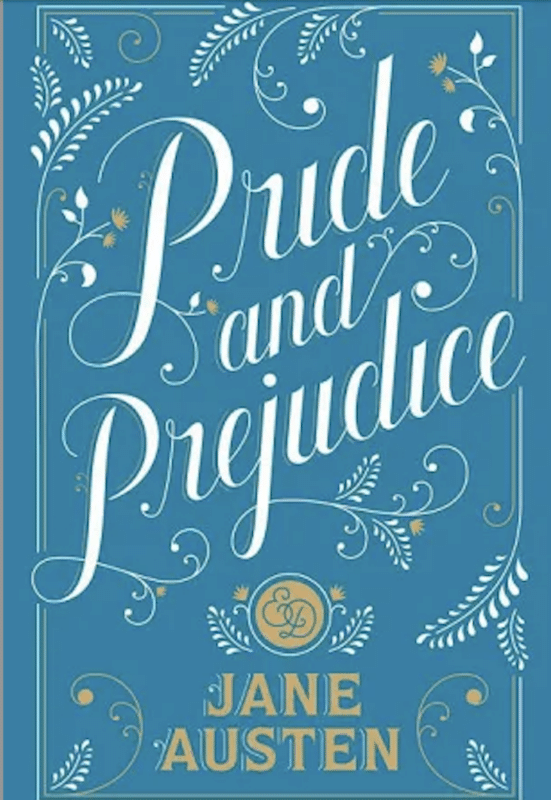
- Send us your Pride and Prejudice First Line Free Writes: support@readaloudrevival.com
Audrey Menck (00:00):
Six minutes of reading can calm your nervous system.
Sarah Mackenzie (00:02):
Everybody has six minutes.
Audrey Menck (00:04):
There's something about that that is really accessible to us, which almost feels like, well, if it's not really hard, does it really count? And it totally does. It totally counts.
Sarah Mackenzie (00:12):
Yeah. It's like trying to orchestrate the perfect scenario is never our friend. It's always keeping us from doing the thing we want to be doing.
MUSIC (00:19):
(music).
Sarah Mackenzie (00:34):
Hello, hello, and welcome to the Read Aloud Revival. This is the show that helps you make meaningful and lasting connections with your kids through books.
(00:42):
I'm your host, Sarah McKenzie. I'm the author of The Read Aloud Family and Teaching from Rest and a growing collection of award-winning picture books.
(00:50):
And today on the show, I have joining me Read Aloud Revival's creative director. Hello, Audrey.
Audrey Menck (00:57):
Hello. It's good to be here. Today, we're going to continue what has really become an informal series here on the podcast about stories and the power they have in our lives.
(01:07):
In episode 280, we talked about books and how they take us places. And in episode 283, we talked about how they help us grow in virtue and it's not because they teach. And today we're going to continue that conversation from a slightly different angle.
Sarah Mackenzie (01:23):
Yeah. We want to talk about the practice of writing because very connected to reading. Oh, so connected to reading, in fact, is the practice of writing. In fact, without writing, there'd be nothing to read.
(01:34):
And a lot of times I think in our families, when we are raising kids who read, we oftentimes find that some of those kids also have a propensity to write. And so we're going to talk about writing today.
(01:47):
And I did an episode not too long ago about why read aloud to kids who can read themselves. So not just reading aloud bedtime stories to our toddlers and preschoolers, but reading aloud to kids who are capable of reading on their own and are reading on their own.
(02:05):
You can find it at readaloudrevival.com/why. We talk about how reading aloud has all these benefits, right? It helps our kids. It increases their capacity for empathy. It helps them build fortitude. It gives them miles and miles to walk in the shoes of someone else. It increases academic performance. It increases information processing.
(02:28):
There is even a study that shows that reading for six minutes can reduce your stress. Physiologically, they can measure a reduction in stress after six minutes of reading.
(02:40):
Actually, that episode, which is at readaloudrevival.com/why, like W-H-Y, we have a one-page PDF that gives some bullet points and a little rundown of what the benefits are of reading aloud.
(02:54):
So if there's somebody in your life you want to share the benefits of why it's important to dedicate time to reading aloud to kids who can read on their own, you want to go grab that freebie. That's readaloudrevival.com/why for that free download.
(03:05):
But in a similar vein, today we want to talk about the flip side of that coin, not just why to read aloud, but also why to write. Because writing has a tremendous number of benefits for our kids and for us.
(03:21):
And like I said, a lot of times in families where we become readers, we often find ourselves and our kids drawn to writing. And we want to talk today just about what writing does, not just for the reader, because of course, like we said, if there was no one writing, we'd have nothing to read.
(03:39):
But also what it does for the writer. Audrey, do you want to introduce this topic a little more for us?
Audrey Menck (03:45):
Yes, I would love to. I think it's actually a broader question of not just writing, but also creativity on a larger scale. Why do we paint, carve sculptures, design buildings, make music?
(03:59):
It seems to be something that's really inherent to us as image bearers of a creator God to create. It seems to be our inheritance to be creative. And it reminds me of a couple years ago, I was at a conference in England and I heard Andrew Peterson talking about creativity.
(04:18):
And he was speaking about the vocation of being an artist. And he was distinguishing it from being creative because his point was really that we're all creative. Regardless of whether or not we are living out a life or vocation or career as an artist, each one of us is creative. We have creativity in us.
(04:37):
And it might come out in our garden, or our home, or your work as an engineer, or a nurse, because in a certain sense, we're all crafting a life and that's an act of creativity. We create relationships and routines, even if we're not songwriters or oil painters.
(04:54):
And so I think it's good to acknowledge that we're all inherently creative simply by existing as human beings. Emily P. Freeman, who is one of my favorite writers, explores this so beautifully in her book, A Million Little Ways.
(05:07):
So if you'd like to read more about that, especially what it means to be an artist just as a person, I definitely recommend that book. And I just wanted to set the stage for us as we talk about this, that this practice of writing, this practice of creativity, it's not just for the artist in the room. It's for each and every single one of our listeners.
(05:28):
And while we're going to discuss writing in a very particular way, know that this is really a conversation that extends to every aspect of your life from the poetry you write to the bread that you bake.
(05:37):
And so I encourage you, even if you're not a writer actually, especially if you're someone who has not yet admitted that they're a writer, perhaps, maybe not even to yourself, that you keep listening because this conversation is for you too.
Sarah Mackenzie (05:49):
Yeah. I actually feel like one of the things I'm hoping that comes from this episode is a permission that we feel to respond to that, I don't know, that prompting like, "Oh, I think I might want to write something down." And I don't just mean writing for other people to read. I also just mean writing for the sake of writing.
(06:11):
I'm writing all the time. You might make notes, a grocery list or a text message to a friend to encourage them on a hard day or something like that. Yes, all of that is good too.
(06:23):
I also just mean you have a thought and you just want to get it down before you lose it because you know that you won't quite remember it later. Writing a letter, writing notes to yourself, writing in a journal. We do a lot of writing in journals around here at my house.
(06:39):
And also In Circle With Sarah, I'm always encouraging moms to write things down even in just quick and dirty bullet point lists. Because I think sometimes taking what's happening in our mind and putting it down externally from us, like removing it from ourselves and putting it on paper, it doesn't have to be a polished paragraph or anything like that. It's just that act of externalizing it can be so helpful.
(07:04):
I was thinking through a few of the specific benefits of writing for the writer. These are true for you when you're externalizing your thoughts or needing to jot something down. Like I said, sending a text message, writing a letter, making a grocery list, or just trying to get a thought that just came to your head outside of yourself on paper.
(07:23):
But it's also true for your children. And so what I'm hoping is that this podcast, when we're thinking about why do we write? What are a few of the benefits that writing does? Why do we feel compelled to write?
(07:34):
Like you said, Audrey, we are made in the image of a creator. So because we are humans, we are compelled to create. We have that creative impulse.
(07:45):
And I think that brings me right into the first benefit I'd love to talk about, which is that writing reminds us of how creative we naturally are.
(07:53):
And a lot of us will say like, "Oh, I'm not a creative person. I'm not a creative type," but you are because you're made in the image of God and God is the ultimate creator. And so you are creative.
(08:03):
It might take different forms because we are all uniquely made and have different personalities, and strengths and weaknesses, and propensities and all of that. But because we are made in the image of God, we are all naturally creative.
(08:18):
And I think this is one of the things that we get the opportunity to demonstrate to our kids if we are in the habit of writing, whether that's something polished or only unpolished things, only journal entries and text messages and grocery lists, we are made to create because that is just how we were made.
(08:38):
It just reminds me of this playful approach to saying like, "Oh yeah, I actually demonstrate how I am made in the image of God when I create." Reminds me of this exercise that we do. It is my own personal favorite writing exercise. And I do it just for fun.
(08:59):
I call it first line free writes. There's actually a workshop for kids where I teach this first line free writes in RAR Premium. I think it's one of the most popular writing workshops we have in there. And it's because it's so fun.
(09:11):
I learned this when I was a kid at a writing workshop when I was maybe 12 or some age around there. And it was so fun and it stuck with me and I still do it to this day.
(09:22):
The gist is that you just take any book from your shelf and you copy down the first line from the book. And then you copy it down on a piece of paper and then you set a timer for however long. 10 minutes is usually what I do. And you keep the story going.
(09:39):
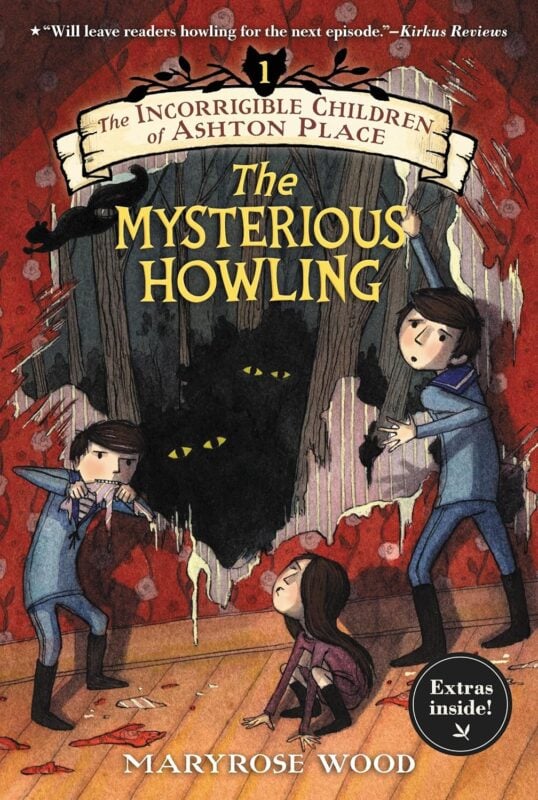
So I know a few first lines because my brain is weird. But one of my favorite first lines is from The Mysterious Howling by Mary Rosewood from This is the Incorrigible Children of Ashton Place series, which is one of my all time favorite middle grade series. Absolutely love it. Perfect read aloud. 10 out of 10 recommend.
(10:00):
But anyway, opening line is something like, I'm not going to have it exactly, but it's something like, "It was not her first time on a train, but it was her first time traveling alone." Something like that.
(10:10):
So if that's the first line, you write that down. And then for 10 minutes, you just keep the story going. You're not writing the story from the book. You're just making up your own.
(10:19):
Now, if you did this with three different kids and yourself sitting at the table or like 10 minute first line free write, everybody write your own for 10 minutes. All four of you are going to come up with completely different stories.
(10:34):
And sometimes they're weirdly similar and you're like, "Oh my gosh, we were on the same wavelength." But for the most part, they're very different and it's just sheer play. It's so much fun.
(10:44):
I do it all the time because I think it reminds me that I am more creative than I think I am. So even when... Because in our adult lives, I think we get really locked into all the things we need to do and have to do.
(10:55):
And we're taking care of our kids, and making dinner, and scheduling dentist appointments, and ordering the next size up in socks for that kid who's walking around barefoot with holey socks again. There's just all these things we're constantly thinking about. And 10 minutes and it's just a completely playful activity.
(11:14):
And I think not only does it help you remember how creative you are, but your kids who think they're not creative might be surprised at how creative they are, because it's just so much fun.
(11:26):
And it really goes back to that idea that you were saying, Audrey, when you were talking about Andrew Peterson and we were made in the image of a creator. We were made to playfully create.
Audrey Menck (11:34):
Well, I was thinking as you were talking that a really fun first line could be that first line of Pride and Prejudice. "It is a truth universally acknowledged that a single man in possession of good fortune must be in want to a wife."
(11:45):
I just would love to see what your 14-year-old daughter and 12-year-old boy come up with there. I think that would be great.
Sarah Mackenzie (11:54):
Oh, for sure. For sure. That's so fun.
Audrey Menck (11:56):
Yeah. And I think, I mean, another writer who I really love, Shauna Niequist, I heard her talking on a podcast once years ago about how when she's in hotel rooms or traveling or whatever, or maybe even just in her home, she'll just scribble out on the backs of receipts thoughts that she has, and then she'll just rip it up into a bunch of pieces and throw it away.
(12:14):
And I mean, she's a beautiful writer, but she's like, "There are some thoughts that are just for me to process with the page and not something that I want to be memorialized anywhere." And I love that idea of writing on the back of a receipt and ripping it.
Sarah Mackenzie (12:26):
Yeah. Because there's something very loose about that. It's not precious. It's like no one's fooling themselves about this is the greatest thing I've ever written. I wrote it on the back of a receipt. I wrote it on a napkin. I wrote it on a...
(12:40):
I actually really like to write on yellow legal pads. I have one right sitting next to me actually. I love to write on yellow legal pads because something about it feels very unfinished. It feels very different from what typing on a computer looks like a finished piece of writing even when it's not.
Audrey Menck (12:55):
It removes the barrier, I think, between making something, even if it's just for you. Right? But I think sometimes when we have a blank page and we're like, "I must fill it with great things." Yeah, I think it's really good.
Sarah Mackenzie (13:08):
Yeah. I mean, you want to remind yourself and your kids that you are made in the image and likeness of God. Spend 10 minutes doing a first line free write and see what happens. It's a pretty great and really fun reminder.
(13:22):
And it's doing more than that, even though that's a huge piece of it. Right? It's doing more than reminding you that you're made in the image and likeness of the Creator. This is exactly what I love about reading aloud is that it seems weirdly simple.
(13:38):
I mean, go listen to our podcast, readaloudrevival.com/why. Why read aloud? There's a whole list of things that we could go on and on about the benefits, the academic and neurological benefits of reading aloud, of grammatically correct, sophisticated language patterns coming in through the ear.
(13:55):
We can go on and on about all the benefits there, but it almost just feels like this can't possibly make that big of a difference. It's so simple. It doesn't cost anything. I can do it in 10 minutes. I can do it right now as soon as I turn off this podcast.
(14:09):
I can grab a book off the shelf and read to my kids for 10 minutes. And that's part of the power of it is that it's so simple and it makes such an enormous impact.
(14:18):
I think this invitation to writing also can, and it doesn't have to be like, "Well, I need to teach my kids how to write topic sentences and really descriptive writing." That's for another thing. We're not talking about that right now.
(14:29):
We're talking about just the playful act of creating and reminding ourselves that we were made to create.
Audrey Menck (14:34):
Kendra Adachi has talked about this. She's the founder of the Lazy Genius Collective. And she talks about how she started to break down her goals to be something that's stupid easy.
(14:45):
She really wanted to get in the habit of working out. And so she decided she was going to do one downward dog a day. And she was like, "It was so dumb. Of course I can do one downward dog a day. Why would I even make that be a goal?"
(14:56):
But she was like, "But then it would take me more time to decide whether or not I was going to do it than just to do it. And then, "Okay, I did it."
Sarah Mackenzie (15:01):
Yeah.
Audrey Menck (15:02):
And so I think it's like that. How can we make things so simple? And also recognizing too that you said earlier, six minutes of reading can calm your nervous system. Everybody has six minutes.
(15:13):
There's something about that that is really accessible to us, which almost feels like, "Well, if it's not really hard, does it really count?" And it totally does. It totally counts.
Sarah Mackenzie (15:21):
Or if it's not a certain amount of time, this is where I think a lot of us get stuck because we're like, "If I don't have 30 minutes to read aloud." You don't need 30 minutes. Do you have six? That'll do it. That'll do something.
(15:32):
You might be able to find more once you get going too, because it's funny how that works. But trying to orchestrate the perfect scenario is never our friend. It's always keeping us from doing the thing we want to be doing.
Audrey Menck (15:43):
Absolutely. Another thing that I think writing can really do for us in going along the same vein as what you're talking about with reading is that it really forces us to slow down, even if it's just for six minutes, and focus on one thing.
(15:56):
We can't write about 10 things at once. You can only write one word at a time, one sentence at a time.
Sarah Mackenzie (16:02):
Yeah.
Audrey Menck (16:02):
And so, I mean, I know there's been a lot of research done too on the benefits of even writing by hand because it's moving at the pace of your own body is able to write it.
Sarah Mackenzie (16:12):
My brain works way faster than my right hand can hand write. So then I will sometimes find myself being like, "Forget it. I got to get to the computer because I can type a lot faster than I can write." It's really good practice for me to have to slow down my thinking.
Audrey Menck (16:26):
I knew someone in, well, who's a mutual friend, but I knew of someone in graduate school who wrote her whole master's thesis by hand, which is just marvelous to me and really unattainable. I did not do that.
(16:39):
But I think I love this. It's kind of the same idea though of reading aloud. It's this gift, it's this invitation to slow down, to be right where you are right now.
(16:50):
And even these simple exercises, simple practices of just noticing the world around you, I find the more that I write, the more I'm paying attention to the details, the way that that woman's red shoes really sparkled off the grocery store floor.
(17:04):
Or you know, it's the more we're reading things that are attentive to detail, the more we're noticing them, the more we're writing them. It's this ongoing way of life that you're being invited to because you're thinking about is the sky blue?
(17:19):
Or what is it about the sky that's different today? Is it cerulean? Are there clouds moving in a particular way that you want to describe? It can be so simple. It doesn't have to be lots of adjectives and adverbs and all these things, but just paying attention to the particulars.
(17:34):
You and I were actually just talking about, I read a piece to you, an article I had read, and we were both so stunned by the beauty of it. And it really wasn't that this writer's language was complex or difficult to understand or interpret or really flowery. It was just that she was so attentive to the details around her.
Sarah Mackenzie (17:54):
It was very specific. It was very-
Audrey Menck (17:55):
So specific.
Sarah Mackenzie (17:57):
Yeah. Which I feel like, okay, so similar to this idea that, okay, the first line free writes is a really fun 10-minute exercise.
(18:04):
Another really fun five, this could be a five-minute exercise, is simply to have everybody stop what they're doing right now and just describe using your five senses, everything you can hear, smell, see, touch, taste right this second.
(18:20):
It does, absolutely, slow you down and make you aware of things that you weren't aware of a second ago, which I think you're right because good writing, like that piece that you read to me the other day while I was driving, and I was like, "Oh my goodness, it was so beautiful."
(18:33):
And it was a very small moment, but it was specific details so I could see exactly what she was seeing and smell what she was cooking. And I think it's because that kind of writing though, to be able to incorporate those sensory details does require you to be attentive, to slow down and notice things.
(19:00):
Which is cultivating that power of attention that we all really want for our kids. And that's the thing that will actually give our kids an advantage, basically.
(19:10):
Is if they have the ability to slow down and cultivate their powers of attention, that's the thing that's in short order right now is because we're all so distracted and being pinged, and our attention is just constantly moving from one thing to another, to another, to another all the time.
(19:27):
I mean, I really just think in this age where we know the powers of our children's attention is not being cultivated, we can feel it in ourselves. The gift of attention, five minutes of writing what you see, feel, or see, taste, touch, hear, smell, not getting them all on my, right now, it's doing more.
(19:49):
Again, it's exactly like where that 10 minute first line free write is doing more than helping your kid learn to write or be creative. It's reminding them that they're made in the image and likeness of God.
(20:02):
It's reminding them how playful and expansive their mind is. It's helping them get words on paper. And there's so many things happening in that 10 minutes.
(20:12):
In the same way, five minutes of like, can you describe the experience of walking into a grocery store, but use your five senses or something like that. It cultivates the power of attention.
(20:25):
It's actually one of the things I just, you mentioned this, you can't write 10 things at once. You can only write one thing at a time, one sentence at a time. And this is one of the gifts I think of reading aloud is that it requires me to be present with my kids.
(20:36):
No, you can't really read aloud well and be making a grocery list at the same time. I've tried it. I've done it. And then what happens is your child goes, "Wait, who's that character?" And you're like, "I have no idea." I wasn't paying attention. I was just saying the words and not paying attention.
(20:56):
And so then usually what I have to say to my kids, this happens fairly regularly where they'll say, "Wait, what happened?" They're asking a clarifying question. And I say, "You know what? I think I missed that too. Let's go back."
(21:08):
And then I'll just reread it again, which I think is helpful for them because it also shows them we're human. And if you read and you get distracted, that means you're human. So just go back and read it again. It's okay.
(21:19):
It's good to go like, "Oh, I'm not paying attention. I'm going to pay closer attention." Reading aloud is one of those invitations to being totally present with our kids.
(21:30):
And it sends this message to them that says, "You are so worth spending time with that it's worth it for me not to be doing anything else so that I can read this story with you for 10 minutes, to be fully present with you."
(21:41):
In the same way, I think taking a few minutes to write. And again, I guess the way we're describing writing, Audrey, feels like you can do it on your own, your kids can do it on their own, but man, if you could do it together and it's only five or 10 minutes, so most of us have time, we all have time for this really on some level. It's a way to be present together.
Audrey Menck (22:00):
It's something that's really beautiful about that because writing is such a solitary act in many ways. It's you and the pen and the page or you and the keyboard and the computer. But stories are something that's shared.
(22:12):
And we'll get into it a little bit later, I think in the episode, but there's something really beautiful about this reader and writer. And so even just getting to write together and then share with each other what you're reading and what you've come to discover as you've been writing in this short amount of time.
Sarah Mackenzie (22:30):
And sometimes you might want to share and sometimes you don't. We would do a 10 or 15 minute free write for a long time. In fact, I'm going to get back into that with the kids at home because we used to start our writing lesson with about 10 minutes of free writing and it was just really fun.
(22:47):
And sometimes I never required the kids to share because sometimes they were just journaling out things. But sometimes I would say like, "Can I read just one of the things that I wrote that I like? Or can I write, this is kind of funny."
(22:58):
And then they would also, again, we're modeling it. So every once in a while they'd be like, "Can I read something that I just wrote?" "Yes." But it's not like everybody now needs to go around the room and read what they just wrote because that will change the way you write, I guarantee it, and not in a good way.
(23:14):
Because you will feel less free to just experiment on the page if you feel like everything that I write has to be read by somebody else. It just changes your experience of writing completely.
Audrey Menck (23:24):
Totally. Well, you can see this with some bigger name authors who will be really successful in one genre and then they'll take a pen name and write in a different genre just to see, "Can I do it? Can I write something here that isn't necessarily tied to me or this persona or personality?" So I think that's on a smaller scale, in your own home, I think that's true.
Sarah Mackenzie (23:43):
Yeah. Yeah. So we talked about how writing reminds us how naturally creative we are and how it helps us slow down and cultivate the power of attention. It also really helps us discover what we think.
(24:03):
Many authors have said some version of this. Flannery O'Connor said, "I write because I don't know what I think until I read what I say." And then Joan Didion, another prolific writer said, "I don't know what I think until I write it down. And also, I write entirely to find out what I'm thinking."
(24:21):
Now, I'm a verbal processor, so I feel like I talk to figure out what I think. Everybody in my personal life needs to know this because-
Audrey Menck (24:35):
It's a delight.
Sarah Mackenzie (24:36):
Well, sometimes it's a delight. The people who are closest to me, like you, will go, "Are we making decisions right now? Are we just processing?" "I'm just thinking."
(24:47):
I remember losing my voice at one point and my first thought was like, "Oh my goodness, how am I going to think? This is going to be a problem." Writing is another way because it's like without doing it verbally, we can do it on paper.
Audrey Menck (24:59):
External act. Yeah.
Sarah Mackenzie (25:00):
Exactly. Again, it's the same thing. You're just taking thoughts that are in here and when they're in your mind, especially if it's something that you're stressed about. So this is why in Circle with Sarah, which is my mentoring program inside of RAR Premium for moms who really want to build lasting relationships with their kids.
(25:19):
One of the things we often do is we write down the thing we're most stressed about or that's keeping us up at night. Just the act of taking the thing you're worried about and externalizing it on paper, just putting it down on paper, somehow shrinks it down to size.
(25:32):
It helps us see that it's like, this is a problem that has parameters or this is a problem that has possible solutions. When it's in our head, it's vague, and nebulous, and big, and feels big and scary. And a lot of times when we get it on paper, it just feels different.
(25:47):
It's shrunk. We can see it for what it is. And a lot of times we don't even really know what we're thinking. What are the thoughts that we're having about that problem until we write it down. I know this is true for me across the board.
(26:04):
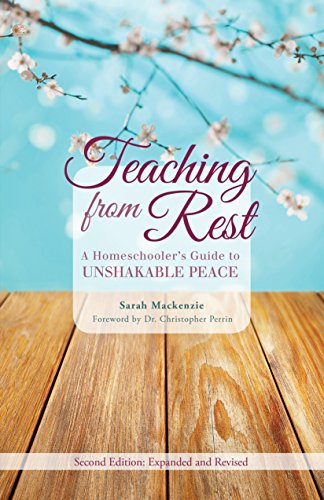
The first book I wrote was Teaching from Rest: A Homeschooler's Guide to Unshakable Peace. And the entire reason I wrote the book is because I was exploring the idea of what it might mean if I was able to have this unshakeable peace, a peace that transcends all understanding, like I'm promised in scripture.
(26:23):
Is that possible in a homeschool when I'm an overwhelmed mother and I legitimately have too much on my plate? I was asking that question over and over in my head in lots of different ways, in lots of different stressful ways. And so I wrote to find out.
(26:39):
And basically what ended up coming from that, it's not like it came out all like that in one piece. That's not what I mean. But I mean, what the project that came from that was Teaching from Rest: A Homeschooler's Guide to Unshakable Peace.
(26:51):
And again, in Circle with Sarah, I'm constantly inviting moms to do these 60 second journaling. Because I really think we often think, "I got to sit down and journal." It's got to be full sentences and paragraphs.
(27:02):
No, no, no. 60 seconds. Set a timer for 60 seconds. Write down bullet points right now. What's the thing that's most worrying you? And we'll be surprised a lot of times about what comes out on the other side of the pen because we don't really know what we're thinking till we write it down.
(27:18):
I have often said that I don't actually feel, I feel most like myself when I've been writing. If I have been journaling regularly or at least making a habit of writing things down, I'll feel most like myself. And I think it's because I have a better tab on what is happening in my brain when I'm externalizing it.
(27:37):
There's something incarnational happening here where you're taking something that's in your brain and you're putting it externally, you're making it live outside on the page.
Audrey Menck (27:47):
Yeah, that's beautiful. It's like an embodiment. You're being able to take something that feels untenable and intangible in your mind and give it some kind of actual structure and meaning in black and white on a page.
Sarah Mackenzie (28:04):
Yeah.
Audrey Menck (28:04):
Recently, Pope Leo met with a number of writers in the Vatican and he gave an address that was just so wonderful. And I think it really goes along with what you're saying here.
(28:13):
He said, "Writing is an act of truth, of revelation, for it reveals who we are and what we believe and hope for. The world we strive toward and the future of which we dream. Writing is an act of humanity."
Sarah Mackenzie (28:28):
Wow.
Audrey Menck (28:29):
I've been thinking a lot about this and about how making art of any kind, right, it's messy. It's not very efficient. It takes time and we have to refine it and edit and adjust.
(28:40):
And, of course, we're talking about multiple different kinds of writing. And I do want to make that distinction of writing that's maybe just for our own personal formation and then writing that we might want to share with others.
(28:51):
But I think especially now when others' creativity is so visible to us, it's really easy to just look around and see everyone who has a finished product.
(29:02):
I was listening to Kate DiCamillo's podcast recently, StoryKind, where they talk about the writing process and different hiccups and hurdles that you might face.
(29:12):
And Kate was talking about how it's easy to take your draft on your computer of your story and look at a book on your shelf and say like, "Why are these two things not the same?" And how ridiculous that is actually because you're looking at a draft and you're looking at a finished product.
(29:26):
And so I think that can be a hurdle for us to even begin, especially for those of us who do want to make art for the world or art for people to read, or listen to, or enjoy, because we're being faced with everyone else's finished product as we sit in the middle of our own creative mess-
Sarah Mackenzie (29:42):
Yes.
Audrey Menck (29:42):
... and that can feel super intimidating. And I think that I have seen, I've experienced this in a number of different ways in graduate school, in the research process. It's a lot of culling things.
(29:54):
You're reading things and you're grabbing quotes and you're thinking about ideas and you're making connections. And I just love a checklist and I love to opt down the list and be like, "Done, done, done."
(30:04):
And you can't really finish. I think creativity, writing, there's a certain level of, even if it's just for your own self and your own journal, there's a certain level that's unfinished because we're unfinished, right? Because we're constantly becoming and growing.
(30:15):
And I think it can be really wonderful to take these practices and just to, like you said earlier, play and enter into the mess of it. And who knows what will come of it? Maybe it will just be your own personal growth and formation. And that is a tremendous thing that will help you become more and more who you're supposed to be.
(30:34):
Or maybe it'll be something that really ends up being shared and touches other people's lives. But I think regardless of whether your actual art reaches people or it's just you, it's what your art does for you, what your writing does for you that can touch people, that's really impactful.
(30:50):
And I think that the writers that I know and the artists that I listen to and pay attention to, I think all of them would say, regardless of any kind of metric of success that they might reach, it's really like they started doing it for them and they have to do it.
(31:02):
They feel compelled to do it even if no one were to listen to their music or read their books. This is something that they have to do in their own lives for their own sense of self.
Sarah Mackenzie (31:14):
So you're talking about the mess of things. And because I was talking about writing teaching from rest earlier, I want to clarify actually that I didn't know when I was writing that book that I was writing a book about teaching from rest or about how do I experience unshakeable peace in my home.
(31:32):
In fact, I have my journal still from when I wrote that book and notes. And I would have an open journal that I was just using for writing that would sit on my counter, because, of course, I'd had 100 babies at this time. I had twins who were six months and Clara was two and all the big kids I was homeschooling.
(31:54):
So this notebook that would sit on the counter, and as I was washing dishes or changing a diaper, a phrase or a question would come to my mind, and I would run over and I would just scratch it out and write it out.
(32:02):
Now, I didn't know that's what I was doing until after it was written. Most of it, I would say about 80% of it. And there are a few pages all in caps in this journal that I can find where I say like, "What is this about?" Because I was so like, "I can't figure out what, there's something that's tying all these things together."
(32:22):
It wasn't until after most of it was written that I realized, "Oh, I'm trying to find out how to teach from rest. I'm trying to find out how to have unshakeable peace in my homeschool when I legitimately have too much on my plate."
(32:34):
Because it's not just about doing less, I can't do less. I have six humans who rely on me for their very livelihood. I can't just do less. Which less? Where? I didn't know. It was so messy. And you can see that in the writing processes that I was trying to figure out the question I was answering.
(32:55):
In retroactively, I can say, "Oh, I wrote that book because I was trying to figure this out. I couldn't have told you that when I was doing it." There's that piece. The other piece you mentioned that really makes me go like, "Oh, that's so interesting," is Kate. Kate DiCamillo, who I just absolutely adore.
(33:10):
She's been on the Read Aloud Revival several times. She's coming back soon. And there is, we will put it in the show notes. She is such an amazing human to be able to share this with us. In all of her humility, there is a version of her first chapter of Because of Winn-Dixie.
(33:31):
Because of Winn-Dixie was Kate DiCamillo's first book. It was the first book she ever wrote. She didn't have an agent. She was writing it for fun. And she just was writing it because she wanted to be a writer, right? So she was just writing.
(33:42):
And her first draft of Because of Winn-Dixie, the first few pages of her first chapter of that first draft are online. We'll put them in the show notes. Go look at it. It will blow your mind. It is so bad. You will look at this. Show it to your kids.
(34:01):
Read the first chapter of Because of Winn-Dixie, which is an absolutely amazing book that has won a bajillion awards and is an absolutely phenomenal middle grade novel. And then go read the first couple of pages of her first draft.
(34:18):
There's no punctuation. There's no capitalization. I think Opal's name was different. Maybe the dog's name was different. I can't remember. And it's not well written at all. And she shares it. She actually shares all of her first drafts.
(34:33):
All of her first drafts of all of her books go to the Curling Collection, which is this collection at the University of Minnesota where they collect sketches, and first drafts, and process pieces from different children's book artists and authors. And it's a phenomenal collection.
(34:48):
But she sends them all there and she says, she can't look at them. She's like, "It is horrifying to me that people find these." But I told her there is nothing... I read that and thought, "Wait, maybe I can write a children's novel. If it's allowed to be this bad in its first draft, I think I might be able to do this."
(35:05):
And I think for our kids too, that's just such a great reminder because like you said, it is standard for us to read a novel that's finished, that has gone through multiple revisions and editor's hands and on our shelves and then compare it to the writing that we're doing and think like, "Well, I'm just not cut out for that."
(35:22):
And not realize that we're comparing two completely different things. You're comparing your messy Lego version of a house to this beautifully architected building. It's not the same thing, but it's so hard to know that when you're in the process of it.
(35:44):
And so yeah, we'll put a link in the show notes so you can see that first draft. It's amazing. It'll blow your mind.
Audrey Menck (35:52):
Yeah.
Sarah Mackenzie (35:53):
Yeah.
Audrey Menck (35:53):
Yeah. That kind of brings me to another thing that we hinted at earlier in the conversation, which is how writing connects us to others. So another Kate, Kate Morton, who is one of my favorite historical fiction authors.
(36:06):
She writes these brilliant novels for adults that travel time and explore history and they're really beautiful. But she wrote this response to a question that a friend asked her, which was, "What do you love about writing?"
(36:22):
And in her reply, she really mused on the sheer magic of the process that's interlaced with what can often be this arduous endeavor. And towards the end of her article, she writes this where she connects the writing process to the reading life in a really beautiful way.
(36:40):
She says, "Both writing and reading are considered solitary pursuits. And it's true that I sit alone for most of the day, every day, communing with figments of my own imagination and doing battle with my limits as a wordsmith."
(36:54):
"But the act of publication is, as the root of the word suggests, public. And this is where we enter the much mythologized realm of storytelling for which, at least, two people are required, one to tell the story, the other to receive it."
(37:11):
"A book is merely a series of words on a page until someone picks it up and begins to read. And, of course, a reader does far more than just receive. It is they who bring the story back to life, a unique version of itself fueled by their imagination, dependent for color and nuance on their life experience."
(37:29):
"My words, their interpretation, a joint creation. To be a part of this marvelous alchemy is a wonder indeed." And I just think this is brilliant. The way she laces these two threads together, writer and reader, storyteller, and the one being told the story is so incredible because it's showing the creative act that it is to be a reader.
Sarah Mackenzie (37:56):
Yeah.
Audrey Menck (37:57):
And it's like Kate says here, the writer gives life to the story first in the telling of it, but the reader gives it life anew in the receiving of it. And this alchemy, this relationship really draws us back into the mystery of art, because, of course, these books are intimately tied to their authors.
(38:16):
We can't sanitize a piece of work entirely from their creator, but it's also about you as the reader, about how you encounter the story, what you bring to it.
(38:26):
And I know this is true because there's so many books that have come across my path at maybe just not the right time. And I've picked them up later and it's really resonated in a different season of life. Right?
Sarah Mackenzie (38:34):
Yeah.
Audrey Menck (38:35):
And I think it's interesting because the books, the words on the pages, they didn't change, but I did. Something in my own life, my own world did. And even though the words on the page have not altered at all through the passing of time, I've changed. And there's something just really incredible about that [inaudible 00:38:56].
Sarah Mackenzie (38:57):
Yeah. I love that you pointed out the creative act of the reader. And that's what Kate was talking about too. It's not just the writer. It's the alchemy between the reader and the writer. It's that connection point that stories...
(39:10):
I mean, stories, words connect us, which I think, anyone who's listening to this podcast knows that words and stories have the power to transform. That's why we're always talking about reading aloud with our kids. That's why we're talking about talking with our kids. That's why we want to read. That's why we want to write.
(39:28):
It's because words have the power to transform and connect us. They have this connective power. Which also reminds me of our newest book that we just published at Waxwing Books, which is our publishing imprint where we're making children's books that will help turn your kids into kids who just love books and love reading.
(39:44):
Our newest picture book is actually called Books Up the Mountain. It's a Packhorse Librarian Story. And it basically, it's a historical fiction picture book.
(39:50):
And it tells the true story of these packhorse librarians during the Great Depression who traversed over streams, and creeks, and harsh weather conditions, and dangerous circumstances to bring books and scrapbooks to people who lived in remote parts of the Appalachian Mountains.
(40:12):
And one of the things that they did, this is so fascinating. I knew that was a thing. I knew that the packhorse librarians brought books to these remote people in Appalachia.
(40:21):
And this was amazing because during the Great Depression, for a group of people to know so much that words and stories transform us. "People need words and stories no matter where they are. We're going to get them to them." That alone is so inspiring to me.
(40:36):
But what I didn't know until Caroline Starr Rose's book, Books Up the Mountain, is that not only were they bringing books that were published in the library system, they were making scrapbooks from the stories and words of the people that they visited.
(40:51):
So they would visit one house and that they would give her, the packhorse librarian, a recipe. And then another one would tell a story about something that had happened in their location where there'd be news bits.
(41:01):
And they would assemble these scrapbooks and they would also bring these scrapbooks around, not just books from the library, but to connect people because words have the power to connect us. And they were connecting these people in remote parts of Appalachia to each other through what they wrote.
(41:18):
And not well thought out, beautifully perfected prose, but scrapbooks that they assembled because the people were writing things down and other people were reading them. And it's that alchemy of connection. It's just absolutely beautiful.
(41:36):
I would say, if you are listening to or watching this show and you're a person who's like, "Yeah, words and stories transform," you should get your hands on Books Up The Mountain, A Packhorse Librarian Story. Because it is a book that celebrates the fact that words matter, and that words connect us, and that stories connect us.
(41:58):
And I feel like that's a lot of what we're talking about today, that writing helps us slow down. Writing connects us to others. Writing helps us figure out what we think. It reminds us that we're made in the image of God and it connects us to each other, which is the whole point of everything, right, to love God and love each other.
Audrey Menck (42:17):
It's like Kate Morton was saying in this article, while reading and writing are these solitary acts, I think something that we've been talking about throughout this whole conversation is that they don't have to be. We can read together. We can write together.
(42:30):
Even though each person in your circle, as you read aloud, is experiencing different things and their mind is coming up with different images and they're bringing the story to life in their own way, even though you're all reading the same story at the same time, these same words at the same time, it is something that's both collective and individual.
(42:50):
And it goes back to what we were saying at the beginning, even with the specificity of things. It's in the particularity of story of our own experience that we're able enter into the universality of what it means to be human, of what it means to be a part of the world.
(43:07):
And I think that is really the standing power of story that is just transcendent beyond ourselves. It's something that we can give ourselves over to and also be a part of at the same time.
Sarah Mackenzie (43:19):
Yeah.
Audrey Menck (43:26):
Okay. So before we go, you are a writer. And I know that there are a lot of writers, aspiring writers, not quite yet admitting that they're writers, writers listening to this show.
(43:39):
And I wonder what encouragement you might have to anyone of those listeners today, especially as they seek to write for themselves, maybe write for others, seeking that magical alchemy that happens when words resonate for the writer and the reader. What would you say to that?
Sarah Mackenzie (43:58):
Oh, I love that question. I would say you're a writer if you write. And one of the things that I am guilty of, so I'm pretty sure some of our listeners and viewers are guilty of this too, is I love thinking about writing. I love reading about writing.
(44:13):
There's no delay tactic to writing I like better than reading a book about writing. I can do it. I've read them all. I mean, I love them so much. But there's a lot of procrastination strategies we can use because we're getting ready to be writers. We're getting ready to write.
(44:30):
But actually, if you write for a few minutes today, you're a writer. And so I would suggest that right after this podcast ends, you go grab a book from your shelf and try that first line free writes. If you have a kid around, grab a kid or a few of them, and do it with them. Or you can just do it on your own.
(44:47):
And just one of the things that I... One parenting hack that I think is pretty useful is to start doing things in front of your kids that you want them to start being interested in. And sometimes they're like, "What are you doing over there?" They might be a little interested in it. That doesn't always work. Depends on the kid.
(45:03):
But do that first line free writes. Grab a book from your shelf. It needs to be a fiction book, by the way, for this exercise. And just grab the first line. If there's a specific character's name, change the character's name in it and set a time for 10 minutes and then just free write the rest, just keep going.
(45:20):
You might be a little surprised. Now, if you do this, this is not going to help you, this isn't going to be like, "Oh, these are words you added to the story you're writing, the novel you're writing," or whatever. There is no amount... If you are a writer, then nothing that you're doing when you're writing is wasted.
(45:33):
You are always exercising, getting better. And your brain is always reorganizing itself based on the things that you're writing and the way that you're practicing. It's exactly like if you're a runner and you went for a 10-minute jog.
(45:46):
It's not wasted. It's part of what you do because you're a runner, I would assume. I don't know. I'm not a runner. That was a terrible metaphor for me to give, but an example for me to give.
(45:56):
But if you are writing for 10 minutes today, you're a writer. And I think if you do this practice where it's instead of delaying your tactics, delaying writing, but you just invite yourself into the experience of imitating your creator by creating for a few minutes, you might be surprised at how delightful and naturally it comes to you.
(46:18):
Some of these first line free writes I do are terrible and I read them afterwards and think, "Wow." And then sometimes I'm like, "Hey, that's kind of fun. I'm going to play with that idea." Or I want to read it to somebody because I'm kind of proud of it. So that's really fun.
(46:32):
Now, this actual particular exercise is my favorite writing exercise. And so like I said, there is a workshop in Read Aloud Revival Premium. So if you are an RAR Premium member, log into Premium and look up First Line Free Writes.
(46:45):
I have a very quick video workshop where I guide you and your kids into this. And a lot of our members will say that if they tell their kids to do something like this, they don't get a great response, but if I invite their kids to do something like this, it's a little different. So you can try it and see.
(46:59):
You watch that video with your kids. It's directly to your kids, so they can watch it. And I believe for that exercise, we have it for kids eight to 16. It's a really wide, but I do this practice all the time, so we should say eight to 44. Right? You could do this at any age.
(47:15):
But not only is there a video, a short video workshop that invites your kids into the exercise. We also have a list of first lines there, so you don't have to go grab them all from your shelf. I can't remember how many there are, but everybody can pick a different one from the list or you can all pick the same one to see what's the same or different.
(47:33):
This would also be a fun activity to do after dinner with the whole family. It's pretty fun. It can be a pretty fun exercise. I think oftentimes what we want to do is just loosen that tension around writing.
(47:44):
In the same way that we oftentimes have this tension around reading, like reading is the thing we do for school, or reading is the thing we do to become better people. That ruins the experience. Those things are true. We do read for school. We do read to become better people. And reading is bigger than that, so much bigger than that. Right?
(48:01):
We want writing to be in that same vein because our kids will be more likely to write for the joy of it, to write to be imitators of God, to write to be creators, to write to figure out what they're thinking, to write to cut their problems down to size.
(48:16):
There's so many different benefits to writing. If we can invite them into the experience of writing instead of it being like writing is something you do for school. Writing is something that has to be polished and perfected. Writing is something... Right?
(48:28):
So this idea of inviting them into a playful writing experience, that would be my number one advice is as soon as you shut off this show, go try it and then come tell us what you think because I want to know how it goes.
(48:39):
And if you are a premium member, log in to check out that workshop. If you're not a premium member, you can become one at rarpremium.com. And that's where those workshops are.
(48:50):
We actually have quite a few little, tiny workshops like that in premium that are really geared toward actual exercises that real writers use.
(48:58):
Not exercises that would come from a writing curriculum, but exercises that authors, published authors that we love at Read Aloud Revival tell us, "This is something I do to be playful in my writing. This is something I do to get unblocked or to make my writing better, more vibrant, richer in sensory experiences and stuff."
(49:16):
So those are the kind of writing activities that I just love are the ones that help remind me that writing is playful and fun.
Audrey Menck (49:24):
And if anybody writes using the first line of Pride and Prejudice, I want you to email it to me because I want to read it.
Sarah Mackenzie (49:30):
Awesome. Yes, please. Support @readaloudrevival.com. We want to know. We want to know. I want to know, especially if you've got boys and girls in tween and teenagers. I want to read those.
Audrey Menck (49:45):
For sure. Oh God.
Sarah Mackenzie (49:47):
Oh, Audrey, thank you so much for coming back on the show. I always love it when we get to chat about stuff here.
Audrey Menck (49:51):
Thanks for having me. This was a delight.
Sarah Mackenzie (50:06):
All right. Now, let's go hear from Read Aloud Revival kids about books that they are reading and loving lately.
Jacob (50:13):
Hi, I'm Jacob. I am nine and I'm from Greenville, South Carolina. And I highly recommend the Harry Potter series because the endings are always so epic.
Sarah Mackenzie (50:25):
Okay, what's your name?
Sam (50:26):
Sam.
Sarah Mackenzie (50:28):
How old are you, Sam?
Sam (50:29):
Four.
Sarah Mackenzie (50:30):
Where do you live?
Sam (50:31):
In Columbia. In Columbia.
Sarah Mackenzie (50:35):
In Bogota, Columbia.
Sam (50:36):
In Bogota, Columbia.
Sarah Mackenzie (50:38):
What's your favorite book?
Sam (50:39):
Tintins.
Sarah Mackenzie (50:40):
Tintins. And why do you like Tintin books?
Sam (50:44):
Because they have a bad guy, some bad guys, and all the good guys win. And it's sometimes scary, but sometimes other times it's not really scary. But we are trying to get the secret of the unicorn so we can discover what Red Rackham's treasure was. But in another story, they were trying to get Red Rackham's treasure.
Sarah Mackenzie (51:19):
They were trying to get Red Rackham's treasure. Say, bye.
Sam (51:25):
And finally, he found it. Bye.
Sarah Mackenzie (51:30):
Bye. What's your name?
Gideon (51:31):
I am Gideon.
Sarah Mackenzie (51:33):
How old are you?
Gideon (51:34):
Five.
Sarah Mackenzie (51:35):
Where do you live?
Gideon (51:37):
Idaho.
Sarah Mackenzie (51:38):
What book do you recommend?
Gideon (51:38):
[inaudible 00:51:39]
Sarah Mackenzie (51:39):
Who's the author?
Gideon (51:41):
[inaudible 00:51:43]
Sarah Mackenzie (51:43):
Why do you like this book?
MUSIC (51:45):
Because the cat is a narrator and there is a lot of brave characters, even toys.
Ephram (51:58):
My name is Ephraim. I'm almost eight years old. I live in Idaho. I recommend the Lego encyclopedia called The Lego Book, because it helps you come up with fun Lego building ideas and it shows you the history of Lego.
Sarah Mackenzie (52:23):
Thank you so very much, kids. We love hearing your book recommendations. Show notes for this episode are at readaloudrevival.com/286. You're going to find all kinds of good stuff in those show notes.
(52:34):
You'll find the Kate DiCamillo first draft of Because of Winn-Dixie. You don't want to miss that. You're going to find a link to the First Line Free Writes workshop and all kinds of good stuff. So readaloudrebible.com/286.
(52:46):
We'll be back in a couple of weeks with another show. Thanks so much for joining us. In the meantime, you know what to do. Go make meaningful and lasting connections with your kids through books.