RAR # 41: Navigating Fantasy: A Guide for Christian Parents, Carolyn Leiloglou

Do you struggle when choosing fantasy books for kids?

I am convinced that fantasy is a critically important part of nourishing my children’s imaginations, helping them to see and know the truth better than they could if they didn’t read it.

And yet. I struggle.

I never read much fantasy as a child, myself, and as an adult I have a hard time knowing which stories will nourish my children, and which are better to pass up. Navigating the world of fantasy can be tricky for people like me.

Today? We’re going to talk all about it. Join Carolyn Leiloglou and myself for a conversation about how to know which fantasy books are worth our time and what it really does for the mind and heart of a child.

In this episode, you’ll hear:

  • how to choose good fantasy books
  • the four kinds of stories
  • Carolyn’s favorite read-aloud!

 Click the play button below:

Books from this episode:

(All links are affiliate links.)
The Trumpet of the Swan
Matilda
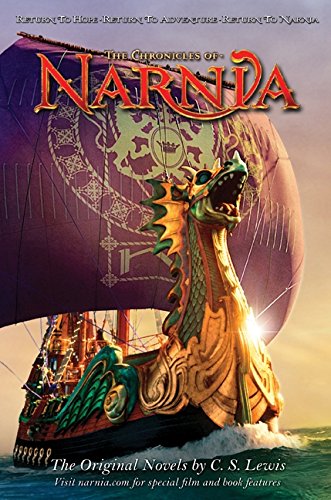
The Chronicles of Narnia
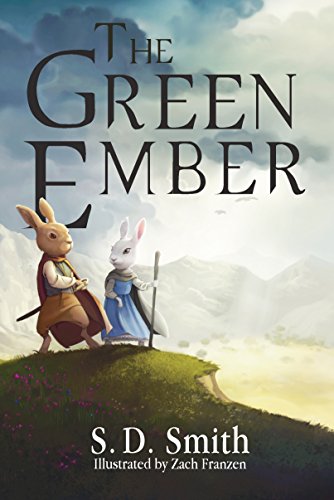
The Green Ember
Five Children and It
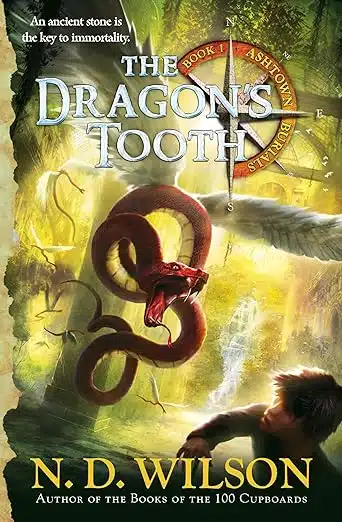
The Dragon’s Tooth (Ashtown Burials #1)
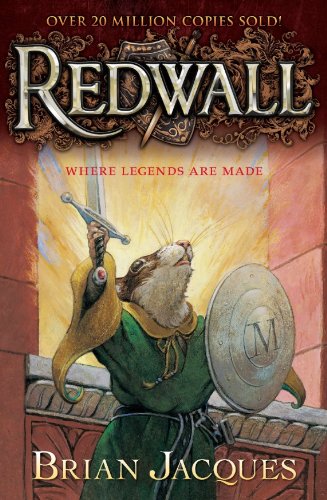
Redwall
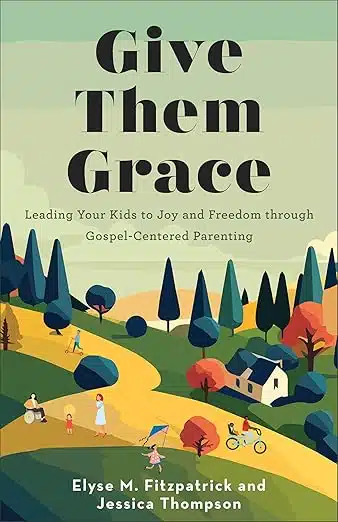
Give Them Grace: Dazzling Your Kids with the Love of Jesus
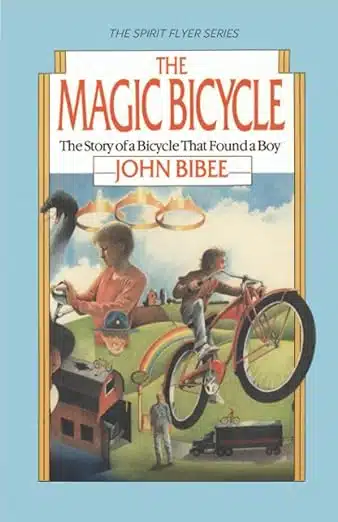
The Magic Bicycle (Spirit Flyer)
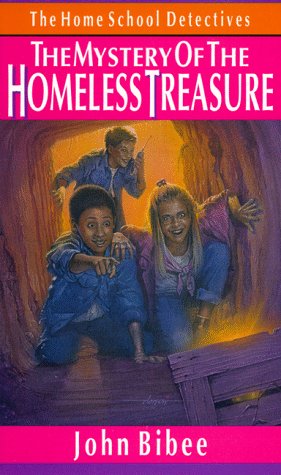
The Mystery of the Homeless Treasure (Home School Detectives)
The Voyage of the Dawn Treader
Mysteries of Life in Children’s Literature
Caught Up in a Story: Fostering a Storyformed Life of Great Books & Imagination with Your Children
The Secret Garden
On the Edge of the Dark Sea of Darkness
Honey for a Child’s Heart
100 Cupboards
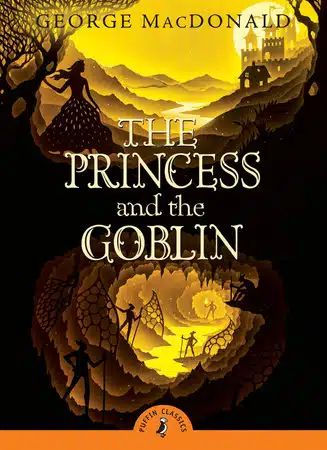
The Princess and the Goblin
The Light Princess
The Book of Dragons
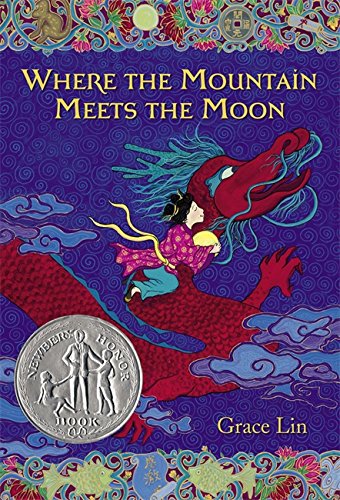
Where the Mountain Meets the Moon
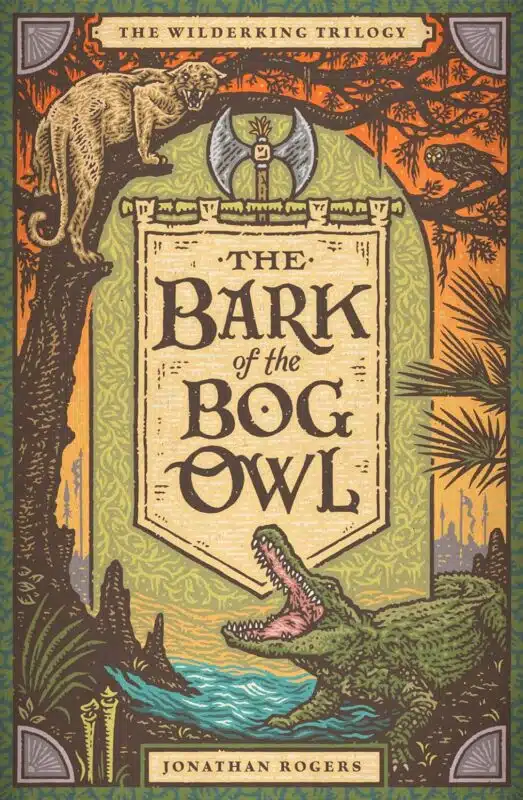
The Bark of the Bog Owl
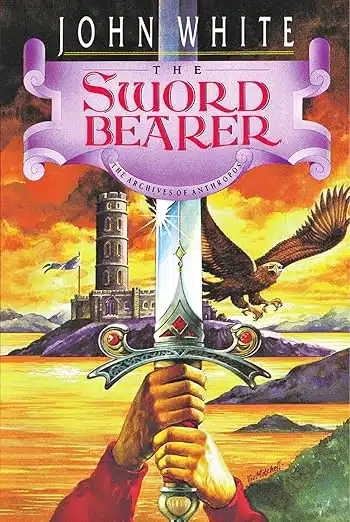
The Sword Bearer (Archives of Anthropos)
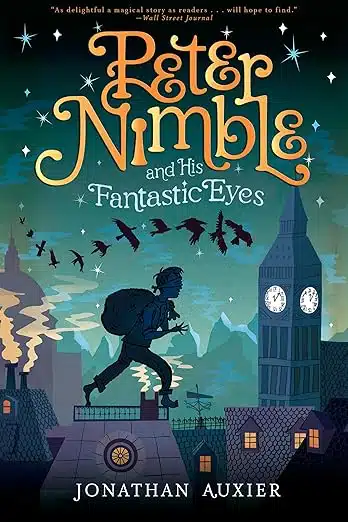
Peter Nimble and His Fantastic Eyes
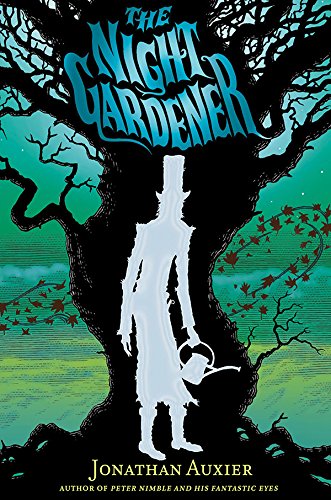
The Night Gardener
The Dark Hills Divide
The Circle
Hood (King Raven Trilogy)
Foundling (Monster Blood Tattoo, Book 1)
Till We Have Faces: A Myth Retold
Auralia’s Colors (The Auralia Thread Series #1)
The Man Who Was Thursday
Little Women

Links from today’s show:

65 Comments

  1. This goes along with what you are talking about. My daughter is 13 and anything I recommend to her she doesn’t want to read. She LOVES fantasy books but tends to be drawn towards dark books. I want her putting things that are pure, lovely, and of good report into her mind. At the library we even have a HUGE list of christian fiction and she wants nothing to do with it. How do I handle this? How do I guide her to books that are healthy for her to read?

    1. That’s a tough question, Christin. Do you do family read-alouds? You might start there. Often when you read the first in a compelling series, you’ll hook them on it and they’ll want to continue on their own. Or listening to it in the car (captive audience). If she doesn’t want to listen to you for recommendations, find someone else she trusts and see if they can speak into her reading life. Sometimes we, as parents, get the most push-back from our kids. I hope that helps (and sorry I didn’t see this sooner).

  2. I’d recommend the Journey Series by Aaron Becker as a fantasy option for younger children. It’s a trilogy of wordless picture books with gorgeous pictures. My kids are 2, 4, 6 and 8 and all love it.

  3. First time to comment. Been loving listening to this podcast! Currently I mostly read board books to my two year old as he’s my only one right now but I cannot wait to introduce my kids to fantasy! I am curious if you’ve read A Wrinkle in Time series by Madeline L’Engle? I think it’s a great fantasy series with a female protagonist!

    1. Alie, sorry I just now saw your post from May! Yes, I really enjoyed the whole Wrinkle in Time series when I was in middle-school, but I haven’t reread them as an adult. My oldest is just about ready for these, I think. :)

    1. I let my kids read them and they love them. But. I haven’t read them myself and definitely am not familiar enough with them to recommend them… so I’ll ask someone I trust instead! Let me see if Carolyn herself will pipe in here. :)

    2. Hi Karen,

      I’ve read all the Percy Jackson books, but I’ve held off on letting my kids read them for now. Riordan’s writing is very fun and engaging, Percy is a loyal friend, and there’s not much I’d object to in the first series (Percy Jackson and the Olympians). However, as a Christian parent, I’m a little concerned about handing my elementary-schoolers a book where every character is the product of adultery. Yes, obviously, that’s the only way to follow the Greek myths that are the basis for this series. But I felt like my kids would be able to mentally separate the story from the circumstances if we waited till middle-school. (This is just my personal conviction and not a judgement on anyone who makes a different choice for their family. You are the one who knows your kids and what they can handle best). There is monster-fighting, but it is never gory (the monsters disintegrate), but there may be some scary images, depending on your child’s temperament.

      I’m not as excited about the second series, Heroes of Olympus. I loved that there was no relationship stuff in the first series, but in the second series, basically every character ends up in a boyfriend/girlfriend relationship. Nothing inappropriate happens, but I did feel like relationships were a big focus of the book, including one character who is gay. These books are more intense, longer, and probably better for late middle school to high school, in my opinion.

      Riordan’s writing is page-turning, and I can’t imagine many kids who wouldn’t love it, so make sure if you introduce it, you are ready for them to finish the series!

      I hope that helps! :)

  4. Inspired by this podcast… I started reading aloud On the Edge of the Dark Sea of Darkness today for our Morning Time. My 13 year old had already started reading it a week ago, so she was especially delighted. My 11 year old and 8 year old loved it. And, I’m pretty sure my 16 year old was listing to the story MORE than doing his Algebra 2 lesson. ;) Thank you for the delightful fantasy book selections which we will add to our reading lists. Personally, I’m going to add Till We Have Faces to my Amazon cart! The Audible narration is tempting me!!

  5. This was amazing! I have a 12yo who has had some reading challenges. But she has always loved being read to. While we worked on reading skills, I filled her ears with audiobooks and read alouds! It worked because she is hooked on stories. But she likes fantasy and though I am a voracious reader, fantasy was never my thing. This is such a gift! Thank you!

    Also, your daughters at the end was like the best thing ever! Great job girls!

  6. We homeschool using Sonlight curriculum, which I love. We read aloud every day, my son reads on his own every day. There is more reading done for history non-fiction, as well. We are reading most of the day.

    This is fantastic, and I see that some of the books in our curriculum have shown up on the new book list. However….There is really no room for all these wonderful fantasy books in such a curriculum.

    I would love to add these in, but that’s going to mean either dropping some of the school read-alouds, or adding fantasy books on top. I may go completely hoarse if I did that. :) Any suggestions?

  7. I loved listening to this episode! I appreciate it so much because I have had such a hard time finding fantasy that I felt comfortable having my kids read, beyond Narnia, Redwall, and a few others. It’s impossible to just go to the library and pick up something unless I’ve heard a recommendation, you know? One author that we love is Brandon Mull and we especially love his Fablehaven series. Have you heard of or read that? We read or listen to all of the time.

  8. Hello, Mrs. Mackensie, and Mrs. Leiloglou,

    I am a 22 year old Christian young lady, and I have a few thoughts regarding this podcast, and the comments after it. I am not trying to be discouraging, or judgemental, but I would like to explain why I think that fantasy is an entirely unacceptable genre for the children of Christian parents to read. Firstly though, I would like to say that I am addressing Christians in this comment; the points I will be bringing forward for consideration will hold weight principally with Christians, and not unbelievers, because they are rooted in a sincere desire to do that which is pleasing to the Lord, and to base all of our actions and beliefs on the principles given in the Bible. I would like to explain about my background, so whoever reads this will understand where I am coming from on this issue.

    I have been homeschooled my whole life, and my mother has used the Charlotte Mason method. In some ways I was self educated, as I read about everything I could get my hands on, and this is how I learned most of what I know. I don’t know exactly how old I was when Mama first read me The Lion, the Witch, and the Wardrobe, but I think I was about five. By the time I was nine, I had not only read all the Chronicles of Narnia several times, but also read an unabridged version of The Hobbit, plus, of course, many of the old fairy tales that most people know. Like many other children, once I was introduced to the amazing world of fantasy, I did not want to read anything else. By the time I was 11, I had also read the Pyrdain Chronicles, and The Fellowship of the Ring, and wanted to read the other two Lord of the Rings books, but was not allowed until I was about 13. I re-read The Fellowship of the Ring when I was 18, and after each chapter, I wrote a synopsis, and my thoughts regarding what I had just read, comparing elements of the story to various principles in Scripture, and showing how the good (or bad) example can apply to our lives.

    I had quite the imagination, and made up fantasy stories without end, which seemed very real to me (and my sister, who was occasionally treated to a peak at my inner world, has told me that they were real to her as well). In fact, my fantasies became more real to me than the world in which I lived. My family became less important to me than figuring out how one of my highly colored characters would escape from the toils that ensnared him, or how the beautiful heroine (based on my own wonderful self) would rescue the hero of the story. In the meantime, I snapped at my siblings because they disturbed my life, and wished I could be some place where my enemies would at least have the goodness to take horrid shapes so I would know how to deal with them. I would console myself at night for the trials of the day by living out my stories in my bed until I fell asleep.

    Thankfully, my parents did not allow me free rein on which books I would read or not read. There were certain ones which I always knew were 100% off limits, and now I am so thankful that they were. However, they did not see anything particularly concerning about the “clean fantasy” they were allowing me to read. They did not realize that many of my attitude problems had their root in the selfish “secret world” in which I lived and moved and had my being. Mama did know that it was terribly hard to get me to read anything that was not fantasy until I was 11, after which I finally discovered that some other, more instructive, books were actually somewhat interesting after all, and began learning more history, and other useful knowledge. As I grew older, my parents became more and more reluctant to let me read fantasy, but, as I triumphantly thought, nobody could take the stories out of my mind, or keep me from making up my own. In fact, though I had only read it once, I had the first several pages of The Two Towers memorized, and had made up volumes of other stories.

    But while I was enjoying my fantasy world, my parents were slowly becoming more and more uncomfortable with this genre of literature. And then they read an article which opened their eyes to the not-so-secret pagan elements intermixed in The Chronicles of Narnia- the one fantasy series that most Christians accept without question as being a perfectly acceptable allegory. (Basically, there are two major problems with this series: the inclusion of pagan Greek gods and mythological creatures, being portrayed in a good light; and the teaching that all roads lead to Heaven. I have posted a review of the Narnia books on my blog, and would encourage anyone who reads this comment to please check it out in order to understand my position regarding these books. (
    ))

    After consideration, research and prayer, they approached me and told me that they were no longer comfortable with these books, and wanted me to read the article, make some judgements, and get rid of the books. This was when I was about 16. Initially, I was upset and disagreed with my parents when they explained their views, but in spite of what I wanted to believe, some rather odd things I had noticed about the books began falling into place. After some time and research, much to my dismay, I realized that I was beginning to agree with them; at least, as regarded The Chronicles of Narnia. Please note: I did not want to agree with them. I used every argument, both to myself and with them, trying to prove that the Chronicles were a Christian allegory; that it was perfectly acceptable to read them, as even Jesus taught in parables; there were strange creatures in the Bible; important principles were taught through these books, etc. But in spite of my own arguments, I began to feel convicted about reading these books. It was not my parents or that article that convinced me; it was the Holy Spirit making me more and more uncomfortable with C. S. Lewis’ books.
    But I thought, “Well, at least I can read some books that are fantasy, but don’t claim to be Scriptural allegories.” But, by this time, my parents did not want me or any of my siblings reading fantasy books. For years the struggle went on in my own heart. I was not rebelling against my parents regarding this, nor was I sneaking in opportunities of reading of these books; I simply did not agree with their position, and was asking God to show me what was the right view. I had come to my own conclusions already, but slowly, the Lord began to show me And, despite my long resistance, I have now come to the conclusion that fantasy books, as a whole, are not good for children, especially children of Christian parents, to read. This decision is not because my parents forced me to conform with their views; it is because the Lord would not let me read these books with a clear conscience, and has shown me many problems with this whole genre. Although I still view Tolkien as a genius, and Lewis as influential, I cannot in good conscience recommend their books to anyone.

    So now, here are the basic reasons I think children should
    read fantasy:
    Fantasy books fill a child’s head with unrealistic ideas, and create a world which is not real, yet can quickly become more important to them than the real world in which they live. One sign of this is that many children, after reading fantasy, want to read nothing else, and read the books over and over, living again in the lives of the characters. Also, reading this kind of book has caused problems for many children, giving them nightmares, and creating a fear and undue sense of supernatural evil. I was not one of these children. Fantasy never scared me, except in the way that is kind of fun. But I have met adults who were frightened as children, and my own sister used to have serious issues with nightmares and sleepless, terrifying nights; due to an undue sense of supernatural evil which had been kindled and fostered by fantasy books.
    After beginning to read fantasy, “living books” and other realistic books become boring and flat. They want to read nothing but fantasy, because only fantasy gives them that amazing “high” time, when they forget all the world, and remember only the story. (Remember, I speak both from observation and personal experience.)
    As for fantasy books teaching principles that a child would otherwise have difficulty grasping, such as sin being like Eustace’s dragon skin, remember that children do not usually pick up on the MORAL nearly as much as the STORY. The impossibility of removing our sins can be shown in far more realistic and clear ways. For example, a Biblical portrayal of sin is found in the frequent mention of leprosy. Leprosy represents sin as perhaps nothing else can. It is far more loathsome than the worst dragon, and it is REAL. It is incurable; the leper has no more power to cleanse himself from leprosy than Eustace had to remove his dragon scales; less in fact. When using this as an example, the moral will not be lost in the intriguing story of an exciting quest to the farthest boundaries of a fictional world. In the Old Testament we find the description of leprosy, the laws regarding lepers, and several stories involving lepers (Naaman, the lepers who found the deserted Assyrian camp). In the New Testament, we find that lepers flocked to Jesus, and He was the only One who could heal them. We find that He was even gracious and powerful enough to touch a leper, without fear of catching the horrible disease, and that at His mighty word, the rotted flesh became whole, the living death departed, and the healed man could return to his home, family, and the fellowship of other men. Is not this a better example than the impossible scenario of a boy being transformed into a dragon by stealing a bracelet, and sleeping in the dragon’s lair? As for these books teaching about evil- the Bible says to be “wise unto that which is good, and simple concerning evil.” We do not need to teach children more about evil than what is taught in the Bible. They will have to grow up in a sinful, evil-saturated world; why would we teach them about it, especially in forms in which it will never confront them? It is far more important to teach them the Bible, and as we expound it to them, they will be fully equipped to combat evil when they encounter it.
    Trying to teach important Biblical truths through a fantastical story tends to cheapen, or lessen the apparent value of the truth. There is a difference between a real allegory, and a fantastic story with some elements borrowed from Christianity. A real allegory takes its interest from the truth it is presenting; in most, if not all fantasy, on the other hand, the interest is found in the story, with some elements of truth added simply to balance the story. Just as a ship with an oversized sail will be unstable, so a story with no elements of truth or reality will not be a well written story, and will not be as interesting as a story that borrows some common themes. It is in our makeup to appreciate, to a certain extent, sacrificial love, devotion, and courage. If these elements are lacking, a story will seem incomplete, therefore people will not read it, and it will not sell. On the other hand, simply because a story has these elements does not mean that it is a good story. It can have these elements, but if it is foundationally unsound then it is of no real value, and can do damage rather than good.
    This point maybe should have been first: We have a limited amount of time on this earth, and there are SO MANY books we can read, people we can bless, businesses we can build, discoveries we can make, meals we need to cook, chores we need to do- do we really have time to spend learning about a fictitious world peopled by anthropomorphic animals, fictional creatures, or people placed in scenarios which will never occur?
    From an educational point of view, this genre is not very helpful. Now, I know this may seem to be rather a shocking statement, but I think if you do some serious thinking, and some research, you will understand why I said this. Think about it this way: Fantasy books do not teach about real HISTORY, real GEOGRAPHY, real PEOPLE GROUPS, real SCIENCE (laws of nature), or real LANGUAGES. So, practically speaking, they have little or no value as regards history, geography, social studies, science, or language (except in the case of very well written books, (such as Tolkien’s books), when they provide examples of highly skilled English literature. More about that a little further down.) We, and especially when we are children, do not naturally want what is best for us. (For example, how many children do you know who would rather eat green beans, or salad, or eggs, than lollipops or cake or ice cream?) Our natural tendency is to want fast paced, highly exciting books that completely absorb us, and create an amazing world that we can enter into whenever we pick up that book. This tends to make us want to push aside other, more beneficial books because they are not as interesting when compared with the more exciting fantasy stories. An interesting point to note, is that fantasy/ science fiction is currently (and has been for some time) the most popular genre of literature in America. Our education rate and moral tone are also at the lowest ebb ever. Could there be a connection? If these books are as good as many people consider them, and as I used to consider them, would they not rather tend to improve the moral and educational tone of the country that loves them so much?
    Even if these books were highly educational, this would not be a good enough reason to give them to our children. The dangers outweigh the benefits. As you mentioned in the podcast, stories are powerful tools, as the reader, especially a young reader, enters into the story, and feels that they are living through the characters. This genre is especially powerful, and for that reason, they can be especially dangerous. A child may forget facts, dates, and things you have tried to teach them, but rarely will they forget a powerful story. The more powerful the story, the more careful you have to be that it is a pure one.

    Now, regarding the literary value of fantasy: I firmly believe that some, or even many of the science fiction/ fantasy writers were geniuses, but just because a person is a genius does not mean we should expose our children to their teachings, fed in a highly appealing story that will remain firmly embedded in their memories for the rest of their lives. Remember too, the Devil himself is a genius at presenting his lies, with a strong admixture of truth, in a highly palatable form. I am not trying to imply that these authors were demon possessed, but just reminding us that simply because the author is “a genius” is not necessarily a good reason to read his books.
    I would also like to point out that there is a difference between pure fantasy, and folk tales, such as King Arthur and the Knights of the Round Table. These stories can be important for a child to have a well rounded education, but they should not read them until they are older (mid to late teens, in my opinion) and well grounded in their understanding of life, the Bible, and a Christian worldview.
    Jesus taught truths in parables, but these were real-life scenarios- not wild quests to the ends of a fictitious and mystical world, or defeating hosts of evil to gain the throne of a kingdom; nor do ANY of the parables or visions in the Bible include magic in any form. In fact, the only times magic is mentioned in the Bible is in a very negative light. The Israelites were commanded to put wizards and witches to death; Baalam was judged of God, and killed; and converted magicians brought their books of magic and burned them when they became Christians (Acts 19:19), to name a few examples. This last reference in Acts is especially interesting, as it shows that practicing magic was immediately considered incompatible with Christianity, and the former sorcerers knew that they had to make a radical change in their lives, even going to the extent of burning their books, which were hand copied, and probably rare and extremely expensive.

    I did not mean for this comment to grow so long… It has turned into an article, and I hope it does not sound judgemental and unloving. My goal in writing and sharing all this is that someone who reads it may be provoked to study the Scriptures, and seek the Lord regarding the choice of books for their children. Mrs. Mackenzie, and Mrs. Leiloglou, I appreciate your love for other homeschooling Christian mothers, and the time you have put into this podcast and your websites. But please, I would encourage you to seek the Lord on this matter, and not simply accept a book because it is interesting, and you can use it as a springboard to teach spiritual truths. There are SO MANY other books that teach these truths more clearly, and convey much more useful information at the same time, without stocking a child’s mind with fantastic creatures, impossible adventures, and frightening episodes. Some examples of books that are interesting, and stretch a child’s horizons while teaching useful knowledge in a good way, are books by G. A. Henty, R. M. Ballantyne, and Charlotte M. Yonge; and biographies/ autobiographies focusing on men and women who made discoveries, lived excellent lives, or were important in history.
    Please, consider your positions again, in great prayer, and remember that you are in a position where other mothers are watching you, and taking suggestions from you. It is a position of great responsibility, and I know you would readily agree that you need the Lord’s help to hold this position in a way that is glorifying to Him. May the Lord bless you both, and help you to serve Him.

    1. Dear Alayna,
      I respect your position and really appreciate the spirit of your reply, especially that you see fantasy as a danger for Christians. I just wanted to point out that when Christian parents read fantasy to their children, they do not treat it as an inspired word but very much a fairy tale (imperfect, with flaws). We take from it what is good and leave behind what is bad. Perhaps fantasy is best read aloud to young children, so that parents can discuss or explain things and shed the light of the gospel on the story. I would also like to point out that any type of book or story or indeed reading itself can become an idol. You can read biographies and idolise the people, you can read factual books and become a materialist. The danger is not fantasy, the danger is anything in the world – be it fantasy, history, science, homeschooling, business, or anything else taking the place of Jesus Christ in our lives.

      1. Hi, Alina,
        Thank you for your thoughtful and understanding response. I understand that no one here is treating fantasy as an inspired word, and I also understand that you all know there are issues in these books which need to be explained as you go. I know that a child’s mind is often strengthened, and their beliefs solidified in discussions; and that often they come to believe the truth more strongly after doubts have been met and defeated, but the problem with fantasy is that it is such a powerfully gripping genre that even if you try to take the good, and leave the bad, they will never forget what they have read, and it can begin to lead them down the wrong road. At best, it is a powerful distraction from real life, and at worst it can undermine their faith. There are so many realistic, well-written, and interesting books to teach the Gospel; why do we need to call in the aid of elves, goblins, centaurs, Hobbits, dwarfs, fauns, and talking animals? Why should we turn from the masses of good books written by Christians of the past, to read those written by fantastical geniuses of the present in hopes of finding some truth presented in a new, more interesting way? We want children to believe the truth for the sake of the truth; not for the sugar coating of an interesting story.
        I fully agree with you that reading- even the reading of good books- can easily become an idol, like anything else in the world. However, reading solid, realistic, books is less likely to become an all-absorbing passion than reading of gripping fantasy. Children also learn more from more realistic examples than they do from scenarios which they know will never face them; so the good is more likely to remain in their minds, and the bad will be less intriguing.
        Also, I would like to say that the argument that anything can be an idol does not give us licence to read those books which are more likely to become idols, but rather to avoid them more carefully because we understand the danger from our own sinful hearts. We pray “Lead us not into temptation” and then sometimes put ourselves directly in the way of temptation, and expect to stand against it. I speak from personal experience, and I am fully convinced that this is the experience of many other Christians.
        Thank you for your response, and for the kind, Christian spirit you have written in. May the Lord bless you!

        1. Dear Alayna,
          Thank you for your response. I think the reason that we go to stories is because God created us to be creatures with imaginations. This is good. Even a very young child will sit and talk to their teddy bears and dolls. They imagine that they talk back to them and the conversations can be going on for ages. There are “baddies” in their games and the good always come on top. This is so natural for children. That’s why fairy tales and fantasies are naturally attractive to them and can be such good tools for conveying truths. I would also argue that in most cases it is not the story that stays with them and most of the time, as they mature they put away childish things, yet the morals of the stories stay with them for life. My parents told me hundreds of fairy tales, I could maybe repeat 5 of them, but I do remember the strong messages confirming the one truth – evil will be defeated, good will win. Also, you said in your first comment that no child will choose the greens over sweets. That may be true, but I do serve puddings to my family, as well as greens for a main course. Balance is so important. I am far from giving my children the diet of 100% fantasy but it increases their trust and gives them wholesome childhood when they are able to be serious and laugh and be silly.
          There is also a danger that many Christian parents encountered, that is their children found their faith too restricting and found themseves snared into the beauty of fantasy when they should have been growing out of it.
          Finally, the Bible talks about beasts with seven heads rising out of the sea, there is also a talking donkey. I think God used these symbols to teach us greater truths. He knew too that we will remember better.
          Please, do have the last word on the subject. God bless you.

          1. Hi, Alina,
            The Lord certainly did create us with imaginations, and it is delightful to see a child with a good imagination. One of my younger sisters is very imaginative with her dolls and our toy animals and people, and it is a pleasure to listen to her narration of their lives. However, a child does not need fantasy to develop his imagination. Wouldn’t it be better for a nine-year-old to be pretending to be Daniel Boone, leading settlers into Kentucky, or rescuing his daughter from the Indians, than for him to be pretending to be a mythical king, conquering fantastic monsters?
            I agree that we naturally learn best through stories, which is why our Lord Himself used parables for teaching. However, you will notice that whenever He wanted to convey a clear truth, He used a simple story that anyone could understand. Not one parable involves the use of magic, or includes strange creatures. They are all either real-life examples, or very realistic stories.
            I am sure that many children are hooked by fantasy after having been raised in “restricted” homes, but if they have a sound foundation of Biblical truth in their hearts, this will not happen. Also, to clarify, I am primarily speaking of longer fantasy works, in the class of The Chronicles of Narnia, The Lord of the Rings, Redwall, Harry Potter, etc. Short fairy tales are a slightly different class. They share some of the same root problems with major fantasy books, but they are not as dangerous because they are outgrown fairly quickly. The more complicated and interesting works are not outgrown, and instead grow with us; therefore they are the more dangerous.
            A child does not need to be exposed to temptation in order to combat it. We do not let our children drink liquor so that they will realize that it is not good (to say the least). Instead, we warn them against the dangers of alcoholism; teach what the Bible says about it, and teach them that the best way to avoid ever becoming addicted to it is to never take the first sip. It is the same way with fantasy stories. A child does not need to experience fantasy to realize that he does not need it in his life. The powerful spell of a well-written story, coming at a young age when his convictions are not yet developed, is usually too much to resist, but when he is older and settled in his beliefs, he will see the fundamental unsoundness and hollowness of these stories, and know to avoid them, without ever needing to read them. And even if he is not settled when he first begins to deal with this issue- cannot we trust God to keep him? Should we, with all good intentions, give our children a taste for books we really understand that they should avoid, rather than simply teaching them what the Bible says, living it before them, and giving them books which uphold the same principles?
            I appreciate what you said about balance. We certainly do need balance, but God is the one Who has designed that balance, and He never said anything about magic being a good part of it. I know no one here is promoting the practice of magic, but magic is an essential part of fantasy stories. In every reference to magic in the Bible, it is referred to negatively, and is portrayed as being incompatible with knowing God, so it must not be a necessary element in a balanced reading diet. I know that you are not trying to teach your children that magic is a good thing; I understand that “magic” is in many cases just the term used for supernatural power, often representative of God’s power; but since it is an essential element in all fantasy stories, they will pick up on it. This puts the parent in a bit of a dilemma: Either, ignore the fact that the practice of magic is incompatible with Christianity, and let them figure that out for themselves, or teach them that “black” magic is bad, and “white” magic is good. Both approaches create confusion in a child’s mind, and likely, still leave them wishing they had magical powers.
            The Bible does include descriptions of some pretty strange creatures, with multiple heads and horns; however, all of these creatures are found either in descriptions of heavenly creatures, or are a prophetic figurative description of a king or empire. In no case is there an example of a detailed story set in a different world, filled with strange creatures, new laws of nature, and magical powers. And, as is shown in the story of Balaam’s donkey, God can open the mouth of an animal, and use it to speak His words, if He chooses. However, this does not give us licence to give our children books which portray talking animals as a normal part of life. The Lord can certainly teach greater truths using these rather strange pictures, but it would take great discernment and wisdom for a man to do the same, and looking at the fruit produced by these books on society, I would be hesitant to say that the authors had that wisdom.

            I am not trying to be argumentative, and I know that for quite a few years now the church has largely accepted fantasy books as good literature. I know that many sincere people, who truly want to serve the Lord, read and enjoy these books, and I realize that much of what I have said may seem extreme, almost shocking. But we want to rise higher, and grow closer in our walk with the Lord, and this genre of literature does not help us in this goal. I am not trying to force this conviction down anyone’s throat, but I simply want to encourage us to seek the Lord in this matter, and not let our personal enjoyment for an interesting story stand in the way of our growth.
            Thank you again for your patient discussion with me.
            Love in Christ,
            Alayna

    2. Alayna,

      I just saw your comment for the first time today. Thank you for taking the time to express your experience and your concerns. I agree that fantasy books could be a negative influence on a person (as they were in your case), but so could biographies, sports, friends, music or food. These things are not evil, but they can be used for evil or for good in any individual’s life.

      I can only speak from my own experience, but the moments I remember vividly from my own childhood reading fantasy books are the profoundly spiritual ones that spoke to my soul. Those glimpses remain in my memory while the rest of the story fades.

      Every parent must consider the things we allow into our child’s life, but we all must recognize that the Lord is in control to use all things according to His will. No amount of shielding will keep sin from our children’s hearts, and nothing we can do will remove it either. We are all dependent on the Lord’s grace.

      Carolyn

  9. What a great episode! My Amazon wishlist is now bursting at the seams. :-) Also, tell your girls that they did a GREAT job on the outro. It really brought a smile to my face!

  10. I approve of all the books listed! I’ve read lots of those aloud. If you like N.D. Wilson, try Sarah Prineas’s Magic Thief series. Delightful London-like setting, the heroes are a grumpy old man and a savvy Oliver Twist-like kid (more like an Artful Dodger, honestly), and by the third book, there’s dragons. My kids loved them.

  11. Thank you Sarah for all of your podcasts. It has inspired us to read aloud everyday. Our family listened to the Wingfeather Series on Audible. The narrator for the 1st and 2nd book has a wonderful english accent. Excellent narrator. The 3rd and 4th books are narrated by Andrew Peterson.
    We absolutely loved this series!

    1. I had not actually realized books 2-4 were on Audible! I had been searching “Wingfeather Saga” and only book one came up. You have to type in the individual book titles to find the others. I had some extra credits, so I just snatched them up to enjoy again (can’t wait to hear Andrew narrate them!)

      1. One of my favorite RAR podcasts by far! Fantasy is a big genre in our family of six as well. So many great suggestions and beautiful quotes. Of course AP’s music has been a part of my life long before his books, but he is an amazing storyteller, lyrically and prose alike. If I were stuck on a desert island and could only listen to one musical artist, it would be him! So I love hearing you say that about his books! Please, Andrew, would love to hear you on RAR!

        1. I so agree with you about Andrew’s music! He’s really the only musician I don’t get tired of! I think Sarah said he is going to do something on RAR (not sure if it’s on the podcast or an author event).

  12. This podcast is easily in my Top 5 faves of the RAR!!! A few of my kids adore fantasy, but I typically don’t, so the list at the end was fan-ta-bu-lous!!! I have listened to the show twice now, because I wanted my 16 and 15 year old daughters to listen!!

  13. I just teared hearing your daughters at the end. They did a great job!
    I’m also not a fan of fantasy so I appreciate the suggestions.
    Is The Wizard of Oz considered fantasy?

    1. Yes, The Wizard of Oz is fantasy, and the book is much less scary than the movie! The audio version read by Anne Hathaway is wonderful. It’s a good read-aloud for the elementary-age crowd on up. :)

      1. We just finished it & we loved it so maybe I’ll give more fantasy a chance. The kindle + audio version were free just a few weeks ago when I got it from Amazon. The Barnes and Noble classic edition for children is a beautiful hardcover. The cover shows the movie but the original color illustrations are inside.

          1. My six year old daughter has read and listened to many of the books in the Wizard of Oz series and it is her favorite! She also loves the MaryPoppins books, although I’m not sure those are fantasy or not!

    2. So beautifully expressed! Of course, it brought tears to my eyes, feeling your love and pain and loss. But for those of us who have nurtured, loved and helped our greyhounds pass on, we feel what you are going through. To be chosen by these dogs to be trusted and allowed into their lives makes us very special indeed.

  14. G’day from Australia,

    I LOVE this podcast. The first one (who can’t love Andrew Pudewa), others in between, this one was also brilliant and so inspiring (got to go buy the Green Ember now).

    I have learnt so much and been affirmed so much in our education choices. I’m recommending this podcast to all my friends and just yesterday met up with one friend who excitedly told me about all the latest books they have been reading as a family. And her youngest boy? He now says he wants to grow up to be a “reader”! (God bless him, he is so cute). Keep up the fantastic work!!

  15. Carolyn and Sarah Mackenzie, this was such a great podcast! I think a lot of parents probably are as hesitant to get into fantasy books as they are about movies and cartoons. There really needs to be a lot of prescreening if parents (and even teachers) are going to be responsible for the worldview these different mediums support.

    Carolyn – I loved that you pointed out not to avoid books necessarily, but to postpone them. I find peers in my generation and sometimes older having difficulty discussing the points of belief conflicts because they have not had practice in doing this. If our goal as parents is to raise adults, our children need to learn how to tell the difference between truth and non-truth, then articulate their apprehensions and disagreements with the non-truths in a pleasant and edifying way.

    This is my issue with relativism being taught in the classroom; students learn to say “this is true for me, that’s true for you” then they mentally check out and don’t actually pursue truth. Reading fiction at an older age that stands in opposition to one’s own beliefs helps teens deal with cognitive dissonance and defend the truth!

    I also love that you brought up The Christ-Haunted Hindu. Fiction totally allows children and teenagers all over the world to share and to learn about ideas previously inaccessible to them.

    In general, as a parent, teacher and writer, this was a super encouraging podcast!

    1. Vanessa, that worldview formation and interaction with ideas that might conflict with our own is such a great reason to do many of these kinds of books as read-alouds (or audiobooks). It gives us such a great opportunity to stop and discuss the big ideas with our kids and hear their thoughts. I love how Sarah has been such a motivator for all of us to read aloud more with our children! :)

  16. I loved this episode, in part because, like you, Sarah, fantasy is not my genre of choice, and so I’d rather not spend all my time pre-reading books I have little interest in. Carolyn was a wealth of information, and she totally convinced me that fantasy has its place in literature! I was so grateful for all the titles she rattled off at the end. I still have yet to read anything by E. Nesbit, but after listening to the podcast, I put one of her books on hold at the library. I think it’s going to be our next readaloud! Thanks, Sarah and Carolyn for a truly fantastic (and helpful!) episode.

  17. I loved this episode! I enjoy reading fantasy and I am exited to read-aloud some of these booking to my children that I am unfamiliar with. Sarah I really enjoyed hearing your older daughters help with the end of the podcast. Your oldest sounds a bit like you. My children often listen to the podcast with me.

  18. What a fantastic episode! Thank you so much for the conversation and for the book list. Finding fantasy books for kids that are both healing and hopeful can be a great challenge, but this just opened a whole world for parents. Thanks you!

  19. I loved this episode!! As a devoted fantasy lover, I was thrilled that the podcast has such a plethora of recommendations, and such a good mix of beloved favorites, books I’ve been meaning to read and ones that I had never heard of!

    I actually teared up Carolyn was talking about the gospel as the healing story. Oh, such good truth!I will definitely be heading to Carolyn’s blog!

    1. Hi Valerie, if you want my opinion on Harry Potter, Sarah Clarkson expresses it perfectly (and more eloquently than I could) in the last chapter of her book, Caught Up in a Story, which we mentioned in the podcast. Hope that helps! If you’d like to talk more specifically about it, feel free to contact me on my website or Facebook page. :)

      1. What age do you suggest as the bottom threshold for Harry Potter? I am not opposed, just trying to introduce it at an appropriate time. Thanks for your insight!

    2. I’m quite sure Sarah Clarkson would approve of my copying that section from “Caught Up in a Story” here, so I’m going to go ahead and type it out for you below.

      from pages 124-125

      “Finally, though I am fully aware of the controversy surrounding the Harry Potter books, I feel I would be remiss if I did not mention a series of fantastical books that has profoundly shaped the imagination for a whole generation for children. Many children grew up with the Harry Potter series and discovered in them a story that gestured powerfully toward hope, love, and redemption. I read them as an adult, and found them rich in the kind of redemptive spiritual imagery I have described in this chapter. If I were asked to sum up the theme of the series in one sentience I would say this: love is stronger than death. From beginning to end, the stories are an affirmation that sacrificial love can overcome darkness, that love has a power greater than any evil and, in the end, will endure when the darkness fails. The last story in the series startled me with one of the most redemptive scenes of Christ-like love that I have read. The series deeply affirms loyalty, sacrifice, and faithfulness.

      This is certainly a set of books that parents will want to vet and I would recommend them for older children who have gained some discernment. The magical element that has caused such concern to many Christian parents is, I would argue, no different than that present in the fairy and folk tales passed own through history, and harmless to children whose outlook and appetites have been established by Scripture. Harry Potter magic is not what C.S. Lewis would call “invocational magic,” a supernatural power gained by calling upon (usually evil) spirits. Rather, it is ‘incantational magic,’ on the tradition of the old fairy tales where magic is a neutral force present in the imagined world much like electricity; an energy that can be used for evil or for good. While each family must decide for themselves, I would encourage Christian parents who have not yet researched these books to delves a little deeper, especially considering their cultural significance and the deep impact they have had on the imaginations of modern children.”

      1. Oh wonderful!!! I just finished reading “Caught up in a Story” too! Our family loves the Harry Potter books. Because they weren’t on the mentioned on the podcast I took that as possibly negative. So I am happy to hear you both only have positive things to say about the series!
        This was one of my favorite RAR podcasts so far!!! I don’t think I can wait another two weeks for another one ;)

        1. Hey Valerie, Harry Potter is it’s on can of worms. I figured that everyone already knew about Harry and either loved or hated him (and probably wouldn’t be convinced by me), so I didn’t need to bring him up. Though I did mention him in that quote from Elise Fitzgerald. ;)

      2. I read the Harry Potter series as an adult just a couple of years ago, and I am now 48. I have chosen to allow my kids to read them at age 16. It is definitely a personal choice. I am so happy to read Sarah Clarkson’s words, as I agree wholeheartedly. The story of redemption is so powerful in the story that I was completely overwhelmed when I read them.
        I am just sorry that I allowed some very popular voices to sway me into thinking that they were evil for so long. I can’t wait for each of my 5 younger children to be able to join their 5 older siblings and me in our HP discussions!!

        1. I agree completely! I too allowed popular opinion to sway me on this topic and, frankly, fear as well, as I had gotten into Wicca as a teen and was afraid of my daughter getting into that. However, a wise friend suggested I read them and then decide. So glad I did!

          1. I read the whole series and loved it at the time but Seriously would you allow your children to read a book of actual witch spells? There are REAL witch spells in Harry Potter and children have been possessed by demons from reading it! If that doesn’t scare the heck out of you what would? We need to protect our children from evil not stick our heads in the sand! The devil wants your children and it is a real battle.

  20. I can’t *wait* to listen this one. I love fantasy (and dystopian) fiction because of the amazing spiritual value you can understand as a reader through ‘other’ worlds. So many good books here I’ve never seen before, as well!
    Sarah M

    1. Sarah,
      You have to read (or listen) the Circle Series if you like fantasy and excitement! Don’t want to give anything away, but it used to be a trilogy until the latest book was released (about 6 years ago) and they will lead you through a story that will keep your attention!!
      Happy page turning! :)

  21. hi! great book list! i wish i could print just the list instead of the pictures of the books, but i wondered, which of those books would be great to supplement our middle ages unit for history? my kids are 9 and 11.

    1. Hi Brooke, I think the Redwall series might complement a history study of the Middle Ages. The characters are all animals, but the setting definitely has a medieval feel. Hope that helps.

      1. We recently finished up a wonderful (series) read aloud set in the Middle Ages called Crispin by Avi. It’s adventure, not fantasy but was perfect for my 8, 9 and 10 year old. (It was a bit much for my 7 year old wiggly boy). It’s beautifully written and spurred rich conversations about courage, freedom, sin and sacrifice.

  22. I haven’t had a chance to listen yet (napping baby won’t let me put him down), but I love that you’re addressing this! I’ll be honest, fantasy has been one of my favorite genres ever since my mom read Narnia to me as a child, and I’m so excited for when my son and any future siblings will be old enough to share that and The Hobbit and my other favorites with him! I’ve long felt that a lot of the overarching themes, especially the battles of good vs evil, mesh with Christian faith very well, and that it’s a shame that so many Christians frown upon them because there may happen to be magic or wizards. I did spot several favorites on the book list this week, and one that’s in my pile to read that I haven’t gotten to yet, and I’ll certainly look for the rest!

  23. This is an amazing book list! I have been so very inspired by you, Sarah! This is my first ever comment! ;) I am wondering if you or any of your readers have read The Kingdom of Wrenly series by Jordan Quinn. Would love to hear a legit review of these before we grab them from the library.

Leave a Reply

Your email address will not be published. Required fields are marked *