RAR #273: Imagining the Childhood of C.S. Lewis, with Judith McQuoid
Many of you will already know that I am a huge fan of The Chronicles of Narnia.
Today, I want to introduce my fellow Narnia lovers to a new book that jumped right off the shelf as soon as I saw it.
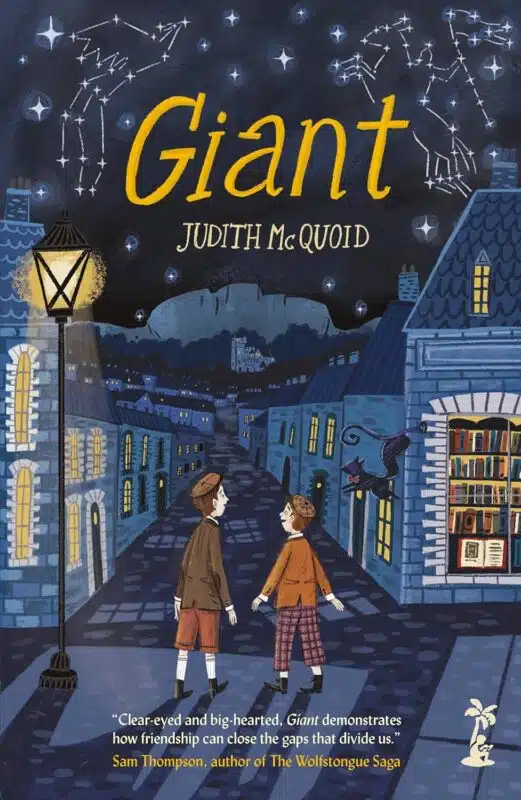
Giant is a middle-grade novel by debut author Judith McQuoid where we meet Davy, a fictional working class boy from East Belfast, Ireland who is sent to work in the wealthy Lewis household in 1908. There, he forges a friendship with Jacks–as C.S. Lewis was known to his friends and family–over books, stories, and building worlds of imagination and adventure.
Giant is a must-read for Narnia fans that adds a whole new depth of experience to C.S. Lewis’s world and will help you read The Lion, the Witch, and the Wardrobe in a fresh way. And today, I’m chatting with the author about what inspired her to write the book, how much of the story is fictionalized, and how the process of writing the book shaped her identity. And you’re going to love her Irish accent!
In this episode, you’ll hear:
- The way her dad’s love of Narnia and Lewis’s Belfast heritage inspired Judith to write this story
- How Judith started with a “skeleton” draft and added layers of detail and depth with revisions
- The faith that carried Judith through the ups and downs of creating Giant
Some links are affiliate links
Learn more about Judith McQuoid:
Books and Resources Mentioned in This Episode:


Sarah Mackenzie (00:14):
Welcome to the Read Aloud Revival. I'm your host, Sarah McKenzie, and this is the show that helps you make meaningful and lasting connections with your kids through books.
(00:25):
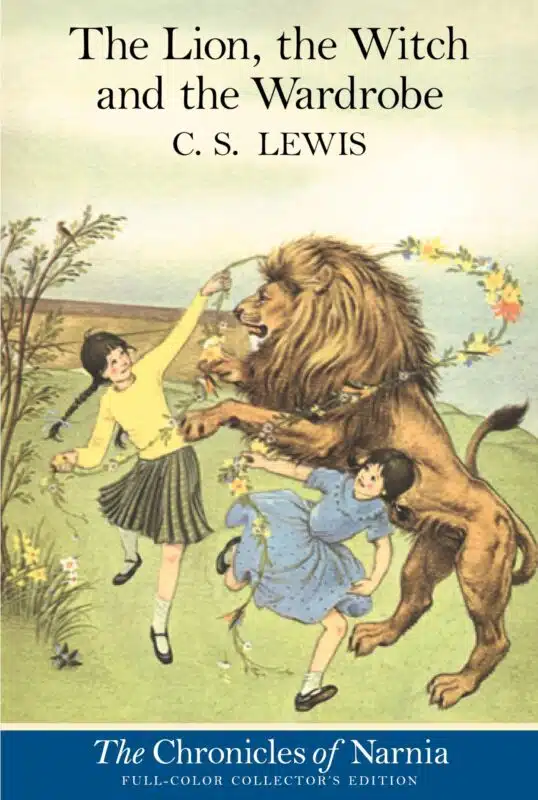
You may have heard me say before that I think The Lion, the Witch and the Wardrobe by C.S Lewis is one of the best, if not the actual best, middle grade novels ever written. I think it's deceptive in its simplicity. It's got really complex themes and it's absolutely stunning in its spellbinding characters, page-turning quality plot. The Lion, the Witch and the Wardrobe is only about 38,000 words, which might not mean anything to you if I just say that like that, but most middle grade novels are close to twice that length, and so 38,000 words is quite short actually for a children's novel. It's stunning to me because if you imagine yourself in Narnia, anyone who has read these books can instantly close their eyes and be there. The immersive storytelling that C.S Lewis was able to accomplish in 38,000 short words most novelists can only dream of doing in twice that length.
(01:35):
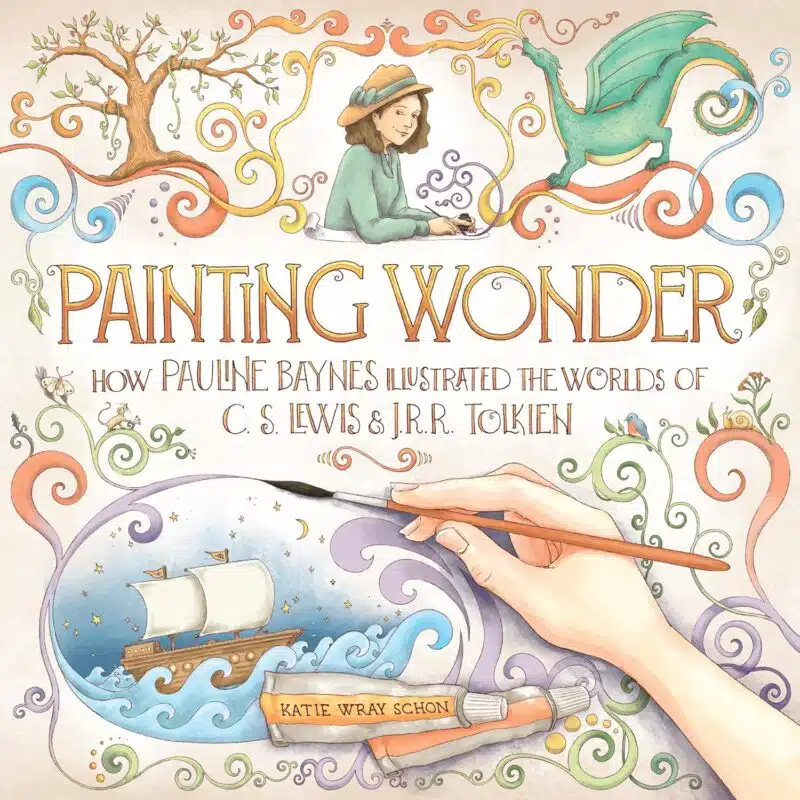
I love The Lion, the Witch, and the Wardrobe so much. We actually chose it here at RAR for the RAR Premium Family Book Club for fall, and we paired it with Katie Wray Schon's beautiful picture book biography about the illustrator of the Narnia series, Pauline Baynes. That picture book is called Painting Wonder. These two books; The Lion, the Witch, and the Wardrobe and Painting Wonder are just a really moving and transformative reading experience. They're delightful for your kids. They're really nourishing and invigorating for you as the one reading aloud.
(02:08):
We had so much fun putting together family book club guides and what we call rabbit trail guides for both of these books so that your family can enjoy them at a deeper level and can just connect in these lasting, meaningful ways. Those guides, of course, are inside RAR Premium, and you can grab them at rarpremium.com.
(02:30):
What I want to talk about today is tangential. It's similar, but it's another book for Narnia and C.S Lewis lovers. It is a brand new middle grade novel called Giant, written by the debut author Judith McQuoid. Now in this book we have Davy. He's a fictional character. He's a working-class boy living in East Belfast in 1908. He's sent to work at the wealthy Lewis household. That's where he meets Jacks, the name by which C.S Lewis was known to his friends and family as a child. Davy is captivated by Jacks. He's captivated by this new friend of his world of books and stories. Together the boys plunge into imagining and adventuring and Davy discovers his own artistic talent. Then Davy has offered a job at the shipyard and Jacks' mother falls gravely ill and their days of wonder and their days of make believe seem numbered. The question remains, will they lose their extraordinary shared world forever or not?
(03:41):
This is a children's novel. It's a middle grade novel, so usually best for ages eight to 12, but you know us around here, you can read it aloud to kids who are younger. You can hand it to your older kids. It's a fictionalized account of C.S Lewis's childhood, and I think it's an absolute must read for C.S Lewis fans and Narnia fans. I think it's going to just give extra depth and richness to your experience of reading the Narnia books, help you read The Lion, The Witch and the Wardrobe in a fresh way, see it with fresh eyes.
(04:12):
Also, hello, can you get a load of this cover? Are you kidding me? It is absolutely stunning. I wanted to snatch it off the shelves as soon as I saw the cover alone. Well, today I've got a treat for you because the author, Judith McQuoid is here to chat with me. We discuss where this book came from, how much of it is fictionalized, how much did she make up, how much did she not? She talks about what surprised her most and how writing this book really shaped her identity. Also, you're going to love her Irish accent. She's got this beautiful lilting accent that I could not get enough of. She's coming to us from Belfast, Ireland. Here is my conversation with Judith McQuoid.
(04:57):
Judith McQuoid. I am so delighted to have you here at Read Aloud Revival. Thank you so much for coming to chat with me.
Judith McQuoid (05:05):
Oh, thanks, Sarah. Thanks for having me.
Sarah Mackenzie (05:07):
Now, where do you live? Where are you coming to us from today?
Judith McQuoid (05:12):
I live in Ireland. I live in a tiny little village, it's about half an hour from the big city of Belfast though, so I can live deep in the countryside, but I can get into the city really quick. It's a nice combination.
Sarah Mackenzie (05:27):
I have never been to Ireland. It is on my not too far in the distant future list of places I want to go.
Judith McQuoid (05:33):
You have to come. Definitely.
Sarah Mackenzie (05:35):
I have been told my friends the beauty is unparalleled.
Judith McQuoid (05:39):
Yeah. It is amazing. Yeah. It's a great place to live.
Sarah Mackenzie (05:40):
How long have you lived there? Were you raised there?
Judith McQuoid (05:43):
Yeah. I was born here. My parents are from here and I lived here until I'm seven. That was the 1970s, and Northern Ireland was not a great place to live in the 1970s, so my parents decided they wanted to raise their kids somewhere safer, so we moved to Texas when I was seven.
Sarah Mackenzie (06:05):
Wow. What a change.
Judith McQuoid (06:06):
Yeah. The Panhandle, Texas. I lived there until I was 14, and then we moved to England and I came back here to go to university, but really only came back to live in 2011. We've been back home for 14 years. My husband is from here too.
Sarah Mackenzie (06:24):
So it's home. It's definitely home for you.
Judith McQuoid (06:26):
Yeah. It's definitely home.
Sarah Mackenzie (06:27):
Okay. Today I wanted to invite you on the show to talk about your new book, which I think our viewers and listeners will absolutely love, we are all about Narnia around here. Right now this fall we're especially diving into Narnia. A lot of our families in RAR Premium are reading the Narnia series, of course, starting with The Lion, The Witch, and the Wardrobe. We're reading Painting Wonder the picture book by Katie Wray Schon about the illustrator of those books. One of our team members came across your book, Giant, and I was like, oh my goodness. We both read it, we both loved it, and she said, "You've got to get Judith on the show." Jonathan Rogers also another favorite here at Read Aloud Revival was like, "Sarah, you've got to read this book."
(07:10):
So tell us about Giant, what is this book?
Judith McQuoid (07:13):
Yeah. Giant fills in the gap in C.S Lewis's life a little bit because a lot of his biographies focus on his Oxford years, and that's great, he loved Oxford and the Oxford was definitely a very important place for him, but the biographies skip over his Irishness because Jack Lewis was an Irishman. Not a lot is known about his early years in Belfast and the fact that he continued to come here throughout his life. My story, Giant, tells his story, but through the eyes of another Belfast child called Davy. I imagine this friendship between Davy who's a shipyard boy and Jack Lewis, who's this well-educated, unusual boy.
Sarah Mackenzie (08:12):
For listeners, this is a middle grade book, so it's a children's novel. You could read aloud with your kids, you could hand it to your kids to read on their own. It's such a delightful experience. I think you're right, we hear a lot about C.S Lewis's time in Oxford and as an adult, but the childhood that formed him and that formed his imagination is so compelling. When you were writing this book, Davy, is he a real person or did you make him up?
Judith McQuoid (08:41):
He's based on my grandfather. My dad was a bit of a Lewis nut really. When we lived in Amarillo, he began to read the Narnia stories to me when I was seven. It was just an amazing performance. My dad was a pastor and he did all the voices and it was just an incredible experience for me. He also used to say to me sometimes, don't you forget, he was a Belfast boy, meaning Jack Lewis, and my dad was a Belfast boy. When my dad passed away, I needed story to console myself. I needed his story, I needed my dad's story, so I started looking into his family history, but I also was playing around on the edges of Lewis's family history, and then I realized, oh my gosh, my dad's dad was born in the same part of Belfast, at about the same time, as Jack Lewis.
Sarah Mackenzie (09:41):
Wow.
Judith McQuoid (09:43):
Yeah. That just fired off my imagination. What if they met in the sweet shop on a Saturday morning? Right or they knew each other from the tram on a Thursday evening. Just the idea that these boys might've connected at some point really sparked my imagination,
Sarah Mackenzie (10:03):
Okay. Let's back up just a second because most of the people listening might go C.S Lewis, why are we calling him Jack? Why did he go by Jack, do you know?
Judith McQuoid (10:11):
Yeah. I do, yeah. C.S stands for Clive Staples, which is an unfortunate name, and when he was very little, so we're talking three or four years old, he decided that it was an unfortunate name, and that he wanted to be called Jack, we think because of a train driver.
Sarah Mackenzie (10:33):
Oh.
Judith McQuoid (10:34):
Yeah. He was on holiday in a little place about an hour from here called Castle Rock, which is at the sea, seaside little place, and I think they were able to see the train track from their bedroom window Clive Staples and Warnie, and the train driver apparently was called Jack, so he decided that he wanted to be called Jack. It started with Jacksey and then as he got a little bit older it changed to Jacks, and then by the time he was an adult, it was shortened down to Jack. People in Belfast, in the area that he's from, still insist that he's Jacks with an S on the end. That's why in the book he has to be Jacks.
Sarah Mackenzie (11:17):
Yes. When you were writing this, I'm just curious as to how much of it did you feel like you could take creative license and make-up and imagine what might fill in the gaps? How much did you decide you needed research for, or to know that this kind of thing happened to Jack?
Judith McQuoid (11:36):
Yeah. In Jack's life, there's very little creativity, to be honest. I've really stuck to his life and the details of his life. I had to do loads of research because he is really important to me, and I wanted to get that right. I felt like I had to get that right. Surprised by Joy gives us lots of details about his life here, and then his diaries and his letters, particularly his letters at Arthur Greaves, give us loads of details about his life here. Through all of those, it took me years. I was able to compile an idea of the places he used to go to, the places he used to love. As an Irish person with all of that knowledge in my head, as I read Narnia, I could see those places, those Irish places that he loved really, really informing those stories. So that's really fascinating.
Sarah Mackenzie (12:41):
Are there particular places that you can see or imagine and go, I can see that right there in that Narnia story, like the direct correlation?
Judith McQuoid (12:50):
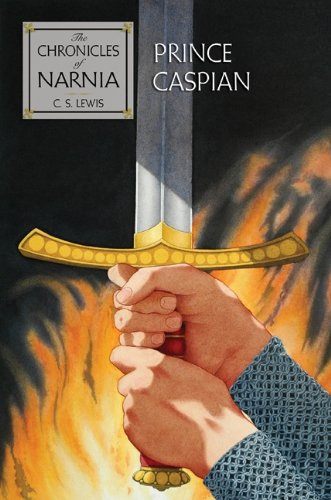
Yeah. When [inaudible 00:12:52] he did go with his mom, before she passed away, he went for a few holidays to what we call the North Coast, which is near where the [inaudible 00:13:02] is, people who I've heard that. There's a couple of amazing places up there that definitely informed his thinking about Narnia. One of them is Dunluce Castle, which is a castle from, I think it's from the 1200s. I mean, it's something ridiculous and it's a ruin, but it's right on the cliff edge so that part of it has fallen into the sea. So while it was still lived in, part of it fell into the sea. Cair Paravel, there's no way that that wasn't in his head whenever he was writing Cair Paravel, particularly in Prince Caspian when Cair Paravel itself is a ruin. Yeah. If you walk through Dunluce Castle and are reading Prince Caspian at the same time, that is an amazing experience because it's just magical the way that connects really.
Sarah Mackenzie (13:57):
So interesting. Okay. Your story, Giant, is told from Davy's perspective, who's a fictional character, so you were kind of making up this. One of the things that was so interesting to me as I was reading it, Jacks almost seemed like a mythological character to Davy. He almost seemed like this ... He was so different from Davy. Davy was so flummoxed by him, I guess, and so it was almost like he was this giant. We all have those when we're children where somebody else is so mysterious to us and we're like, wow, they're so different than I am. That's kind of what I was seeing, but I'm curious as to whether or not I was reading into something you were trying to do there or not, or maybe my own experience was coming in there and where the title came from for this story.
Judith McQuoid (14:46):
I think flummoxed is an amazing word. I love that word. I think that's a really good description of how Davy feels about Jacks. I think Davy kind of represents a lot of Belfast people, we're all a bit flummoxed by C.S Lewis and how this boy growing up into this literary giant with these incredible stories and his non-fiction. I think part of me wanted Davy to represent Belfast people's gratitude, but also their kind of flummoxed-ness, that kind of attitude towards him.
(15:34):
I love the title Giant. It wasn't the original title. For a while, it was called The Giant of Belfast, but we didn't want it restricted to geographical stuff so much. Definitely when I think of Giant, I think of C.S Lewis as being one of the giants in the story, definitely. There's also the reference to there's a giant that overlooks Belfast. There's a giant within the mountain that is supposed to have inspired Johnathan Swift to write Gulliver's Travels, so that's another giant. The shipyard here is a sort of giant, [inaudible 00:16:15]. Then of course there's the Irish myths about giants like Finn McCool. All of those kind of giants were mixed in there, so they [inaudible 00:16:26].
Sarah Mackenzie (16:25):
Oh, that would be such a great pairing. There are some Tommy DePaola picture books about Finn McCool. There's a couple I think too, maybe about Finn McCool. There's some Irish legends that are just delightful. Those would be fun to pair.
Judith McQuoid (16:37):
Yeah, they would. Yeah, definitely
Sarah Mackenzie (16:42):
You mentioned Gulliver's Travels, so there were a few books that show up pretty prominently in the story, which is my favorite, when there's a book in a book, all of my happy radars are going off as I am reading about a book within a book. Tell me, are those books that you know that were a part of Jacks's childhood or were you imagining that, or how did you choose them?
Judith McQuoid (17:00):
No, definitely, they are books that he referred to as things that he read when he was little. Gulliver's Travels was one of his favorites that he read and reread, so they all play a part. I love that idea of books within books and you meeting authors in different worlds and different lives, as you pick a book off the shelves. That's part of why I love the [inaudible 00:17:30] book, why Katie Wray Schon has done such a great job, because there are books within books in that book as well, which I love.
Sarah Mackenzie (17:36):
Yes. Yes. I love that so much because we are all formed by the books from our childhood, and our adulthood, but especially the books by our childhood. C.S Lewis's imagination was so enlivened. I remember reading or hearing somewhere, I can't remember where now, I wonder if it's true or if it's a legend, that basically when he wrote The Lion, the Witch and the Wardrobe, he put all the things he loved most like fawns and these mythical creatures, and snow, and beavers and all these different things together in a story and just completely delighted himself with all these things he loves. I always think it's kind of a fun exercise to go, if I was going to put together things that I love, like bookshops, and tea, and a train ride through London ... Well, if I was going to put all those things together in a story, what story would I come up with? I don't know if you've heard that before about him or not.
Judith McQuoid (18:33):
It wouldn't surprise me at all, and I think The Lion, the Witch, and the Wardrobe particularly has that magic about it, doesn't it? That every element in it just seems delightful, doesn't it?
Sarah Mackenzie (18:44):
Yeah.
Judith McQuoid (18:45):
Even more so than the others in the series, it just feels so crammed full of delight.
Sarah Mackenzie (18:51):
Yeah. I mean, I can't read that book without just thinking this is an absolute masterpiece. I think the simplicity of the language with the complexity of the themes, the way that you can read it once, or eight times, or 20 times and see something new, the way you can read it to a six-year-old, and a 16-year-old and a 46-year-old, and everybody will experience it differently. I just think there's nothing else like it.
(19:18):
Tell me about writing Giant. This is your first book, do I understand that correctly?
Judith McQuoid (19:23):
That's right, yeah.
Sarah Mackenzie (19:24):
Okay. What surprised you about writing it?
Judith McQuoid (19:26):
I didn't realize that it's okay to write in layers.
Sarah Mackenzie (19:30):
Ooh. Tell me what you mean by that.
Judith McQuoid (19:33):
I write quite minimally, so I underwrite rather than overwrite, so an editor never has to tell me, "Take that out." They always have to tell me ...
Sarah Mackenzie (19:44):
Tell me more.
Judith McQuoid (19:45):
Yes.
Sarah Mackenzie (19:46):
Expand.
Judith McQuoid (19:49):
Put this in. Yeah. Exactly. My first draft is like a skeleton, and then I go back and I add layers. It could be a layer of seasons. I need to think about the seasons and what is happening, or it could be that I needed to put in more about the books that the boys were reading together. It took so many versions and so many layers to get it to the point where it was complete.
Sarah Mackenzie (20:23):
When you would do that ... I'm so compelled by this because I have thought about layers in revising drafts, usually in a way of taking things out or making cuts. I have a very strong preference for concision, for precise, concise language that hits beautifully. I think this is why I love picture books so much because that's a requirement, but I've never thought about allowing myself the ability to write a story as a kind of a skeleton and then come back in with each layer. When you're coming in with a layer, do you know, this time I am doing this purposeful thing, I'm looking for season, I'm looking for setting, I am expanding this sense of place or putting my character in their bodies or something.
Judith McQuoid (21:12):
Usually, but sometimes as I'm editing, sometimes it occurs to me. I think, "Oh, what about if I went back and added that in throughout." Sometimes that only occurs to me as I'm reading and working on it. For instance, obviously I wanted Gulliver's Travels in there, but then I remembered that Jacks didn't like film. Belfast's cinema is long-selling tradition. I kind of wanted some sort of cinematic thing in there, and I thought, wouldn't it be amazing if there was this Georges Méliès film that they could go and see? Then I realized, I looked it up Georges Méliès did Gulliver's Travels. Then I had to go back in and add that in.
Sarah Mackenzie (22:01):
[inaudible 00:22:03].
Judith McQuoid (22:04):
Totally. It was like a total gift. So much of this story felt like discovery rather than making it up, it felt like it was already there and I just needed to find the pieces to make it work.
Sarah Mackenzie (22:20):
I feel like this is a tool that I've not heard people talk about much, but I'm so excited to talk with you about this compulsion to underwrite. A lot of times in writing circles you'll hear people say, "I just write so much and I have to cut so much," and those of us who do not do that and do not have the ability to do that can sometimes feel a little bit like, "Am I missing something?" We have a lot of young writers and aspiring writers both listening to this podcast and I wonder, I mean even, okay, you write your kind of skeleton and then maybe even going back and saying, where can I add dialogue? That's the thing that I'm always needing to add. I always love it when I'm in my reading. If there's a whole chapter with no dialogue, it's going to be a rough one for me to get excited about reading. As a reader, I can go back and go, oh ... I just love this idea of going back through layers with one focus at a time.
(23:11):
I love that.
Judith McQuoid (23:12):
Yeah. I think accepting that that is your process and that every writer is different and you just need to find your way of writing and just accepting that that's okay and that it will get there eventually after you've done as many layers as you need to.
Sarah Mackenzie (23:33):
What was the hardest part about writing this book?
Judith McQuoid (23:36):
I feel that writing is not for the faint-hearted, and yet, I am quite faint-hearted. There were many, many times where I thought, "This is too hard." Not the writing of it, but the next stage, the looking for a publisher stage, it's hard.
Sarah Mackenzie (24:02):
Yes.
Judith McQuoid (24:04):
In many different ways. It's not just the rejection or the not hearing back, but it's hard in other ways. It's hard to hand over something that is so precious to you, it is like a child in a lot of ways, to somebody else. That's really tough. It takes a lot of persistence and a lot of courage, and those are two things that I do not have in huge amounts, but the Lord is faithful, and there were many times where I said to the Lord, "I am willing to give this up. I'm willing to just lay it down and move on and do something else." Every single time something happened, and I was given a very clear idea of what the next step was.
Sarah Mackenzie (24:56):
I think sometimes it's easy for us to look at a finished book and forget that there was this road. We don't always know what the road was either to getting it into our hands. I heard you talking with Jonathan Rogers on The Habit Podcast, which we'll put in the show notes for any of you listeners who want to go listen to it, because it's a lovely episode. I'll tell you, when Jonathan Rogers sends me a personal email and says, "Sarah, you need to read this book," I read it. That's what I do. I would encourage anyone who ever gets a personal email from Jonathan Rogers with a, "Read this book," you should probably read it. On that episode, you were chatting with him about the struggles to publication. I wonder if you'd share that with our listeners.
Judith McQuoid (25:37):
Yeah, sure.
(25:39):
When it had reached a point where I thought, well, maybe a publisher could have a look at this now, I reached out to a publisher for the first time, and it happened to be an American publisher who was open to submissions, not an agent, and they accepted it. They said, "Let's do it," and that was during COVID lockdown, so they said it would take two years, so it kind of sat. We did little bits here and there and they had the cover sorted. It was on Amazon for pre-order. Then I got an email one day and the editor said, "I'm really sorry. Inflation, our finances we're not going to be able to do any debut authors anymore."
(26:33):
It was the strangest feeling, and I'm not saying that I wasn't upset, I did cry for 24 hours. I didn't want to talk about books for about a week, any kind of book, but there was a strange kind of peace within it as well that I just knew that the Lord had it in hand and that the Lord knew what he was doing,. That carried me through and got me to pick myself up off the floor a little while later. I kept working on the book and added a couple of chapters here and there, got an agent in America, and actually we landed with a new publisher about a year later,
Sarah Mackenzie (27:25):
A year later year, which I think [inaudible 00:27:27] if we all think about just how long that feels. Also, the idea of you already felt like you were being carried through this writing process, but then, I mean, there's this sort of dissonance I think that happens when it's like, okay, but I felt like I was supposed to write this thing and you were carrying me through it, and now ... It was on Amazon, people were ready to pre-order it. How is this happening? There had to have been that sort of like, this is not what I expected to be facing next.
Judith McQuoid (27:54):
Yeah. I think it taught me a lot about what you put first. It taught me a lot about my identity.
Sarah Mackenzie (28:05):
Tell me more about that.
Judith McQuoid (28:08):
In the course of reading that email, I went from debut author back to mom, and wife, and ex-teacher. In the pain of that, I learned a lot about holding any identity I have in writing, holding that very, very lightly and always waiting on the Lord about my identity and what he wants me to do next, whether that's write something else and keep it for me, or write something else and see who else would like it. Yeah.
Sarah Mackenzie (28:51):
Any of the ways that we identify ourselves, outside of being beloved children of God, can be taken from us at any time.
Judith McQuoid (28:58):
Absolutely. Absolutely. Even wife and mother.
Sarah Mackenzie (29:03):
Yeah. Right.
Judith McQuoid (29:04):
I'm not very courageous, by nature, and I'm also not very patient by nature. I have discovered the wonder of waiting on the Lord, in that process, in that year and a bit. Just the wonder of letting it go, laying it down and seeing what he's going to do and not relying on myself, not having to rely on myself, but there's just the joy of being a child and saying, "I don't know what to do next," but I know a guy who does know what to do next. He's good.
Sarah Mackenzie (29:51):
So good. You said something else a few minutes ago that I want to go back to because I don't want to miss it. You said that writing, to you, feels like an act of discovery, which I think most of us think writing as an act of creation, like creating [inaudible 00:30:07] creating something out of nothing. Tell me about writing as discovery. What do you mean by that?
Judith McQuoid (30:13):
I suppose I mean that we write in partnership with the Holy Spirit really, and that sometimes ... Like the Georges Méliès film I was talking about, sometimes those things, those treasures are there just waiting for us and are put in our path. It is like following breadcrumbs, I think, that come from another source outside of me. Again, within that there is a waiting, I think, and there is a following. Again, it's letting that responsibility to be on somebody else and not all me to know that I am waiting and following.
Sarah Mackenzie (31:02):
So often in my own writing I have found that I don't actually know what I want to say, or what I'm going to say, or what even threads to follow till I'm in the act of writing. In that way it does feel, absolutely, to me feel like discovering what's in here. I have no idea, and there's no way for me to find it unless I just start typing or handwriting, whatever method I'm using that day.
(31:28):
Oh my goodness. Well, what is something that you would love readers, listeners, viewers to know about this book, or about Jacks, or about the writing process? Just one thing that you'd love to share.
Judith McQuoid (31:41):
I'd like readers to know that his childhood was actually really important to him, and that he was very conscious of that throughout his life, how important his childhood years were to him, and how important Ireland was to him, and that he was very conscious of that. I think he knew that he was writing out of those memories when he wrote Narnia.
Sarah Mackenzie (32:08):
It feels to me like he could not have possibly written Narnia without being very connected to his own childhood, like remembering it, holding onto it, or at least appreciating it in a way. I mean, his childhood was not easy, so all the things that formed him; the good, the bad, the treasured, the magical lands he created with his brother, the heartbreak, he experienced, all of it.
(32:31):
Well, we're going to put up on the screen this cover, it is gorgeous, Giant by Judith McQuoid.
Judith McQuoid (32:35):
Isn't it lovely?
Sarah Mackenzie (32:37):
Is this the same cover that was from the first publisher or no? Did you get a whole new cover?
Judith McQuoid (32:39):
No. A whole new cover. Yeah.
Sarah Mackenzie (32:42):
Oh gosh. It's just absolutely stunning and the book is lovely. Get it for yourselves, read it aloud with your kids or hand it to your kids to read on their own. It's a treasure. I think anyone who loves C.S Lewis and his work is going to love Giant by Judith McQuoid.
(32:58):
Judith, thank you so much for coming to the show.
Judith McQuoid (33:00):
Thanks, Sarah.
Sarah Mackenzie (33:06):
What a delight. I hope you get your hands on this book, it was such a joy to read. I think it would be a joy to read aloud as well. We're going to put links to Judith's website in the show notes, as well as of course the book itself so that you can go grab a copy and add it to your home library. The show notes are at readaloudrevival.com/273.
(33:28):
Now, let's go here from the kids about the books they're loving lately.
(33:34):
All right. What is your name?
Violet (33:36):
Violet.
Sarah Mackenzie (33:37):
And where do you live?
Violet (33:39):
I live in Florida and the city I live in is Apopka.
Sarah Mackenzie (33:46):
What is your book you recommending today?
Violet (33:51):
Chronicles of Narnia. It's so cool. There's magic and kids can get from one world to another and there's a bad magician who's planted as a tree.
Sarah Mackenzie (34:05):
That's so weird reading The Magician's Nappy, right?
Violet (34:08):
But we finished the book and the next book that we're studying is The Lion, the Witch, and the Wardrobe.
Sarah Mackenzie (34:17):
Thank you, Violet. What is your name?
Ellie (34:21):
My name is Ellie.
Sarah Mackenzie (34:22):
Where do you live?
Ellie (34:24):
In the state of Florida and my city is Apopka.
Sarah Mackenzie (34:29):
What is a book you're recommending today?
Ellie (34:31):
Grandma's Attic because it's so cool and fun. It has all these fun stories because I like to know how she gets her tongue off the wheel.
Sarah Mackenzie (34:46):
How she gets her tongue off the pump?
Ellie (34:48):
Yeah.
Sarah Mackenzie (34:49):
That's a good one.
Winston (34:51):
Hi, my name is Winston. Where I'm from is Utah. My favorite book is Calvin and Hobbes. Why it's my favorite book is because I like his imagination.
Vivian (35:08):
Hi, my name is Vivian. I'm from Utah. I have a million favorite books, but one of the books that I'm reading right now is The Very Nearly Honorable League of Pirates. It's super fun and there's lots of fun adventures, and it has magic, and pirates. It's just super fun.
Sarah Mackenzie (35:30):
Thank you so much, kids. I love hearing your book recommendations so much. If your kids want to leave a message for the podcast, they can go to readaloudrevival.com/message. That's where they can leave a voicemail and we'll air it on the show and hear what they want to recommend for other listeners to be reading.
(35:50):
Show notes for this episode are at readaloudrevival.com/273. I'll be back in two weeks with another episode of the podcast. Of course, in the meantime, you know exactly what to do; go make meaningful and lasting connections with your kids through books.