RAR #47: How to Read the Classics with Kids (even if you’ve never read them before)
If you didn’t read a whole lot of classics growing up, chances are you’re feeling a little worried about how to read them with your own children. If so, then this episode of the Read-Aloud Revival podcast is for you.
In this episode, you’ll hear:
- keeping your wits about you at the library
- studying history chronologically
- read response journaling
Click the play button below:
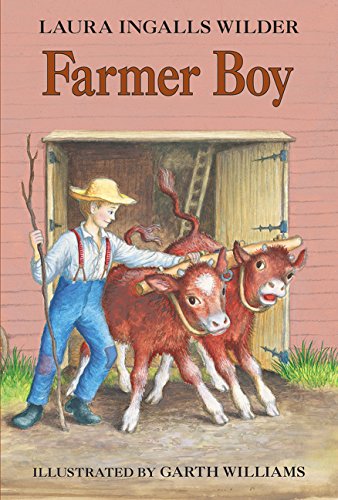
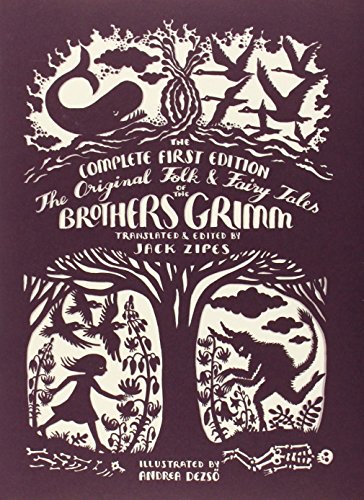
Books from this episode:
(All links are affiliate links.)
Links from today’s show:
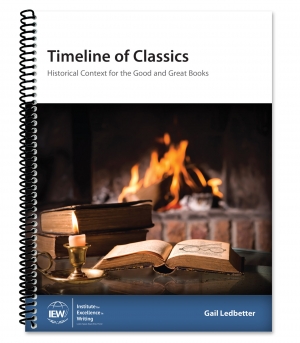
- Gail’s book: Timeline of Classics
- Jim Weiss on Episode 4 and Episode 5
- Adam Andrews on Episode 2
- To Kill a Mockingbird
- Teaching the Classics by Adam and Missy Andrews
- Teaching Writing: Structure and Style
- Jim Hodges audiobooks
- The Timeline of Classics website
- Tarzan of the Apes audio
- Frankenstein read by Jim Weiss
- The RAR Booklist


As I web site possessor I believe the content material here is rattling magnificent , appreciate it for your hard work. You should keep it up forever! Best of luck.
I haven¡¦t checked in here for some time since I thought it was getting boring, but the last few posts are good quality so I guess I will add you back to my everyday bloglist. You deserve it my friend :)
I have been checking out many of your posts and it’s nice stuff. I will surely bookmark your blog.
Been homeschooling and reading aloud for over 20 years, but your book talk is compelling and exciting. Still adding books to my list. Thanks!
I do not even understand how I stopped up here, but I
thought this publish was once great. I do not understand who you might be but definitely you
are going to a well-known blogger in the event you are not already.
Cheers!
I just love your podcast and REALLY enjoyed this episode! I keep our online library catalog and amazon wish list open the whole episode and always end up with additions. Thank you so much for this wonderful resource.
Cindy, I wish I’d kept a tally of my library fines over the years. I’m sure it’s more than I’d like to admit!
I will soon be starting my 28th year home-schooling. We’re on our second generation with teaching 3 of my grandchildren. But, back when our children were gathered around in the living-room, listening to me reading good books aloud, they could always catch me when I decided to delete a questionable part.
It seems I had unknowingly developed a habit of clearing my throat before I skipped over something. Then, of course, they would be on tenterhooks, wanting to know just what bit of atrocious drama or appalling words I had left out. Even in our all-time favorite, Little Britches, there was some “throat-clearing” going on. Maybe now with the grandchildren, I can manage to covertly pass the questionable passages without detection.
Children are very perceptive…I love it!
Thank you for another encouraging podcast. Could you tell me the difference between All Through The Ages and Timeline of Classics?
Thank you,
Sharon
I don’t have both of them so I can’t do a good full comparison for you. I’ve heard such good things about both that I bet you can’t go wrong either way, though!
Would you be interested in conducting an interview with me for a future podcast?
Yes, definitely! :) You are on our list of people to contact. You should be hearing from someone on my team before too long.
Sarah,
Any chance you could try and get Jenny Rallens on your show to tell us how she teaches her students to read a book? Her short clip of 5th graders discussing Lord of the Rings is wonderful, and I’m wondering how she got them to that point. It seems that all her old blog posts on commonplacing and such have disappeared. I know that in one of her talks, she mentions using different colors to make some sort of chart on the board as they discuss things. I’d love to hear more about that. Thanks for considering!
Sure, I’ll add her to our idea list- we’re gearing up for a whole ‘nother round of interviews. :)
Have you seen Jennifer Dow’s posts on Jenny’s method?http://expandingwisdom.com/2015/09/commonplacing-the-introductory-lesson/
I read few classics growing up in my public school education. I read some and those were awesome. But it was as an adult that I was drawn more and more into classics and a desire to discover these books. It’s been an incredible joy and delight to dive into these books as a single woman and mostly now as a mom, reading them to my kids!
Great episode! Sarah and Gail – I’m wondering how you handle offensive words and ideas when reading aloud classic literature. For example, I’m currently listening to the audio version of To Kill A Mockingbird. Sissy Spacek does an amazing job, but wow – hearing the frequent use of a particular racial epithet is jarring. I couldn’t imagine reading that aloud. I know the Little House books have a few lines I’d rather not expose my child to at this point, but I could skip them, I suppose. I’m not opposed to using these things as a jumping off point for a discussion at the appropriate age, but even so, there are some words I just can’t stomach saying aloud.
Hi Christina, I agree with you completely! It’s just plain common sense to skip or rephrase as you read to your kids. As moms we have to honor our motherly “filters” and judge when our children are ready for discussions over offensive words and ideas. In my literary analysis classes, I gave parents a detailed list of the pages where offensive words occurred and offered to “white out” words and/or phrases in their child’s book. (Or simply pick another book!) As it turned out, parents thanked me for this option, but chose rather to have the discussion as a family, not shying away from cultural influences of the time period. You are in good company! There are plenty of times when I would have been mortified to say certain things out loud. I hope this is helpful!
please leave off the Narnia books. I had read the LOTR trilogy with my sons (editing a little as i went, esp in the war-torn second book, and in particularly scary parts dealing with Shelob the spider) and i had read Jules Verne and several other classics to them, when i attempted my own first reading of The Lion, the Witch and the Wardrobe out loud to my boys. Well, i couldn’t get through it. The humiliation of the lion by the witch — cutting his mane, etc. — was just TOO MUCH. It was appalling to me and upsetting to my sons. We stopped it and went to something else. There is no place for that kind of humiliating cruelty in children’s literature, IMO. Thanks!
Robin,
I’m not sure if you are a Christian, but Aslan in “The Lion, The Witch, and the Wardrobe” is written as a type of Christ. Here’s what Lewis said about the themes of his book: “Suppose there were a Narnian world and it, like ours, needed redemption. What kind of incarnation and Passion might Christ be supposed to undergo there?” So the fact that you found the humiliation of Aslan appalling and upsetting shows that Lewis actually has written a masterful work that wakes us up to the suffering Christ endured in a way that we might not feel as viscerally anymore if we are familiar with the Biblical story. We should feel even more appalled and upset about the taunts, jeers, humiliation, pain, and death that Christ suffered willingly at the hands of sinful men on our behalf. These are weighty themes indeed, but (if you are a Christian) they should be used thoughtfully to help our children explore the dark realities of human sinfulness and the glorious realities of the depths of Christ’s love for us to be willing to suffer such humiliation to purchase our redemption. It’s actually a wonderful opportunity to share Christ with them in a way that they might be able to better relate to and understand at a young age.
Blessings, Mary
No, we are not Christian, and I had understood that to be the nature of Lewis’ work and was open to it. My children and I encountered evil in other stories that was not full of that particular humiliation whuch was too intense for me as an adult (so I judged it too intense for my children). Thank you for the thoughtful replies.
I think Mary answered right on, but to the same point, I read an article at Story Warren discussing this same idea. I recommend the read for another point of view as to why evil is an important element in stories.
http://www.storywarren.com/imagination-and-evil/
Thank you for this link to Story Warren! ❤️ I think we all approach literature differently. I would not have my children miss Aslan/Narnia for the world. The Truth, Goodness, and Beauty found in those pages have had such a profound, lasting, and positive influence on my own life and faith. Aslan bearing the shame and humiliation of Redemption’s price opened my eyes for the first time to truly see what my Lord endured to ransom me. ❤️
I cannot express how helpful this podcast was. We have been homeschoolers and fans of good books for years, but this is our first year venturing into classical education. The tips from this(as well as those from previous podcasts on the topic) will definitely come in handy. THANKS!