RAR #285: Becoming a Book Woman with Caroline Starr Rose
Books are so much more than just a collection of words. They are lanterns that illuminate our lives in so many incredible ways.
Today, I want to share a story with you about a group of women who also believed in the power of books to transform lives. So much so, that they were willing to endure quite a lot of hardship to get books into the hands of people who otherwise wouldn’t have had access to them during a difficult period of American history.
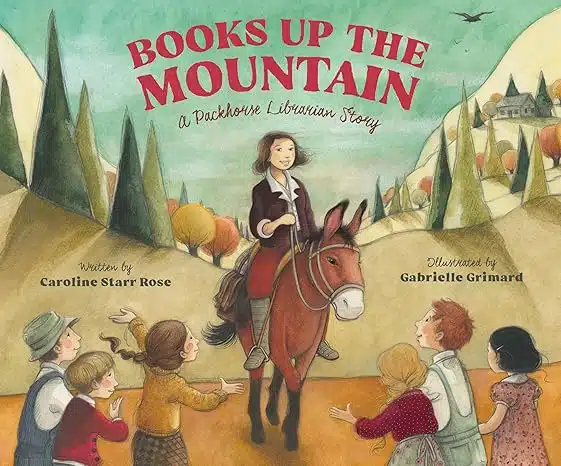
In this episode, I’m talking with Caroline Starr Rose, author of our newest Waxwing Books release, Books Up the Mountain: A Packhorse Librarian Story. Caroline is an author and editor of middle grade and picture books, and in our conversation she talks about the real-life program that inspired Books Up the Mountain, the scavenger hunt process of researching historical fiction, and writing stories that honor children and their experiences.
In this episode, you’ll hear:
- About the Great Depression-era librarians whose work and communities inspired Caroline to create The Book Woman
- Why Caroline finds writing for children such lifegiving and compelling work
- The challenges presented by writing historical novels versus picture books, and what makes “picture book alchemy”
Some links are affiliate links
Learn more about Caroline Starr Rose:
Books and Resources Mentioned in This Episode:

Sarah Mackenzie (00:00):
I always wonder to myself, as a person who's never written a historical novel, "Oh my goodness, how do you know what to collect or what to look for?" You're like, "You don't. You don't know. You just collect and collect."
Caroline Starr Rose (00:10):
That's right. I love that. You have to be a collector. And it's like a scavenger hunt where you're just gathering everything that is remotely interesting. And does it all end up in the book? No. But is it important that you have completely absorbed and just devoted your mind to all of these ideas? Yes, that's how the story comes to be.
Sarah Mackenzie (00:48):
Listeners and viewers of this show are people who know that books have the power to transform. They illuminate our lives in all kinds of ways. And we know that books are not just a collection of words. They're more powerful than that. And today on the show, I want to talk about a group of women who also believed that. In fact, they believed it so much that they were willing to encounter quite a lot of hardship in order to make sure that those who did not have access to books in their lives would have access during a really hard time in American history. So I want to talk all about it today.
(01:25):
Welcome to the Read-Aloud Revival. This is the show that helps you make meaningful and lasting connections with your kids through books. I'm your host, Sarah Mackenzie. I'm the author of Teaching from Rest and The Read-Aloud Family, and a small collection of award-winning picture books. And at Read-Aloud Revival, we have been recommending books for your families for over a decade because of course we believe, like you do, that books have the power to transform and to connect and to illuminate our children's lives. And recently I began a publishing house called Waxwing Books because I wanted to make it easier than ever for families like yours and mine to find these books that connect us and that enrich us. Stories that they're too powerful, too important to be forgotten.
(02:09):
Well, those books that we make at Waxwing are about stories that are not only too important to be forgotten, but they contain art that you want to look at a little longer than you have to. They contain words that you want to say out loud because they're so rich and delicious. And they're books that really just turn our kids into lifelong readers. And our newest book at Waxwing is this one and it's called Books Up the Mountain: A Pack Horse Librarian Story. And today on the show, I have invited the author of this book, Caroline Starr Rose, onto the show. Caroline, welcome back actually, because you've been to the Read-Aloud Revival so many times now, but welcome back. We love you here.
Caroline Starr Rose (02:46):
Thank you, Sarah. It's so fun to be with you again.
Sarah Mackenzie (02:50):
Well, tell me where this story came from, why... Well, first of all, let's tell the listeners about what is Books Up the Mountain about?
Caroline Starr Rose (02:57):
Yes. So Books Up the Mountain is about a little known works progress administration project that started in 1935 and ran through 1943 in the Appalachian region of Eastern Kentucky. And this program allowed for local women, and a few men, to become librarians and to bring books via mule or horseback or sometimes even just by foot up into the Appalachian Mountains to readers who before this time had had no library access.
(03:33):
So it's really just about one particular book woman, she's never given a name, but she is lovingly called Book Woman by her patrons. And it follows her through one of her routes in the fall. She stops, I think, at four different places, a home, a school. She meets one patron on the wayside. He comes to her. He knows where her route is. And then there's an older man she meets and a sick young woman. And then we see her go through this cycle again in the winter. And so same patrons, same relationships, we get to see them kind of grow and change and see the influence that this woman and her everyday, very basic work, the impact that this has because of the stories that she brings and the way that she honors her community.
(04:28):
So it's really just a delightful, beautiful story. If you feel the library is just a really noble institution, which I feel so much, and if you love how stories change who we are and how they connect us with one another, this book is for you.
Sarah Mackenzie (04:47):
Yeah, I feel like it's a book for those of us who love books and who believe in the power of books because we're following the journey of one book woman in this story as she's crossing creeks and facing different weather. And just the delight of the faces of the people that they encounter. I can imagine... It's like the very first bookmobile, the very first... I don't know if it was the first actually traveling library, I'm sure there were traveling libraries before then. But just what a gift, especially during the Great Depression in such remote parts of the world. What a gift. I mean, I can imagine everyone looking out the window waiting, just waiting, waiting for the librarian to arrive.
Caroline Starr Rose (05:32):
And what I loved, these women really got to know their patrons well. They got to know their interests and their tastes. And so they would handpick reading materials for them.
Sarah Mackenzie (05:41):
Wow. Okay.
Caroline Starr Rose (05:41):
And another really beautiful thing, you might have planned to talk about this later, but I want to bring this up as I'm thinking about it. So many people who were participating in this program, they felt there was no way to repay these women who brought them books. And so they gave what they had to give, which were things like quilt patterns or mountain ballads or recipes. And so these were added, they were put together into scrapbooks along with old newspaper clippings where newspapers had worn to shreds, and old magazines. And so they were created into these scrapbooks that really became testaments to a time and place. And then those also were available for checkout by these patrons as well.
Sarah Mackenzie (06:34):
I love that because it's not just that the librarians were bringing books and stories, books that were in the library, let's say. They were also carrying the stories of other people around them who they could-
Caroline Starr Rose (06:44):
Yes.
Sarah Mackenzie (06:45):
I love this. It's like the ultimate connection to those who've gone before in books and those around us in these scrapbooks that were like living books really. They were like being formed in real time. That's really beautiful. And what you just pointed out is that the librarians had this personal connection with their patrons, with the people they were bringing books to, which is what books do. It connects us to the people that hand them to us. It's like why we hand a book to a friend when we're like, "You have to read this. I just read this. I loved it so much."
(07:13):
Okay. So you've written quite a few historical fiction books, picture books and middle grade novels.
Caroline Starr Rose (07:21):
Yes.
Sarah Mackenzie (07:22):
And I want to know what your process looks like. I mean, when you're writing about something that really happened in history, can you tell me just how do you get started? Where do you begin?
Caroline Starr Rose (07:33):
Yeah. I'm not somebody who is just overflowing with ideas. I have a friend who says, "I just hope I can write every idea I have in my head before I die." And I think, "I am not that person."
Sarah Mackenzie (07:46):
Yeah.
Caroline Starr Rose (07:46):
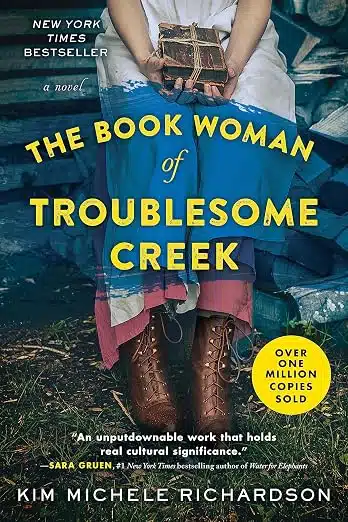
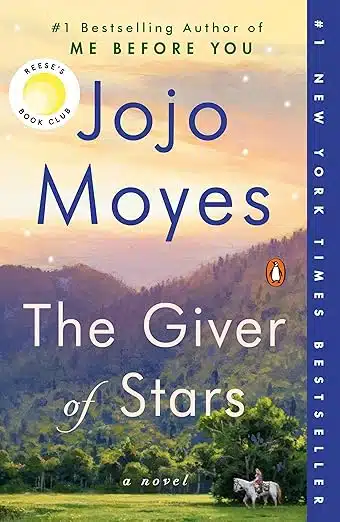
But I'm never sure when an idea is going to come to me. And this book in particular started in 2019 when I read Kim Richardson's fabulous adult novel called The Book Woman of Troublesome Creek. And it was a story of a packhorse librarian. And I had never heard of these group of women before, this time in American history. And I though, "This is fascinating.This is everything that I love. I want to write a picture book about this." Not long after, I read The Giver of Stars, which came out, I think, just within a few weeks of The Book Woman of Troublesome Creek. And it was another adult novel about the packhorse librarians by Jojo Moyes, I think is how you say her name.
(08:38):
And by this point, I had already started my own draft and I though, "I cannot be the only children's author who has read these books and wants to write this story for children because it's just so compelling." And interestingly, once I wrote it and it went out on submission, there were a number of editors who said, "I have gotten so many packhorse librarian picture book manuscripts coming across my desk of late. This is so interesting." And I though, "I know. Because it's in the water right now. It is just so compelling."
(09:15):
But as far as research goes, every book is different. I always have some sort of notebook for every book that I work on. I know with this one, I use it to keep notes, to gather ideas, to ask questions. Sometimes it becomes a scrapbook where I am pasting things. With this book, I found, strangely, that I took a lot of notes on sticky notes. And then-
Sarah Mackenzie (09:41):
Oh, interesting.
Caroline Starr Rose (09:43):
... I have this photograph where I had stuck them, they must have been arranged in some sort of grouping, on the side of a desk that was in my office, the desk that's sitting over there right now. And so I could sit in this chair that was in the corner and kind of look at the information I'd gathered and shift it around and think about, "What am I trying to do? Here are the facts. What is it that I want to do with this information? How will I take this information and build a story out of it?"
Sarah Mackenzie (10:16):
I always wonder this about, because when I've read your historical novels, your middle grade novels, I always wonder to myself as a person who's never written a historical novel, like, "Oh my goodness, how do you know what to collect or what to look for?" So I always love hearing you talk about your notebook. You're like, "You don't. You don't know. You just collect and collect."
Caroline Starr Rose (10:36):
That's right. I love that. You have to be a collector. And it's like a scavenger hunt where you're just gathering everything that is remotely interesting. And does it all end up in the book? No. But is it important that you have completely absorbed and just devoted your mind to all of these ideas? Yes, that's how the story comes to be.
Sarah Mackenzie (11:02):
Yeah. Well, it feels to me more invitational than... I was just thinking about for our kids even, how much more interesting it might be to write about something that they're first given a certain amount of time just to go watch as many videos and read as many books from the library and maybe talk to people at a museum or an expert or something. "Let's just get so much information and don't worry about getting..." There's a different kind of invitation into collecting information because you know you're going to use it all because then it feels like a waste if you're not. That's not what we're doing here. It's like a, "Find out as much as you can and then we'll find out what threads are the most interesting ones to pull on." Did you find that you needed to go back and get more or different information often?
Caroline Starr Rose (11:51):
Yeah. That almost always happens with everything I write. And I kind of start very broadly and I'm not exactly sure what the story will be. I start to narrow in. And then as I draft, there are things that either I need to know more about or things I hadn't even considered or thought about to begin with that I need to go and learn more about. And so it's a very organic process. It's not this step one, step two, step three, step four, but it is a lot of circling back, a lot of learning.
(12:19):
And I love that idea that you talked about with kids. That is a very inviting way to explore the world and to be curious is to encourage them to become an expert in something. Now, this doesn't mean you have this fancy degree, but pick something that compels you, that makes you think and wonder. And you can delve into that as long as you like. You can go as deep and as wide and you can gather your materials. To me, that is one of the most delightful things in my job. I am both the teacher and the student. And I can't teach myself without access to resources. And so it's just a really liberating way to approach my work.
Sarah Mackenzie (13:05):
Yeah. I can imagine it being like a stockpiling phase-
Caroline Starr Rose (13:08):
Yes, yes.
Sarah Mackenzie (13:08):
... where your purpose is not actually to write a draft of anything. Your purpose in these two weeks or whatever, three weeks... I don't know, I'm just imagining this with my boys. I'm making a plan actually right now for a writing project in the fall.
Caroline Starr Rose (13:19):
I love it.
Sarah Mackenzie (13:21):
Your job for these weeks is to stockpile as much information as you can find on a topic of your choice and then also organize it in a way that you can tell me what you find most interesting because then we can know what to write about. Instead of just writing about this topic, it's writing about a very specific. Yeah, that's fun.
Caroline Starr Rose (13:38):
I love that. Love it.
Sarah Mackenzie (13:40):
That's fun.
(13:45):
So when you were researching for Books Up the Mountain, was there anything in particular that surprised you as you were doing your research?
Caroline Starr Rose (13:54):
Oh goodness. Let's say this, one thing that was challenging is because this program existed in a number of different counties in Eastern Kentucky, it was not the same across the board. So I couldn't say, for example, that every single book woman covered this many miles a day or every single book woman repeated the same route every two weeks. Now, many book women traveled between this many and this many miles a day. Maybe it would be around 20. And many of them did repeat these routes every two weeks. But there was not an across the board system in place because you worked with what was available. You worked with the number of people that were available, the materials available, the buildings where you could house your materials. And so it was a very fluid sort of thing, which is hard when you're trying to gather information and pinpoint facts. They weren't necessarily there in that form.
Sarah Mackenzie (14:58):
Mm-hmm, yeah. One of the things that was really interesting working on this book from the publishing side is you presented the story. And then, of course, Gabrielle Grimard is our illustrator, she was doing all the illustrations. And one of the things that was so interesting and a different challenge than we've had in other books we've made here that are not historical fiction, is making sure that things were historically accurate in the illustrations. And so we'll put some of the sketches, some of Gabrielle's fabulous sketches on the screen here for our viewers. So if you are listening to this episode and not watching it on YouTube, you might want to head over to readaloudrevival.com/video. That will take you to the YouTube channel because we're going to put some of Gabrielle's sketches up on the screen here.
(15:42):
And you'll see that, for example, and I think you're the one who caught this because we don't always have the author looking at illustrations through the process of a book. It kind of just depends on the book. But I think pretty sure you're the one that said, "Oops, we wouldn't have a glue..." She had illustrated like a bottle of glue. "We need a different. That's not historically accurate. They wouldn't have used a bottle of Elmer's glue," let's say, in this time and place.
(16:07):
So making sure that the glue pots look correct or, "Would that one room schoolhouse have looked like that?" Making sure that the landscapes look true to the Appalachian Mountain Range, for example. So all of those kinds of things that present a challenge. And then also our art director is really well versed in horses and mules. And it's actually amazing because she will be able to look at the picture of like a strap on the mule and be like, "Oops, that part of the bit would go under the ear, not over it," or whatever.
Caroline Starr Rose (16:43):
Oh, that's interesting. That's great.
Sarah Mackenzie (16:45):
I never would have known that. Yeah, it's one of those things that reminds me that there's so many people that it takes to make a great book.
Caroline Starr Rose (16:53):
Exactly.
Sarah Mackenzie (16:53):
And we don't even realize most of them are invisible to the reader.
Caroline Starr Rose (16:57):
Thank goodness it takes so many people because I would not want my work to stand on its own. I need everybody else's input to make it shine.
Sarah Mackenzie (17:06):
I would love to talk actually about the specific challenges of writing a historical fiction picture book, because that is a whole different thing than a novel. And the fact that you only have a limited number of words to tell this story presents a challenge, right? Can you talk to me about that?
Caroline Starr Rose (17:22):
I see picture books like a puzzle. And the limitation to me is really liberating because a novel is its own challenge and has some things that are easier than a picture book, some things that are more difficult. But with a picture book, you are quite quickly able to get a bird's eye view of everything. When with a novel, it can take a long time and many trips through the manuscript to have a sense of what this thing is. And so that is one nice thing about a picture book where I can kind of grasp where it's going and kind of hold that in my head at a pretty early place.
(18:06):
Now, as far as writing historical fiction, I very much want to give a sense of place. And in historical fiction, we know that setting is both time and place. And so while I don't ever directly declare, "This is the time," through the artwork and through what's going on, these women are traveling not by automobile or any other conveyance other than simple animals or even by foot, you have a sense, even if you might not know as a child, "This isn't happening today, is that? Or is it?" So there are a lot of things that are not told directly, but indirectly, I hope we are showing the young reader, "This is a different time, this is a different place." I think the illustrations, and Sarah, we talked about this when early on you said, "What are you looking for in an illustrator?" And I said, "The only thing I can come up with is somebody that is able to help me feel nostalgic." Now, nostalgia is different for everybody, but I really think these pictures just so warmly invite the reader to climb in. And they do have this sense of another time and another place.
(19:29):
So I'm not sure if that answers your question about historical fiction for picture books other than no author should ever be announcing, "Hey everybody, this is the date. This is what's going on." But it's the showing rather than the telling. Hopefully you are presenting something where the reader then is welcomed in and experiencing it, whether they are fully aware of the historical setting in that moment. Hopefully that's something that maybe later they can discuss with a parent or as they get older and look at the author's note, they might be interested in reading on their own.
Sarah Mackenzie (20:09):
Yeah. I think what you're speaking to really is the artistry, the art form, I guess, of the picture book in particular requires that the text is doing some of the work and the illustrations are doing some of the work. We don't want that work really to be duplicated. We don't want the text to be doing what the illustrations are doing or opposite of that. They both have like their own role. And then when it's done well, it's like this alchemy of like a very immersive experience-
Caroline Starr Rose (20:38):
Exactly.
Sarah Mackenzie (20:38):
... because you have the very spare text and these very well considered illustrations that you want to look at longer than necessary that draw you into the world in a way that one or the other can't really do without the other part.
Caroline Starr Rose (20:48):
Yes, exactly. It's magic.
Sarah Mackenzie (20:48):
I know.
Caroline Starr Rose (20:53):
What happens when the words and the pictures come together, it is, alchemy is a perfect word. It is something neither of them apart could ever begin to tell a story in the way that they do together. It's just... It's impossible.
Sarah Mackenzie (21:07):
Yeah. Picture book alchemy. I love it.
Caroline Starr Rose (21:09):
Yes.
Sarah Mackenzie (21:17):
Talking about the author's note, I have mine open here. And this is one of the things that I think is especially fabulous about your author's note in particular, which gives so much more rich backstory to the book woman we just read about in our fictional tale. These photographs in here are photos, of course, of real packhorse librarians. In Kentucky, they have an archive of these photographs. As a kid, I would love it when I would read a book and then you'd find a photograph, a real photo... Even the photograph of the author would be like, "Wait, a person [inaudible 00:21:54]?"
Caroline Starr Rose (21:52):
"It's a person?"
Sarah Mackenzie (21:56):
Yeah. You think about how a person had to make this. But if I was reading a biography or something, and then you see a picture of the real person, well, now I want to read the book again and think about... I would stare at those photographs. The photographs in the back matter are fabulous. The other thing that I love, and we talk about this all the time here at Read-Aloud Revival, which is there is a misconception that picture books are for younger kids. And that do you outgrow a picture book?
(22:25):
Now, one of the things I'm always reminding people, or trying to let people know if they don't know, is that quite often a picture book's language is richer than you'll find in a chapter book or a middle grade novel because publishers are expecting that a picture book is going to be read aloud by an adult to a child, so there's no limit on the vocabulary or complexity of the language or anything. It's not like needing to be at a second grade level or a fourth grade reading level. And so there's all this flexibility for the author to use really rich, robust language. And because of that, the language is pretty sophisticated oftentimes, not always, but oftentimes really rich, more rich in fact, than you'd find in a novel.
(23:07):
And so that fact about the text being particularly well written in a picture book, also, it has to be just by nature of the fact that there's only 500 words or however many are allowed, depending on the book. And the richness of the author's note, I think make nonfiction, historical fiction, and biographical picture books some of the richest resources we can use with older kids when we're learning about history.
Caroline Starr Rose (23:33):
Without a doubt. One thing I didn't mention, in part of my research, oftentimes when I have glommed onto a time in history or a question that I have about a particular person or place, I often start with picture books as my initial resources. Because, again, you get this quick bird's eye view and then the author's note and the bibliography often that is included gives me a place to then look next. So you get a quick, comprehensive look at things. And then from there you can dig deeper and go wider. The work that's required to create something like this is tremendous. And so when you are looking to learn something new, I encourage you to start with picture books. It really is a rich place to start.
Sarah Mackenzie (24:29):
So in that, going back to that writing idea for my boys, having them in that stockpile phase, I almost wonder if it would even be fun to be like, "See if you can find two videos, five picture books," giving them this-
Caroline Starr Rose (24:43):
Yes, that's a scavenger... Yes.
Sarah Mackenzie (24:43):
Yeah.
Caroline Starr Rose (24:44):
So many different resources.
Sarah Mackenzie (24:46):
Yeah, yeah.
Caroline Starr Rose (24:46):
And maybe someone they could interview if that were a possibility. So there's so many different ways that they can approach their topic or their... I love that.
Sarah Mackenzie (24:58):
Which matches to me in my mind, it's like it's matching a lot of what we do naturally as adults when we get excited about something and want to learn about it. I remember reading a novel years ago on the Russian Revolution and specifically the Bolshevik perspective on this Russian Revolution. I just read a novel and was like, "Wow, I've never learned about this before." And went on a rabbit trail where I was looking things up online, I was watching videos, I was looking for other novels that would depict the same time and place. That's what we do when we are excited. Even about something that we want to learn how to do, like if you want to learn how to knit or something, a lot of times that's exactly what we do.
Caroline Starr Rose (25:36):
Exactly.
Sarah Mackenzie (25:36):
We go stockpile information. So it feels like practice doing real life.
Caroline Starr Rose (25:42):
Yes. Being a lifelong learner. Showing that in real time, what that's going to look like.
Sarah Mackenzie (25:48):
Yeah. You have something on your website where you talk about how you seek to write stories that honor childhood. And I love that. It reminds me of something that the now past author, Andrew Clements, who our listeners and viewers may remember wrote the fabulous book, Frindle, as well as the whole bunch of other funny and compelling and very readable chapter books for kids. Frindle's my favorite.
Caroline Starr Rose (26:14):
Sarah, I have to jump in and ask, did Frindle make you cry?
Sarah Mackenzie (26:18):
Yes, of course it did.
Caroline Starr Rose (26:19):
Frindle made me cry when you think, "This is a story about a pen and I'm crying." It's so beautiful. Sorry, just had to know.
Sarah Mackenzie (26:29):
It really is. And speaking of authors who can do so much in such a small space, Andrew's books are very short.
Caroline Starr Rose (26:34):
Yes.
Sarah Mackenzie (26:34):
Most of them are very short. And Frindle's a good example of that, of a book that he did so much and so little. Anyway. I interviewed him once and he talked about how he was always... He had two boys, I think, two sons, I'm pretty sure, just like you. And he would ask himself as he was writing, "Is this worthy of my sons' bookshelves?" Because his kids were readers and he was like, "I know that it's like privileged place to be on that bookshelf." And so he would think, "Is it worth their time in their childhood? Because childhood is such a beautiful, holy thing. So is this worth their childhood?" And I love that because it makes me, when I look at books, kind of wonder, "Is this honoring the dignity of my children and their childhood?" But I wonder what you mean when you say that you want to write stories that honor childhood, if that's what you're thinking.
Caroline Starr Rose (27:27):
Yeah. I want kids to know that they are seen and heard because I think it's really easy, I'm a former teacher, I'm a mother, I'm a former child, and yet it's really easy to kind of brush off or poo-poo some of the experiences and feelings of children. We talk about things like puppy love. We'll downplay if you scraped your knee, "Oh, no big deal, brush it off." And in some ways, those things are okay. It's not that those things are bad. But we are very quick to diminish or downplay a lot of those first experiences. And I think children's books in particular that are done well, and I don't know if I've ever discussed this with you, this is middle grade, my favorite character of all time is Ramona Quimby.
Sarah Mackenzie (28:25):
I wouldn't have guessed that actually for you.
Caroline Starr Rose (28:27):
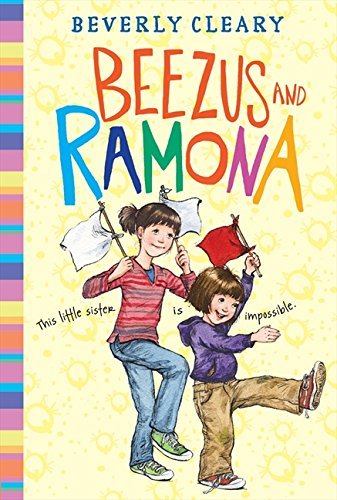
I love her so much. I loved her as a girl and then I became a teacher, I'm getting goosebumps, I read her again as a teacher and I though, "Oh my gosh, there is so much respect for the young child in these stories." And then I became a mother and I read them with my kids and I thought, "Oh my gosh." So if I can offer something like that where I want to linger in the moment where you're feeling surprised or joyful or sad and doing that, I hope what I'm communicating is your experiences, your thoughts, your curiosity, your fears, your joys, those things matter. And they're not just going to matter someday when you're grown and you're not just kind of practicing life right now, because sometimes as a kid you feel like, "Well, maybe I'll be important later when I'm a grownup." They always talk about the next generation or whatever. Well, but right now, this moment, you count right now. And I want my books to really honor that, to give dignity to those big and small moments and just really speak to what it means to be a child.
Sarah Mackenzie (29:39):
What do you find is the most challenging part about writing for children?
Caroline Starr Rose (29:46):
I don't know if I would say the same thing a different day, but because of what I've just told you, I am often asked by well-read and well-intended people when I will write for an adult, when I'll write my grownup book essentially is what I'm asked. And what I hear in that, whether it's intended or not, is that much like I said sometimes children feel like, "These are my practice years, someday I'll get to be a grownup and then I'll really count," I'm hearing that same message that, "Oh, perhaps these are your... You're just kind of finding your voice now, you're trying this out, you're practicing."
Sarah Mackenzie (30:26):
Warming up.
Caroline Starr Rose (30:27):
I'm warming up for my real work. And what that says to me, again, is that children are secondary. And that is not the truth. The books that changed my life, I read widely to this day and the books that I still can tell you have made the most impact on me as a reader are the ones I encountered in childhood. And to be able to speak into that, to be able to contribute to this canon of children's literature, I get to play a role in that? I get to give a small part? What is more meaningful? Yeah, adult literature is great, but no, thank you. That is not what I'm meant to do. I'm meant to offer my very best to children. And so what is challenging sometimes is I think the mindset that adults sometimes bring to my work.
Sarah Mackenzie (31:27):
That is challenging. I also think if we were to ask most... This is completely anecdotal, but I bet it's true, if we were to ask adults, "What was a book that changed your life?" I bet a lot of them, I bet it's very likely that most people would name a book that they read when they were growing up. Yeah.
Caroline Starr Rose (31:45):
I completely agree.
Sarah Mackenzie (31:46):
Yeah.
Caroline Starr Rose (31:47):
Even things we read today are impactful. And I think sometimes we remember a book for a long time, but a lot of times it might be impactful and we forget quickly or it's not impactful, it's just entertaining. And there's a place for all of that. There's nothing wrong with any of that. But I want to speak into the child's experience. I want that privilege. What a gift. That's where I want to be.
Sarah Mackenzie (32:19):
All right. Well, before we go, tell me, what do you hope for readers of Books Up the Mountain?
Caroline Starr Rose (32:27):
I hope they can see how impactful stories are in our lives throughout our lives. You'll see the very young in this story. You'll see the old. You will see how books are a shared conversation between readers. And what I've been thinking about the last few weeks about this book in particular is the idea that I get to be a book woman to so many people. And Sarah, you get to be a book woman to so many people. Think of all the relationships we have where we say, "Have you read this yet?" Or, "Come into my lap and let's read a story." We have this opportunity to be like the book woman in the ways that we, within our community, talk about and celebrate stories. And I love that. I love that.
Sarah Mackenzie (33:24):
To me, it feels like actually it'd be a lovely gift for your librarian because it's like a book that says, "We notice what you do. We notice the work that you do and that you are still bringing books up the mountain to us in different ways than this particular book woman did that we also don't want to forget."
(33:40):
Caroline, thank you so much for coming back on the show. It's always such a joy to talk to you.
Caroline Starr Rose (33:45):
Likewise, I just really look forward to our conversations, Sarah. So thank you. And what a delight to make this book with you.
Sarah Mackenzie (33:51):
It was so much fun.
Caroline Starr Rose (33:52):
An absolute dream.
Sarah Mackenzie (34:02):
Well, now let's go hear from the kids about books they're loving lately.
Felicity (34:06):
My name is Felicity Hill. I'm 10 and I'm from Idaho. I recommend the American Girl Mystery series. I recently finished a Felicity mystery called Lady Margaret's Ghost. I like the ghost mysteries because they keep you reading to the end. Once I read a ghost mystery in one day.
Atticus (34:29):
My name is Atticus and I'm seven and I live in Idaho. I recommend Runt because I like wolves.
Speaker 5 (34:44):
What's your name?
Faye (34:46):
Faye.
Speaker 5 (34:47):
How old are you?
Faye (34:49):
Five.
Speaker 5 (34:50):
Where do you live?
Faye (34:51):
In Idaho.
Speaker 5 (34:54):
In what book do you recommend?
Faye (34:57):
Just Gus.
Speaker 5 (34:59):
Just Gus? Why?
Faye (35:02):
Because I like dogs.
Cora (35:05):
Hello, my name is Cora and I'm nine years old and I live in Ames, Iowa. And I like the Castle Glower series because there's griffins in it, wizards in it, and princesses in it.
Rosie (35:19):
Hello, my name is Rosie. I am four years old. I like Owl and Penguin because they're so silly.
Wells (35:30):
Hi, my name is Wells. I'm from Ames, Iowa, and I'm five years old and my favorite book is Magic Tree House. And why I like it is because Jack has a notebook and he writes things down in it, but he doesn't really listen to Annie and Annie always figures the things out.
Sarah Mackenzie (35:59):
Thank you so very much, kids. You know I love hearing your book recommendations. The show notes for this episode are at readaloudrevival.com/285. Remember that you can order a copy of this book at the Read-Aloud Revival shop. I'll put a link in the show notes, but go to shop.readaloudrevival.com. It is gorgeous. I cannot wait for your kids to linger over these pictures, to trace those end papers, to read Caroline's words, and to just remember the transformative power of books and remember a story that is truly too important to be forgotten. So thanks so much for joining us today. We'll be back in two weeks with another episode of the show. In the meantime, you know what to do, go make meaningful and lasting connections with your kids through books.