RAR #268 Advice to Young (And Young at Heart) Creatives
Have you ever read a book and thought, “Wow, how did the author do that?!”
Or maybe you’d love to sit down with your favorite author and pick their brain about their writing process or tips and tricks for when you get stuck.
Today, the Read-Aloud Revival team has compiled some of our favorite advice about getting creative from the archives of RAR Premium’s Family Book Clubs.
Whether you write, draw, paint, or engage in any other creative pursuit, and whether you’re seven or seventy-seven–and every age in between–there’s something here to help you get your creative juices flowing.
In this episode, you’ll hear:
- Tips for staying with the struggle and keeping the joy in your creativity
- How to create a satisfying story
- Advice for getting ideas, when to ignore your outline, and loving the process
Some links are affiliate links
Books and Resources Mentioned in This Episode:
Sarah Mackenzie (00:00):
Do you ever close a book and think, oh, I wish I knew how the author did that, or maybe you finished reading a book and you think I would love to ask the author about their favorite writing tips or tricks or how they get unstuck. If you do, you're in for a treat today.
(00:32):
Welcome to the Read Aloud Revival podcast. I'm your host, Sarah Mackenzie. For today's episode, the RAR team compiled some of our favorite advice for young and young-at-heart creatives from our family book club Archives. Six writers and illustrators share nine pieces of advice on today's show ranging from super practical to the absolutely inspirational. Now, when I say this advice is for young creatives or young-at-heart creatives, I mean it, whether you're 7, 27, 47, or 77, this episode is full of good stuff for you. It will encourage you whether you love to draw or paint or write or do some other creative pursuit. So let's dive in.
(01:34):
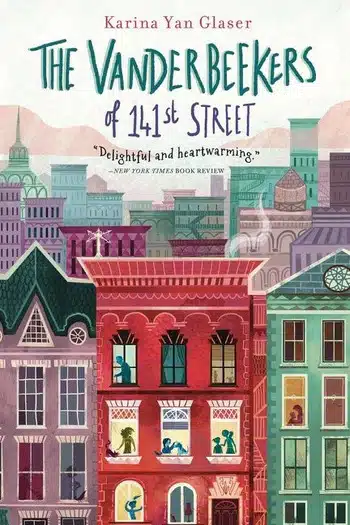
It's no secret that sometimes the creative juices just aren't flowing even when you really wish they were. Should you wait it out, force yourself to try and push through, go hunting for inspiration? Well, our first author has a great perspective. Karina Yan Glaser is the author of the middle grade series, the Vanderbeekers, and she says she finds value in staying with the struggle. What do you do when you need inspiration when you're writing?
Karina Yan Glaser (02:06):
It's really tough because I think that you can be the kind of person who like me is just like, if this isn't happening, I need to force it to happen because I feel like it's really easy if you're in a creative field to be like, okay, I'm not feeling this. I'm just going to do something else and then come back to it. And sometimes that is the right decision. But I think if I did that every time I felt like I wasn't inspired by something, then I would just not have anything done. So I almost have to force myself to do things. Even going back to doing things that you're uncomfortable with. Sometimes I write things and I'm really uncomfortable with it because it's just such bad writing or even as I'm writing it, I know that it's not going to stay in the book, but just the act of writing and pushing the book forward is what I need.
(03:05):
So going back to those messy first drafts, I absolutely do that with every single book. There's never been one book where I'm writing it and being like, oh, this is flowing and everything is sounding good. It's never like that. It's always like, okay, I need to write this many words today and I'm not feeling extra great about how it's going, but that's sort of the process that I go through when I write a book. And there are definitely times where I need a break and I need rest, but I also feel like when I'm in the middle of a book, I just need to stay committed to my deadlines and get it done and know that that's part of the processes and just having things in there that I'm not going to necessarily keep in if I need to go through a bad five drafts before I start feeling good about the story.
Sarah Mackenzie (04:05):
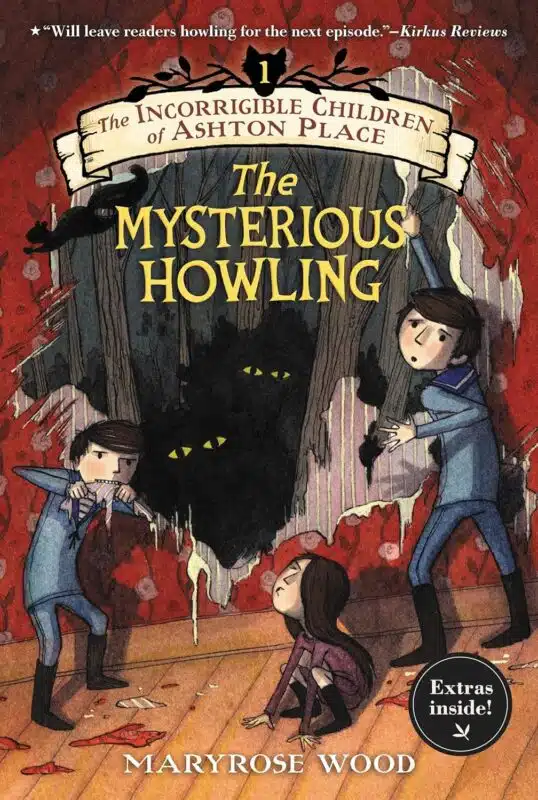
I remember hearing from Mary Rosewood, who's the author of the Incorrigible Children of Ashton Play series that she thinks the hardest part about writing is managing your own anxiety when it's not going well, because as soon as it goes well, you're done with it and you kind of move on to the next thing anyway. So really the act of writing is about working with a story or language that's not working, and I thought that was so interesting. It helps me when my own writing is just terrible, which is happening a lot right now to be like, oh, that's right. This is the job is just to manage my anxiety. It's not supposed to be good the first time.
Karina Yan Glaser (04:38):
I think sometimes we think writers are just naturally good writers, and I don't think I've met anyone who just writes something and it's just great the first time around. It's not a thing. I don't know. It's just sort of forcing yourself to be okay with it not being good. I think pushing through those hard times are what makes it all worth it, because not everything is comfortable, so it's a good thing to do to make sure it's comforting. Most of writing is uncomfortable. I think that's true. Definitely true.
Sarah Mackenzie (05:17):
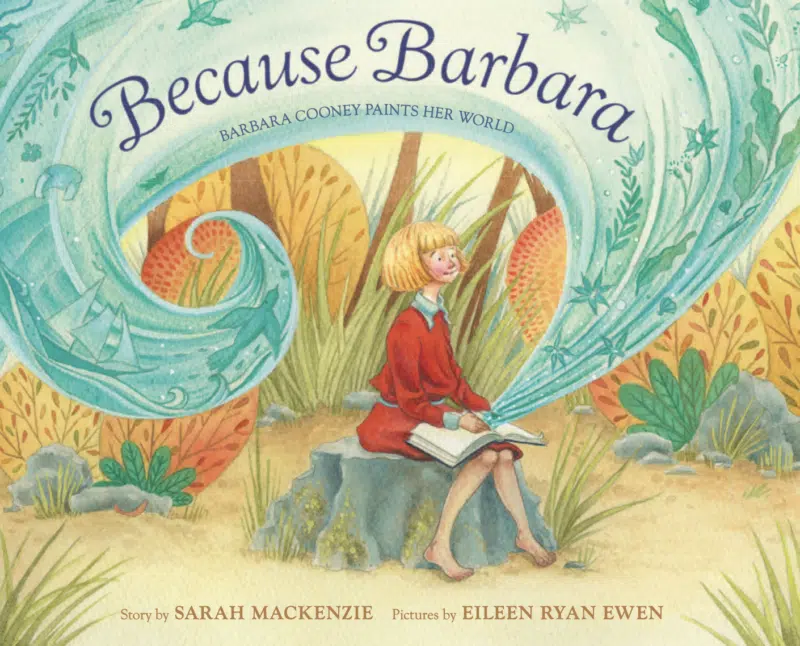
I love Karina's books. I love her insight that you've just got to get comfortable with not being good. Now, Eileen Ryan Ewen illustrated my book because Barbara, Barbara Cooney Paints Her World. She is quite familiar with the frustration that can arise when your creative work isn't coming along quite the way you were hoping it would. Her advice? Find the joy in it.
Eileen Ryan Ewen (05:44):
My biggest advice is to keep drawing, right? Keep drawing. Just like Barbara, and I say to my own kids and other kids that I see or I work with, I see that, oh, I'm not happy. It's not good. They look at maybe this finished product and I say, I can't do that. I can't either. And I still look at artists and I say, I still get frustrated with myself. Keep going. Keep going and find the joy in it. Make messes. Use as many materials as you can. I mean, I was always drawing as far as my own route. I was always drawing. My dad loved to draw as well if he would draw with us. And I did get a degree in painting, actually fine art painting. They didn't have illustration where I went to college, but I knew I wanted to be an illustrator.
(06:30):
I loved reading books and even I was so sad when I became... When books stopped carrying illustrations, I don't think that really exists anymore. I think people, a lot of books are created now even for young adults and adults have a lot of illustrations, which I love. I'm so happy. I was growing up, it seems like after third or fifth grade, it just, the illustration stopped. And I remember being so very sad and wanting to see illustrations. And even in my mind, if I read a certain passage in a middle grade or a young adult book, sometimes I would just put the book aside and try to draw what I had read.
(07:05):
I wanted that multisensory experience of seeing or trying to capture what the author was telling me. And I continued as an adult. Like I said, I did major in teaching but wanted to go into illustration and I just kept working and I was rejected a lot, and that's okay, but I kept at it, so I kept creating as much until finally something landed in my hands of someone who wanted to hire me as an illustrator.
Sarah Mackenzie (07:30):
Some of our kids in the audience here, they just have a love for it, you can tell.
Eileen Ryan Ewen (07:35):
Always, just always, yes, keep finding a joy in it. So even when I was frustrated or hit a roadblock, that's okay. Keep finding what that's not working and maybe step back and then go dig right back into it. If you find joy in it, do it always, always.
Sarah Mackenzie (07:48):
So inspiring, right? And I love Eileen's art because I chose her for one of our first picture books at Waxwing. Now let's switch gears and get into some nuts and bolts. Whenever Millie Florence comes by Read Aloud Revival, we get fantastic ideas for making our storytelling more compelling. Here, Millie is going to respond to a question from a young writer about tying up a story when you've got vibrant characters and multiple plot lines, how do you resolve the story? She says, I'm writing my first novel. I have vivid characters, a solid beginning, loose middle, but barely an ending. Any tips for resolving plots?
Millie Florence (08:39):
Yes. This is a good question. So first, you've got to keep in mind what is the goal of an ending? And the most important thing for an ending to be in a fiction book is satisfying. It can be happy, it can be sad, as long as it's satisfying to the reader, that's what matters. And in order to make an ending satisfying, you have to make your main character believably complete their arc. So ask yourself, how do you want your main character to grow and change over the course of the story? What lesson are they going to learn, in other words? And then you need to ask what needs to happen in the plot in order for that character to change?
(09:24):
Because so often in stories, it's not necessarily that something needs to happen, it's that someone needs to feel something. And your job as the author is to figure out what they need to feel and what will make them feel that. Because all the events in a book are fictional, they're not real. The only thing that is real is the emotion, the emotion that you make your readers feel. That is real. So that's the most important part. And you want to make those emotions feel believable and satisfying going into the end of the book. So ask yourself, what's my main character need to do to complete their arc? What do they need to feel? What will make them feel that? And then how do I engineer the plot so that will happen at the end?
Sarah Mackenzie (10:08):
Any writers who are here, write that down. That is so good. And it's not something that we usually hear or think about. What does my character need to feel in order to, and then what would make them feel that? I mean, brilliant.
Millie Florence (10:21):
So often I think you're asked like, oh, well, what would your character do in this situation? And that's I think where plots get off track. I think it's more often what situation do you need to put your character into to make them do X?
Sarah Mackenzie (10:34):
Yeah, right. Well, the other thing is that I hear what's the worst thing that could happen to your character now? And in my brain, I'm always like, die? I don't know. And then that doesn't make a great story. So what do your characters need to feel and what will make them feel that way? I had never heard that angle before, and I've heard a lot of writing advice. I'll tell you what, talking to Millie actually makes me want to write.
(11:00):
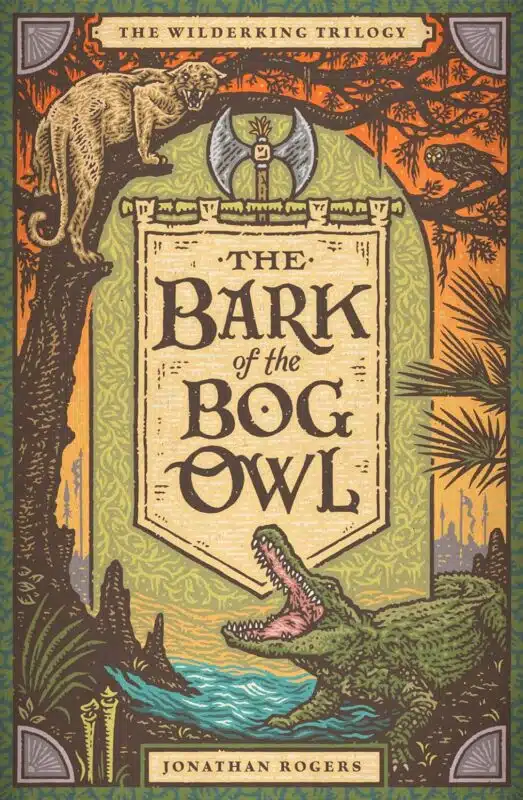
Now Read Aloud Revival is full of fantasy lovers, not to mention historical fiction, magical realism, and stories from worlds very different from our own. So it's no surprise that Jonathan Rogers, author of The Bark of the Bog Owl got a question about world building from a young writer. Here's Jonathan in conversation with RIR premium coordinator, Leilani Curtis, sharing how he thinks about the mechanics of building a realistic yet fantastic world.
Jonathan Rogers (11:32):
There's a lot to be said about world building, but I guess I would say it's really important in world building to realize that any world you're building that you want to make sense has to be built on the things that make this world work. And so the question is always with world building, it's not just what if? The sort of preamble to the question what if is knowing what we know about how things work in the world, what it. So knowing what we know about how things work in the world, what if the world was flooded?
(12:12):
There are movies about where everything's flooded and people are going around on boats instead of in cars. Well, the question is knowing what we know about people, how would they behave in a world where they had boats instead of cars. Knowing what we know about people, what would happen in my case if a frontiers-y kind of world country that had gone to this island to get away from the encroachments of an empire? What happens when that empire shows up? And then you could say, and if there were elves, but in my case there weren't elves, but you can't just make up new ways of people interacting with each other. I'm always interested in a world where things are different, where grass is blue or whatever. It's always interesting. But the one thing that I can't get interested in is what if people didn't act like people?
(13:06):
That's what we care about is what do people act like? How do people act? And then if people are in a weird situation, in science fiction where they're off on another planet where the rules are different, but they're still people, and then what's going to happen? And so whatever changes you make to the world, you can't invent a world in which jealousy makes everybody happy and there's no such world. And we can't even imagine one. And it would be pretty bad if we could imagine. I mean, if you can figure out a way to imagine a world where jealousy makes people happy, well, that's not a very good use of your storytelling energy.
Leilani Curtis (13:45):
I think what I'm really hearing from you is that even when in building creative or new worlds, that it's really showcasing. There are just some needs that humanity has in terms of relationship, food, transportation, and then the creative part is getting to problem solve what that might look like in the setting.
Jonathan Rogers (14:03):
Or even the Fiji folks, I had to say, these are people who don't have metal. They don't really have much access to stone because they live in a swampy place. And so how are they going to manage? What are they going to eat? How are they going to cook it? If they do, once they do catch it, do they get good at eating things raw or they can't have a kettle to boil a stew? So I had to think through all those kinds of things, and that's how world building works. I know that seems like a not quite as exciting kind of world building as inventing middle earth or whatever, but it's still world building.
Sarah Mackenzie (14:39):
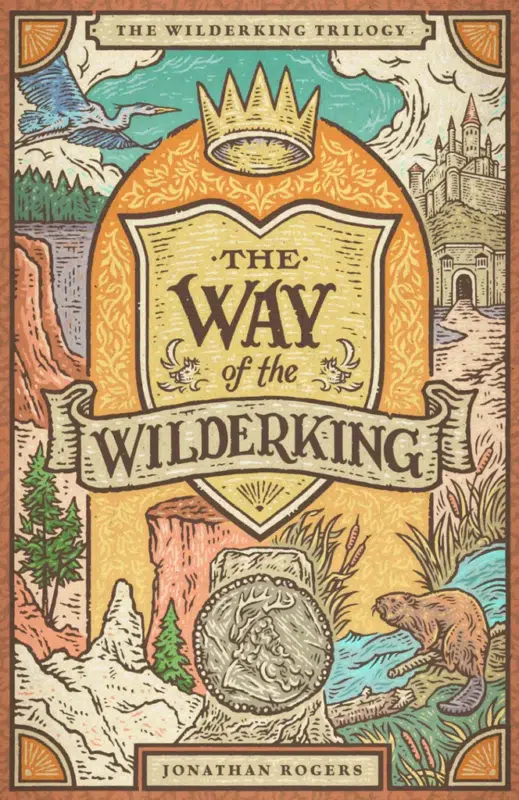
Yeah, I just love that take on world building, and I love Jonathan Rogers books, his series, the Wilder King Trilogy is among my tippy top favorite read-alouds of all time. If you have not read them aloud yet, now is the time. Now, some of the most delicious language and visuals emerge when we use more of our senses than sight alone. In the Vanderbeekers series, Karina Yan Glaser makes use of sound to bring the family's brownstone to life. And one of our astute young readers asked her how she did that. It was really neat how the words you used described the scene perfectly, like how the brownstone, squeaked, groaned, et cetera. How did you learn to describe sounds so well? So I wonder if that's something that you revisit when you are revising or editing something or does it come to you the first time that you write?
Karina Yan Glaser (15:37):
Oh, that's a great question. Well, in terms of the brownstone I had in my first draft that the publisher acquired, I had bits of that in that draft. And my editor, well, when I wrote it in, I was like, I don't know if this is weird or good. And I just sort of leaned into being okay with it and being like, it's just the way I see it and I'm just going to keep it in. And my editor really liked it and she was like, why don't you just lean into that just a little bit more because I think we could bring that out a little bit more.
Sarah Mackenzie (16:17):
So that the brownstone ends up being almost like a character. Is that what you're kind of talking about?
Karina Yan Glaser (16:21):
Yeah, exactly. So the brownstone reacts to certain things. Yeah, so that's what I did. I ended up adding just a little bit more. I don't think the book is overwhelmingly... The brownstone is magical or anything, but I do feel like when we live somewhere, we have a relationship with that place and I wanted to bring that out, especially since the kids were so drawn to that building in particular, and it was a big part of the story.
(16:49):
So having the brownstone have that kind of relationship to have an affection for the kids as well, I think sort of made the story a little bit deeper. In terms of sounds, like New York City, you probably hear just from on this recording, you might've heard some ambulances or dog making little funny sounds in the background. Sound is something I think that maybe we leave out of our writing sometimes because it might be easier to describe something visual, but sounds or the feeling of something really leaning into the other senses can sort of open up a setting a little bit more. And also I think because we do rely on something digital so much, it just opens up a little bit a different part of creativity I think when you describe it with another sense.
Sarah Mackenzie (17:54):
Yeah, and sound. I think you're right. It does seem to be like, I almost don't know the sounds that I'm hearing unless I close my eyes to stop seeing things. It's like I can't really hear things as well because relying on my sight, I think.
Karina Yan Glaser (18:06):
Yes. Yeah, and I think a lot of us do that rely on sight. I had a pretty significant eye issue maybe four or five years ago, and so I have very little vision in one of my eyes and it got me sort of thinking about if I wasn't so relied on sight, what would I rely on? Because a lot of people who are visually impaired talk about how other senses are heightened. Thinking about that with my own eyesight and trying to bring out strength in other senses, I think that's a good practice in general.
(18:47):
So yeah, closing your eyes, there is a scene in the Vanbeakers where the kids sort of close your eyes, just listen. And I think in a place like New York, it is a little bit more obvious because you're getting a lot of this sort of external sound from man-made things, cars and whatnot. But in nature, because I live in New York City, whenever I go somewhere else, I am always startled by how loud it is and just being in nature and just the various animals or rustling of leaves or wind or all those things that I think are really beautiful and really come across on the page really nicely too when you write it.
Sarah Mackenzie (19:30):
Good stuff, right? You can ask a hundred writers where they get their ideas and you'll probably get 107 different answers at least. Well recently, Millie Florence shared the three-part framework she uses to generate and capture great ideas for her stories.
Millie Florence (19:52):
I have a step-by-step, here's how you get ideas. Ready? Step one, notice the world. Step two, ask good questions about it. Step three, write down all your noticings and all your questions in a notebook. So that you don't forget them. And a really good example of when I've done this in my own life of how you can see this play out is at one point I went to homeschool prom and at some point I was just hanging out and I saw at the edge of the dance floor there was a door, and on the door there was a plaque that said library slash elevator. So step number one, I noticed the world. I noticed something a little bit interesting, a little bit different, a little bit weird, a little bit quirky.
(20:37):
Then I asked good questions. I said, huh, what does that mean? What could be on the other side of that door? Is it an elevator that leads to a library? Is it an elevator that is a library? Are there books on the shelves of the elevator? What if-
Sarah Mackenzie (20:56):
You never get off.
Millie Florence (20:57):
Yeah. What if it's like a magic tree house situation? You can open a book and then press a button on the elevator and it takes you to the world inside that book, and that's how you get an idea. Notice the world, ask good questions, write them all down in a notebook so you don't forget.
Sarah Mackenzie (21:13):
So good, right? I hope you're getting inspired to write or create, to draw, to make something. I am. Sometimes I know it feels like you have to have all the answers to your creative questions like you are on your own to solve your creative challenges, but help is often just an email or a phone call or a text message away. Barbara McClintock, the illustrator of over 40 picture books and one of my all time favorite illustrators, shared this unforgettable story of asking for help. You almost won't believe who she asked for help from. Did you have someone in your life who helped you pursue your illustrating dreams?
Barbara McClintock (21:56):
Yes, I did. I had actually a lot of people who helped. And starting with both my parents, my dad was a portrait photographer and my mom was a teacher, but when she was in college, she was a textile and design major, so she made all her own clothes and she loved to sew and she would invent her own patterns for clothing. So I had two very creative parents who are very supportive of me, but when I was in college in North Dakota, I wanted to write and illustrate children's books and there was no one teaching writing and illustrating in my college at that time. So I read a story in Time Magazine about Maurice Sendak and they said that he lived in Ridgefield, Connecticut. And I thought, I bet he could help me figure out how to get into children's books. Wow. So growing up in North Dakota was like, oh, everybody's friendly. Of course.
(22:59):
I'll just call. Ridgefield information, his number was listed, this is how long ago this was. And so I thought, okay, I'll just call him. And I thought, how bad could this get? He'll either be nice and he'll talk to me or he'll hang up, so it's a no-brainer. There's nothing to worry about. So I called him his phone number and the phone rang and he picked up and I said, "Hi, I'm Barbara and you've never met me. You don't know who I am, but I have some questions. I want to write and illustrate children's books and what do I do? Can you help me?"
(23:41):
And he was wonderful. He talked to me for 20 minutes. He told me how to put together a dummy book and a portfolio, and he encouraged me to move to New York City and take my portfolio around. And so he really is what got me started in my career really just reaching out to someone. You would be surprised how even people you think would never talk to you about something or whatever, just be courageous and reach out and ask people for help because people are often usually, most of the time, so flattered that somebody would ask and somebody has always helped them at some point, so they're giving back by helping others.
Sarah Mackenzie (24:38):
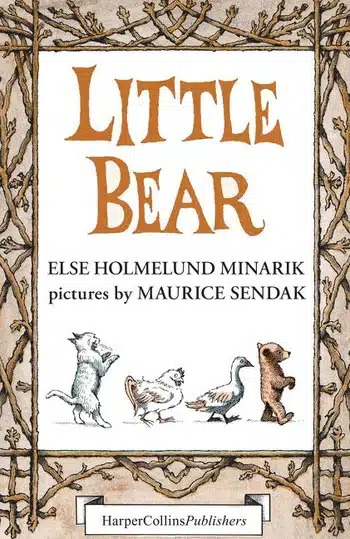
There's so much I love about that story from the fact that knowing that the Little Bear books illustrated by Maurice Sendak were your favorite to the fact that you had the audacity to call him out of nowhere is amazing. I love this so much about you. And then to know that he showed up in your illustration here brings a whole other level of appreciation to this illustration and that he took the time to... Yes, I love that, that people are so much more willing to help than we think they are. That's a beautiful story.
(25:08):
I still love that story even though I've heard her tell it before, it never fails to inspire me. So here's a question. Do you need to know exactly where a story is going before you get started? Well, let's circle back to Jonathan Rogers. He says no. His advice is to leave yourself open and just be curious about what's going to happen next.
Jonathan Rogers (25:35):
I originally thought of it as one long story and then early on realized, no, I'm not going to do this as one long book, but three smaller books. And I will say that... I mean, very generally, I knew where the whole story was going, but to me the most interesting thing that happens in book two, I had no idea until I was pretty deep into it.
(26:00):
And then in book three, same thing. I was really deep into that book before I knew how it was going to... I mean, I had an idea how it was going to end. Then I realized, oh, here's a better way for it to end. I think it was really important when you're writing stories to leave yourself open to what's going to happen after you start writing the story.
(26:18):
So I always have an outline for a story. I can't really bring myself to start if I don't have an outline, and then that outline is always wrong, but I also... I know that too. I know I have to have an outline, but I've also learned to hold that outline very loosely because when you lock yourself in and you say, I know how the story's going to end, what you're saying is, I'm as smart as I'm going to be in this story. I already know when I... And you're never as smart when you start a story as you are when you've been writing it for a little while. And then you really start to make connections and you really can see things that you couldn't possibly see before that, and you have to do whatever works, right? I mean, some people, like I said, I feel like I've got to have an outline.
(27:06):
But I don't say, okay, everybody write an outline. That's the only way to do it. It's just how I do it. And some people can just need to just wade in and see what happens, but it's kind of a hybrid thing for me. I have the outline and then I stay open to throw the outline out eventually.
Sarah Mackenzie (27:21):
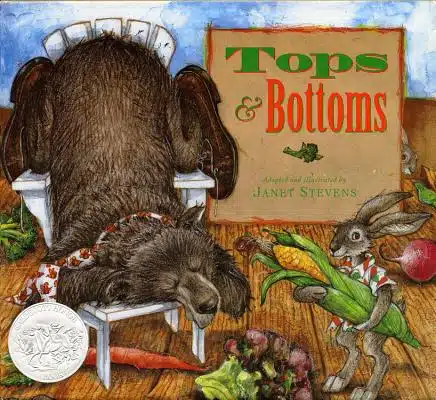
Pretty freeing, right? Writing is not rigid. It's one of the reasons I think so many kids hate writing for school, even if they love reading or writing for fun, because in school it's almost like we can't help but try to make it a rigid plan outlining thing where we know what we're trying to say before we say it. That's not how real writing works. Now, last but not least, let's hear from author and illustrator, Janet Stevens. She wrote and illustrated one of my favorite picture books, Tops and Bottoms.
(27:58):
She's also the illustrator of the Anansi Folk Tales by Eric Kimmel. Those are some of my favorite picture book versions of those African folk tales. I love them so much. One of our young artists asked Janet, when did she know when she wanted to become an artist and how did she get better at it? Her answer is what every young or young at heart creative needs to hear.
Janet Stevens (28:24):
Well, I started drawing when I was about six, and I did this painting and it was terrible, but I loved it. And I think I was maybe five because I was in kindergarten. And the trick is just loving to do it. And if you love to do something like writing or any of these things we've been talking about, math like my sister, drawing, writing all of these skills is because you love to do it. You do it more and the more you do it, the better you get. And I did not stand out as a great artist or anything, but I love to do it.
(29:06):
And so I slowly got better and then all of a sudden they started to notice. They said, well, you should be an illustrator or you should do this, or you should... I was like me? So it's really the joy you get from the process in making the art. And a lot of people I know are so talented, but they don't want to do it. They just do it a little bit and they don't have that need to do it, and so it's too bad because they could probably be really good.
Sarah Mackenzie (29:45):
Hearing you talk about needing to do it. So I have a 21-year-old daughter who's in art school right now actually. When she was, I have a picture of her when she was, I want to say six or seven, about that age. We went to the Space Needle in Seattle and we get up to the very top and she gets a very panicky look on her face. It says, mom, I need something to draw with now. And I'm like, okay. So I'm fumbling through my purse and I find a piece of paper and a pencil, and she's just looking out and sketching, and you could almost see her like, okay, I'll be okay. That's it. She's got it.
Janet Stevens (30:24):
It's kind of a need to do it, and it's not necessarily talent. It's almost that desire.
Sarah Mackenzie (30:32):
Yeah, I like it. Okay.
Janet Stevens (30:34):
Important. Yeah.
Sarah Mackenzie (30:34):
Then if you have the desire, you'll also keep doing it, and the keeping on doing it is what helps you get better.
Janet Stevens (30:40):
Yeah.
Sarah Mackenzie (30:41):
Isn't that awesome? I hope you take something away from this episode that helps you move forward with a creative project, whether you are in need of inspiration or practical nudge in the right direction. I think learning about how others work and what they struggle with and how they get over those challenges can be so encouraging. And if you'd love a little more of that in your life, then you should know that every month in Read Aloud Revival Premium, we host an author or illustrator who shares a behind the scenes look at their work and their process, and when you join, you also get access to an incredible archive of these conversations, including the full length discussions with the authors and illustrators you heard from today. You can learn more about RAR Premium at Rarpremium.com. Now let's listen to RAR Kids about what they're reading and loving lately.
Evelyn (31:42):
My name is Evelyn. I am nine years old and I live in Kansas City, Missouri. My favorite book right now is Glitch and I like it because it's just crazy and suspenseful and exciting the whole time.
Hazel (31:58):
My name is Hazel. I'm seven years old. I live in Kansas City, and a book that I really like is X-Ray Yarn because Isabel is very generous and she makes sweaters for everyone and everything.
Natalie (32:19):
Hello, my name is Natalie. I am seven years old. I live in Kansas City and my favorite books right now are the Magic Treehouse series, and I like them because I get to learn in history and it's also an exciting journey at the same time.
Sebastian (32:45):
Hello, Reiner. My name is Sebastian and I am three years old, and I like Salk Rock because it has a really cool Salk that... Because it has a lot of Salks that I believe that. I think it's so super cool.
Evelyn (33:07):
Hi, my name is Evelyn and I'm nine years old and I'm from North Pole, Alaska, and I would recommend the [inaudible 00:33:13] series because I like how the author tells this story.
Winston (33:16):
Hi, my name is Winston and I'm 10 years old. I live in North Pole, Alaska. I would recommend the Red Ball series because it has a lot of adventure. At the end of each chapter, they usually leave you hanging.
Albion McCormick (33:28):
Hi, my name is Albion McCormick. I live in Newcastle, Oklahoma. I recommend the series Geronimo Stilton because he goes on lots of crazy adventures and always gets into some kind of trouble.
Sarah Mackenzie (33:40):
What's your name?
Nathan (33:40):
Nathan.
Sarah Mackenzie (33:40):
Where do you live?
Nathan (33:40):
Colorado.
Sarah Mackenzie (33:47):
What's your favorite book?
Nathan (33:49):
Little Blue Truck Christmas.
Sarah Mackenzie (33:51):
Why is that your favorite book?
Nathan (33:53):
Because it has Christmas trees and Little Blue truck gives his friends trees. Bye-bye.
Sarah Mackenzie (34:03):
Bye. How old are you, Nathan?
Nathan (34:06):
Three.
Sarah Mackenzie (34:07):
Good job.
(34:09):
Thank you so much kids, and thank you for listening or watching. Did you know that these episodes are on YouTube now? They are. You can go to readaloudrevival.com/video if you'd like to subscribe to the YouTube channel. Please do that. It helps us reach more families. Our show notes are at readaloudrevival.com/268, and I'll be back in two weeks with another episode. In the meantime, you know exactly what to do. Go make meaningful and lasting connections with your kids through books.