RAR #266 How to Do Shakespeare (and Actually Enjoy It)
On the last episode of the Read-Aloud Revival, we talked about why Shakespeare is not a school subject. I hope we were able to convince you!
But if we know that Shakespeare isn’t a school subject or an item on a checklist, how do we actually do it? And how do we make Shakespeare not just doable in our homeschools, but delightful?
Today, we’ll talk through a simple framework your family can use to experience one of the richest and most rewarding literary treasures in the world in a way that is absolutely magical and a whole lot of fun.
I’m willing to bet that if you implement the framework that we discuss in this episode, you won’t mistake Shakespeare for a school subject ever again!
In this episode, you’ll hear:
- Why we don’t start teaching Shakespeare with the original text
- Simple, easy ways to build connections with Shakespeare’s works and with each other
- How incorporating performance makes Shakespeare come alive for the whole family
Watch the episode on youtube
Some links are affiliate links
Books and Resources Mentioned in This Episode:
- Text SHAKESPEARE to 33777 to join us in RAR Premium for Shakespeare Summer

Sarah Mackenzie (00:00):
On the previous episode of the Read Aloud Revival, we talked about why Shakespeare is not a school subject. I hope I convinced you. Today we're going to talk about how. If Shakespeare is not a school subject, and if it really is as magical and fun as I say it is, then how do we actually do it? Well, I thought you'd never ask. Welcome to the Read Aloud Revival. I'm your host, Sarah McKenzie. Today I'm going to show you how to make Shakespeare not just doable in your homeschool, but delightful.
(00:53):
We'll talk through a very, very simple framework that your family can use to experience one of the richest, most rewarding literary treasures in the world, and it is a whole lot of fun. I'm willing to bet that if you implement the framework that I'm going to unpack for you in this episode, you will not mistake Shakespeare for a school subject ever again. Now, I love, love exploring Shakespeare with kids so much, that I don't just do it with my own kids I also teach it at our local homeschool co-op. I teach kids from ages eight all the way through high school, and I get asked fairly often, "How should I get started with Shakespeare?"
(01:40):
And my answer is always the same. Don't start with a lesson plan. Goodness, no. Or a literary or line by line analysis, no, no. Don't even start by jumping straight into Shakespeare's original work. Start by telling the story. Always start with the story because Shakespeare was above all a master storyteller. His plays are filled with mistaken identities and mischievous fairies and sword fights, ghosts, magic potions, revenge, lovers who can't quite get their timing right. It's no wonder that his stories keep getting told and, retold, reimagined, revived.
(02:29):
Shakespeare is in the bones of the stories that most of us already love, and when you approach Shakespeare with your kids in a way that puts a primary emphasis on the story then we're returning Shakespeare to what he was trying to do in the first place, invite us into a shared human joyful experience, or not always joyful, but a shared human experience. When it comes to Shakespeare, you always, always, always want to start with the story. Shakespeare was a master storyteller, and the first step to truly enjoying one of his plays is to know who is who and what the heck is going on. My favorite way to do this is to read a retelling. So that's our step one. Step one is to read aloud.
(03:21):
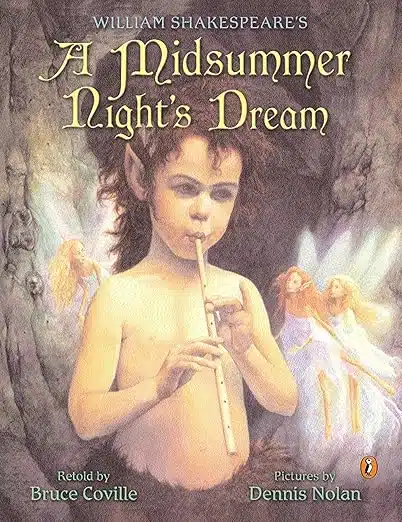
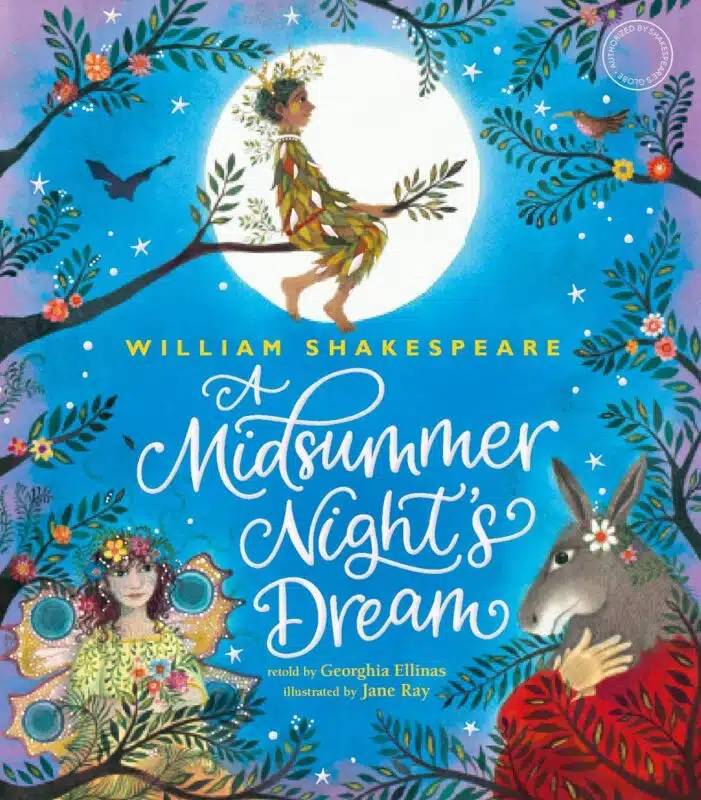
Now, the goal here is not to start with the original text. Actually, I would discourage you from starting with the original Shakespeare play. The first goal is to fall in love with the story, the characters and the plot. Now, Shakespeare's plays are filled with drama and humor and magic and mistaken identities and big emotions, and we don't need to analyze the language before we understand what's happening. There are many, many lovely retellings out there, some with really gorgeous illustrations, others that are in chapter book style. We'll put some of our favorites in the show notes of this episode at readaloudrevival.com/266.
(04:00):
I've got several recommendations along with some age recommendations for your kids. The heart here though is to read a retelling together. That should always be step one. Then step two is to relate. Now, we say this all the time around here homeschooling is about relationships. Homeschooling is about connections. Connecting with Christ, connecting with one another, and connecting with big ideas. Once we're familiar with the story that we're enjoying in a Shakespeare play, we can start making those connections with ideas. But in order to do this, I do something that helps a lot, even if I'm already very, very familiar with the play, but especially if it's my first time through, I draw stick figures. Yes, amazing, very artistically complicated stick figures.
(05:00):
I draw very simple stick figures. I literally draw out what's happening in the story? Who loves whom? Who's tricking whom? Who accidentally falls in love with a donkey, for example? Because the hardest part of Shakespeare is usually just keeping track of who is who. Stick figure maps, that's what I call them when I draw these stick figure scenes. I call them stick figure maps. They're really simple and they make it all so much more fun. They also take the bar down because as soon as you start drawing bad stick figures on the whiteboard, whether you're doing it with your own kids at home or you're doing it with a class full of kids at a co-op, they just start laughing and realize, "Oh, this is mostly fun.
(05:43):
We don't have to be all hoity-toity. We don't have to be super smart. We don't even really have to understand what's going on yet." So I'll talk my kids through each scene of whatever retelling we're reading, drawing stick figures on the board as we go so that they can keep track of who is who. When I'm reading with my students at co-op we'll maybe read like a third of the retelling during the first class. So then I'll start the second class by asking the kids who remembers what happened in our reading last week, and as they tell me what happened last week, I'm drawing my stick figures on the board. Then we read the next part and so on. So then while you're doing these stick figures, it's a really fun time to pair it with food. We love doing this at Read Aloud Revival.
(06:33):
You have to feed your kids approximately 3,000 times a day anyway, so you might as well make it enjoyable, right? And by bringing in food, you're bringing in a sensory experience. And we know from brain science that activating the senses helps your child form warm memories. So when you add brownies or lemonade or some kind of fun themed snack, if you have the energy for that, you are talking through Shakespeare with a sensory experience and sealing it in your child's mind as a warm memory. Really, the key to not being intimidated by Shakespeare is realizing that you can parse out what he means just by going line by line as long as you have some helpful tools.
(07:22):
So that's often something I'll do, especially if we get a little bit confused. I'll pull out a set of lines that I liked or that I happen to know are famous or that I don't understand, and I write them on the board. And then I often use a tool like the No Fear Shakespeare books to help me break down what that line means. Quick heads up on No Fear Shakespeare. This is a tool I love and I use. I don't usually hand it to my kids until they're in high school. Some of those Shakespeare lines you probably don't actually want your kids to know what Shakespeare was saying, so use it for yourself. It's a teacher tool. Side note here is that if you end up just wanting to join me in doing Shakespeare Summer, I do this for your kids on video, so you don't need to parse the lines out yourself.
(08:11):
Actually, I also do the stick figure drawings with your kids on video. So if you like the sound of open and go, or you want to do Shakespeare with me or have somebody walk you through these same steps, go to rarpremium.com or you can text the word Shakespeare to the number 33777. Back to parsing the language or really translating, what did Shakespeare mean in this line? One of the things that happens when you parse a passage or two is that you become and your kids become way less intimidated by Shakespeare because now we realize it's just a code we're kind of figuring out. It's all figureoutable. So step one was to read aloud and step two was to relate.
(08:55):
We do that by talking through what's happening. I usually draw on the board and I do food. Then what's step three? Step three is to remember. And this is where it gets really fun. Shakespeare wrote his plays to be performed, not to be read. So when I'm teaching Shakespeare, a Shakespeare class at my co-op, for example, we put on a play. And there is simply no better way to have your kids fall in love with Shakespeare than to perform him. I mean, that's what you do. You perform a Shakespeare play. Now at home, I don't put on a full play. I don't put on a full production. You might be like, "Sarah, that's not going to work." I totally understand.
(09:45):
You're like, "I have too many babies, too many commitments, kids that do not want to do this or not the energy for this." That doesn't sound fun. So here's the deal. In our RAR Premium, we wanted to provide an easy grab and go set of lines. So we developed a family readers theater for our members to have fun with. That means we're providing a script with Shakespeare's original language paired down so it doesn't take you two and a half hours to get through. And in this Reader's Theater, each family member takes a part or two and you read through the play. This is such a fun family activity. Everybody in the family can have different roles, maybe with voices, maybe with a silly hat or a blanket and a clothespin for a cape or a pair of fairy wings.
(10:34):
If you have non-readers, then they can just be in the room and the kids who can read and the adults who can read can do the different parts. If you don't have any readers, you can do all the parts. If you have a bunch of kids and want to invite some friends over, there'll be enough parts for them too. And this Reader's Theater is Shakespeare's original language paired down and it tells you the story. So now you've got the retelling because you read aloud and you've already been talking through the plot by drawing them or watching me draw them on video and sharing some fun food. So you've got the relay, and now to remember it, you're doing the Reader's Theater.
(11:07):
Now, if you don't get the RAR Reader's Theater, if you don't do Shakespeare Summer with us, you can also get an actual script of the play and do that. That's going to take a while. It'll be long. Most Shakespeare plays are a couple hours long. You can also get a very, very, very short version of the script in a book called Shakespeare's First Folio. This is newly released in the last year illustrated by Emily Sutton. It's a little pricey, but that's because it's hefty. It's gorgeous, it's heavy, it's packed full of plays. The plays are very short. So my only complaint is that they're so paired down that a lot of the comedy is actually lost. But the illustrations are really nice and it makes a beautiful coffee table book and you could use it.
(11:56):
It's set up like a Reader's Theater in there. So you could pick a play and use that for your Reader's Theater. When you're reading a Reader's Theater, here's the important thing to remember. There's no pressure to memorize or to get it perfect. It's just about entering the story together in the way Shakespeare intended. There are some other things you can do to have fun with the Reader's Theater to help Shakespeare come alive for your kids. You can memorize passages. Your kids will probably memorize them a lot faster than you think. You can use simple stick puppets to act out the scenes. You can watch a ballet version or a performance of the play.
(12:39):
I'll just give you a quick caveat depending on the play, you just want to use a little caution here because Shakespeare's plays are not always appropriate for kids, and definitely different productions of them aren't always appropriate for kids, so you always want to vet that ahead of time so you're not surprised as you're watching with your children. But the heart as always, is about connection. So read aloud, relate, and remember, and anything else is just the cherry on top. Now, we got so excited about helping you fall in love with Shakespeare. We got so many questions asking if I could show you all how I do Shakespeare with both my kids and my co-op students, not as a subject, but as a joyful experience.
(13:29):
So at RAR Premium, we decided we're going to have a Shakespeare Summer. Just in case you and your kids want to do Shakespeare with me this summer we're in the mood to do A Midsummer Night's Dream, one of Shakespeare's most whimsical and hilarious comedies. And if your kids like mix-ups and magic potions or troublemakers, they're going to love it. In Shakespeare's summer you're going to find everything that I've outlined here, read, relate, remember, all of those steps, just all done and presented for you. There's A Midsummer Night's Dream retelling recommendations, so some of the retellings that we like best of this particular play that you can read aloud for step one.
(14:11):
There are weekly videos where I walk your kids through each scene using those stick figures. Truly, you're going to be just gobsmacked by my amazing artistic abilities. I also parse out some passages to really remove the intimidation of Shakespeare's language. We provide some recipe ideas for each week that will help your kids remember the play as a sweet summer memory. They're very, very fun themed, but simple. So nothing complicated or time-consuming. And yes, we curated our own Read Aloud, Revival Reader's Theatre of A Midsummer Night's Dream for your family.
(14:52):
And that's included along with some simple tips for costumes you can put together just with what you have laying around the house, like blankets and clothespins and the like. We also have some printable puppets if your kids want to act out the scenes that way instead of costumes. It's ideal for the whole family. And I want to challenge this idea of Shakespeare as a school subject once and for all by taking us all on a whirlwind, whimsical tour of A Midsummer Night's Dream over the summer. And then if you still insist on calling it a school subject, then fine, you got it done before the next school year even started. Go you.
(15:35):
You can start your next school year going, "Well, we haven't even started the school year yet and we already did Shakespeare." Listen, whether you join us for Shakespeare Summer or not, I hope you are inspired to make Shakespeare not a subject in your school, but an experience to relish in your family. To join us for Shakespeare Summer, go to rarpremium.com or text the word Shakespeare to the number 33777. Now, let's go hear from our kids about some of the books they're loving lately.
Speaker 2 (16:14):
What's your name?
Baby Harold (16:17):
Baby Harold.
Speaker 2 (16:18):
Baby Harold. How old are you, Harold?
Baby Harold (16:19):
Two.
Speaker 2 (16:20):
And what book do you love?
Baby Harold (16:24):
Little Blue Truck.
Speaker 2 (16:25):
Little Blue Truck.
Titus Dukeman (16:28):
Hi, my name is Titus Dukeman and I'm from Indianapolis, Indiana, and the book I'm presenting is Nate The Great because he's a detective and he has some funny mysteries. And I like the book because some of his mysteries are interesting and funny. Bye.
Speaker 2 (17:07):
What's your name?
Dukeman (17:07):
My name is Dukeman.
Speaker 2 (17:09):
Where are you from?
Dukeman (17:11):
Indianapolis, Indiana.
Speaker 2 (17:14):
What book would you recommend?
Dukeman (17:16):
Fox in Socks.
Speaker 2 (17:17):
Why?
Dukeman (17:19):
Because it's silly and it's hard to say the words. And-
Speaker 2 (17:30):
Is it a tongue twister?
Dukeman (17:32):
Yeah, it's a tongue twister and [inaudible 00:17:34].
Speaker 2 (17:34):
It's just fun to do?
Dukeman (17:37):
Yeah.
Speaker 2 (17:40):
Yeah. Can you say bye?
Dukeman (17:40):
Bye.
Edith (17:42):
My name is Edith and I am from Indianapolis. And what is it called again?
Speaker 2 (17:52):
The Little House books?
Edith (17:53):
The Little House books. It's my favorite kind, and they help around a lot of the house and they pick a lot of stuff and their father goes hunting because they can't grow meat, all you can grow is just vegetables. And Laura doesn't have a doll so she loosed corn. And they do paper dolls. And at the Christmas Eve one, she gets a doll and she loves it and she plays everywhere where she would go. Bye.
Emmett (18:39):
Hi, my name's Emmett and my favorite book is A to Z. And I'm six years old and I'm from Minnesota. And I love that they sell mysteries. That's what I love about it.
Speaker 2 (18:54):
And it's A to Z Mysteries.
Dukeman (18:56):
Mysteries.
Lillian (18:58):
Hi, my name is Lillian. I am 13 years old and I live in Virginia. I have two book recommendations. I love The Vanderbeekers series because there's five kids in my family. And I also love Deborah Hopkinson's book We Must Not Forget because I love historical fiction.
Charles (19:15):
Hi, I'm Charles. I live in Virginia and I'm 11 years old. My favorite books are The Wild Robot series because it's all in the great outdoors and I love animals.
Emeline (19:26):
Hi, my name is Emeline and I'm 10 years old and I live in Virginia, and the books I would recommend is anything by Laura Martin because they're funny and exciting.
Margaret (19:36):
Hi, my name is Margaret and my favorite book is Blue Number. And I'm three years old.
Sarah Mackenzie (19:47):
Thank you so much kids. One of my favorite things about doing Shakespeare in the way that we've talked about here is that it feels like playing. There's no need to make it academic or complicated. You're building family culture. You're cultivating joy and sharing something really extraordinary. If you want the easiest possible way to start, I want to invite you to come join us for RAR Premium for Shakespeare Summer. We've done all the heavy lifting for you.
(20:16):
All you have to do is show up with your kids and a little curiosity. In six weeks Shakespeare will surprise you because this isn't about doing it right, it's about doing it together. All the details for Shakespeare Summer can be found inside RAR Premium. Go to rarpremium.com. Let's see. Show notes for today are at readaloudrevival.com/266. And I'll be back in two weeks with another episode of the Read Aloud Revival. In the meantime, you know what to do. Go make meaningful and lasting connections with your kids through Shakespeare.