Best of RAR: The Joy of Shakespeare
When I mention Shakespeare, a lot of people immediately conjure up visions of high school English class, struggling through Julius Caesar line by line.
Which is an absolute shame, because Shakespeare’s plays are meant to be experienced–performed, seen, heard, felt.
And experiencing Shakespeare with your kids is truly one of the most joyful things you can do together.
Today, I’m returning to my conversation with one of my favorite Shakespeare lovers, Ken Ludwig.
Ken is the author of How to Teach Your Children Shakespeare and one of our most celebrated, widely-performed playwrights. His plays are performed every single night of the year, and his enthusiasm for Shakespeare is utterly contagious and in this episode, we not only nerd out about our favorite plays, but share how to make teaching Shakespeare a true delight for you and your children.
In this episode, you’ll hear:
- Easy tips for breaking down passages for young kids to make them fun and memorable
- Why Shakespeare is the best way to introduce children to complex, inventive, and beautiful language
- How Shakespeare’s work informs all of the English literature (and plays and TV and movies!) that followed it
Watch the episode on YouTube
Some links are affiliate links
Learn more about Ken Ludwig:
Books and Resources Mentioned in This Episode:
- How to Teach Your Children Shakespeare
- RAR #241: How to Teach Your Children Shakespeare, with Ken Ludwig
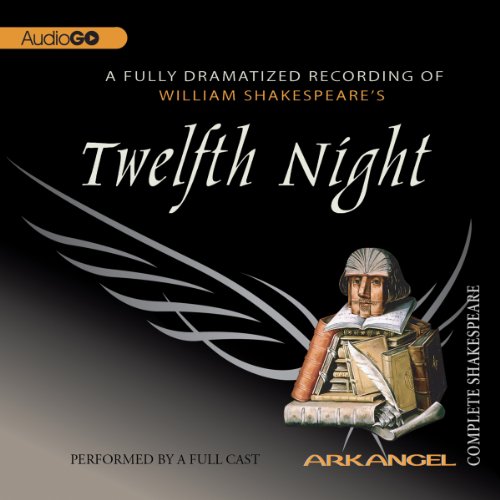
- Arkangel Shakespeare
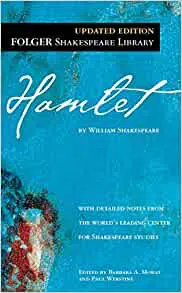

Sarah Mackenzie (00:00):
I think when most of us hear the name Shakespeare, we think back to a high school classroom, fluorescent lights buzzing overhead while we struggled through reading Romeo and Juliet, line by line, wherefore art thou and all that, and that's a shame because here's the truth. Shakespeare was never meant to be dissected like a frog under a microscope. His work, in fact, was never meant to be read at all. He meant for his plays to be experienced, to be performed, seen, heard, and felt.
(00:51):
Welcome to the Read-Aloud Revival podcast. I'm your host, Sarah McKenzie. Today I want to talk about why experiencing Shakespeare with your kids might be one of the most joyful things you ever do together. So let's begin by flipping the way we usually think about Shakespeare on its head. We often think that Shakespeare is a school subject or that we should read it as part of a rich literature curriculum for our children to be academically well-versed. And listen, it's true that when it comes to passing on a rich literary heritage, Shakespeare's plays are where it's at. But I want to make a case today that Shakespeare is not a subject at all. It's not something you should do in your homeschool to have well-educated kids. I think you should do it because homeschooling is about connection. It's about connection with Christ, connection with each other, and connection with ideas, and Shakespeare is a playground for connections. Besides that, it's just so much fun.
(02:03):
I think one of the bigger misconceptions about Shakespeare is that his work should be read. I even recently heard from a fairly well-versed homeschool expert, who shall remain nameless, that watching a Shakespeare play is almost as good as reading it. But no, Shakespeare's plays were never meant to be read. This isn't like Charles Dickens, where he published serial publications, distributed around public meeting houses and read aloud every week. No, Dickens was meant to be read. Shakespeare was meant to be performed. Shakespeare's plays were only written down so that actors could perform them. And do you know who filled the Globe Theatre in London 400 years ago? Not scholars, not academics or literary critics, just people. Fishmongers, tailors, bakers, families. They laughed and they cheered and they booed and they wept because Shakespeare understood people. He understood what makes us tick, what we long for, what we fear, what makes us giggle or blush or bristle or weep.
(03:14):
He wrapped all of those emotions in the most beautiful, playful, powerful language ever written. I like to say that you don't need to do Shakespeare for academic reasons or for elevating the literary culture in your home. You should just do it because it's so stinking fun. And if you experience Shakespeare with your kids in the way that I want to invite you to do, I can nearly guarantee that these will become impactful, cherished moments of connection for your kids that your kids will take with them and that you will take with you as well. Also, it will boost their academic prowess because Shakespeare's language is literally everywhere, and it'll broaden them culturally because Shakespeare's stories are the bedrock for so many other plays and stories and movies and books that we love today. Your kids' language will also improve because nobody does language like Shakespeare. But above all, you will have so much fun. And honestly, most homeschooling families I know are actually doing okay when it comes to academics.
(04:23):
They're doing all right when it comes to creating a culturally rich experience for their kids, giving their kids a great vocabulary. What homeschooling families need is a lot more fun. So how do we do this? And why on earth am I saying Shakespeare is fun? We'll be unpacking how to do Shakespeare in this life-giving, rich, completely fun and simple way more in the next episode. But today I wanted to invite one of my very favorite Shakespeare people on the face of the planet to the podcast.
(04:55):
I'm talking of course about Ken Ludwig. He's the author of How to Teach Your Children Shakespeare. He very well may be the most performed playwright of our time. He's had six shows on Broadway and London's West End. He's won all kinds of awards. He's a playwright whose plays are performed on stages around the world every single night of the year and he's also a deep lover of Shakespeare. He's one of those people who helps you fall in love with the thing that he's so in love with, just by nature of his enthusiasm. So without further ado, here's my conversation with Ken Ludwig. Ken, it is always a complete joy to talk to you. Thanks for coming back to the Read-Aloud Revival.
Ken Ludwig (05:46):
Well, thank you for having me. I always have the most fun ever when I'm talking to you.
Sarah Mackenzie (05:51):
I was so delighted when I saw there was a new edition of your book, How to Teach Your Children Shakespeare. Let's tell our listeners who might not be familiar with either edition of the book about it. Do you want to give a little description of what it was and why you wrote it?
Ken Ludwig (06:06):
Sure. I'd be happy to. I just happen to have a copy of it with me. When my children were, the older was in first grade, she came back and spouting a line of Shakespeare, "Hey daddy, I know a bank where the wild thyme blows." And I was sent, "Olivia, where did that come from?" Her teacher was from England, loved Shakespeare and started teaching the children how to memorize lines from Shakespeare. And at six years old, believe it or not, it works because it's like a nursery rhyme, especially if it rhymes. "I know a bank where the wild thyme blows, where oxlips and the nodding violet grows." So suddenly in those two lines of iambic pentameter, they rhyme and the children walk back and forth to school saying them, and suddenly they know Shakespeare.
(07:08):
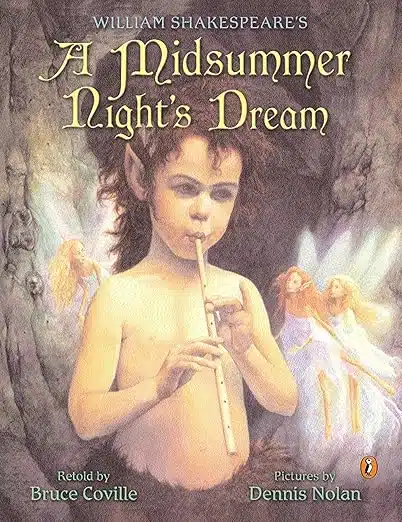
And I thought, oh, what a wonderful opportunity. I love Shakespeare, spent my life in Shakespeare, and here's a chance to start to teach my daughter Shakespeare. And how to teach her Shakespeare? Teach her passages, teach her these four lines then and then explain a little bit about that play we're talking about. That was A midsummer Night's Dream. Always a good one to start the children with. Maybe a little bit of, usually the comedies, Much Ado About Nothing, As You Like It. So little by little, over years and years and years, Olivia and I would snuggle in bed on Saturdays and Sundays and we would spend an hour each time learning passages from Shakespeare.
(07:53):
And then one day when I was having something else published, my agent at William Morris Endeavor said to me, "Any other books you have lying around your office?" I said, "No." He said, "I bet you do." So I had written the first chapters of this. He had me send it to him. He loved it. There was an auction among publishers to publish it. It got published and now it exists. And what it does is it tells parents, it says, How to Teach Your Children. It's for parents. It's not for children in the sense that if you stay one chapter ahead of your children, you can teach them how to recite Shakespeare, passage by passage, what the play means at an appropriate level. I've chosen passages that they can understand and they can conquer, and you do it with them. Lo and behold, my daughter went away to college knowing 1,000 lines of Shakespeare just off the top of her head.
Sarah Mackenzie (08:59):
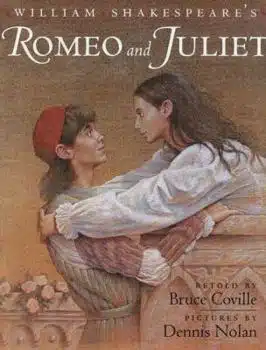
I love this so much. There's so much here. One piece that I love, especially, and you know this, I've told you this before, but this book is my hands down, absolute favorite resource for teaching Shakespeare. And most parents who are listening to this podcast probably don't know a lot of Shakespeare themselves because the way I was taught Shakespeare, it was in high school, we just read a play. I think probably it was either Julius Caesar or Romeo and Juliet, but I don't remember.
(09:27):
I remember thinking it was boring, I didn't understand it, because we just read it like it was a novel, even though it is not a novel. There was no delight. And so we feel out of our depth, like how am I supposed to teach Shakespeare if I don't even know it? And I love that the way you've set up and organized and framed everything you teach in the book is exactly like, I don't even know if you have to stay a whole chapter ahead, just a few pages ahead, and you can guide your kids right through. And then you're teaching your kids and you're teaching yourself at the same time.
Ken Ludwig (09:58):
And I chose the enjoyable stories that were age appropriate. The notion that in America, and you weren't the only one, the usual one that got taught in America in young high school students was Julius Caesar. There could not be a worse play to choose. Of all of Shakespeare's glorious plays, could not be a worse one because it's about a bunch of older men, all men virtually, there's a couple of small female parts, talking politics in togas. And to this day, I don't know what's going on in it myself. And for decades and decades, maybe 100 years, that's how they taught Shakespeare because some person got in their mind that that was a serious play. Certainly we've gotten away from that. And the best play to start your children with is a Midsummer Night's Dream. It's set in a magical woods. There's a king and queen of the fairies, there's mischief, it's funny. It's the best.
Sarah Mackenzie (11:02):
It's so hilarious. There's so many great lines. There's so many lines from a Midsummer Night's Dream that we recite just, I mean, one of the ones, I know I've said this on the podcast before, so some of our old listeners will probably recognize it, but when we're in a hurry, we'll say, "I go, I go, look how I go swifter than arrow from the Tartar's bow." And all the kids will say it. We'll say it like, "Mom, hurry up. We're going to be late." And then I'll recite it as I'm grabbing the keys or the kids will do it. It's just fun. There's so much fun. There's playfulness, there is no end of laughter between Puck and Bottom and all of the rude mechanicals. Their whole scenes are just hilarious.
Ken Ludwig (11:43):
They're hilarious.
Sarah Mackenzie (11:43):
It's just so fun. Something else you mentioned about the way you set up your book is that you're leading with passages, you're leading with the language really, and then teaching about the story. None of this sounds like sitting, like in your high school English class with just the play in front of you, reading it silently to yourself, which I think is how I was taught. And I think this speaks so much to your experience as the world-renowned, award-winning playwright that you are. Knowing that these words are supposed to be spoken aloud, recited, memorized, performed, and then set into a story. Memorization is such a key piece of your methodology in how to teach your children Shakespeare. Why is that?
Ken Ludwig (12:30):
Well, how else can we appreciate Shakespeare in a fun sense? Not in an old-fashioned sense, in a fun sense, but memorize a few lines. You used, as an example, that my family did the same. Going someplace quick, used Puck's line. Puck is the little fairy Sprite who works for Oberon. He's his mischievous servant. And Oberon tells him to go find the magic flower and Puck cries out, "I go, I go, see how I go swifter than Arrow from the Tartar's bow." Well, what could be more fun? We all say it together, as a family, as you do, and that suddenly brings the play alive. Telling a summary of the play is important later, when you want to know what the play's about, as long as it's a short summary.
(13:20):
But to just go right in with some of the fun language, Oberon, Puck's master, "I know a bank where the wild thyme blows where oxlips and the nodding violet grows." He's describing the bed of flowers where his wife, Titania, sleeps because he's going to put a magic spell on her eyes. And when she awakes, she's going to fall in love with the next live creature that she sees. And what does she see? A donkey. So she falls in love with a donkey. What could be more fun? That play is meant to be joyous and full of beautiful, and the language makes it joyous. So you need to put together the language and put together the story, put together pictures of the characters, get a good book for children on Midsummer Night's Dream. And you see the king and queen of the fairies. You see Bottom, that's the man who's working in the forest. He's just an everyday artisan, and he gets transformed into a donkey. So he speaks, hee-haw, hee-haw, he loves being with the fairy queen. Well, kids are attracted to this. It's a great, fun, joyous story.
(14:42):
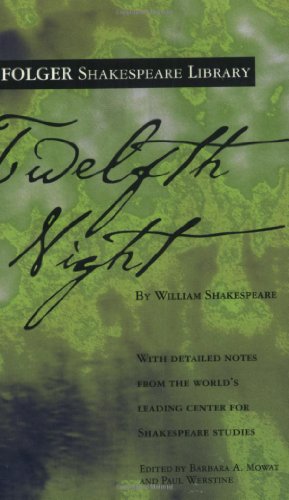
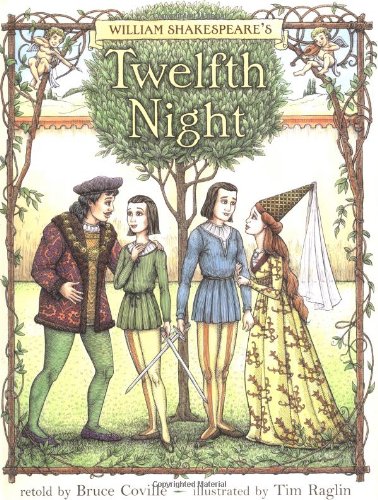
Now, Shakespeare wrote 10 comedies, not all of them as magical as A Midsummer Night's Dream because A Midsummer Night's Dream is set in a magical kingdom. But all of them fun, all of them funny, all of them interesting, and Shakespeare always gets your attention right off the bat. Right off the bat in the stories, where do they start? Where does Twelfth Night start? There's a big storm at sea and a ship is going down, and a brother and sister who are identical twins who love each other deeply get separated in the storm.
(15:21):
So the girl, whose name is vile Viola, gets washed up on shore. She looks around and she says, "What country, friend, is this?" "It is Illyria, lady." She says, "My brother, he is in Elysium. Perhaps he is not drowned." The captain says, he says, "In a sense, a miracle that you yourself were saved." And we're off and running. We have a young, vulnerable, beautiful woman who is on shore in a land she's never been on. She's lying there in the sand. The water's lapping against her. She's been in a terrible shipwreck, which begins the play, and she's lost her twin brother, who is her heart. Now what better a story, how can you start a story better than that?
Sarah Mackenzie (16:17):
Yeah. Right.
Ken Ludwig (16:17):
Now what do we want? We want her to find her brother.
Sarah Mackenzie (16:21):
Yeah. It's like this reminds me so much of these experiences where I will go to want to share a story of some kind, Shakespeare or otherwise, with my kids, and they'll be like, oh, I don't. Usually, I think, kids don't realize how exciting Shakespeare's plays really are. Unless you have somebody, like listening to you drop us right into that story makes us go like, oh my gosh, yes. What happens next? That's exactly what we want. This is the same thing we want to give our kids. And this is what I think you do in your book, because you also, one of the things that's really powerful, I think, about the way you set up your book is that you parse lines basically.
(16:59):
This is what this line means. "I know a bank where the wild thyme blows." What's a bank? Our kids might not know. They might be thinking of the place they store money. So instead, let's tell them what it is. And one of the things I've noticed with my classes at our homeschool co-op is that sometimes we'll be doing a reader's theater version of a play, and I'll stop at one point and go, "Hold on, hold on. Do you know what you just said?" Especially if the kid recited it in a way that didn't really make sense with what they were saying.
(17:28):
"Do you know what you just said?" And they'll go, "No." I'm like, "Okay, let's write it out." So I'll write it on the board. I'll be like, "Okay, let's figure this out." And I think it's like unraveling each word. Then they're like, "Oh my gosh." It's almost like unlocking a mystery. And then they're like, "Oh my goodness." Once in a while, this class that I'm doing right now, we are doing Much Ado About Nothing. And there are some hilarious lines that, as soon as I'm like, "Do you know what you just said? Can we talk about what Beatrice just said there?" Then they're like, "Oh my goodness." I'm trying to think of what off the top of my head and of course I'm drawing a complete blank-
Ken Ludwig (18:07):
No, the first thing he does after he is tricked into believing that Beatrice is in love with him, his first line, he's then left alone. They put on, his friends think he should be in love like everybody else because it's a comedy, and he's always been attracted to Beatrice. His name is Benedict. He's a soldier. He's always been attracted to Benedict, but they're always only at each other's throats, just like so many people we, just in high school, when you think a guy's cool, you can't say he's cool. So you bicker a little bit. So they're always bickering with each other.
Sarah Mackenzie (18:41):
Yeah.
Ken Ludwig (18:42):
They're bickering. And their friends decide what we're going to do, we love Benedict, and it'd be a pain in the neck, but we still love him. He's our friend. We're going to trick him into thinking that Beatrice loves him, because Beatrice does love him, but we're going to let him hear it. So we're going to go out, the three of us are going to be in the clave. They're waiting for a marriage to happen. We have to pass the time, two weeks till the marriage, somebody else's marriage happens. And they say, "Oh, I know what we're going to do. We're going to trick Benedict into thinking that Beatrice is already declared her love for him."
(19:17):
So they walk around and they talk loud because they know that Benedict is behind that bush over there reading a book. Well, and one of them says, "Well, you know that Benedict, I feel sorry for him. He doesn't realize how much Beatrice loves him." Benedict, who we can see, he's like, "What? What's going on? She loves me? She loves me?" So after they do this number on him and they're laughing to each other, and then they walk away and they know they've got him. His first line is, "This can be no trick." His first line is, "This can be no trick." And then he goes on to say, "One of the three of them was a man with gray hair and a beard. Somebody like that would never lie to me. He's an older man." So Shakespeare isn't, you got to cut through what sounds like highfalutin language or language that might frighten you and get down to it. And what does he say? "This can be no trick. That old guy would never lie to me."
Sarah Mackenzie (20:23):
And then Beatrice comes and says, "I bid you, come to dinner." He looks at the audience and says, "There's a double meaning in that. I bid you come to dinner," like he's looking for, my goodness, it's such a funny scene. Oh my goodness.
Ken Ludwig (20:37):
[inaudible 00:20:37]. It's so funny. And imagine, lately when I've been talking about Much Ado About Nothing, to talk about the miracle of Shakespeare, I do this. I pick up usually a white piece of paper. Let me do it with a white piece of paper, a white piece of paper. This is a piece of paper that Shakespeare's sitting and looking at, got nothing on it, okay? Up to Shakespeare's time. No one had written romantic comedies. No one had written funny comedies at all. Shakespeare changed the world. So there's no such thing as romantic comedy. He has to sit with a blank piece of paper and a quill pen. I've got a little mechanical pencil I use. I write longhand. I never type.
(21:20):
And he sits with his pen and his ink and he thinks, what will I write? And he comes up with the idea of the first romantic comedy ever written. He invents that whole genre. That's the genre that Meg Ryan and, who's the guy in all the Meg Ryan romantic comedies? Tom Hanks. Tom Hanks, Meg Ryan [inaudible 00:21:46] whole series of romantic comedy movies for years and what we see on TV all the time, the Christmas movies, all of these are romantic comedies. It didn't exist. That genre, that notion of writing a play where two young people, maybe they were in love and now they're on the outs. Maybe they spat all the time. Maybe they think they're in love and one of them walks away from the wedding. The whole notion of a play around comic characters that are heading towards a wedding didn't exist. It just didn't exist. No one had invented it. He sat down with a piece of paper and he wrote Much Ado About Nothing, and it was the first romantic comedy ever written. And since then-
Sarah Mackenzie (22:26):
I didn't know that.
Ken Ludwig (22:26):
Yeah.
Sarah Mackenzie (22:28):
Oh, I didn't even realize it was his first comedy. I guess I should have known that.
Ken Ludwig (22:30):
His first romantic comedy. It wasn't his first comedy.
Sarah Mackenzie (22:32):
Okay.
Ken Ludwig (22:33):
He had written, oh, the older ones were loves, like Midsummer Night's Dream was [inaudible 00:22:38]. The early comedies are Taming of the Shrew, Love's Labour's Lost, Merry Wives of Windsor, and then he starts getting into his real center cut comedies, which starts with Midsummer Night's Dream, and then what are called his three high comedies, which are Twelfth Night, As You Like It, and Much Ado About Nothing.
Sarah Mackenzie (23:01):
Okay.
Ken Ludwig (23:01):
Each one very different. So he invents this whole form out of his head, out of his noodle.
Sarah Mackenzie (23:08):
Amazing. I mean truly. This is one of the plays that you added to the new edition of the book, correct? Much-
Ken Ludwig (23:15):
It is. And the new edition has a little, I wanted them to do a bigger one, but it's a little yellow sticker that they printed on that says "Now with two new chapters." And what happened was, knock wood, it sells enough that they said, "Hey, we want to do a new edition of it. Would you write a couple more chapters? The way things print, we have enough room for two more chapters." If we don't spend X more money, maybe they'll do it again. Then I said, "Sure," and I hadn't done Much Ado About Nothing in the first edition, so I said, "Oh, good. Let's do my favorite comedy."
Sarah Mackenzie (23:53):
So we're talking about all of this language, giving this incredible language to our kids, delightful language. What do you think is the importance of giving that beautiful, complex language to kids, even if they don't understand all of it, or even if we have to explain it to them? Just tell me why it matters, maybe.
Ken Ludwig (24:14):
Well, it matters because it teaches us to speak with a certain articulation, with intelligence. Not just say, "Did you have a good time at the party?" "Yeah, man, it was great. It was good. Yeah, it was great. I had a good time. I had a good time. We had a great time." You start to think about how you're speaking and conveying a more complex sense of things. So let me just go right to the new chapter about Much Ado About Nothing.
Sarah Mackenzie (24:46):
Okay.
Ken Ludwig (24:47):
He's sitting, it's passage 26, it's towards the end of the book. It's the two new chapters I wrote. He's sitting around and he knows that his best friend Claudio is about to get married. That's the wedding that's going to happen in the story, and he's just musing. Let me read you the first two or three lines. He says, "I do much wonder that one man, seeing how much another man is a fool when he dedicates his behavior to love will after he had laughed at such shallow follies and others become the argument of his own scorn by falling in love." That's the opening sentence. So it's complicated, but it's worth the time and I talk about it in the book word by word. What does each word mean?
(25:41):
"I do much wonder that one man," he says, "I don't understand. Why does one man, when he sees other men falling in love and becoming fools, becoming such fools for falling in love," because he's a man who said, "I'm never going to marry. I'm never going to fall in love," just like Tom Hanks would do in one of those Meg Ryan movies. You're not catching me. I'm going to be a bachelor all my life. And that's what Benedict does. He says, "Huh, I do much wonder that one man, seeing how much another man is a fool when he dedicates his behavior to love."
(26:28):
When you're standing there and you see your friend make a fool of himself over love, oh, I'm going to buy her chocolates. Oh, we're going to go to the movies. I wonder if she'll hold hands with me. I wonder if, oh my gosh, maybe this will be the night I kiss him. You're making such a [inaudible 00:26:45], because Benedict says, "I'll never do that. I'll never make a fool of myself." And of course, what happens in the course of the play? He falls head over heels for Beatrice and he does it because he's fooled into it by his friends and he overhears them talking. So it's got a great plot. What a great plot.
Sarah Mackenzie (27:06):
Yeah.
Ken Ludwig (27:07):
This is the opening lines of this soliloquy, which is the one I suggest people learn, and [inaudible 00:27:12] actually learn just the first sentence of it. "I do much wonder that one man seeing how much another man is a fool when he dedicates his behavior to love," and then he goes, after he's laughed at such shallow follies in others, after he's laughed at such nonsense by someone else, will become the argument of his own scorn. Will become just that way that you're laughing at that guy, the argument of his own scorn.
(27:51):
I scorn that guy who falls in love. Why would I become the argument of my own scorn by falling in love? And then he finishes it with falling in love, and such a man is Claudio. And then he does this marvelous extended metaphor. So as you teach your children, as they get older, they say, "What is a metaphor?" A metaphor is when something is like something else. A metaphor in a simile or sometimes you either use the word as or like. So he says, "I have known when there was no music with him, but the drum and the fife." What does he mean by that? He means I've known when all he cared about was military music. The drum and the fife are military music.
(28:42):
That's when drummers are drumming and in military form and a fife is what you play, things like a short little sideways flute. You're hearing colonial Williamsburg. Those are military instruments. Those are instruments you play when you are a soldier. And he says, "I have known when there was no music in him, but the drum and the fife." So he's using those as metaphors, "And now he rather hear the tabor and the pipe," and now he'd rather hear little flutes playing and violins playing because the sweet little guy has fallen in love. He's making fun of his friend Claudio for getting married in a week's time.
Sarah Mackenzie (29:39):
Which is pretty funny too because this is one of those instances where I think Shakespeare actually gives us the whole plot in this really sideways, like early hints at it. Pretty much, it's all in there in those lines of Benedict. This is exactly what's going to happen to Benedict in a minute.
Ken Ludwig (29:57):
It's so ironic. It's so much fun.
Sarah Mackenzie (29:57):
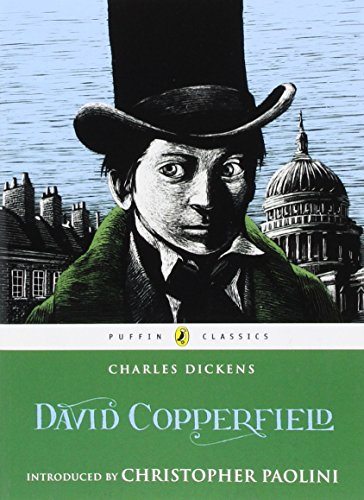
I think one of the things, so I'm reading David Copperfield to my 11-year-old twins and my 13-year-old right now, and we're reading an abridged version, in case anybody out there is like isn't that going to take you half a century? It is an abridged version I got from a London bookshop that is exquisite. I'll put it in the show notes, but it was so funny because we are not that far into it. We're on our way home from homeschool co-op the other day. One of the kids in the back was complaining about something, I don't remember what they were complaining about, and I'm just listening. I'm driving and one of the 11-year-old twins, Beckett, goes, "I'm a lone, lorn creature." I'm going to say this wrong. "I'm a lone, lorn creature. Everybody feels things more than I," or, "I feel things more than everybody does," or whatever the line is that, who is it? Mrs. Gummidge, am I saying that right?
Ken Ludwig (30:49):
Yeah.
Sarah Mackenzie (30:49):
I feel like I'm not, but yeah. Okay. Mrs. Gummidge just says, when she's just constantly the victim and feel so sorry for herself, and she's always like, "I'm a forlorn creature." It was so funny, he said this out of nowhere and it was like everybody started laughing and it was so much better than any of us calling out the other kid being like, "Could you stop whining for a minute? Could you stop complaining?"
Ken Ludwig (31:12):
Yeah. And that's what literature does.
Sarah Mackenzie (31:15):
Yeah, that's right. And then nobody does language better than Shakespeare. So then when we do it with Shakespeare, it's just extra. I know a lot of homeschoolers, I think, want to do Shakespeare with their kids because they understand this is a part of our literary heritage. I don't think most people understand, myself included, even though the extent to which Shakespeare's plays have impacted storytelling ever since. Yeah, talk about it.
Ken Ludwig (31:45):
Everything. Jane Austen does not exist without Shakespeare. She worshiped Shakespeare, she draws language from him, she draws stories from him. All the things that we love that are easier to digest come from Shakespeare. Nobody knew Shakespeare as well as Charles Dickens. Your Great Expectations and all these great stories come from him. And what I try to do in the book, I'm not trying to advertise the book, but what I'm saying is find something like this book if this isn't the one for you. But that does-
Sarah Mackenzie (32:17):
This is the only one that's like it.
Ken Ludwig (32:20):
It's got to do this. You need to memorize a few lines, because then you start to hear how it sounds and it becomes very real to you, even if it's as well known as, "To be or not to be. That is the question." Or oh, "What light through yonder window breaks," whatever you learn, memorize it and make sure you understand what each word means. That's the other half of the equation. Don't just learn it by rote. Make sure you know what each word means. "I do much wonder that one man," means I'm confused. I wonder, I don't understand why one man is what he's saying. I don't understand or I'm surprised that one man. "I do much wonder that one man seeing how much another man is a fool when he dedicates his behaviors to love." Maybe dedicates holds you up.
(33:27):
Maybe you say, "What do you mean by dedicates his behavior to love." When he acts like he's in love. Dedicates means absorbed, becomes. When he acts like he's in love. He says, "I don't understand one man, when he sees how other people act when they're in love, they do these silly things. Instead of playing military instruments, they're playing little fiddles and swooning. Oh, I have known when he would have walked 10 miles to see a good armor. I know when he'd have walked 10 miles up the hill to see a good armor plate on a knight."
(34:11):
"I've known when he would walk 10 miles as he could armor and now will he lie 10 nights awake, carving the fashion of a new doublet." Meaning in his mind, lying awake in bed, carving the fashion of a new doublet, imagining what a new beautiful suit, a doublet is the jacket of a suit, what my new jacket would look like when a girl sees it. Oh, maybe it'll have a little gold braid on it. Maybe it'll be fancy. She'll be attracted to me because maybe it's a little tight in the body, so that she can see my muscles. He's saying, "I used to know when you'd walk 10 miles to see a good piece of armor, now you're lying awake at night dreaming of how you're going to look for this woman. What happened to you?"
Sarah Mackenzie (35:03):
That's right.
Ken Ludwig (35:04):
And if you take each one of those little bits of the speech and say, "Well, he's just saying you've become a love monster. What happened to you?"
Sarah Mackenzie (35:15):
What is a just about to happen to you, Benedict.
Ken Ludwig (35:18):
[inaudible 00:35:18] just about to happen to Benedict, and that's what's so great.
Sarah Mackenzie (35:23):
Yeah. I feel like one of the things that I can appreciate now about Shakespeare's plays that maybe I didn't before reading your book was that it feels like, even over just a handful of his plays, we get all of the biggest emotion. Let me think. I was going to say the biggest emotions, but we have tremendous themes of fear, revenge, justice, love, and it's all clothed in this language that's really beautiful. But as our kids are growing and going through the teen years and they're feeling really big emotions.
(36:06):
So I feel like it gives them this story where they can see these feelings that they're experiencing of all different kinds, anger, love, justice, revenge. I keep thinking of the, we just saw Hamlet, of course. Those are in my mind. But in Midsummer Night's Dream, there's all other kinds, mischief and pride, but they're clothed in this really beautiful language that I feel like then, when we give our kids the chance to recite them, not just read them, but recite them like you're suggesting, it's like they get to try them on in beautiful language and it feels, I don't know. It feels like there's nothing else quite like it. There's nothing else like it.
Ken Ludwig (36:50):
I agree so deeply. And it's not just that the music is beautiful. It is beautiful because it's in a kind of verse that he was just a genius. There was no other writer in the history of the world who was such a genius. But the beauty is part of it, but it's also the complexity of the language that he makes easy and clear. Because when you're thinking a thought, and if you said, "No, it's odd that somebody'd make a fool of himself just because he fell in love." Well, that's what he says in that first sentence. But when he says it that more complex way, he's saying, "See how much another man is a fool when he dedicates his behaviors to love." That's not quite just saying, "When he falls in love." Dedicate your behavior, suddenly love has become part of you. It's overwhelmed you. It's become part of who you are. You're now dedicating your whole behavior to love.
(37:50):
So the language not just is beautiful, it's complex in a way that tells us more than just simple monosyllables would do. It makes us feel those ideas down in our kishkas. We really understand what he's talking about, and he does it again and again. "O, what a rogue and peasant slave am I. I have heard the guilty creatures sitting at a play have, by the very cunning of the scene, been struck so to the soul that presently they have proclaimed their malefactions." That's Hamlet. You just saw Hamlet in Stratford. Well, it's different to say, "Oh, I'm not worth 2 cents. I'd like to kill that Claudius. I'm sure now that he killed my father and left me an orphan and I loved my father." Now, when I express those things like that, which is paraphrasing, it makes it clear, but it not only lacks the beauty, but it lacks the complexity, lacks the weight. "O, what a rogue and peasant slave am I?" That's a very powerful way to express your feelings of anger and disappointment in yourself that goes down deep, and that's what Shakespeare does all the time.
Sarah Mackenzie (39:24):
So if a parent walked up to you at let's say a book signing event or something and said, "I already read a lot of good books with my kids. Why should I make sure I also include experiencing Shakespeare?" What would your answer be?
Ken Ludwig (39:42):
The answer is that you can't be a literate person in the English language without knowing Shakespeare. Sometimes you don't even know why that's so. That's not just being highfalutin and being a snob. Jane Austen depended deeply on Shakespeare. When we read Jane Austen, if we don't know what her allusions to Shakespeare are, we're missing some of Jane Austen. Same with Charles Dickens, same with George Orwell, same with Noel Coward. Say, who are [inaudible 00:40:14] with Toni Morrison, same with all the intelligent people who wrote, after Shakespeare, wrote novels, wrote plays, wrote treatises, wrote essays, but especially novels or wrote history, they are drawing on Shakespeare for their allusions, for their comparisons all the time because if they're teaching in college or they're just smart people who are writing books or they're doing this, they know they're Shakespeare. They have to. It's the one odd piece of the puzzle that no one else fills. If you don't know Shakespeare, you just don't have that bottom of the English language.
Sarah Mackenzie (41:03):
Okay, yes.
Ken Ludwig (41:05):
You'll never know other things as well.
Sarah Mackenzie (41:08):
I also love how much just enjoying Shakespeare with my kids has made them see it otherwise. This completely unrelated TV show we've been watching called When Calls the Heart, which people who are listening to this, some of you, I know, watch it. It's like this Canadian pioneer historical drama type darling. And there was an episode I was watching with my kids. There was an episode where one character is matchmaking two other characters. And so in order to get them to fall in love, she basically, her plan is to have a love note delivered by this little child into one of their jacket pockets. But of course, the little child who's supposed to deliver the love note puts it in the wrong jacket pocket.
Ken Ludwig (41:54):
Oh, great.
Sarah Mackenzie (41:55):
We're watching this, and I am thinking to myself, magnificent. This is such, and Clara, my 13-year-old, she pauses it and she goes, "If that kid isn't Puck." It was so great because she saw the whole-
Ken Ludwig (42:07):
Very [inaudible 00:42:08].
Sarah Mackenzie (42:08):
Yeah, but I didn't have to show it to her. I didn't have to say it. It's like she just saw it, and I think they do, over time. The other thing I really appreciate about the way you frame things in your book is I think for a lot of us, we think, okay, I've got to introduce my kids to Shakespeare, so now I've got to do all of Shakespeare. But you just take it at a very relaxed pace of how about we just start with Midsummer Night's Dream, which I always love to start with too. It's my favorite place to start. And then over time, you add in As You Like It or Much Ado About Nothing or Romeo and Juliet or whatever you're going to do.
(42:44):
But really, and my kids, I feel like, are pretty familiar with a lot of Shakespeare now, and we very rarely do deep dive in or go see more than one particular play a year. But if you think about it, over time, that's a pretty, especially if you're doing it in this way where you're reciting passages and they really understand the passages, they really understand the story, then they just know it.
Ken Ludwig (43:13):
It adds up, and it just can start slow and slow and slow. And then you say, your child's, mine was six because she came back and said that. So how much did she learn in that first six, seven, eight years, maybe five lines, eight lines, what you do, but it felt familiar and I let her draw the covers of her own books. We had them in three ring binders and she'd draw pictures of Puck or Shakespeare on the front. I have all of them, to this day, and there's about eight or 10 of them because [inaudible 00:43:48] with Little dividers in, and we knew we were going to do that. Oh, let's go do the Much Ado passage from this and remind ourselves of that. Let me say that that note trick, which is great. You mentioned that one from the Canadian show you just talked about, what's it called? I want to say it now?
Sarah Mackenzie (44:08):
When Calls the Heart is what it's called.
Ken Ludwig (44:09):
When Calls the Heart.
Sarah Mackenzie (44:10):
Yeah.
Ken Ludwig (44:11):
That is a very specific Shakespeare thing. Yes, Puck does mischief and Puck makes mistakes. Remember, he puts the magic juice on the eye of the wrong lover, but delivering the wrong note because there's two notes to the wrong person is exactly what happens in one of the early comedies called Love's Labor's Lost.
Sarah Mackenzie (44:34):
Okay, I'm not familiar with that one.
Ken Ludwig (44:38):
The lower comic characters named Costard, C-O-S-T-A-R-D, there's also a very funny Spaniard in it because he uses his language. Shakespeare's loves using funny French and funny Spanish because these are people who have accents. Don Armato and Costard are the lower comic characters, the ones who are silly as opposed to Berowne and the lords and ladies who are funny, like Much Ado About Nothing. A combination of Much Ado About Nothing's story on the top and these funny, funny characters on the bottom. So the setup for Love's Labour's Lost, the setup of the whole story is that four lords decide we are going to form our own little academe, they call it, meaning we are going to form our own little club.
(45:26):
We are not going to talk to women for three years. We're not going to think about those things. We are going to study academic subjects. We are going to be pure, and so well, what's the first thing that happens after they make these vows? The Queen of France and her three ladies-in-waiting, all of whom are beautiful, all of whom are about the same age as these young guys, come to this same town and the guys are going, uh-oh, we're supposed to not take notice of these gorgeous women who just walked in town? So Berowne writes a love letter to one of them, and the King of France writes a love letter to the Queen of France, because they're matched. All four of them are matched. There's Dumaine, Longaville, Berowne, and the King of France. And see, he doesn't want his friends to know he's breaking the rules. So he gives that note and he hands it to the clown ...
Sarah Mackenzie (46:22):
Hilarious.
Ken Ludwig (46:23):
And the clown delivers it to the wrong person, and so they all get to see that Berowne broke the rules. And about halfway through they go, "We got to give this up. These girls are too pretty." That's the story.
Sarah Mackenzie (46:39):
Hysterical. I had no idea that was the exact, I mean, that's exactly where it came from, then. [inaudible 00:46:43].
Ken Ludwig (46:42):
That's the story of Love's Labour's Lost.
Sarah Mackenzie (46:44):
Amazing. Ken, I love chatting with you. I absolutely love this book. You know I love this book. I hope every listener gets a copy. I think every homeschool in America would be better off with this book in it, on its shelves. At least-
Ken Ludwig (46:57):
Thank you. I love seeing you. It's been too long. We have to keep this up.
Sarah Mackenzie (47:04):
Isn't he wonderful? I could listen to Ken talk about Shakespeare all day. His enthusiasm is contagious, and what I love most is how approachable he makes it all feel. And that's really the heart of it and the heart of what I hope you take from this episode. When we enjoy Shakespeare with our kids, not as a lesson, not as a subject, not even as an item on our to-do list or a thing in our school day, but as a treat, something amazing happens. We build a shared language in our families. We create inside jokes. We fall in love with words again. We fall in love with some of the greatest stories ever told and ever performed on stage. And most of all, we get to explore stories that have stood the test of time because they speak to something deeply true about being human. In the next episode, I want to dive into the how of all this, because it is way simpler and way more fun than you probably think. Now let's hear from kids about the books they've been loving lately.
Kytan (48:12):
My name is Kytan. I am nine years old, and I am from Dawsonville, Georgia. I recently read The Journey of Five by Jenny Phillips. In the book, there is a small village where a boy with a twisted flag named Finn helps his family and neighbor every day by cutting firewood, getting water from the river. One day, the river starts drying up. All the surrounding villages assemble a group of five to investigate and solve the problem now threatening their villages. Finn and his four companions set off on a dangerous journey and help others along the way. After encounters with enemy soldiers, storms and reindeer, this story of survival and faith comes to an end. This book taught me to give without intent to get back, and everyone has a talent to share with others. I would recommend this book because it is an exciting story that teaches good morals, which I have been trying to read more of.
Sarah Mackenzie (49:28):
What's your name?
Louis Castle (49:29):
Louis Castle.
Sarah Mackenzie (49:30):
How old are you?
Louis Castle (49:31):
Five.
Sarah Mackenzie (49:32):
Where do you live?
Louis Castle (49:32):
[inaudible 00:49:33].
Sarah Mackenzie (49:35):
Mountain Home. What's your favorite book?
Louis Castle (49:40):
Pete the Cat.
Sarah Mackenzie (49:40):
Why do you like Pete The Cat?
Louis Castle (49:41):
[inaudible 00:49:42].
Sarah Mackenzie (49:42):
What's Pete the Cat like?
Louis Castle (49:44):
Pete the Cat.
Sarah Mackenzie (49:45):
He's like Pete the Cat?
Melody (49:47):
My name is Melody. I'm 10 years old and I live in Mountain Home, Arkansas. My favorite book is Dark Sea of Darkness because it's so cool and they have monsters and sea dragons.
Speaker 6 (50:05):
And sea monsters.
Melody (50:06):
And sea monsters.
Sarah Mackenzie (50:07):
What's your name?
Baby Harold (50:11):
Baby Harold.
Sarah Mackenzie (50:12):
Baby Harold. How old are you, Harold?
Baby Harold (50:13):
Two.
Sarah Mackenzie (50:14):
And what book do you love?
Baby Harold (50:19):
Little Blue Truck.
Sarah Mackenzie (50:20):
Little Blue Truck.
Alma (50:21):
Hello, my name is Alma. I'm 11 years old and I live in Quebec. I would like to recommend the book, A Place To Hang The Moon by Kate Albus. I think it's a really good book to read in the fall because there is a lot of libraries and tea and hot buttered toast and just cozy scenes. It's one of my favorite books to read.
Kate (50:47):
Hi, my name is Kate and I am nine years old, and I would recommend Swallows and Amazons. It's about four kids who set out to an island and camp there, and they meet two other girls and they make friends. Oh, and I am from Quebec.
Lucy (51:14):
Hi, my name is Lucy. I'm nine years old and I am from Quebec. I am recommending Farmer Boy because it's a good book and it's about these kids who live on a farm, who garden, [inaudible 00:51:33] and it's long ago, so things are mostly done at home, like sewing, and they have sheep, and they sometimes have to wash the sheep before, I guess, shearing them.
Sarah Mackenzie (51:52):
Thank you so much, kids. If you want a little sneak peek at what we're going to be talking about, text the word Shakespeare to the number 33777. Thank you for spending time with me today. I'll be back in two weeks. In the meantime, you know what to do. Go make meaningful and lasting connections with your kids through books.