RAR Podcast: Baptizing the Imagination with Malcolm Guite
What is your calling in life?
For poet, songwriter, and academic, Malcolm Guite, it’s unequivocally clear—to be a storyteller.
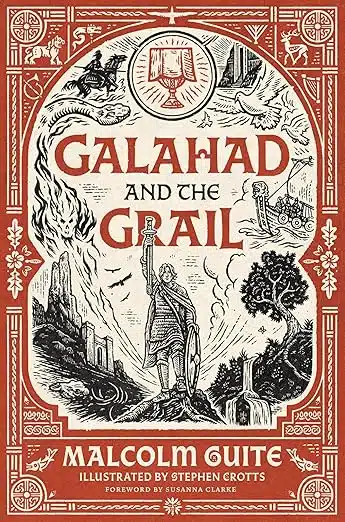
Today on the podcast Audrey and I chat with Malcolm about the first volume in his new retelling of the classic King Arthur stories, Galahad and the Grail, illustrated by the incredible Stephen Crotts and published by our friends over at Rabbit Room Press.
Not only is Malcolm adapting the legends of King Arthur, he’s doing it in poetic ballad form, which means they are basically designed to be read aloud.
In our conversation, he tells us about the epic journey he and his publisher and illustrator undertook to visit sites connected to the Arthurian legends, how a childhood surrounded by books and stories led him to his lifelong love and study of literature and poetry, and the impact his own mother had on his journey to becoming a poet and storyteller.
In this episode, you’ll hear:
- Why Malcolm chose to write this story in ballad form
- How woodland walks inspire Malcolm’s writing and why he knew it was time to “take up the tale”
- What elements and parallels of Biblical stories Malcolm wanted to restore that have often been left out of modern Arthurian retellings
Some links are affiliate links
Learn more about Malcolm Guite:
Books and Resources Mentioned in This Episode:
- Rabbit Room Press
- Steven Crotts
- Official Trailer | Merlin’s Isle: The Tale this Land Still Keeps
- The Rime of the Ancient Mariner, Samuel Taylor Coleridge
- Ode to a Nightingale, John Keats
- Martin Shaw
- Gandalf on the doorstep!
Malcolm Guite (00:00):
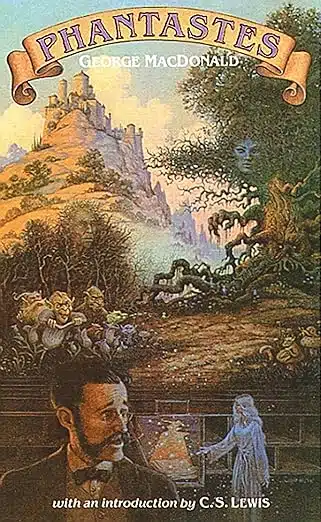
One of the wonderful things in C.S. Lewis's Surprised by Joy is about how when he was thought he was a really fierce atheist, he randomly picks up a wonderful storybook on the railway station, which turns out to be George MacDonald's book, Phantastes, and didn't make Lewis Christian immediately at all, but Lewis says it baptized his imagination. It's kind of working away so that when the time came right, all those stories were part of a kind of big homecoming to God, and I hope this will sort of not only be a pleasure, but also be a kind of baptism of the imagination.
Sarah Mackenzie (00:47):
Welcome to the Read-Aloud Revival Podcast. I'm your host, Sarah Mackenzie. This is the show that helps you make meaningful and lasting connections with your kids through books, and today I have a treat for you. Our guest is Malcolm Guite. He is a poet, a songwriter, an academic, and he's got a brand new book coming out from our friends at the Rabbit Room Press called Galahad and The Grail. I cannot wait for you all to hear him talk about this book, and I can't wait to chat with him myself about it. He holds degrees from both the University of Cambridge and Durham University, and he is just an absolute delight. I love listening to him read aloud on his YouTube channel. Malcolm, welcome to the Read-Aloud Revival. We're so happy you're here.
Malcolm Guite (01:30):
Hello. It's lovely to be here. The two words read aloud immediately draw me in because as you will know from my YouTube things, I think reading aloud is a great thing to do. It's almost a lost art. I have been formed by my parents reading aloud or telling stories to me, and that's become part of who I am. So when I wrote this poetic ballad form retelling of the stories of King Arthur and the Holy Grail and song, I very much aimed at I thought it might be read aloud. So it's attractive to be asked to be on a podcast cast which started with the words read aloud.
Sarah Mackenzie (02:11):
We are big fans around here and of reading aloud, and then Audrey, who's also here. Audrey, welcome back to the show.
Audrey Menck (02:17):
Yes, thanks for having me.
Sarah Mackenzie (02:19):
Yes, yes. She could not jump fast enough when she saw this book was coming out to be like, "We've got to talk about this on the podcast." Okay. So, Galahad and the Grail is the first of four, I think, right? It is four.
Malcolm Guite (02:28):
Yeah, that's right.
Sarah Mackenzie (02:30):
Okay. These are retellings of the Arthurian legends in ballad form.
Malcolm Guite (02:35):
Yeah.
Sarah Mackenzie (02:35):
Malcolm, I'm wondering if you can explain to our audience what exactly a ballad is and then why you felt like that was the right form. I mean, it is. I cannot wait for them to hear you read some of this aloud.
Malcolm Guite (02:47):
First thing to say, I started hearing these stories even before I could read because my mother knew and loved these stories and she told me these stories when I was little. So I first sort of heard them in the ear. My mother is also a Scotswoman and she knew lots of songs and ballads. Ballads were originally written to be sung to fairly well-known tunes. They basically usually had four line verses, sometimes a little bit longer, with a couple of rhymes, and they would have a kind of four stresses and three stresses, four stresses and three stresses.
(03:18):
I mean, a Scots ballad that my mother would sing Thomas the Rhymer. "True Thomas lay on Huntlie bank and he aspired a lady gay, a lady that was brisk and bold, come riding over the fernie brae." So you can feel that rhythm. "Her skirt was of the grass green silk, her mantle of the velvet fyne. At every ilka tett of her horse's main hung 50 silver bells and nine." In that story, this guy, this poet meets the Queen of Elfland and is taken off into the realm of fairy. So my mother would sing those kind of things to me. Now, the point about ballads is they're memorable. They're strongly rhythmic. They draw you in and they've got a kind of chant to them, a kind of incantatory beat.
(04:00):
Most ballads, old ballads, they began to be collected and printed in the 16th century and onwards, and then there's a big revival of them in the romantic period in the late 18th, early 19th century. The most famous revival of ballads was the poet Samuel Taylor Coleridge, and probably one of the most famous ballad that he wrote, but he obviously, I think, composer was telling is the The Rime of the Ancient Mariner. You hear exactly even sharper rhythm. "It is an ancient Mariner, he stoppeth one of three. By thy long grey beard and glittering eye, now wherefore stopp'st thou me."
(04:35):
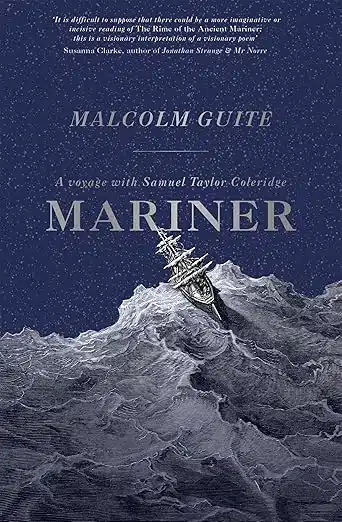
I had written a long book, detailed study of that poem, The Rime of the Ancient Mariner and of Coleridge's life called Mariner, and all this time I'd been thinking, "I want to write my epic." I was thinking, "Shall I write it in blank verse? Should it be in prose? Wait, If poetry, what kind of poetry?" I was puzzled. Then suddenly I realized that the form that Coleridge use of the ballad was just the right form, because the thing about The Rime of the Ancient Mariner is this. You can read that story or have it read to you when you're eight and you love it, but there's tons of stuff in there for you to get as you grow up. There's more and more.
(05:12):
So I dedicated my book about The Rime of the Ancient Mariner to my mother who had read it to me when I was little. By the time I wrote the book, I was in my 50s, late 50s and my mother was 97. By the time I got up to Scotland to see her, she'd read the whole thing and was chatting away to me about it. So she gave me something when she recited that I still cherish now. So the more I thought about it, my mother having taught the ballad forwards, I dedicated this book as well to the memory of my mother. My mother died at the age of 101 in 2020. So I've dedicated this whole epic to her memory and it just suddenly made sense that the ballad form.
(05:59):
My hope is, especially if it's read aloud, that this kind of ringing, singing, chanting will sweep people along. Now, you don't have to be super conscious that it's poetry. You don't have to stop at the end of every line as you're reading it. You can just let it flow through. What happens in the end is that the rhythm becomes almost like a backbeat or an incantation or a chant in your mind. It just elevates you and it just get your heart goes in sync with the rhythm as it goes. The poetry speaks to the heart as well as to the head. I sometimes think that the effects of poetry, the rhyme and the meter and the assonance and the alliteration and all those things, they're sort of like the music in a movie that's adding a richness, but while you're watching the movie, you're not thinking about music. But if you are watching your favorite movie without the music, you think, "Oh, what happened? Where did all the magic go?"
Sarah Mackenzie (06:52):
Yes.
Malcolm Guite (06:53):
A lot of it was in the music.
Sarah Mackenzie (06:54):
[inaudible 00:06:55].
Malcolm Guite (06:55):
So, a poem is a way of write telling a story with its own music packed into the way it's told.
Sarah Mackenzie (07:02):
Oh, I love this so much, and it gives it almost a cinematic feel and with the language coming in through the ear and the poetic language coming in through the ear. Then yes, the beat providing the music, it feels immersive.
Audrey Menck (07:16):
Yeah, exactly.
Sarah Mackenzie (07:16):
We know this. Audrey and I talked about how this book is dedicated to your mother, Shiona Guite, homemaker and storyteller, 1918 to 2020, and we couldn't help but be reminded of what we... We just had a conversation not too long ago about Flora Lewis, C.S. Lewis's mother. Of course, he credited his mother with his love of stories, which it feels to me like what I'm hearing from you is like, "My mother planted this love of the cadence and stories of ballads to me."
Malcolm Guite (07:46):
Oh, absolutely. She did, and I write about that in the appendices of the book as well about hearing her tell these stories and the effect they had on me.
Sarah Mackenzie (07:55):
Audrey, do you want to talk about your connection to Malcolm?
Audrey Menck (07:57):
Malcolm and I met a little over a year ago when I was at the University of St. Andrews. We went to a couple of the same conferences. Actually, at that time, I got to hear about this new project at Hutchmoot UK in Derbyshire, England. Malcolm and his publisher, Pete Peterson at the Rabbit Room, as well as his incredible illustrator, Stephen Crotts, they were about to embark on a journey. Malcolm, can you talk a little bit about the quest the three of you went?
Malcolm Guite (08:20):
Oh, it was indeed. It was absolutely wonderful. I mean, one of the beautiful things about the Arthur stories is that they're kind of almost... They're not only written in medieval texts. They're also almost written, if you like, on the text of the land and the landscape. There are so many places that have Arthurian associations or even Arthurian names right across the British Arts, but the real cluster of them is around the Glastonbury and then down in Cornwall. So Pete Peterson and Stephen Crotts and I did this kind of quest stroke summer road trip, and it was really important. I needed to be in these places to soak up their atmosphere and write. Of course, Stephen, who's doing these illustrations, really needed to be there and sketching. So it was a working trip as well as a joyful, sort of something between a working trip, a holiday, and a pilgrimage, and in fact, the pilgrimage aspect of it.
(09:15):
So we went down to Glastonbury, and Glastonbury Vale is a very beautiful ancient vale, which has a tour or a hill on top of which is a tower which is known as Glastonbury Tor. It also has the ruins of Glastonbury Abbey, which has flourished in the Middle Ages and in 10th, 11th, 12th centuries right up to the 16th century. But the abbey itself was there because they claimed to have found the ruins of a much, much older church. The Glastonbury legend, now I'm not saying that every historian is going to go for this, but I mean, print the legend as they say, the Glastonbury legend is remarkable.
(09:57):
So it tells the story of how the Joseph of Arimathea, whom we meet in three of the four gospels and learn most about from John's gospel. But a very early legend is that because he was there at the deep position, when they took the body of Christ down, that he was there and he had with him because Jesus, one of the disciples that had entrusted to him, the chalice, the vessel that had been used at the Last Supper, and that as he came to the foot of the cross, he held some of the blood of Christ in this vessel, and then he gave his tomb for Jesus to use.
(10:29):
Then of course, when the resurrection happened, the Romans were really upset and demanded of him the body. "Have you hidden it away?" He said, "Well, no." You put a God of soldiers, nobody... Anyway, the legend is they arrested Joseph and tried to starve him and have him die of thirst and starvation by keeping him off for 40 days. But Jesus, the risen Jesus appears and brings... Now, he already has the challis. Now he brings the patten bread and he lives on communion, as it were, for the 40 days. When they dig him out again, he says, "Look, I've had my punishment, but I'm..." Anyway, Jesus tells him to take these holy things, the chalice, the patten, and the spear with which Christ was wounded, the spear, which pierced Christ's heartbeat.
(11:11):
The legend is that he takes them to Great Britain. Now, this isn't entirely as far fetched as it might seem because there was in fact a trade between the Levant and Cornwall in tin, because Cornwall was one of the Roman Empire's sources of tin and you needed Tin to make bronze. So the legend says that Joseph's day job, as it were, was that he was a Finish and trader. He traded battle. So the story is that he takes these holy things to the Shores of Avalon, to Cornwall, and then he makes his way and he prays that he will be given a sign as to where he should stop and where they should be. He gets to Glastonbury, to Glastonbury Vale, to a little hill called Wearyall Hill, and he's leaning on his staff because he's tired from the journey. It's why the hill is called Wearyall.
(11:57):
Suddenly, the staff takes root and flowers into this beautiful flowering thorn tree, which is still there today as the Glastonbury Thorn. There's a beautiful stream springs up, which flows down into a well, which is still to this day called the Chalice Well. So he founds a church there. Eventually, according to the legend, when both pagan kelts and then eventually pagan sex and start invading, they take the holy things, the chalice, and then they hide them in a mysterious castle, which is wound around with spells, and that's the setup for eventually finding the holy grail.
(12:36):
So later on when the Arthurian stories start happening and that Camelot arises, Glastonbury is still regarded as a holy place and it's sometimes called the Vale of Avalon because in those days there was much more water, and the tor, which you see the rising thing was like an island and it was the Isle of Avalon. So there's this wonderful interlay of probably pre-Christian stories and then the Christian story together. The really significant thing is how that happens and how the grail actually completes and gives the final true meaning to some of those earlier myths or maybe looking for...
(13:11):
There were Celtic stories of magical cauldrons where they would give you everything you wanted in terms of food and drink, or they would help you to resurrect the dead or whatever. Perhaps that was because they knew that one day, they intuitively imagined that one day God would come and give us all he is and all he has in a challis and in bread and wine. So my view is that although some things were rebuked, other things found their fulfillment, a bit like St. Paul in Athens saying, "I saw this statue to an unknown God. He whom you worship has unknown him and therefore I preach."
(13:45):
So there's a wonderful set of stories around Glastonbury. But then the story, of course, starts in Cornwall because that's where Joseph arrives. Then when finally, he prophesied that one day there will be a Christian king in these pagan islands and that Christian king will have a court which has sufficient righteousness and holiness about it, that the grail can come out again and the grail will reappear, and that is Arthur in the Court of Camelot.
(14:10):
The legend is that Arthur is actually conceived and born right down in Cornwall at a place called Tintagel. So after Steve Crotts and Pete Peterson and I had spent some time in Glastonbury, we then went down to Tintagel. All this time, Pete had organized for a couple of film crew to come along, these documentary makers, and we made this amazing film, which I think is going to be released by Rabbit Room at some point later.
Sarah Mackenzie (14:41):
Of course. Amazing.
Malcolm Guite (14:42):
Just beautiful, beautiful, very paintedly filming. We started the filming in Oxford. I was in the Bodleian Library where the medieval manuscripts are that I have some of my sources. So it starts there, and then we go to these various places. On the way down between Glastonbury and Cornwall, there's a beautiful mirror, a sort of pool called Dosemary Pool, which is where the story is supposed to have happened of the Lady of the Lake giving Excalibur to Arthur. So we filmed there, and then we went and we got a whole day's filming down... Beneath Tintagel, there's a fantastic cave that the waves come in and out of, but at low tide, you can walk into the cave, and it's called Merlin's Cave, and it's like a carving of Merlin. So we completely immersed ourselves in the landscape of the story, and that influences both my writing and Stephens's wonderful illustrations.
Sarah Mackenzie (15:32):
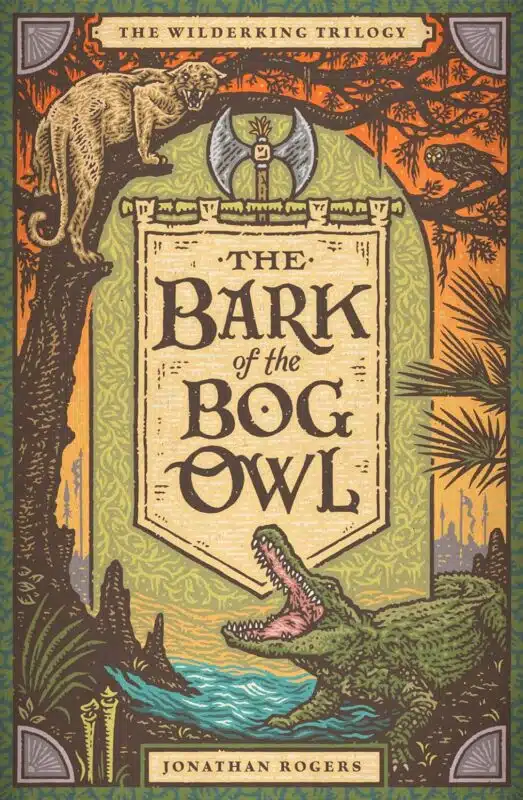
Yeah. Oh, gosh. Speaking of his illustrations, if I can draw some connections for our listeners and viewers... By the way, if you're listening to this podcast, you can hop over to YouTube if you'd like to watch it. I am holding up this beautiful book, Galahad and the Grail up on screen now. So the illustrations by Stephen Crotts, you all will know Stephen Crotts from his illustrations in The Wilderking Trilogy by Jonathan Rogers, the brand new illustrations, the new covers that they just did there, gorgeous. He's done so much other work too, but we're huge fans of Jonathan Rogers, the Wilderking Trilogy around here, so we're always talking about it and they are truly stunning, the most-
Malcolm Guite (16:11):
Oh, he's really grown and devoted as an artist even in the course of doing this, and he himself has got so deeply into the legends. So I feel great. I've been kind of like initiating. In fact, when the two of us... In the second volume, look at that. Isn't that amazing?
Sarah Mackenzie (16:25):
Yeah. Beautiful.
Malcolm Guite (16:25):
In the second volume, there's a bit where Merlin turns Arthur and himself into owls and they fly to this high stargazing tower and they're on this pinnacle legend, and Merlin is showing Arthur the stars and showing where the pole star is, where the true north, and talking about how the moral pole star and a kind of moral compass, and there's a whole thing going on. Anyway, at one point, we met up in America, Stephen and I. We were on a place called Lookout Mountain in Georgia and near Calvin College, I think is there. We were in a house which had a stone balcony, and I'd just written this bit, and I didn't even think about the similarities.
(17:05):
So I read this to Stephen, because he was going to be illustrating the next volume, and his eyes were wide and I finished it, and he said, "This is exactly where we are. It's like the old Merlin and the young Arthur." Then we started talking about Merlin, and suddenly the dog that belonged to the house, this beautiful Labrador dog came up and started leaning against me, and our host came out and said, "You should know that our dog is called Merlin." So, it was amazing.
Sarah Mackenzie (17:34):
You have got to be kidding. For real, the dog's name was really Merlin.
Malcolm Guite (17:38):
[inaudible 00:17:38] stuff like that happening in it.
Sarah Mackenzie (17:42):
Oh, my gosh, so fabulous.
Audrey Menck (17:50):
Malcolm, we would love if you would share a little bit of this book with us. Do you mind reading the prelude?
Malcolm Guite (17:55):
Yeah, I'd love to do that. Now we're talking about ballads coming from before writing down, not only this prelude, but also quite a lot of the poem I began composing on walks. I do a lot of walking in woodlands around that place. I go out on a walk and I start hearing the rhythm and saying it. Back in the day, before we all had phones, I used to compose in my head and just try and remember as much as I couldn't go and write it down. Now sometimes I speak it. People walking through in the same was going, "Who is that weird old bearded guy chanting away into the tree there in speech?" I don't remember the bit of poetry. So you'll see a bit of that quality as I read you this. First prelude is called Take Up the Tale.
(18:35):
"As I walked out one morning, all in the soft fine rain, it seemed as though a silver veil was shining over hill and vale as though some lovely long lost spell had made all new again. And through that shimmer in the air, I seemed to hear a sound as though a distant horn were blown in some lost land that I had known that seemed to speak from tree and stone and echo all around. And with the music came these words, 'Poet, take up the tale, take up the tale this land still keeps in earth and water magic sleeps. The dryad sighs, the naiad weeps, but you can lift the veil. From where the waves wash Cornwall's caves out to the white horse vale, the lands still hold the tale of old, like hidden treasure, buried gold. Once more, the story must be told.
(19:38):
'Poet, take up the tale. Tell of the king who will return. Tell of the holy grail. Tell of old knights and chivalry, tell of the pristine mystery of Merlin's isle of gramarye. Poet, take up the tale. Take up the tale of courtesy. Take up the tale of grace. Revive the land's long memory. Summon the fair folk. Let them be. Something of faery, wild and free still lingers in this place. Lift up your eyes to see the light on Glastonbury Tor. Then come down from that far green hill to where the sacred waters spill and shine within the chalice well and listen to their lore.
(20:29):
'Yay. Listen well before you start. Be still there you begin. See through the surface roundabout, the noise, the rush, the fear, the doubt. Though modern Britain lies without, Fair Logres lives within. You may yet walk through Merlin's isle by oak and ash and thorn. The ancient hills do not forget and you might wait their wisdom yet. Who knows what wonders might be met on this mid-summer morn'. So I have taken up the tale to tell it full and free. The tale that makes my heart rejoice. I tell it for I have no choice. I tell it till another voice takes up the tale from me.' "
Audrey Menck (21:22):
Oh, I just love that. It's so beautiful. I love that in this book there's sort of a dual quest being taken up. You have Galahad, of course, searching for the grail, taking up his task as a knight. But there's also in this prelude, this moment where you as a poet are taking up this call to write this story, which is so incredible.
Malcolm Guite (21:44):
Yeah. It was about time too. I wanted to do this for ages. The more important the thing is, the more scared you are to start it or the more you put it after it is. I thought, "I've got to wait. I've got to wait for my style to mature. I've got to wait till I read more of the medieval sources."
Sarah Mackenzie (22:02):
"I'm not ready." Yes.
Malcolm Guite (22:03):
It just came a point where I thought, "I have to do it now." I was in my 60s by then. At least I thought, "If you don't do it in this side, this decade, it's not going to get done. It's now or never." So that's partly what this prelude is about, is about me going for a walk and the muse finally saying, "Okay. Now is the time. Go for it." I'll tell you a lovely thing. Obviously, I read that out loud and it's fun. But a fun thing that Stephen Crotts has done, all the different sections of the book start with a lovely kind of illuminated capital letter. When we get to the actual story of Galahad and the knights, it's all about them. But the very first one, I don't know if you guys can see this, but inside the A of "As I walked out," he's actually put me at my desk.
Sarah Mackenzie (22:47):
I love it.
Malcolm Guite (22:49):
I might flew away and all [inaudible 00:22:51].
Sarah Mackenzie (22:56):
Oh, it's perfect. And the pages are flying over you.
Malcolm Guite (22:58):
Then when it lift up your eyes to see the light on Glastonbury Tor, there's Glastonbury Tor, which he was sketching when we... And they're also the leaves of oak and ash and thorn, and they become very important later on in the story. So it's all there.
Audrey Menck (23:13):
Absolutely brilliant. Well, we have a lot of inspiring writers who listen to the podcast, and I would love if you would share a little bit about your own journey of becoming a writer. How did you discover this was your calling, this was the quest you wanted to embark on, and what would you go back and tell yourself from the very beginning?
Malcolm Guite (23:29):
I grew up in household full of books, and my parents read to me, but then as soon as I could read, I would read, begin by rereading the books my parents had read to me because they got tired of reading them again and again. So it's natural for me to think that an author was a revered creature, almost like a demigod, the people who produced these magical books. I was imagining C.S. Lewis and talking having conversations in my head about Middle-earth and Narnia, and I had no idea, of course, that they really did. So in my late teens, when I started reading a bit about more about these authors, and I discovered that they knew each other and that they encouraged each other. So that excited me.
(24:09):
It also excited to me in a sense that authors were real live people. Some of them lived not far from me. Then when I came up to Cambridge to study literature, obviously Cambridge is full of professors who've written books and often the person who's teaching you has wrote the book, written the book that you just were needing to get ready for the essay. So I was beginning to live in the midst of, if you like, real live authors. Somewhere in all of that, I thought, "Well, I wonder if one day I can be an author."
(24:37):
But the specific thing of being a poet, I was about 16 or so, and I was taken to visit Keats's house, the poet John Keats' house. So that made Keats very real and alive for me. There was like a lock of his hair there, and there was the love letters that he'd written for Fanny Brawne whom he loved. He lived next door. I read some of his poems that were hanging on the wall and there were one in particular, the Ode to Nightingale. Again, it was the sound. It was the music in the language that got me.
(25:09):
I was at a boarding school in England. I was quite homesick. I was a bit depressed when I went to Keats's house. Nightingale starts in that kind of a place. It starts, "My heart aches and a drowsy numbness pains my sense. As though of hemlock, I had drunk or emptied some dull opiate to the drains one minute past and Lethe-wards had sunk." So like pains, drains, sunk, ache, I'm going, "Oh, man, I know what that's like." Of course, suddenly the verse takes off for the next verse. He hears the Nightingale. He doesn't even tell you he's heard it. He says, "It is not through envy of thy happy lot, but being too happy in thine happiness that thou light-winged dryad of the trees in some melodious plot of beach and green and shadows numberless, singest of summer in a full throated ease." I was going like, "What was that? It was just so beautiful."
(26:00):
I just didn't even know English could sound like that. So I immediately became a wannabe Keats and I wrote lot. In a sense, most of what I've tried to do as a poet in my adult life, I've discovered having read lots of Keats and Shelly and Byron and then gone back to Wordsworth and Colorado and eventually back to Don and Hope, I discovered this English poetic tradition up to the sort of middle of or late 19th century. Then I thought, "Well, I'd better read some contemporary poetry." I was opening up these kind of contemporary poetry people who just like write weird experimental verse and it's like chopped up prose and there's no meter or rhyme and it's just like really weird obscure. I'm like, "What is this?"
Sarah Mackenzie (26:44):
I wish all the people who were listening could see you put poetry in air quotes there, contemporary poetry.
Malcolm Guite (26:53):
Where did all the good poetry go? Then I realized listening to records that some of that had gone. There were singer songwriters, people like Leonard Cohen or Bob Dylan or Van Morrison were singing songs that were more like the poems that I'd read. But anyway, when I finally got to the point where I could for figured I'd got good enough at the craft to have a go at publishing and put it out there, my mission was to try and recover meter and rhyme and the beauty and music without... The problem was when I first did it, I was like a pastiche Keats. I was like, "I want to be Byron."
(27:29):
It was full of quaths and doths and prithees and forsooths and everything and you can't do that. You have to speak in a contemporary voice to some degree and you have to speak naturally, but how do you do that without losing the rhythm and the music? That's very much what I got. So I always wanted to be a poet after that and it took a very long time. I started wanting to do it in my late teens and I didn't actually publish. I did a couple of like little chat book ones that weren't really going anywhere, just put it self-printed, but I didn't get a proper publisher to publish a volume of my poetry until I was in my early 50s. So it was like a nearly 40-year apprenticeship, but I've been making up for lost time ever since.
Sarah Mackenzie (28:14):
You have. Okay. A couple things pop out to me about what you just said. I resonate so deeply with what you're saying about where did all the good poetry go? This is how I feel about picture books. So I have such a deep love for the art form of a picture book and the language of a picture book. Really, I created my publishing company, Waxwing, because I kept thinking like, "Okay. I can see these other ones that I love so much. There are new picture books that are coming out that are fantastic, but why are there not more of them? What are we doing here?"
(28:47):
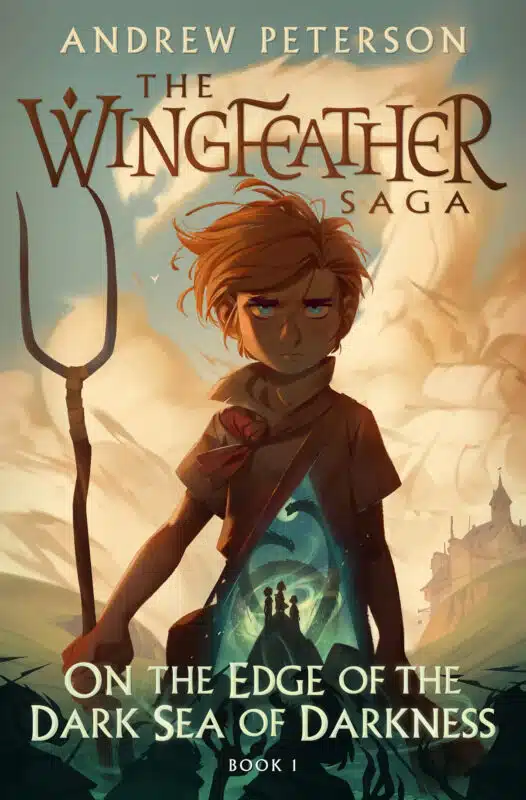
So, we're going to do it ourself. I think we're just going to do that. We're going to bring this back. The people, Rabbit Room who of course published Galahad and the Grail, they have such a... I was going to say reverence. That is probably the better word. Respect is another word we could use for it. Let me make a few more connections for our audience. Pete Peterson is the publisher at Rabbit Room and he is Andrew Peterson's brother. You'll all know Andrew Peterson because of his music, which we all love. And The Wingfeather Saga, huge fans of The Wingfeather Saga around here. We love The Wingfeather Saga. They're not, of course, ballads at all. They're prose, but you want to read those books aloud. You want to read that language aloud. And I think that Andrew's musicianness comes out in his writing.
(29:30):
One of the things that I think may be coming up for some of the people listening to our podcast is like either a... Well, I don't really know poetry and I find it intimidating, which is... I just want to read this little bit from your note from the poet because you say, "Reading a ballad out loud is easy." You read it for the sentence for the meaning that runs on across the lines and between the rhymes, the rhythm and rhyme will take care of themselves. Ideally, you should be almost unconscious of them and they will gradually They take up their own backbeat and melody and carry you along whilst you surge forward with the story itself. So don't worry about pausing at the end of the line or emphasizing the rhyme. Read each stave as though you were yourself telling the story around a campfire. And above all, enjoy it. Poetry is meant to give pleasure. I hope our listeners and viewers hear that because really you've done the hard work for us.
Malcolm Guite (30:29):
I felt like the sort of mystical Christian heart of the story had been airbrushed out by a lot of modern renditions. Also, some people have tried to kind of almost like repaganize the story, which I think isn't quite right. Anyway, there are some great storytellers in Britain, and one of the greatest of them is a guy called Martin Shaw, who I thought of at the time, or from what I'd read of his, he was more of the sort of Neopagan type, but he loved these stories, great storyteller. But when I was telling my story, really bringing the Christ-centeredness of the grail back in, I literally had said to myself, "Boy, I'm going to be in trouble with Martin Shaw."
(31:04):
So then I get an email from Martin Shaw, because I'd started reading them out on my YouTube. So I got this, "You're Galahad?" I thought, "Oh, God, I'm in trouble now." In fact, Martin was going, "Yes, go for it. I really like the way you're..." I know how to write a sonnet, but I thought, "Can I tell a story?" Here's this master storyteller. He said, "No, you're doing really well. I like this." Then he said, rather cryptically, "Come and see me." So I went down to Devin and I did-
Sarah Mackenzie (31:32):
You feel like you were getting called to the headmaster's office?
Malcolm Guite (31:35):
Well, thing is this, one of my convictions in writing this is that I think the reason why the stories are told in the way they are is that telling the story of Arthur and then particularly of Galahad and the Grail was a way of baptizing the imaginations of our Celtic forebears. There's all these clearly magical pre-Christian characters like Ladies of the Lake and Merlin is clearly some kind of, and yet all the stories happen at Christmas or Pentecost and at the heart of it is this Christian thing.
(32:04):
One of the most beautiful episodes in the story, it's only a couple of paragraphs in Thomas Mallory's great retelling, but I make much more of it is a vision of the white hart, the white hart with golden antlers, which comes back and forth into the various stories. You can imagine a pre-Christian cult in which hunting some beautiful white stag and the beautiful white stag is like the kind of king of the forest. You slay that king and yet you honor it.
(32:31):
You can imagine all of that and how when the Christian story comes, we'll say, "Well, there really is a King and he was willing to be slain, but he was slain for you. What you thought about the hart or what you thought is really getting you ready to hear the gospel about the King."So in the story, you have this magical hart, but it becomes Christ and that seemed to me to be really important. I wanted to restore that. That story, there's loads of Arthured stories and movies, but that's not even there, but it seemed to me to be a really important part of the story.
(33:08):
Anyway, I went down to see Martin Shaw. It was literally in the middle of a huge storm and the power was out. He was in this old fat cottage and everything was lit by candles. It was like going to visit beorn, this huge bearded figure. I'm kind of holding this propitiatory bottle of whiskey in front of me and I sip. Anyway, he basically called me because he said, "I'm actually finding myself gripped by Christ and by the gospel." But it started with a series of dreams in which a white hart with its antlers came into his house and started trashing the place. So he was actually on a journey. He's now baptized. He's a member of the Orthodox Church. So when I finally came to write my story of the white hart in this, I made a much more of it.
Audrey Menck (33:52):
Well, and what I love, you were saying this earlier too, all of these myths coming together, the completion in the Christian myth and this Lewisian idea, the C.S. Lewis myth is truth become fact.
Malcolm Guite (34:02):
It's both mythically resonant for your imagination, but historically true for your reason. So it's not a mere myth, it's not an idle myth. But if all the great myths became fact in the story of Christ, became history, then telling that story brings a new meaning to all the myths. The myths point to him rather than pointing away from him.
Audrey Menck (34:22):
Well, and something else that we talk a lot about here is that oftentimes good stories are pointing towards the wedding feast, right? Here we have a reflection of that Galahad and the Grail on this quest to find the grail, the cup that Christ used at the Last Supper that was present on Calvary. Could you share with our audience some of the tradition and the history behind wedding feast and the grail and how that comes together in the story?
Malcolm Guite (34:48):
Jesus uses the feast, not only the wedding feast, but the feast generally, "I shall not drink this again until I drink it with you and you in the Kingdom." Of course, Lewis picks that up when The Voyage of the Dawn Treader, when they come to Aslan's table and Aslan's table, it's renewed. So when the grail first appears at Camelot, part of this music, there's a beautiful sumptuous aroma. There's a kind of sense of glimmering of heaven. There's the grail itself. Then suddenly there's a feast all along the table and it's a promise of the feast to come.
(35:20):
When they get to the Grail Castle, there's a feast, although Galahad abstains because he knows, and then the grail appears, and then they follow the grail to the chapel and you have this thing that once the grail has been achieved as it were, then it's possible to heal the wounded king, the fisher king. And because the king was wounded, the land was laid waste. And with the healing of the king comes the healing of the land.
(35:43):
But also in my way of telling the story in the kind of version of medieval version I'm following, there is also a kind of subplot in which Sir Percival, who's accompanying Galahad, has another reason for getting to the Grail Castle because he had met a maiden there called Blanchefleur and then they'd been separated and their wicked enchantment would come between them. He knows he can't have Blanchefleur's hand until he too has achieved this quest. So after the king is healed, the king then plights the truth of Percival and Blanchefleur. So there's that wedding element. Of course, the marriage feast is deeply biblical because there are various ways in which even in the Old Testament, Yahweh, the Lord sometimes talks about Israel as the bride and about where you get a lot of that in Hosea. Of course, Christ is referred to as the bridegroom. So that's a deeply Christian motif, which then finds its way into these stories.
Sarah Mackenzie (36:41):
I love this so much. We do a program called Shakespeare Summer here at Read-Aloud Revival, and so we're gearing up for that for this coming summer. We're going to be reading as you like it with our kids. One of the things that I was just preparing was explanation for the kids about how all of Shakespeare's comedies and-
Malcolm Guite (37:02):
And with weddings.
Sarah Mackenzie (37:03):
Yes. This is the true happily ever after because this is the wedding feast of the lamb. Thank you so, so very much. This has been an absolute delight. If there was one last thing you would say to anyone who's encountering your book, what are you hoping that families who are reading this together will take with them?
Malcolm Guite (37:22):
Okay. Well, first of all, I'm hoping to give pleasure. I mean, I'm hoping it's just going to be fun and enjoyable, but I'm also hoping that it will kind of baptize the imagination. One of the wonderful things in C.S. Lewis's Surprised by Joy is about how when he was thought he was a really fierce atheist, he randomly picks up a wonderful storybook on the railway station, which turns out to be George MacDonald's book, Phantastes, and didn't make Lewis Christian immediately at all, but Lewis says it baptized his imagination. It's kind of working away so that when the time came right, all those stories were part of a kind of big homecoming to God. I hope this will sort of not only be a pleasure, but also be a kind of baptism of the imagination, and that would be my hope for it.
Sarah Mackenzie (38:08):
I love that so much. Oh, Malcolm, thank you so much for your time. This has been an absolute joy.
(38:18):
Audrey, that was so amazing. He is iconic.
Audrey Menck (38:23):
He absolutely is. As soon as I saw this book was coming out, I just knew we had to have Malcolm on the show, and I'm just so glad he was able to spend some time with us today. He just navigates the creative world and the academic world with such ease. We were at a theological conference in Oxford last summer, and we were on a break and we were sitting out a session or something, and we were outside in the courtyard, and he was sort of admitting to me like, "Oh, I feel out of my depth at these things." I was like, "There's no way. I am the master's student. I feel out of my depth." But I just loved in that conversation, just the way you can tell he has such a deep passion for the craft, for language, for the way that it works and sounds and moves together and draws people together, and so I just thought it was so beautiful, the way that really comes through, even just in the stories he tells and absolutely comes through in this book, in this ballad as well.
Sarah Mackenzie (39:20):
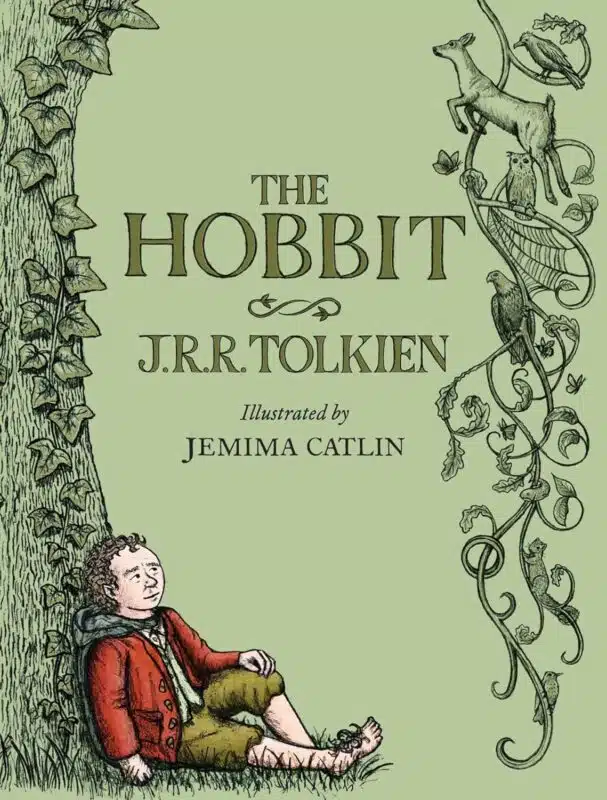
Well, it's so fun to listen to him read aloud. Last night in preparation for this interview, I was watching some of his YouTube videos just because watching him, listening to him, I should say, read aloud, as our listeners now know, because he read loud to us for a minute, it's just next level. You just feel like you're absolutely swept into the story. It was funny because I was sitting there just watching a... It was a 10-minute video. We'll put a link to it in the show notes because it's so delightful. It's this 10-minute video of Malcolm drinking some port, I think, a porter, I think is what he's drinking, and smoking a pipe and reading aloud the section of The Hobbit where Gandalf and Bilbo in the shire.
(40:08):
Anyway, I couldn't stop listening to it. It's a very short video, but I was just enraptured. Then Clara, your 14-year-old sister, wanders into the room and just sits down like, "Oh, I guess we're doing stories now." Then Backett comes in and he was like, "Oh, are we listening to The Hobbit?" and I was like, "We are." Everybody was just instantly... I mean, I could listen to him tell stories forever.
Audrey Menck (40:32):
Oh, absolutely. I've read this book and I'm going to... He mentioned earlier that he recorded an audiobook for it as well. So as soon as that comes out, I will certainly be listening to that because he is just a master storyteller.
Sarah Mackenzie (40:45):
So fabulous. Okay. So, Galahad and the Grail, go grab your copy on rabbitroom.com. There were some other things that Malcolm mentioned, little bonuses and fun, coloring pages and things like that. So everything that you need is going to be at rabbitroom.com. We'll put a link in the show notes as well. And I'll also include a link to that video. It'd just be such a fun experiment for our listeners to turn that 10-minute video on and see how long it takes for your children to gather around you. This probably will happen on its own. So all of our links are going to be in the show notes, which are at readaloudrevival.com/279. I hope you all love it. Okay. Well, let's go hear from the kids about the books that they're loving lately.
Rowan (41:38):
My name is Rowan and I'm five, and my favorite book is P.B. Bear's Birthday Party. I like wide down the train and when they start a picnic and when they play hide and seek.
Sarah Mackenzie (41:52):
Where do you live?
Rowan (41:54):
Tacoma, Washington.
Leah (41:57):
My name is Leah. I am seven years old and I live in Minnesota. I recommend the Hardy Boys Detective Handbook by Franklin W. Dixon. I like this book because I love all the Hardy Boys books.
Gwennie (42:13):
Hi, my name is Gwennie. I live in Tacoma, Washington. I'm seven years old and I recommend Princess Smarty Pants by Babette Colt. I like it because she has lots and lots of pets and the books are very fun.
Anna (42:35):
My name is Anna. I'm nine years old. I live in Minnesota. I recommend The Wollstonecraft Detective Agency series by Jordan Stratford. I like these books because they are funny and I like mystery books. One interesting thing about these books is that the people like Ada Byron Lovelace King and Mary Wollstonecraft Godwin Shelley were real people in history, but they didn't actually know each other and weren't close to the same age like in the books.
Caspian (43:11):
I'm Caspian and I'm nine and I live in Tacoma, Washington, and the book I recommend is The Green Ember. Why I like it? Why I like it is because there's rabbits against wolves. Wait, wait, no, no, no, no. There's rabbits who loves wolves and birds, and there's a lot of crazy stuff like that. Yeah, like that.
Sarah Mackenzie (43:36):
Thank you so much, kids. We'll be back in two weeks with another episode. So in the meantime, pretty sure you know what to do. Go make meaningful and lasting connections with your kids through books.