Planning Is Guessing
Before you take your homeschooling plans too seriously, remember that you’re only guessing. It’s important guessing—essential, even.
But still. Planning is (at its best) just guessing.
Think about it:
When we are planning for a school year, we’re making all kinds of guesses. We’re guessing about:
- How quickly our child will master each math concept and be ready to move on to the next one
- How much time our child will need to write that paragraph
- How long that conversation about slavery will take with our child who is reeling from his first encounter with history’s ugly truth
- How many times everyone will get sick
- How much sleep we will get on any given night
- How many times the dishwasher will overflow or the dryer will break
- How many times the toddler will shove toys down the toilet (or is that just me?)
We’re making guesses about how much schoolwork we can get done in a day and how many books or lessons we’ll be able to finish. But none of us actually know what tomorrow holds.
When we remember that planning is guessing, we keep our plans in their rightful place. We remember that curriculum and lesson plans are only meant to be tools, wielded by us but not to rule over us.
Let’s talk about tools, shall we?
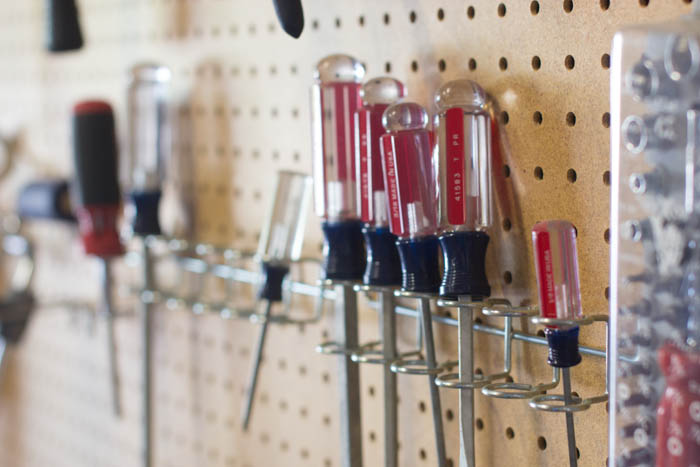
A tool is something that’s supposed to help you.
Let’s say you need to fix something. An earring, perhaps, that one of your toddlers broke.
Theoretical, of course.
You go out to the garage to see if you have a set of pliers you can use to fix it. You shove aside the box of nails, the hammer, the wrench. You don’t need any of those, or the variety of screwdrivers at your disposal—they have a function, but you don’t need them today.
Eventually, you find a set of pliers. Actually, you find a few different sizes, but only one is the right size for this earring.
Do you feel guilty that you haven’t used all the tools you have?
Do you feel like you must make use of the hammer and the screwdriver to fix your earring?
Do you feel that having those tools at your disposal is money wasted, even if you don’t need the service of your hammer for several months at at time?
Of course not. That would be silly. It’s a tool, after all. It’s there when you need it, in the capacity in which you need it.
So why do we feel guilty if we don’t sweat over our homeschool curriculum?
Most of us have stacks of curriculum on our shelves, and we feel like we must use it all, thoroughly and from beginning to end.
We look at a history book or a science text and think we have to do every single lesson in the book in just the manner described by the curriculum publisher for it to “count.”

We forget that the book is only a tool in service to us and our children.
We should feel free to pick up our tools and use them in ways that will help us teach our children.
But we should never feel burdened by our toolbox.
We should never trade our family peace or the leisure of slow, sane learning in exchange for making the most use of our hammer and nails.
Here is the deal: your plans are just guesses, and your curriculum choices are your tools, meant to be your servants and not your masters.
When we make a homeschooling plan, we are just guessing how our average day is going to go. It’s all drummed up in our imagination.
We often don’t account for unexpected interruptions, even though any mother nows that unexpected interruptions make up a great deal of an average day.
Our real life isn’t the one we’ve planned or imagined. It’s the one we’re living.
We don’t get grace for what happens in our imagination.
We don’t get grace for the schedule we mapped out on a color-coded grid at the beginning of a new school year.
We get grace for the real moment in front of us. That messy one—the one that looks nothing like we thought it would.
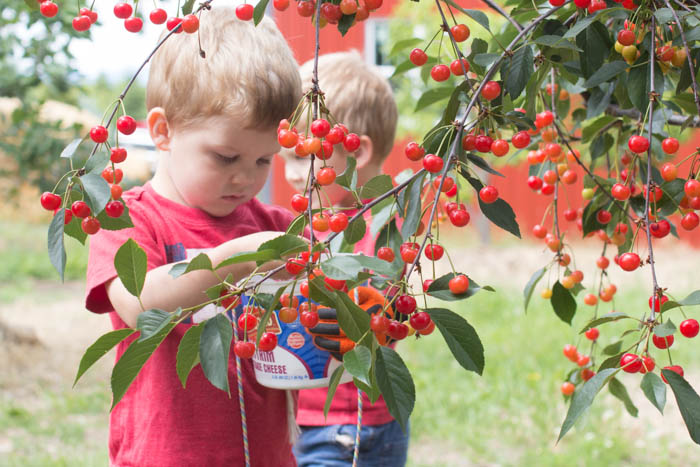
So make your plans for another school year.
It’s important to make good guesses so you can steer your ship in the right direction.
But don’t be surprised or deflated when you veer off course, encounter a surprise wind, or land somewhere you didn’t expect.
Planning is just guessing.
Tell yourself this every day when you look at your beautifully mapped out schedule. It’s all just a guess. And the curriculum you’re using? Keep it in its place. It’s your tool. Use it to help you follow through on those guesses as best you can.
Your best plans were just good guesses, after all. The real grace arrives the very moment you need it.